How a Bull Terrier Gets Out of a Fence
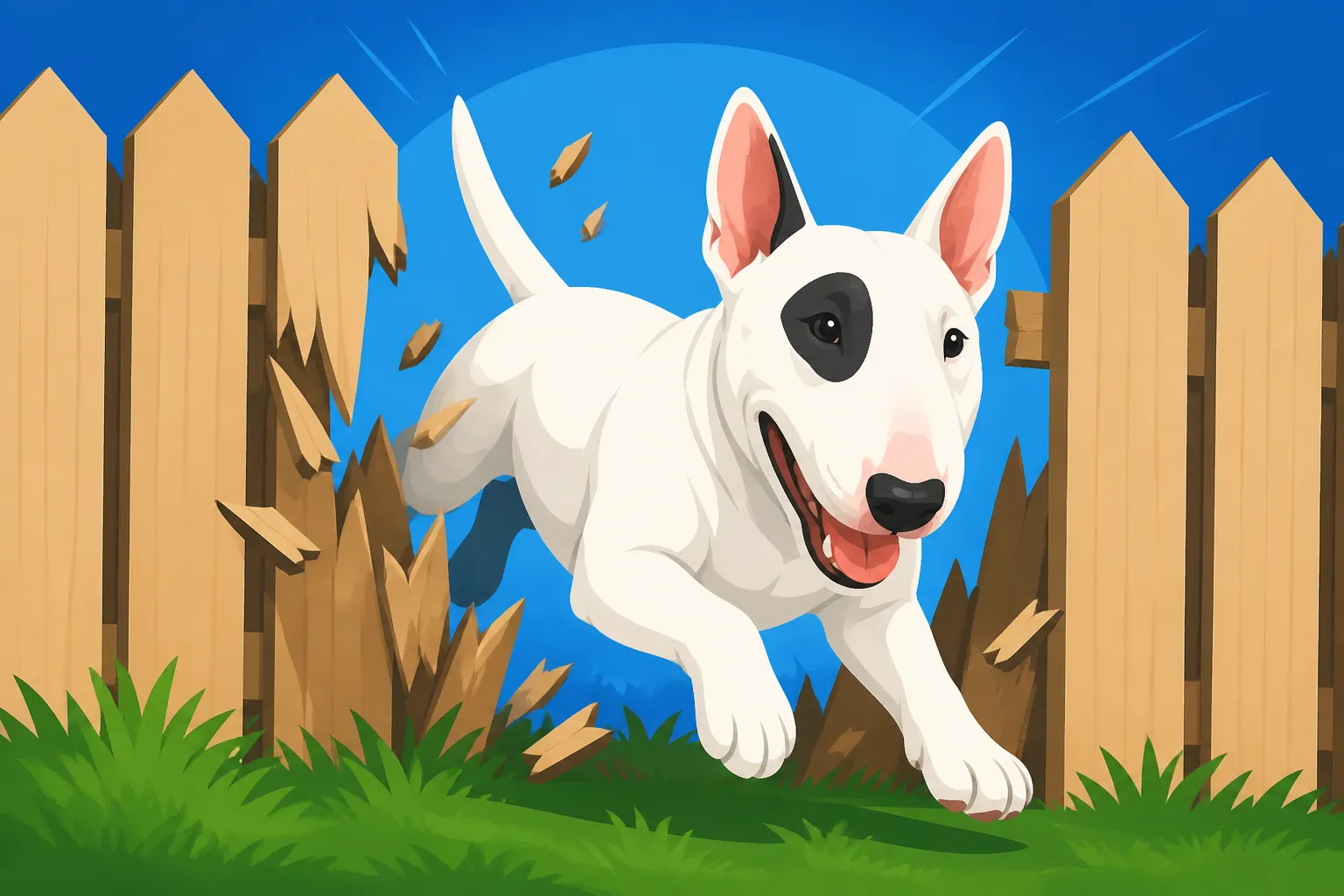
It’s a heart-stopping moment for any Bull Terrier owner: you step outside, call for your beloved companion, and silence is the only answer. You race to the fence line, only to discover a new hole, a bent panel, or a gate inexplicably ajar, and your Bull Terrier is nowhere in sight. This guide is dedicated to dissecting the often-ingenious ways Bull Terriers manage to escape their enclosures and, more importantly, offering practical, empathetic solutions to keep your clever companion safely contained.
Understanding the Bull Terrier Escape Artist Mindset
Before we dive into the physical methods of escape, it's crucial to understand why your Bull Terrier might be attempting to break free. It’s rarely out of malice or disobedience, but rather a combination of their unique personality, high intelligence, and often, unmet needs. These are dogs with a massive zest for life, an insatiable curiosity, and a powerful drive that, if not properly channeled, will find an outlet – and sometimes that outlet is the great wide open beyond your fence.
The Bull Terrier’s Drive to Explore and Hunt
Bull Terriers possess a strong prey drive and an adventurous spirit. A squirrel running along the fence, a rabbit hopping through the bushes, or even just the enticing smells of the neighborhood can become an irresistible siren call. For a Bull Terrier, the fence might just be a minor inconvenience standing between them and an exciting chase. This intense focus on a perceived “prize” can make them surprisingly resourceful and persistent in their escape efforts, turning them into little four-legged engineers of freedom.
They're not just looking for trouble; they're looking for stimulation. If their environment within the yard isn't engaging enough, they'll seek it out elsewhere. A Bull Terrier who feels under-exercised or under-stimulated might see the outside world as a far more interesting place to spend their afternoon, leading them to constantly test the boundaries of their confinement. How Much Exercise a Bull Terrier Actually Needs is often more than people assume, and a tired Bull Terrier is a less adventurous Bull Terrier.
Boredom and Anxiety as Escape Motivators
While the thrill of the chase is one factor, boredom and separation anxiety are equally potent drivers for escape. A Bull Terrier left alone in a yard for long stretches, especially if they’re not used to it, can quickly become bored, restless, or anxious. This mental state can lead to destructive behaviors, including relentless efforts to escape. They aren’t trying to be “bad”; they’re simply trying to cope with their feelings or find something to occupy their powerful minds.
A Bull Terrier with separation anxiety isn't just bored; they're genuinely distressed by your absence. They might whine, bark, pace, and eventually, try to escape to find you. Signs a Bull Terrier Has Separation Anxiety can be subtle or overt, but it's a critical factor to recognize and address. Even if you're only gone for a few hours, a Bull Terrier's world can feel like it's ending, making that fence seem less like a barrier and more like a challenge to overcome. Providing ample mental and physical stimulation is key to preventing these types of escapes.
Common Bull Terrier Escape Routes and Solutions
Bull Terriers are intelligent and physically capable dogs, and they employ a variety of tactics to breach barriers. Understanding these common methods is the first step in fortifying your yard and keeping your companion safe.
The Art of Digging Out
One of the most frequent escape methods for many dogs, including Bull Terriers, is digging. They have strong paws, powerful shoulders, and an innate drive to dig, whether it’s for prey, a cool spot, or just out of sheer enjoyment.
Why Bull Terriers Dig Under Fences
Bull Terriers dig for several reasons. Sometimes, it’s simply curiosity—they smell something interesting on the other side of the fence and decide the fastest way to investigate is directly through the earth. Other times, especially in hot weather, they might be trying to create a cool hollow to lie in, and if that digging leads them under the fence, all the better. Boredom is a huge factor here too; a Bull Terrier with nothing better to do might just start digging for entertainment. What a Bull Terrier Does When It Is Bored often involves destructive behaviors, and digging is high on that list.
Then there's the prey drive. If your yard backs onto a field where rabbits live, or if there's a groundhog under your neighbor's shed, your Bull Terrier will feel a powerful urge to investigate. They're built for digging, and they'll happily excavate a tunnel if it means getting closer to that exciting scent.
Dig-Proofing Your Fence Line
To combat a digging Bull Terrier, you need to extend your fence underground. There are several effective strategies:
- L-Footer Trench: This involves digging a trench along the fence line, about 1-2 feet deep, and installing an "L" shaped barrier. The horizontal part of the "L" should extend inwards towards your yard by at least 1-2 feet. You can use chicken wire, hardware cloth, or even concrete pavers. The idea is that when your Bull Terrier tries to dig down, they hit the horizontal barrier, which is frustrating and usually deters them. This method is incredibly effective because dogs instinctively dig down first, rather than digging out horizontally.
- Burying Wire or Mesh: Another option is to bury a strong wire mesh or fencing material directly along the bottom of your existing fence. It should go at least 18-24 inches deep. Heavy gauge welded wire or even chain link buried vertically can be quite effective.
- Rock or Concrete Borders: For particularly persistent diggers, you might consider laying a border of large rocks, landscaping timbers, or pouring a concrete footer right along the base of the fence. This creates an impenetrable barrier at ground level.
- Strategic Planting: Some owners find success by planting thorny bushes or dense, thorny ground cover directly along the fence line, inside the yard. This can make the area uncomfortable for digging.
Remember, consistency is key. If your Bull Terrier finds even one weak spot, they'll exploit it. Regularly inspect your fence line for new dig marks and reinforce them immediately.
Overcoming the Fence: Climbing and Jumping
Bull Terriers are surprisingly agile and can jump higher or climb more effectively than their stout appearance might suggest. Their determination, combined with strong hindquarters, makes them formidable vertical challengers.
How Bull Terriers Scale Walls and Fences
Many Bull Terriers are capable jumpers, especially if they have a strong motivation to get over. A 4-foot fence might be easily cleared by a determined Bull Terrier. They can also be surprisingly adept climbers, particularly if the fence offers any toeholds. Chain-link fences, for example, can be climbed much like a ladder. They might use nearby structures like woodpiles, trash cans, or even small trees to gain extra height, turning these into launching pads.
Their athleticism is often underestimated. They might not look like a gazelle, but their muscular build provides a surprising amount of propulsion. A Bull Terrier in pursuit of a squirrel or another dog, or simply desperate to escape due to Why a Bull Terrier Cannot Be Left Alone All Day, can clear impressive heights.
Raising and Fortifying Your Fence
If your Bull Terrier is getting over the fence, you have a few options:
- Increase Height: The most obvious solution is to increase the height of your fence. For persistent jumpers, a fence of at least 6 feet is often recommended. If you have a chain-link fence, consider adding extensions that angle inwards at the top, making it harder to get a grip and climb over.
- "Coyote Rollers": These are PVC pipes or similar cylindrical objects installed along the top of your fence. When a dog tries to scramble over, the roller spins, preventing them from getting a secure grip. These can be purchased online through retailers like Amazon or DIY-ed with readily available materials.
- Mesh or Wire Extensions: For wooden fences, you can add a section of sturdy wire mesh or lattice to the top, extending the effective height. Ensure it's firmly attached and doesn't offer new climbing opportunities.
- Remove Climbing Aids: Scan your yard for anything near the fence that your Bull Terrier could use to get a boost—dog houses, storage bins, landscaping features, or even low-hanging tree branches. Relocate or remove them.
- Invisible Fences (Use with Caution): While some owners consider invisible fences, they generally aren't recommended as a sole containment solution for Bull Terriers. A highly motivated Bull Terrier will often endure the static correction if the lure on the other side is strong enough. It teaches them to run through the correction, not to respect the boundary. This is particularly true if their prey drive kicks in or if they are in distress due to anxiety.
A strong, tall, and smooth fence offers the best physical deterrent. Whether a Bull Terrier Needs a Reinforced Fence is often a question of when, not if, for many owners.
Gate Breakouts and Other Breaches
Sometimes, the simplest path is the most overlooked. Gates are common weak points in any fence system, and a smart Bull Terrier will quickly figure out how to exploit them.
Manipulating Latches and Pushing Through Gates
Bull Terriers are famously clever, and many learn to operate simple gate latches. Their powerful noses and jaws are excellent tools for nudging, lifting, or prying. If a gate isn't completely flush with the frame, they might push their way through, especially if the latch isn't fully secured. Their sheer strength can also be a factor; a determined Bull Terrier can lean against a flimsy gate or even ram it repeatedly until the latch gives way or the gate itself bends.
I've heard stories of Bull Terriers who could undo complicated garden latches with a nudge of their nose and a flick of their head. They watch, they learn, and they experiment. If they see you operate the latch, they'll try to mimic the motion.
Securing Your Gates
Gates need to be as secure, if not more secure, than the rest of your fence:
- Double Latching: Use two latches on your gate, one at the top and one closer to the bottom. Choose latches that require a complex motion (e.g., lift and pull, or a spring-loaded bolt) that's difficult for a dog to operate. A sturdy gate latch combined with a heavy-duty carabiner or padbolt can add extra security.
- Self-Closing/Self-Latching: Invest in gate hardware that automatically closes and latches behind you. This eliminates the "oops, I forgot to close it properly" scenario.
- Reinforce the Gate Frame: Ensure the gate itself is robust and doesn't have weak points where it meets the posts. Add diagonal bracing if needed to prevent sagging, which can create gaps.
- Check for Gaps: Periodically inspect around the gate for any gaps your Bull Terrier could squeeze through. If the gate doesn't extend completely to the ground, add a buried wire or L-footer underneath it, just as you would for the rest of the fence.
- Supervision and Training: Teach your Bull Terrier a strong "stay" command around gates, and always be mindful of them when you're entering or exiting. If they're prone to pushing, teach them to wait patiently. Consider working with an online training program like BAXTER & Bella, which offers resources for fundamental obedience that can translate to gate manners.
Here's a quick overview of common escape methods and prevention:
| Escape Method | Bull Terrier Tactic | Effective Prevention Strategies |
|---|---|---|
| Digging Under | Uses strong paws to excavate tunnels; motivated by prey/curiosity/cool spots. | Install L-footers (buried wire/mesh extending inward), concrete pavers, or a buried wire barrier (18-24 inches deep). Monitor regularly for new digging attempts. |
| Climbing Over | Climbs chain link, scales wooden fences using toeholds, uses nearby objects. | Increase fence height (6+ feet recommended); add inward-angling extensions or "coyote rollers" to the top. Remove climbing aids near the fence (woodpiles, old crates, low tree branches). |
| Jumping Over | Leaps over fences, especially if motivated by prey or excitement. | Increase fence height (6+ feet is often necessary). If fence height cannot be increased, consider a secure, roofed kennel area for unsupervised time, or explore tethering (supervised and short-term only). |
| Gate Manipulation | Nudges, pushes, or prys open simple latches; leans against flimsy gates. | Use double-locking, complex latches (e.g., spring-loaded bolt + carabiner). Install self-closing/self-latching hardware. Reinforce gate frame; ensure it fits snugly without gaps. |
| Chewing Through | Chews through wooden fences, gates, or other flimsy materials out of boredom/anxiety. | Use metal, strong vinyl, or pressure-treated lumber for fences. Address boredom and anxiety with ample exercise and mental stimulation. Provide appropriate What a Bull Terrier Chews When Left Out to redirect chewing, such as durable rubber toys from Amazon. |
Preventing Escapes: Beyond Physical Barriers
While reinforcing your fence is paramount, addressing the root causes of escape behavior is equally important. A physically secure yard is only one part of the equation; a mentally and physically fulfilled Bull Terrier is the other.
Adequate Exercise and Mental Stimulation
A tired Bull Terrier is a good Bull Terrier, and a mentally stimulated Bull Terrier is less likely to become a backyard engineer. These dogs have significant energy levels and brilliant minds that need an outlet. If they're not getting enough appropriate exercise, they will invent their own entertainment, which often involves challenging the boundaries of their confinement.
Regular, vigorous exercise is non-negotiable. This isn't just a leisurely stroll around the block. Think brisk walks, challenging hikes, fetch sessions, or even agility training. Beyond physical exertion, mental stimulation is crucial. Puzzle toys, like those found on Amazon, that dispense treats can keep them occupied for a while. Teaching new tricks, engaging in scent work, or enrolling in obedience classes can provide the mental workout they crave. Which Puzzle Toys Occupy a Bull Terrier can be a lifesaver for those times you can't actively engage them.
Addressing Boredom and Separation Anxiety
If your Bull Terrier is trying to escape primarily because they're bored or anxious, physical barriers alone won't solve the problem; they'll just make your Bull Terrier more frustrated and potentially more destructive.
For boredom, ensure they have access to appropriate, durable chew toys when left alone in the yard. Rotate these toys to keep them novel and exciting. Some owners even hide treats around the yard for a "sniffari" game. Engaging training programs, such as those offered by BAXTER & Bella, can provide structured activities that build confidence and reduce boredom-related mischief. Teaching them to settle on a mat indoors can also translate to a calmer demeanor when left outside. Teaching a Bull Terrier to Settle on a Mat is a great skill that fosters independence.
If separation anxiety is the culprit, this is a more serious issue that often requires a multi-faceted approach, potentially involving a professional dog trainer or veterinary behaviorist. Escaping is just one symptom of their distress. Signs a Bull Terrier Has Separation Anxiety can include excessive barking, destructive chewing, inappropriate urination/defecation, and of course, frantic escape attempts. This isn't something to punish, but rather to treat with patience and understanding.
Supervision and Crate Training
No fence, no matter how robust, is 100% escape-proof, especially with a determined Bull Terrier. Close supervision is always your best line of defense. Whenever your Bull Terrier is in the yard, be present and observant. This allows you to interrupt any escape attempts before they become successful and to identify new weak points in your fencing.
For times when you absolutely cannot supervise them outside, especially if you're still working on fence reinforcement or anxiety issues, consider secure indoor containment. A heavy-duty crate, specifically designed for strong chewers and escape artists, can be invaluable. This isn't meant to be a punishment, but a safe den where they can't get into trouble or hurt themselves trying to escape. Just make sure the crate is appropriately sized and introduced positively. Which Crate Holds a Bull Terrier is a crucial question for Bull Terrier owners, as standard wire crates often don't stand a chance. Remember that no dog should be crated for excessively long periods.
Ultimately, preventing a Bull Terrier from escaping is a combination of creating an impregnable physical barrier, meeting their profound needs for exercise and mental engagement, and understanding their unique motivations. It's a commitment, but one that ensures the safety and happiness of your beloved companion.
Disclaimer
This article is for general informational purposes only and does not constitute professional advice. Laws, prices and regulations vary by location and change over time. Consult a qualified professional for guidance on your specific situation.