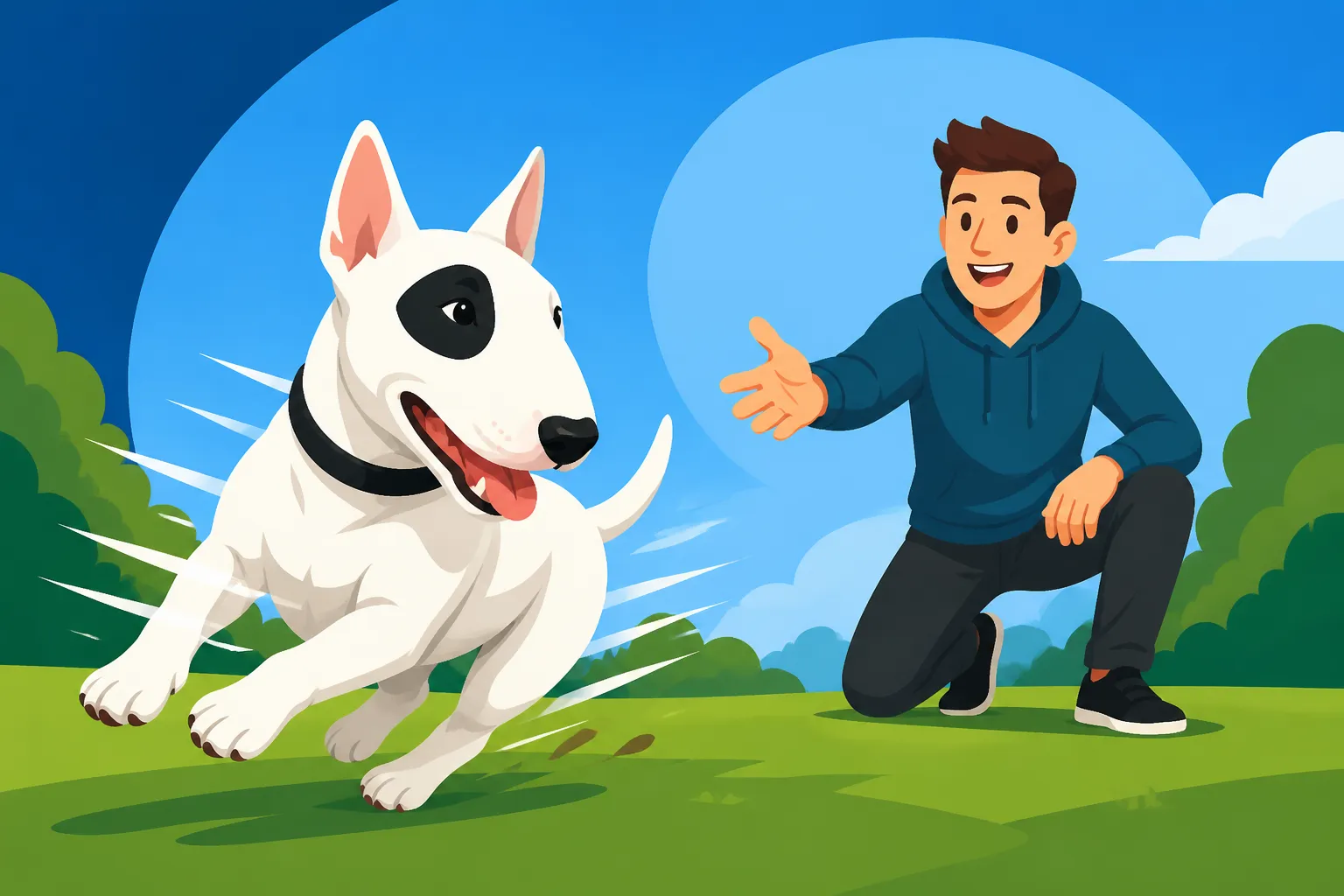
Teaching a Bull Terrier to Come Back Mid Zoomie
There are few things more disheartening than calling your Bull Terrier, with all the love and urgency you can muster, only to watch them rocket past you in a blur of pure, unadulterated joy – usually straight towards something highly interesting (and potentially mischievous). That burst of energy, often called "zoomies" or FRAPs (Frenetic Random Activity Periods), can make even the most diligently trained recall cue seem utterly pointless. This guide is all about tackling that exact frustration, giving you realistic, step-by-step strategies to teach your Bull Terrier to come back, even when they're in the throes of their wildest, most exhilarating zoomie spree.
Decoding the Bull Terrier Zoomie Phenomenon
Understanding why your Bull Terrier dives headfirst into a full-speed, careening dash is the first step toward teaching them to interrupt it. These aren't just random acts of canine chaos; they're often a release of pent-up energy, excitement, or even stress. For a Bull Terrier, whose physical strength and joyful exuberance are legendary, a zoomie can be an impressive, albeit challenging, spectacle.
What a Bull Terrier Zoomie Looks Like
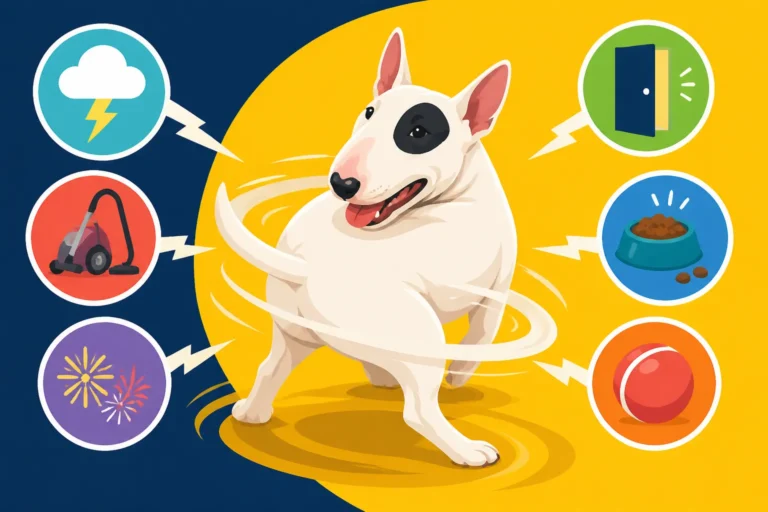
Imagine a canine tornado. That's often what a Bull Terrier zoomie resembles. They'll typically start with a sudden burst of speed, running in wide circles or figure-eights, often accompanied by happy, open-mouthed panting and sometimes an almost frantic look in their eyes. They might tuck their butt low, flatten their ears, and launch themselves off the ground, doing quick turns that defy physics. It's a full-body expression of pure, unadulterated joy and kinetic energy. They might even grab a toy and shake it violently mid-run, or do a sudden "stop-and-drop" on the ground before launching again. If you've ever seen a Bull Terrier in full flight, you know exactly what I mean – it’s a magnificent, wild display, but one that makes any attempt at traditional recall seem utterly futile. You might be interested in reading more about How a Bull Terrier's Zoomies Look Like to better identify these moments.
Why Recall Is So Challenging During Zoomies
The main reason recall becomes an uphill battle during zoomies is the sheer intensity of the experience for your Bull Terrier. When they're in that high-arousal state, their brain is practically flooded with endorphins, and their focus is narrowed entirely on the physical act of running and releasing energy. It's akin to trying to have a serious conversation with a child who is sprinting around the playground on a sugar rush. Their ears might be hearing you, but their brain isn't processing the command, let alone feeling the motivation to stop what feels so incredibly good. Furthermore, many Bull Terriers have a strong prey drive, and during a zoomie, they might be "chasing" unseen things, or the very act of running feels like a hunt. Interrupting that instinctual drive requires a level of motivation that simply "come" often can't provide. Sometimes, the zoomies can even escalate into other behaviors, such as when The Age Bull Terrier Tail Chasing Starts, showing just how intense their focus can become.
Laying the Groundwork: Building a Bombproof Recall (Before the Zoomies Start)
Before you can even dream of calling your Bull Terrier back mid-zoomie, you need to establish a rock-solid recall in low-distraction environments. This foundational training is absolutely non-negotiable. Without it, you're building a house on sand. Remember, A Bull Terrier Trains When It Sees the Point, so your job is to make "come" the most rewarding thing ever.
Starting in Low-Distraction Environments
Begin your recall training indoors or in a securely fenced yard with no distractions. Use a long line, perhaps a 15 or 20-foot one, even in a fenced area. This gives you a safety net and helps teach your Bull Terrier that "come" isn't optional, even if they momentarily ignore you. Start by standing a short distance away, saying their name and then your recall cue (e.g., "Max, Come!"). As they move towards you, praise them enthusiastically, and as soon as they reach you, reward them with something truly amazing – not just a dry kibble, but a piece of cooked chicken, cheese, or a favorite squeaky toy. Practice this multiple times a day, keeping sessions short and fun. The goal is to build a positive association so strong that "come" instantly equals "party time!" Many Bull Terrier owners find that consistency here is key, and some even find online programs helpful for structured lessons, like those offered by BAXTER & Bella, which provide step-by-step guidance for building these crucial obedience skills.
The Power of High-Value Rewards
For a Bull Terrier, "high-value" doesn't mean "any old treat." It means the absolute best thing they could possibly want in that moment. What constitutes high-value will vary for each dog, but generally, it's something stinky, chewy, or exceptionally exciting. Think: tiny pieces of hot dogs, cooked chicken breast, cheese, or even liverwurst. For some Bull Terriers, the ultimate reward might be a quick, enthusiastic game of tug with their absolute favorite toy. Which Reward Outranks a Bull Terrier's Own Idea often depends on the individual dog, but it needs to be something that makes them feel like they've won the lottery. The higher the distraction, the higher the value of the reward needs to be. If you're practicing recall in a slightly more distracting environment, like your backyard with interesting smells, that reward needs to be even more enticing than those smells.
Making Recall a Game, Not a Command
Turn recall into the best game ever. Play "hide and seek" in your house or yard. When your Bull Terrier finds you, make it a huge celebration, lavish them with praise, and offer that high-value treat or toy. Run away from them when you call them, making yourself exciting and something they want to chase. Use an upbeat, happy tone of voice, never angry or frustrated, even if they're taking their sweet time. If "come" becomes associated with being caught, leashed, or ending their fun, they'll quickly learn to avoid it. Conversely, if it always leads to delicious treats, joyful interaction, or a favorite game, they'll be far more likely to sprint back to you. Remember, Bull Terriers are smart and can be quite willful; they need to want to come back. Consider pairing recall with a favorite toy they will work for, as discussed in Which Toy a Bull Terrier Will Work For.
Mastering the Mid-Zoomie Comeback: Advanced Strategies
Once your Bull Terrier has a reliable recall in low-distraction settings, it's time to incrementally increase the challenge. Getting them back mid-zoomie is the ultimate test, and it requires patience, strategic planning, and understanding their unique Bull Terrier temperament.
The Long Line: Your Best Friend
A long line (15-30 feet) is absolutely indispensable for proofing recall in distracting environments, and especially when dealing with zoomies. It allows your Bull Terrier to experience freedom and practice recall without the risk of them truly bolting. Start in a familiar, contained outdoor space like a large, securely fenced park or an open field where you can control the environment. Let them run and sniff around on the long line. When you anticipate a zoomie, or when one starts, wait for a slight dip in their energy, or a moment when they glance your way. That's your window. Give your recall cue ("Max, Come!") with excitement, and if they hesitate, gently guide them in with the long line. Reward heavily when they reach you. Products like durable long lines are readily available on Amazon, and investing in a good quality one is essential. How Strong a Bull Terrier Is on a Leash means you need sturdy equipment.
Interruption Techniques for High-Energy Moments
Sometimes, a direct "come" won't cut through the zoomie brain fog. You need an interruption.
- The "Party Noise": Instead of just "come," try making a novel, exciting sound. Some Bull Terriers respond well to a loud, happy whistle, a special squeaky toy, or even you clapping your hands and yelling "Yay!" in an excited tone. The key is novelty and excitement – something that cuts through the mental noise of the zoomie.
- The "Reverse": If your Bull Terrier is running away from you, turn and enthusiastically run in the opposite direction. This often triggers their chase instinct, and they'll pivot to follow you. As they get close, praise and cue your recall.
- The "Surprise Treat Drop": Carry a small baggie of incredibly high-value, easy-to-eat treats. When they're mid-zoomie and you need them, call them, and if they glance your way, immediately drop a handful of treats on the ground near you. This creates a positive association and breaks their focus.
Remember to keep these interruptions positive. You're not punishing the zoomie; you're just redirecting their attention towards you and a positive outcome.
Proofing Recall with Increasing Distractions
Once your Bull Terrier is reliable on a long line in a somewhat distracting environment, you need to systematically increase the level of distraction. This means practicing near other dogs (initially at a distance), near children playing, in new locations, and eventually, during their zoomies.
Recall Training Progression by Distraction Level:
| Distraction Level | Environment | Training Tools Recommended | Reward Value | Focus |
|---|---|---|---|---|
| Level 1: Low | Indoors, quiet room, fenced backyard | No tools needed initially, then a 6ft leash | High | Building positive association, making "come" fun, short distance. |
| Level 2: Moderate | Fenced park (no other dogs), quiet trail | 15-20ft long line, regular leash | Very High | Introducing environmental stimuli, practicing during sniffing, mild interest. |
| Level 3: High | Park with other dogs/people (at a distance) | 20-30ft long line, specific "zoomie interruption" item (toy) | Exceptionally High | Testing reliability with major visual/auditory distractions. |
| Level 4: Mid-Zoomie | Controlled open space (long line required) | Long line, emergency whistle/marker, supreme treats | Extreme | Applying interruption techniques when dog is highly aroused and focused on movement. |
Always set your Bull Terrier up for success. Don't go from your living room to a dog park off-leash in one jump. Gradually introduce new distractions, always using your long line as a safety measure. If they fail, that's information, not a reason to get angry. Go back to a lower level of distraction where they can succeed and build up again. Consistent practice, even for a few minutes each day, will make a massive difference. You might want to consider How Much Exercise a Bull Terrier Actually Needs to help manage their overall energy levels, which can impact zoomie frequency. For more general training guidance, A Bull Terrier Trains When It Sees the Point offers excellent insights into their unique learning style.
Managing Zoomie Environments
Sometimes, the best recall strategy is a good management strategy. If you know your Bull Terrier is prone to massive zoomies in certain environments or at certain times of day, adjust your plans.
- Leashed Walks: If an area is too stimulating or unsafe for a long line, keep them on a regular leash. It's better to prevent the uncontrolled zoomie than to constantly try to interrupt it.
- Designated Zoomie Zones: If you have access to a large, securely fenced area (like a private dog park rental or a friend's property), use that as their "zoomie zone." Let them run it out, knowing they're safe. Practice recall after they've had a good run and are slightly less amped up.
- Pre-Zoomie Warm-Up: Sometimes, a structured play session or a brisk walk before going to a wide-open space can take the edge off and make them less likely to explode into a full-blown zoomie. This can also help reduce Why a Bull Terrier Runs at You at Full Speed during play.
- Consistent Practice: The more you practice recall in various situations, the more it becomes ingrained. Don't just practice when you need them to come back; practice when you know they will come back, even if it's just calling them to you from across the room for a treat. This keeps the positive association strong.
Teaching a Bull Terrier to come back mid-zoomie is a marathon, not a sprint. It requires immense patience, understanding of their unique personality, and consistent, positive reinforcement. But the reward – a reliable recall and the freedom to safely enjoy off-leash adventures with your spirited companion – is absolutely worth every effort.
Disclaimer
This article is for general informational purposes only and does not constitute professional advice. Laws, prices and regulations vary by location and change over time. Consult a qualified professional for guidance on your specific situation.