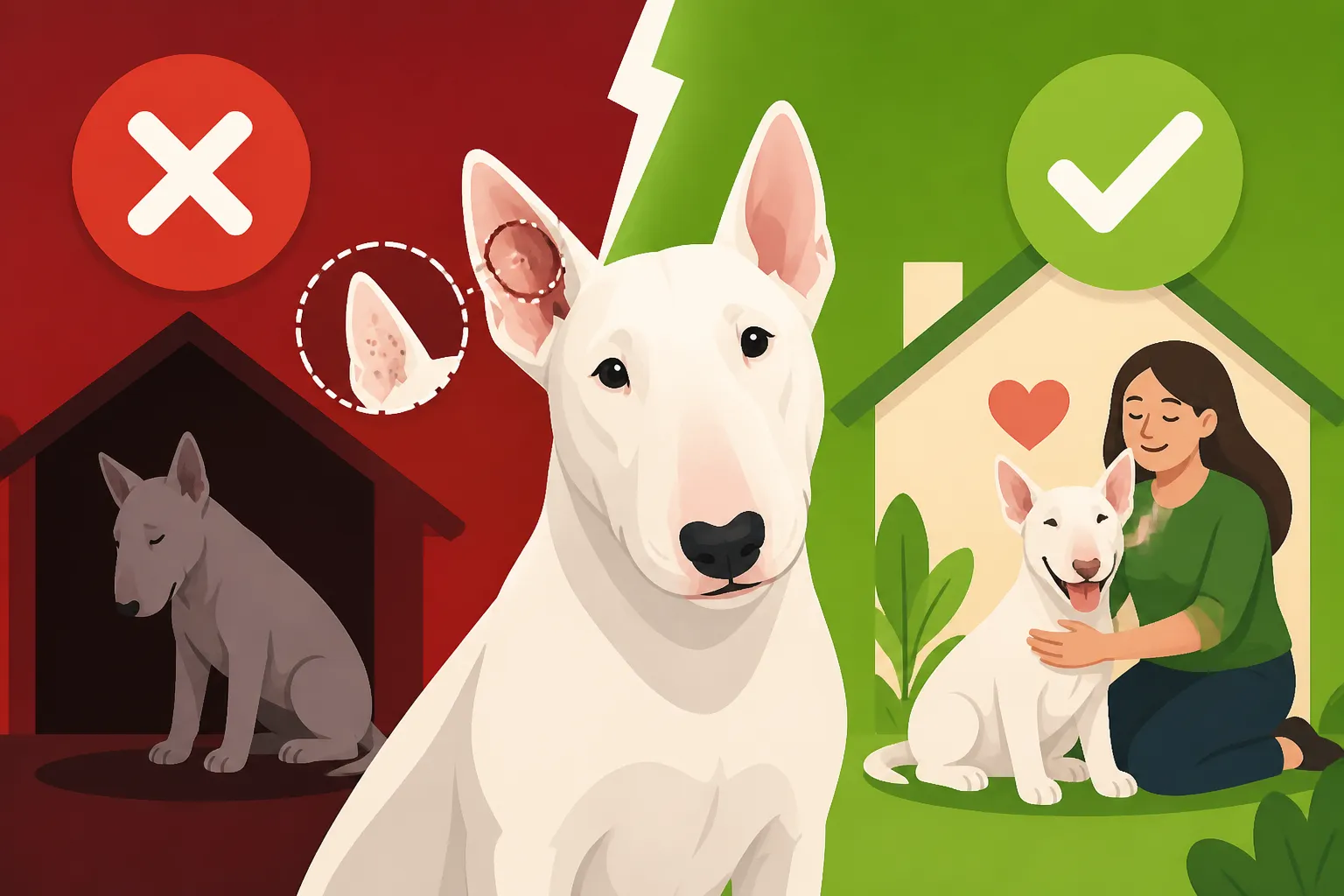
Whether a Deaf Bull Terrier Should Be Placed in a Home
Bringing a Bull Terrier into your home is always an adventure, full of hilarious antics and unwavering loyalty, but when that particular Bull Terrier happens to be deaf, many prospective owners understandably feel a knot of anxiety. The thought of raising a dog that can't hear you call its name or bark at the doorbell can seem overwhelming, leaving you wondering if a deaf dog can truly thrive. This guide aims to clear up those concerns, exploring the realities, challenges, and immense joys of providing a loving home for a deaf Bull Terrier, helping you decide if this unique, wonderful dog is the right fit for your family.
Understanding Deafness in Bull Terriers
Deafness, particularly congenital deafness (present at birth), is a more common concern in certain breeds, and our beloved Bull Terriers are certainly among them, especially those striking white ones. It’s not a flaw in their character, but a physiological difference that requires understanding and adaptation from their human companions.
Causes and Prevalence of Deafness
The primary culprit behind congenital deafness in Bull Terriers, especially those with white coats, is a genetic link. The same gene responsible for their beautiful lack of pigment can, unfortunately, also affect the development of the auditory system in the inner ear. It’s a bit of a package deal sometimes – that stunning white coat comes with an increased predisposition. While white Bull Terriers are at a higher risk, it's important to remember that deafness isn't exclusive to them; even colored Bull Terriers can be born deaf, although it's far less common. For more in-depth information, you might want to read about How Many White Bull Terriers Are Born Deaf.
The specific gene mutation linked to piebaldism (white spotting) is often implicated. When a Bull Terrier carries two copies of this gene, resulting in a predominantly white coat, the melanocytes (pigment-producing cells) sometimes fail to develop correctly in the inner ear. These cells are crucial for the proper functioning of the cochlea, which is responsible for hearing. Without them, the nerve endings in the inner ear can degenerate, leading to permanent deafness. It's a complex genetic dance, and not every white Bull Terrier will be deaf, but the risk is certainly elevated.
Diagnosing Deafness
So, how do you know if a Bull Terrier puppy is deaf? The gold standard for diagnosing deafness in dogs is the Brainstem Auditory Evoked Response, or BAER test. This non-invasive test measures the electrical activity in the cochlea and auditory pathways in the brain in response to auditory clicks. Puppies can be reliably BAER tested from about 6-8 weeks of age, which is often before they go to their new homes. This test is crucial for breeders and prospective owners to understand a puppy's hearing status. If you're considering a Bull Terrier, asking a breeder about The Age a Bull Terrier Puppy Can Be BAER Tested and their testing practices is a must.
A BAER test will indicate if a dog has normal hearing, is unilaterally deaf (deaf in one ear), or bilaterally deaf (deaf in both ears). While unilateral deafness presents fewer challenges, it's still a good piece of information to have. A unilaterally deaf Bull Terrier can often live a completely normal life, with most owners only realizing their dog has a hearing deficit when they approach from the deaf side. However, a bilaterally deaf Bull Terrier requires different considerations. Knowing What a BAER Test Tells a Bull Terrier Owner can truly prepare you for the journey ahead, whether it's managing a subtle unilateral loss or embracing the unique needs of a fully deaf companion. This early diagnosis is vital for responsible placement.
The Unique Challenges of Owning a Deaf Bull Terrier
Let's be real: owning any Bull Terrier comes with its own set of distinct challenges and rewards. They're strong-willed, boisterous, and incredibly charming. Adding deafness into the mix doesn't make it impossible, but it certainly changes the landscape of daily life. It's not about being "less than" a hearing dog, but about being different, and those differences require a thoughtful approach.
Communication Barriers
The most obvious hurdle is communication. You can't call your deaf Bull Terrier from across the yard or get its attention with a clap. This means relying entirely on visual cues and physical touch. For dogs that are naturally prone to selective hearing anyway, like many Bull Terriers can be when they've got their own ideas, it might not seem like a huge leap, but it is. Establishing clear, consistent hand signals for everything from "sit" and "stay" to "come" and "no" becomes paramount. It also means you need to be constantly aware of where your dog is and whether it's looking at you.
Imagine trying to communicate without a shared language – that's often what it feels like at first. Frustration can build on both sides. Your Bull Terrier might not understand why you're suddenly in its face, or why you're tapping its shoulder. You, in turn, might get exasperated when your dog seems oblivious to your attempts to get its attention. This is where patience truly becomes a virtue. Positive reinforcement, paired with very clear, exaggerated hand signals, is the key. The bond you form through this dedicated visual communication, however, is incredibly strong and uniquely rewarding.
Safety Concerns
Safety is, without a doubt, one of the biggest considerations for a deaf Bull Terrier owner. A dog that cannot hear a car approaching, a bicycle bell, or the warning growl of another dog is at a distinct disadvantage in many situations. This immediately impacts how you manage their outdoor time. Off-leash privileges in unfenced areas are generally a non-starter. Even in what seems like a safe park, an unexpected sound could spook a hearing dog into bolting, but a deaf dog won't hear that sound and could wander into danger oblivious to shouts.
A securely fenced yard is absolutely essential. This isn't just a recommendation; it's a necessity. Your Bull Terrier won't hear you open the gate, or hear someone approaching. Any gaps in your fencing become major escape routes. You might want to consider Whether a Bull Terrier Needs a Reinforced Fence because their determination and strength can test even sturdy enclosures. Inside the home, think about things like smoke detectors with visual alerts or vibrating options, and ensuring your dog is never startled awake, which can lead to a defensive snap. Always approach them gently from the front or side, or use a soft touch to wake them.
Training and Enrichment
Training a deaf Bull Terrier might sound daunting, but it’s entirely possible and can even be incredibly fun. It simply shifts from auditory cues to visual ones. Think about it: dogs learn by association, and whether that association is a sound or a hand gesture, the principle remains the same. Your Bull Terrier is still smart, still full of that trademark "three-year-old in a dog suit" personality, and still driven by what motivates it. You just need to tap into that with your hands and body. For general training insights, remember that A Bull Terrier Trains When It Sees the Point.
The key is consistency and repetition, much like with a hearing dog, but with an absolute reliance on clear, distinct hand signals. Food rewards, toys, and enthusiastic praise (visual praise, like a big smile and thumbs up!) work wonders. For recall, a vibrating collar (used humanely and after careful conditioning, never for punishment) can be a lifeline, letting you get their attention from a distance. Enrichment is also vital; a deaf Bull Terrier can still get bored, and a bored Bull Terrier can get destructive. Puzzle toys, scent work, and interactive games become even more important when audible stimulation is absent. To prevent destructive behaviors, it's worth reviewing What a Bull Terrier Does When It Is Bored and implementing a robust enrichment plan.
Creating a Safe and Enriching Home Environment
Welcoming a deaf Bull Terrier into your home is an act of incredible compassion and commitment. It means you're willing to adapt your lifestyle to meet their unique needs, ensuring they feel secure, loved, and fully engaged with the world around them. It's a journey, not a sprint, and every step you take builds a stronger bond.
Communication Strategies for Deaf Bull Terriers
The foundation of a successful relationship with a deaf Bull Terrier is a robust, consistent communication system. This goes beyond just teaching basic hand signals. It's about developing a language that you both understand implicitly. Start with very simple, distinct hand signals for common commands like "sit," "stay," "come," and "down." Use a clicker? Now you'll use a visual marker, like a quick flash of your thumb and forefinger, or a distinct head nod, followed immediately by a reward. This positive reinforcement builds confidence and understanding.
Beyond basic commands, consider practical signals for everyday life. A wave of your hand for "come," a thumbs-up for "good dog," and perhaps a gentle tap on the shoulder for attention. For longer distances, like in a yard, a flashlight can be an invaluable tool. A quick flash can signal "look at me," followed by a hand signal for "come." Consistency is key – everyone in the household needs to use the same signals for the same commands. Enroll in a dog training class with an instructor experienced in working with deaf dogs; many methods developed for agility or obedience can be easily adapted to visual cues.
Home Modifications and Safety Protocols
Making your home a fortress of safety for a deaf Bull Terrier is paramount. We've already touched on the importance of a secure fence. Beyond that, think about things that might otherwise go unnoticed. For instance, consider installing smart doorbells that offer visual alerts (flashing lights) or vibrating pagers. This way, your Bull Terrier isn't startled by someone suddenly appearing when they didn't hear the knock or bell. Inside, establish a safe, comfortable crate or bed where they can retreat and not be disturbed while sleeping; teach children to respect this space and not wake the dog abruptly.
When venturing out, a double-leash system can provide an extra layer of security, attaching one leash to a collar and another to a harness. Always use a leash, even in seemingly safe areas, because a sudden, unseen danger could arise. Consider brightly colored or reflective gear for walks, making your dog more visible to others, especially at dusk or dawn. And remember, microchipping and having updated ID tags are crucial for any dog, but especially for one that cannot hear and might be disoriented if lost. You’ll find more information about preventing wandering in topics like Signs a Bull Terrier Has Separation Anxiety, which can sometimes manifest as escape attempts.
Socialization and Play
Just because a Bull Terrier is deaf doesn't mean it should be isolated. Proper socialization is still vital for a well-adjusted dog. Introduce your deaf Bull Terrier to various sights, smells, people, and other calm, well-socialized dogs from a young age. Supervised playdates are fantastic, allowing them to learn canine body language and appropriate play without the added confusion of auditory cues. Always supervise interactions closely, as your deaf Bull Terrier won't hear another dog's warning growl or yelp of pain.
For play, focus on highly visual and interactive games. Fetch, tug-of-war, and hide-and-seek (where you visually signal for them to "find" you) are excellent. Scent work, where they use their powerful noses to locate hidden treats or toys, is also a fantastic enrichment activity that doesn't rely on hearing. These activities build confidence, mental stimulation, and deepen your bond. Remember, a deaf Bull Terrier is still a Bull Terrier, eager to engage and be part of the family fun.
Assessing Suitability for a Deaf Bull Terrier
Making the decision to bring a deaf Bull Terrier into your life is a significant one. It requires a realistic assessment of your own lifestyle, patience levels, and commitment to providing a truly inclusive home. While there are challenges, the rewards are often immeasurable.
Owner Commitment and Lifestyle
Adopting a deaf Bull Terrier isn't a casual undertaking. It demands an extra layer of commitment, consistency, and patience. Are you prepared to communicate almost exclusively through visual cues, constantly monitoring your dog's attention? Can you ensure a supremely secure environment, both indoors and out, understanding that off-leash adventures in open spaces are likely off the table? This commitment extends to ongoing training and socialization, ensuring your Bull Terrier is confident and well-adjusted. If your lifestyle is extremely busy, with long hours away from home, or if you travel frequently without your dog, it might be a tougher fit.
However, for those who are willing to embrace these differences, the bond with a deaf Bull Terrier can be incredibly profound. They often become incredibly tuned into their owners' body language and facial expressions, creating a deep, intuitive connection. They don't know they're "different" – they just know their world, and if that world is built on understanding and love, they will thrive. Considering the long-term investment in any Bull Terrier, including health and training, it's worth reviewing resources like What a Bull Terrier Costs to Buy in 2026 to fully appreciate the commitment involved.
The Joy and Rewards
Despite the perceived challenges, welcoming a deaf Bull Terrier can bring immense joy. These dogs often develop an extraordinary bond with their human family, becoming incredibly attuned to visual cues, vibrations, and subtle shifts in body language. Their other senses, especially sight and smell, can become heightened, making them incredibly observant and engaged with their environment in unique ways. Owners often report that their deaf dogs are less prone to startle from loud noises, creating a calm presence in the home.
The journey of teaching and communicating with a deaf dog fosters incredible patience and creativity in owners. The moments of breakthrough, when your Bull Terrier finally grasps a new hand signal or responds perfectly to a visual recall, are incredibly rewarding. You're not just giving a dog a home; you're offering a lifeline and receiving an outpouring of unconditional love and a unique companionship in return. The deep, unspoken understanding that develops is a testament to the power of the human-animal bond.
Considering Insurance and Proactive Care
Just like any Bull Terrier, a deaf Bull Terrier will benefit from comprehensive veterinary care throughout its life. While deafness itself isn't typically covered by pet insurance, other potential health issues are. Considering their breed-specific predispositions, it’s always wise to look into Insuring a Bull Terrier Against What It Actually Gets. Pet insurance plans from providers like Healthy Paws can help manage the costs of unexpected illnesses or accidents, ensuring you can always provide the best care without financial strain.
Proactive care is even more important for a deaf Bull Terrier. Regular vet check-ups, a balanced diet, and consistent enrichment will contribute to their overall well-being. Keeping them physically and mentally stimulated is crucial. While deafness might mean some adjustments, it doesn't mean a life of limitations. With the right support, patience, and a deep understanding of their unique needs, a deaf Bull Terrier can lead a full, happy, and incredibly rich life as a cherished member of your family. It's not about overcoming a disability, but about embracing a different ability.
Comparison of Communication and Safety for Deaf vs. Hearing Bull Terriers
| Feature | Hearing Bull Terrier | Deaf Bull Terrier |
|---|---|---|
| Communication | Voice commands, tone, whistles, verbal praise | Hand signals, body language, facial expressions, visual markers |
| Attention Cue | Calling name, clapping, verbal sound | Gentle touch, stomp/vibrate floor, flashlight flick |
| Recall | Verbal "come!", whistle | Visual hand signal, vibrating collar (conditioned), flashlight |
| Outdoor Safety | Hears cars, other dogs, verbal warnings | Relies on sight, vibration; cannot hear threats |
| Fence Needs | Secure fence recommended | Absolute necessity for secure containment, no gaps |
| Startle Response | Can be startled by unexpected loud noises | Can be startled by unexpected touch or sudden visual appearance |
| Off-Leash | Possible in safe, controlled environments with good recall | Generally unsafe outside securely fenced areas |
| Enrichment | Auditory toys, verbal games, puzzles, scent work | Visual toys, scent work, puzzle toys, interactive games |
| Emergency Alerts | Hears smoke alarms, carbon monoxide detectors | Needs visual/vibrating alerts (e.g., specific alarms) |
Disclaimer
The information provided in this article is intended for general informational purposes only and does not constitute professional veterinary advice. Always consult with a qualified veterinarian or a certified professional dog trainer for any health concerns or training strategies specific to your Bull Terrier. Individual dogs may vary in their needs and responses.