How a Fighting Ban Changed the Bull Terrier
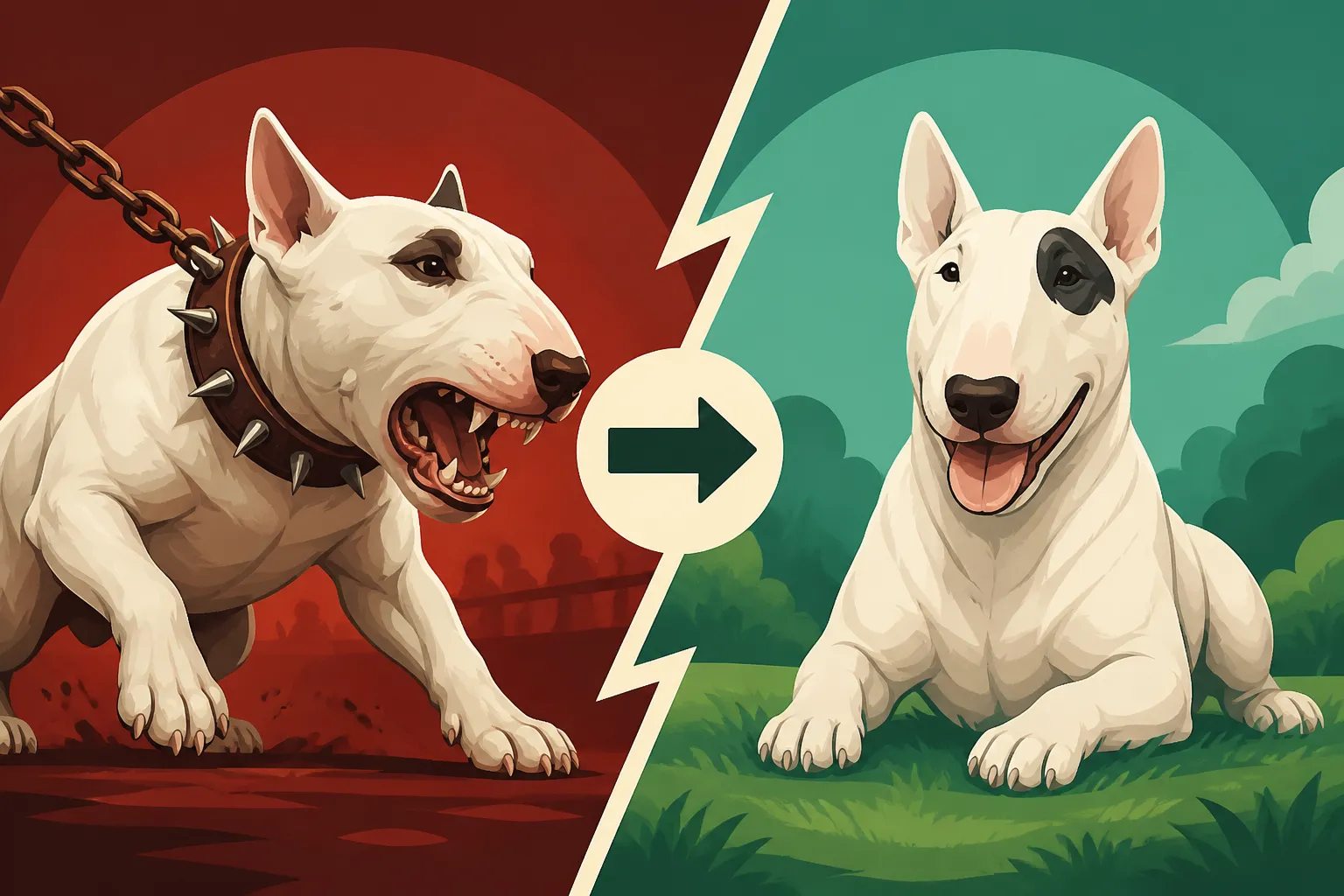
A fighting ban did not instantly erase the Bull Terrier’s association with blood sports or transform every dog into a companion. The change was gradual: new laws pushed fighting out of public life, while breeders and owners increasingly valued a distinctive, manageable dog for the show ring and home. This guide explains what changed, what did not, and how the modern breed emerged.
What the fighting ban actually prohibited
From public spectacle to illegal activity
In early nineteenth-century Britain, bull-baiting and bear-baiting drew crowds to organized events. Dogs were set against tethered animals, and the spectacle was treated as entertainment. Dog fighting also took place, sometimes in more private settings. These were distinct activities, even though both relied on dogs bred or selected for tenacity and a willingness to engage.
The Cruelty to Animals Act of 1835 prohibited bull-baiting and bear-baiting in Britain and addressed animal fighting more broadly. Its passage marked a major legal and cultural change, but a law does not instantly make a practice disappear. Enforcement could be difficult, and illegal contests continued in some places. The ban did, however, make organized blood sports increasingly unacceptable in public and riskier to stage.
For the Bull Terrier’s history, that distinction matters. The law did not create the breed, and it did not immediately turn fighting dogs into pets. Instead, it changed the conditions in which people could use and promote dogs associated with the older sporting world. To understand the dogs involved before and during that transition, it helps to look at What the Bull and Terrier Was.
Why a law did not change a breed overnight
A breed is not remade by legislation alone. Dogs already existed, breeders still had to decide which animals to mate, and people’s preferences changed over time. Some owners continued to prize courage and determination, qualities that could be associated with fighting, even as public fighting lost legitimacy. Others were drawn to dogs for companionship, appearance, or exhibition.
Illegal activity and lawful dog ownership could also coexist. A dog’s background did not tell you exactly how an individual owner would use it, and a change in the law did not automatically erase inherited traits or people’s interests. The transition was shaped by shifting customs, breeding decisions, public attitudes, and the growing appeal of showing dogs.
That is why it is too simple to say, “The ban made the Bull Terrier a companion.” It changed the social and legal landscape in which the breed developed. The move from blood sport associations toward public respectability took place through many choices made by breeders, exhibitors, and owners over decades.
How the Bull Terrier developed after blood sports declined
Breeders shaped a new public image
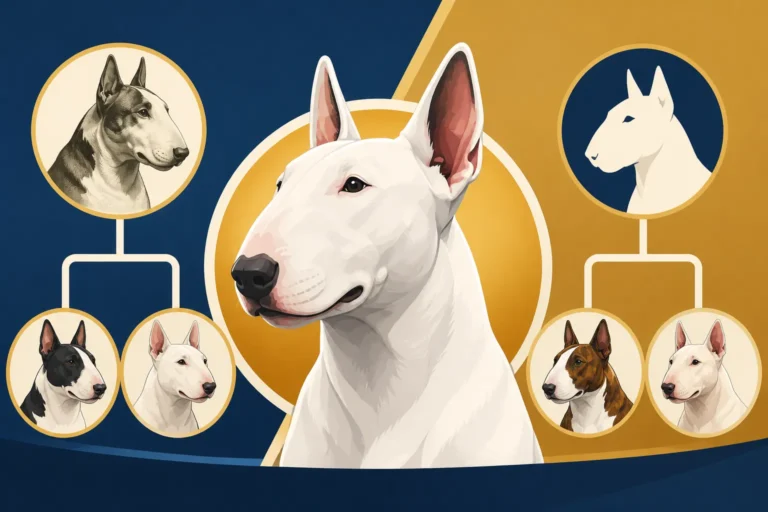
James Hinks, a Birmingham dog dealer and breeder, is closely associated with the development of the recognizable Bull Terrier in the mid-nineteenth century. He helped establish a more consistent type, including the striking white dogs that became known as “White Cavaliers.” These dogs were presented as stylish and respectable, a departure from the rougher image people associated with bull-and-terrier crosses.
Hinks’s role was not simply to breed away every trait connected to the breed’s past. Rather, he helped make a particular kind of dog appealing in a new setting: one that could be shown, admired, and kept as a companion. Appearance mattered, but so did presentation. A polished dog in the exhibition ring could challenge the assumption that every dog descended from bull-and-terrier stock belonged only in a fighting pit.
If you have heard that Hinks single-handedly created a completely new breed, it is worth treating that as a simplified version of a complicated history. The Bull Terrier emerged through a wider process of crossing, selection, and changing breed ideals. The question of temperament and historical purpose is explored further in Whether Hinks Bred the Fight Out of the Bull Terrier and Whether a Bull Terrier Was Bred to Start Fights.
The show ring offered an alternative
Dog shows gave breeders a lawful, public place to display and compare dogs. The famous Cremorne show of 1862 is often connected with Hinks and the rise of his white Bull Terriers. Showing created a different kind of status: owners could gain recognition for a dog’s look, movement, and quality rather than for success in an illegal contest. Read more about What Happened at the 1862 Cremorne Show.
This did not mean every early show dog was a gentle family pet, or that show breeding instantly replaced every other use of dogs. It did mean that a new audience could admire the breed for qualities visible in a public ring. The white coat, distinctive head, and strong outline helped the dog stand out. For context on the choices behind that striking appearance, see Why Hinks Wanted an All White Dog.
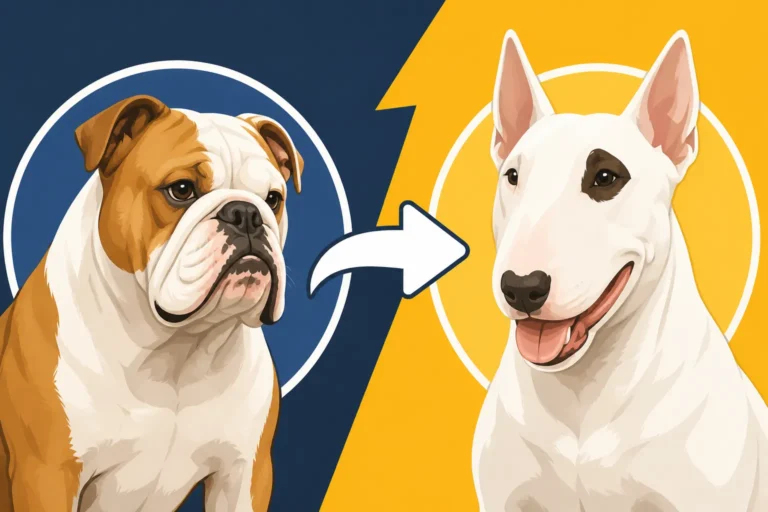
A show career also encouraged more deliberate selection. Breeders had reasons to produce dogs with recognizable, repeatable features, and buyers could seek animals for display or companionship. Over time, that helped separate the emerging Bull Terrier’s public identity from the older, less standardized bull-and-terrier type.
What changed and what remained
The breed’s reputation changed faster than its history
The shift away from blood sports helped make a companion-and-show image possible, but it did not erase the breed’s origins from public memory. People continued to associate Bull Terriers with toughness and courage. Those qualities could be admired in the show ring or described as part of a dog’s character, even while the violent uses that had helped shape earlier sporting dogs were increasingly condemned.
It is also important not to treat “fighting dog” as a complete description of every Bull Terrier or its ancestors. Breed histories often compress a range of dogs, purposes, and practices into one label. Some bull-and-terrier dogs were connected with fighting; others had different roles or were kept by owners for reasons that cannot be reduced to blood sport. The broader question is discussed in Whether Bull Terrier Was a Fighting Dog.
The law changed what people could do openly and what society was willing to celebrate. It did not provide a clean dividing line between a “fighting era” and a “companion era.” The two images overlapped for a long time, and changing the breed’s reputation depended on breeders and owners consistently presenting a different purpose.
A white show dog did not represent every Bull Terrier
Hinks’s white dogs became influential, but the breed’s development did not stop with one color or one breeder. The preference for white Bull Terriers shaped the breed’s early image, while later breeding broadened the colors and types represented. The white dog became a symbol of the new, more respectable identity, not proof that every dog had the same background or temperament.
Other breeds and breeding traditions also influenced how Bull Terriers developed. Histories sometimes describe the Bull Terrier as if one neat recipe produced it, but the development of a modern breed is usually less tidy. Distinctive features became more consistent over time through selective breeding, not through one single event or law.
The history of other white dogs in Britain is part of that wider picture. For an additional thread in the story, see When the English White Terrier Died Out. Taken together, these histories show how changing tastes and show culture could redirect breeding after blood sports became less socially acceptable.
What the fighting ban means for Bull Terriers today
Historical roots do not dictate an individual dog’s behavior
A breed’s history can help explain why people describe it as sturdy, energetic, or determined, but it cannot predict exactly how one dog will behave. Individual temperament is shaped by genetics, early experiences, training, health, and daily life. A Bull Terrier living in a home today is not a historical sporting dog, and it should be understood as an individual rather than judged by a simplified account of its ancestry.
That does not mean owners should ignore a dog’s needs. Many Bull Terriers are strong, active, and enthusiastic, so thoughtful handling, rewarding training, and suitable activities can make everyday life easier. If an owner is putting together a practical enrichment routine, a retailer such as Chewy may be one place to look for general supplies like durable toys or food puzzles. The important step is choosing items appropriate to the individual dog and supervising use, rather than assuming any product is indestructible.
For a closer look at how people’s ideas about purpose and reputation have shaped the breed, see Whether a Bull Terrier Was a Gentleman's Companion. The label “companion” is useful, but it should not suggest that every dog is automatically easy to live with or suited to every household. Consistent boundaries and appropriate activity matter more than a romantic version of the breed’s past.
The legacy is a transition, not a clean break
The fighting ban helped close the door on public blood sports and encouraged new ways to value dogs. Breeders such as Hinks contributed to a more recognizable Bull Terrier and promoted it in settings where appearance and presentation mattered. But the change was gradual, and the breed’s identity was shaped by more than one person, one show, or one law.
For modern owners, the most useful lesson is not that a Bull Terrier is destined to behave in a particular way because of its history. It is that public reputation can change while breed traits and individual needs still deserve careful, practical attention. If you are planning activities for a lively dog, Chewy may offer a range of everyday enrichment supplies, but a toy is only one part of a routine that should also include training, interaction, and rest.
The history also helps explain why arguments about the Bull Terrier can become emotionally charged: people may focus on different parts of the story, from the breed’s blood-sport associations to its development as a show dog and household companion. Keeping those chapters in view avoids both extremes—pretending the past never happened, or treating it as the whole story. For modern owners who need basic play and enrichment items, Chewy can be a convenient shopping option, but the right choice depends on the dog’s chewing habits, play style, and safety needs.
Disclaimer
This article is for general informational purposes only and does not constitute professional advice. Laws, prices and regulations vary by location and change over time. Consult a qualified professional for guidance on your specific situation.