Whether Hinks Bred the Fight Out of the Bull Terrier
A Bull Terrier’s fighting ancestry is real, but the story that James Hinks simply bred aggression out of the breed is too neat. Hinks helped shape the dog into a distinctive show and companion animal, yet no single breeder could erase inherited traits or guarantee a particular temperament. Here’s what the history supports, what remains uncertain, and what it means for Bull Terriers today.
What “breeding the fight out” actually means
The Bull Terrier’s roots predate James Hinks
The Bull Terrier did not begin as a finished breed created by one person. Its background is tied to the bull-and-terrier dogs of Britain, a varied group descended from crosses between bulldog-type dogs and terriers. Those dogs were associated with blood sports and other work that called for physical strength, tenacity, and determination. The exact mix varied, and the dogs were not all identical in looks or behavior.
That history matters because Hinks inherited a type of dog that already existed. He did not start with a blank slate, and “the Bull Terrier” was not yet a single, settled breed in the modern sense. For more background, see What the Bull and Terrier Was and Which Breeds Went Into the Bull Terrier.
By the time Hinks became associated with the breed, public tastes and expectations were changing. Organized blood sports had been outlawed in Britain, although illegal activity did not disappear overnight. Some dogs with fighting ancestry were increasingly kept and bred for other purposes, including companionship and exhibition. A change in use, however, does not automatically mean that every dog’s instincts or behavioral tendencies changed at the same pace.
“Bred the fight out” is a shorthand, not a proven event
The phrase suggests a clear before-and-after transformation: a fighting dog goes into Hinks’s kennel, and a gentle companion comes out. History is rarely that tidy. Selective breeding can shift the frequency of traits over generations, but it cannot reliably remove every behavior associated with a broad ancestry in one step. Nor does a breed’s origin tell you exactly how an individual dog will behave.
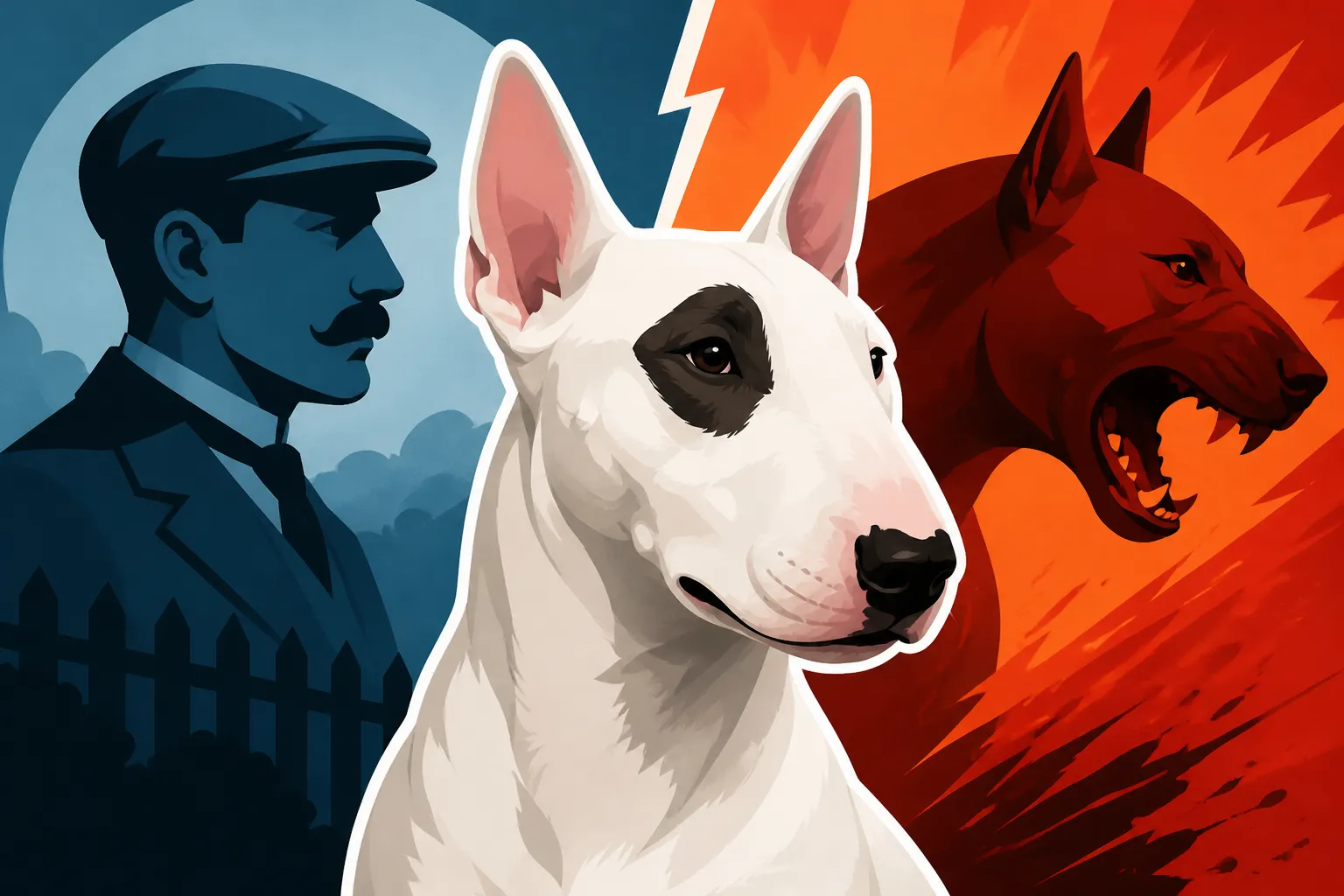
Hinks is often credited with refining the Bull Terrier’s appearance and helping establish the white dog that became strongly associated with the breed. He is also remembered for promoting a more polished, companionable image. But claims about his exact breeding choices and their behavioral results are harder to establish than the familiar story makes them sound. Who James Hinks Was offers more context on the breeder, while How a Fighting Ban Changed the Bull Terrier explores the broader shift in how such dogs were used.
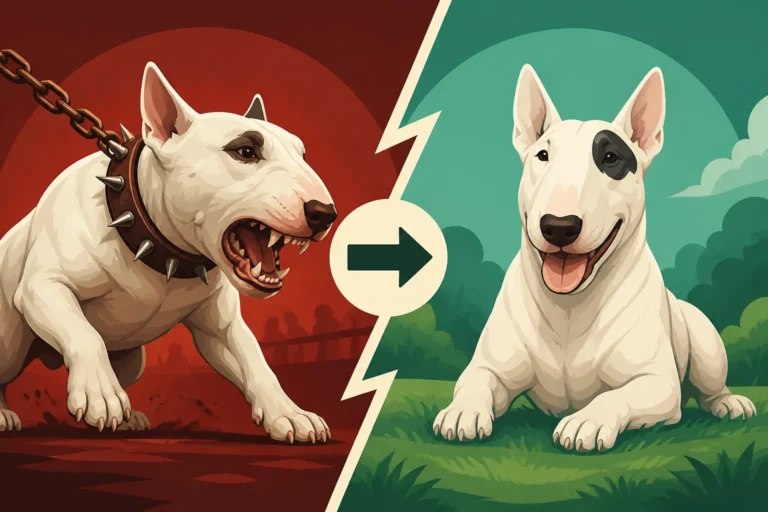
So, did Hinks breed the fight out of the Bull Terrier? It is more accurate to say he helped move the developing breed away from its rougher fighting-dog image and toward a show-ring and companion role. That is not the same as proving he eliminated fighting behavior from the dogs he bred, or that every later Bull Terrier inherited a uniformly gentle temperament.
What Hinks may have changed
He helped shape a new public image
Hinks is closely linked with the rise of the white Bull Terrier, a cleaner and more distinctive-looking dog than many of the rougher bull-and-terrier types that came before it. The breed’s appearance helped it stand apart in public and in the show ring. Its reputation shifted too: instead of being presented only through working or fighting ancestry, the Bull Terrier could be framed as a stylish companion.
The popular “White Cavalier” image captures that rebranding. It suggests a bold, spirited dog that could also be a respectable companion. The name is useful for understanding how people wanted to present the breed, but it should not be mistaken for a behavioral guarantee. Why the Bull Terrier Is Called the White Cavalier and What the White Cavalier Name Meant explain how that identity became part of the breed’s story.
A shift in public image can influence what breeders value. If buyers and exhibitors favor a particular appearance or a more manageable household temperament, breeders may select toward those preferences. Still, a slogan or a show-ring image cannot tell us exactly which traits Hinks prioritized in every mating, or how consistently those traits passed to later generations.
The Cremorne story is part of the legend
One well-known story connected to Hinks involves his dog Puss at the Cremorne show in 1862. The tale is often retold as evidence that Hinks’s dog was a composed, impressive animal, and it helps make the breeder’s transition from fighting ancestry to respectable show dog feel immediate and dramatic. But famous breed stories can grow more polished with each retelling.
The story is relevant to Hinks’s reputation, but it does not establish that he removed aggression from the breed. A single dog’s behavior in one remembered episode cannot prove what a whole population was like, much less demonstrate a lasting genetic change. For the story and its context, see What Happened at the 1862 Cremorne Show and What Puss the Bull Terrier Did at Cremorne.
| Claim | What the history supports | What it does not prove |
|---|---|---|
| Hinks helped develop the Bull Terrier | He is strongly associated with shaping and promoting the breed | That he created it alone from scratch |
| The breed moved toward companionship and exhibition | Its public image and uses changed over time | That every dog became gentle or non-confrontational |
| The Bull Terrier has fighting ancestry | Its earlier bull-and-terrier roots are linked to blood sports | That every modern Bull Terrier is aggressive |
| Hinks “bred the fight out” | He may have helped steer breeding and reputation away from that image | That he eliminated fighting-related tendencies in a defined, measurable way |
That distinction matters when people ask whether the Bull Terrier was a fighting dog. The historical answer involves ancestry, changing uses, and varied individual dogs—not a simple label that can be applied to every Bull Terrier then or now. Whether the Bull Terrier Was a Fighting Dog looks at that question in more detail.
What the history means for Bull Terriers now
Ancestry is not a temperament forecast
A Bull Terrier’s historical background is worth knowing, but it cannot tell you everything about the dog in your home. Temperament is shaped by multiple influences, including inherited tendencies, early development, health, learning, and the environment. Two dogs of the same breed can differ in how they respond to unfamiliar dogs, handling, excitement, or frustration.
It is also important to separate traits. A dog can be physically strong, determined, energetic, or persistent without being aggressive toward people. And a friendly dog can still need thoughtful management around other animals, high-arousal play, or situations where it struggles to disengage. A breed’s history is context—not a reliable individual assessment.
If you are considering a Bull Terrier, ask about the parents’ behavior and the breeder’s approach to raising puppies, not just the story of the breed. Meet adult dogs if you can, and think honestly about your own experience, routines, and ability to manage a powerful, lively companion. What People Get Wrong About the Bull Terrier discusses some of the assumptions that can obscure what living with one is actually like.
Modern care is about meeting the dog in front of you
For current owners, the useful question is less “Did Hinks breed the fight out?” and more “What does my dog enjoy, and how can I guide that energy safely?” Regular training, clear household routines, and supervised interactions help you notice what your individual dog can handle. If play becomes too intense, take a calm break and redirect toward an activity your dog can do successfully.
Enrichment can also give a persistent, energetic dog an appropriate outlet. Food puzzles, scent games, short training sessions, and durable, supervised chew options may help occupy a dog that is restless or easily bored. Some owners browse Chewy for puzzle feeders or chew products, but the right choice depends on the dog’s size, chewing style, and safety needs. No toy should be treated as indestructible, and dogs should be watched with items they might break or swallow.
Chewy may also be useful for finding routine supplies such as treat pouches for reward-based training or cleaning products for the inevitable muddy-paw day. The brand is not a substitute for training advice, veterinary care, or choosing products carefully. If your dog shows persistent fear, escalating aggression, or behavior that feels unsafe, ask your veterinarian for guidance and consider working with a qualified behavior professional.
The most balanced view is that Hinks helped turn a developing dog type toward a new identity as a show dog and companion, but “bred the fight out” overstates what can confidently be claimed. The Bull Terrier’s past informs the breed’s story; it does not predetermine the character of every dog. For a broader look at the breed’s development, Where the Bull Terrier Comes From is a useful next read. Owners looking for everyday enrichment ideas can also browse Chewy’s selection while checking each product’s suitability and supervising its use.
Disclaimer
This article is for general informational purposes only and does not constitute professional advice. Laws, prices and regulations vary by location and change over time. Consult a qualified professional for guidance on your specific situation.