Whether a Bull Terrier Was Bred to Start Fights
It's a common, and frankly, deeply frustrating misconception to hear people whisper that Bull Terriers were "bred for fighting." You might even encounter this assumption when looking for housing or insurance, or simply when walking your beloved Bull Terrier in public. This guide aims to pull back the curtain on the breed's true history, dissecting the difference between their ancestral roots and the deliberate vision of their creator, James Hinks, to clarify once and for all what the Bull Terrier was actually bred for.
The Genesis of the Bull Terrier: Beyond the Pit
To understand the Bull Terrier, we have to travel back in time, well before the breed as we know it existed. The lineage is certainly entwined with a darker period of canine history, but it’s crucial to distinguish between a historical type of dog and the specific, refined breed developed later. People often lump all "bully breeds" together without understanding their individual histories, and it does a huge disservice to the nuances of each.
The Ancestral Bull and Terrier Crosses
Before the formal Bull Terrier came into being, there were many "bull and terrier" type dogs. These weren't standardized breeds with carefully kept pedigrees as we understand them today. Instead, they were crosses bred for very specific, often brutal, purposes. Their primary function revolved around the blood sports popular in 18th and 19th century Britain: bull-baiting, bear-baiting, and eventually, dog fighting. These dogs were selected for their incredible tenacity, strength, courage, and a powerful bite. They were gritty, tough, and unwavering in a fight, qualities that, while admirable in a different context, were exploited for cruel entertainment.
Imagine the gritty streets of industrial England, where these hardy, powerful dogs were the canine gladiators of their time. They were built for endurance and a relentless drive, often a mix of Old English Bulldogs and various terriers, designed to grip and hold. These ancestral dogs contributed heavily to the physical prowess and determined spirit we see in the modern Bull Terrier. However, their temperament was highly tuned for combat with other animals, a far cry from the companion dog Hinks later envisioned. These were utilitarian working dogs of a harsh era, and their existence often hinged on their ability to perform in violent spectacles. For more insight into these predecessors, you can read What the Bull and Terrier Was.
James Hinks' Revolutionary Vision
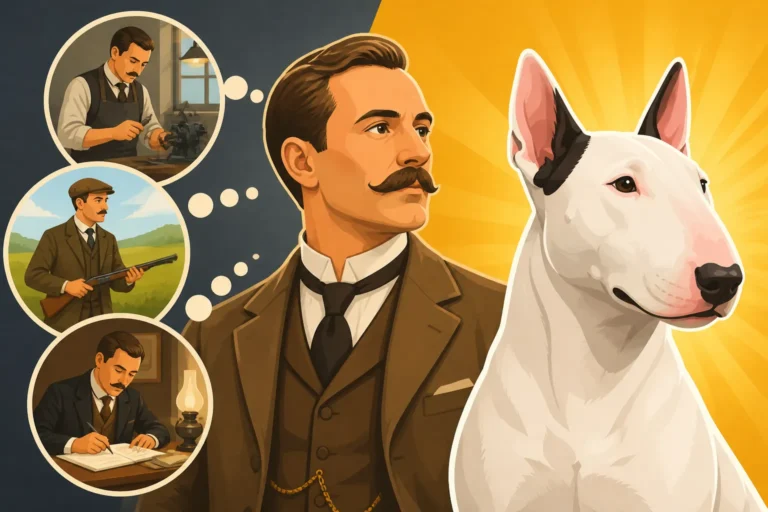
Enter James Hinks, a dog dealer from Birmingham, England, in the mid-19th century. Hinks was not simply perpetuating the breeding of fighting dogs. He had a revolutionary vision: to create a gentleman's companion. His ambition was to develop a dog that retained the courage and physical power of its ancestors but possessed a refined appearance, a calm demeanor, and an unwavering loyalty to its human family, rather than a penchant for dog-on-dog aggression. He wanted a dog that could walk proudly at a gentleman's side, a symbol of elegance and strength.
Hinks started with the existing bull-and-terrier crosses but introduced other breeds to achieve his ideal. It's widely believed he incorporated the now-extinct English White Terrier for its clean, all-white coat and elegant lines, and the Dalmatian, likely contributing to the unique head shape and active temperament, though some theorize about other breeds like Greyhounds or Pointers. His goal was to breed out the overt fighting tendencies and produce a dog that was physically imposing but genteel in nature. He essentially took the raw materials of formidable working dogs and sculpted them into something entirely new – a true companion animal. Hinks's focus was on an athletic, handsome dog with an even temper and distinctive looks. To learn more about his influence, see Who James Hinks Was and Which Breeds Went Into the Bull Terrier.
The "White Cavalier": A New Purpose Emerges
Hinks's creation wasn't just a physical transformation; it was a rebranding, a deliberate shift in purpose and perception. He actively worked to showcase his Bull Terriers as noble companions, a far cry from the brutal pit fighters of the past. This new image was carefully cultivated and successfully embraced by a changing society.
Demonstrating a Gentleman's Companion
Hinks understood that simply breeding a new dog wasn't enough; he had to prove its worth and demonstrate its altered temperament. He actively campaigned to establish his Bull Terriers as sophisticated companions, well-suited for the emerging middle and upper classes who valued loyalty and a striking appearance over fighting prowess. These dogs were often seen accompanying their owners on walks, at markets, and even in polite society, a deliberate contrast to the grime and violence associated with their predecessors.
The most famous anecdote illustrating this shift comes from the 1862 Cremorne Gardens show in London. Hinks reportedly accepted a wager that his pure white Bull Terrier, Puss, could defeat an older, more established fighting dog. While the story varies in detail, the popular version claims Puss emerged victorious without a scratch, proving her courage while also showcasing a controlled, almost gentlemanly, fighting style that avoided injury. This event, whether entirely true or embellished over time, solidified the "White Cavalier" image – a dog that was powerful and brave but didn't seek out conflict, instead performing admirably when challenged. This narrative was vital in repositioning the breed in the public eye. You can delve deeper into this story by reading What Happened at the 1862 Cremorne Show. The very moniker "White Cavalier" speaks volumes about the refined image Hinks sought to project. What the White Cavalier Name Meant details this aspiration.
The Impact of Fighting Bans
The societal landscape played a significant role in the Bull Terrier's evolution. Bull-baiting was outlawed in Britain in 1835, and while underground dog fighting continued for decades, the moral and legal tide was turning against such cruel spectacles. As these brutal "sports" became increasingly illegal and socially unacceptable, the demand for dogs bred purely for fighting diminished. Breeders who wanted to continue their work had to adapt, either by refining their breeds for other purposes or by risking legal repercussions.
The Bull Terrier, with Hinks's deliberate emphasis on companionship and aesthetics, was perfectly positioned for this transition. Unlike some other breeds whose primary identity remained tied to fighting, the Bull Terrier found a new, legitimate purpose in the show ring and as a family pet. The legal changes effectively pushed breeding efforts away from overt aggression and towards temperament and conformation. It meant that a dog’s beauty and disposition became paramount, rather than its ability to inflict damage. This cultural shift was a lifeline for breeds like the Bull Terrier, allowing them to shed the violent associations of their past and embrace a new future. For more on this, check out How a Fighting Ban Changed the Bull Terrier.
The Bull Terrier Temperament: Loyalty Over Lacerations
One of the greatest injustices done to the Bull Terrier is the perpetuation of the myth that they are inherently aggressive or dangerous. While they are undeniably strong and have a tenacious spirit, their true temperament, when properly raised, is one of unwavering loyalty and boundless affection.
A Dog Bred for Comradeship, Not Conflict
Modern Bull Terriers are renowned for their people-loving nature. They are often described as having an almost clownish personality, full of antics and a mischievous sparkle in their unique triangular eyes. Many owners affectionately call them "a three-year-old in a dog suit" due to their playful, sometimes boisterous, approach to life. They thrive on human companionship and are known to form incredibly strong bonds with their families, often preferring to be involved in every aspect of household life. They are not content to be left outside or ignored; they want to be part of the action, leaning against you on the sofa, following you from room to room, and offering endless entertainment with their goofy charm.
Their affection is often expressed with their whole body – a full-speed "zoomie" culminating in a head-butt, or an enthusiastic lean that could knock you off balance if you're not ready! This exuberance is a testament to their joy and love for their people, not an indication of aggression. A well-socialized and properly trained Bull Terrier is a devoted, engaging, and utterly charming member of the family, eager to please and always ready for an adventure or a cuddle. Their history is one of developing a strong bond with humans, as you can see in Whether the Bull Terrier Was a Gentleman's Companion. For a deeper dive into their character, explore What a Bull Terrier's Temperament Is Really Like.
High Energy, Strong Prey Drive, and Dog-Dog Dynamics
It’s important to acknowledge that while Hinks specifically bred away from dog-on-dog fighting, Bull Terriers still possess some inherent traits from their terrier and bulldog ancestry. They have a strong prey drive, which means smaller, fast-moving animals like squirrels, rabbits, or even cats (if not raised with them) can trigger a chase response. This isn't aggression; it's instinctual behavior rooted in their historical function as vermin hunters.
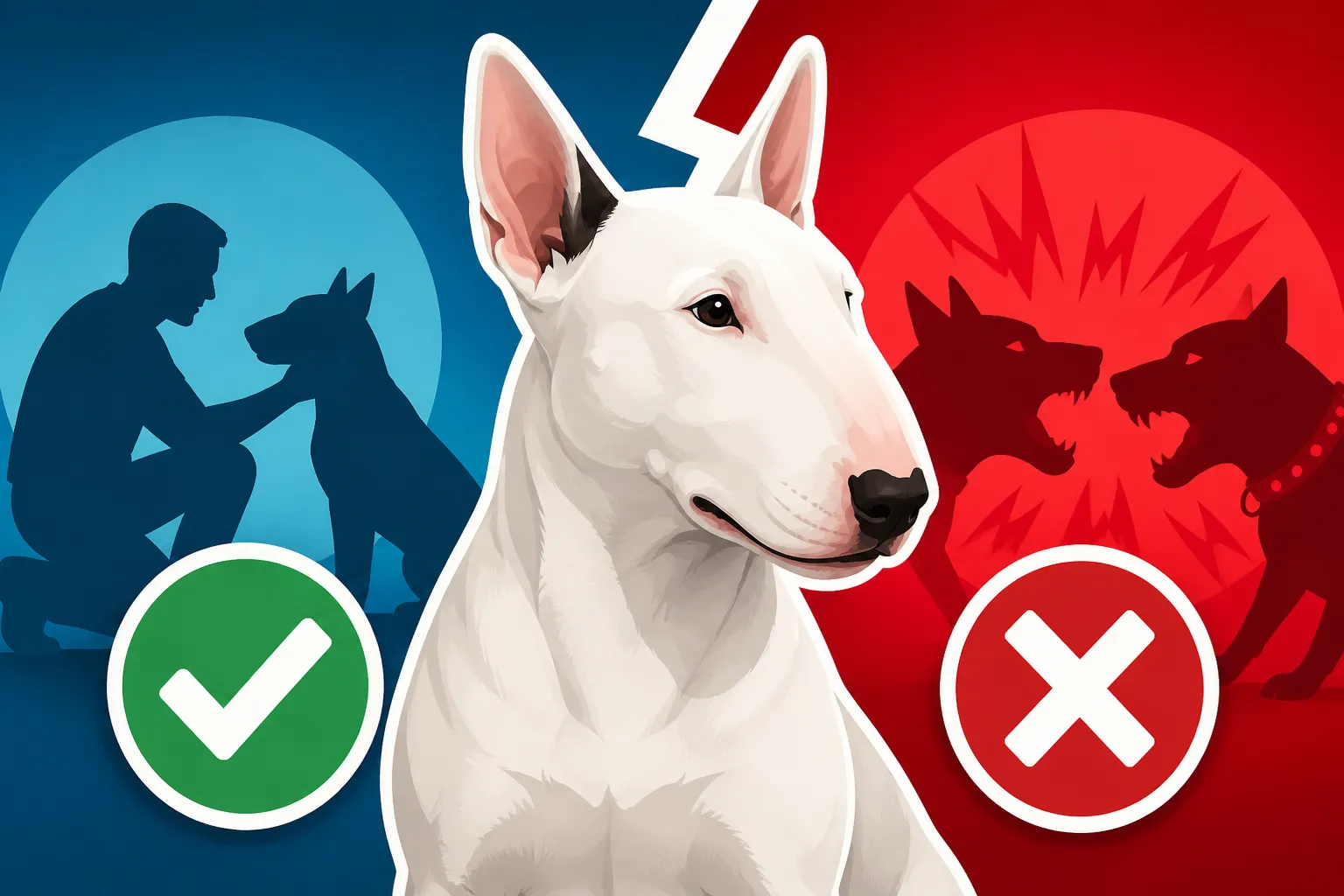
Additionally, like many terrier and bully breeds, Bull Terriers can have varying degrees of dog-dog tolerance. Some are perfectly happy to coexist with other dogs, especially if introduced thoughtfully and socialized from a young age. However, some may exhibit same-sex aggression, particularly intact males. This isn't about being "bred to start fights" but rather a natural assertiveness and confidence that can lead to conflicts if not managed with consistent training and responsible ownership. It requires owners to be vigilant, provide appropriate socialization, and understand their individual dog's limits. It means that while they might not start a fight, they are absolutely capable of finishing one, which is why proper introductions and supervision are paramount. Living with a Bull Terrier alongside other dogs takes thoughtful management, as discussed in A Bull Terrier with Other Dogs.
Debunking the Myths: Separating History from Hype
The enduring myth that Bull Terriers were bred to start fights often stems from a misunderstanding of their history and a broad-brush application of the term "bully breed." It's vital to differentiate between genetic predisposition for certain traits and the deliberate intent to create an aggressive animal.
The Misleading "Bully Breed" Label
The term "bully breed" itself is a bit of a loaded one. It broadly refers to a group of dogs that share ancestry with the Old English Bulldog, often including breeds like American Pit Bull Terriers, Staffordshire Bull Terriers, and of course, the Bull Terrier. While these breeds share a common history rooted in bull-baiting and dog fighting, their subsequent development and modern standards have often diverged significantly. The Bull Terrier, as established by Hinks, was deliberately steered away from this path, focusing instead on conformation and companionship.
The public often conflates the term "bully breed" with inherent aggression, fueled by sensationalized media and breed-specific legislation. However, a dog's behavior is a complex interplay of genetics, environment, socialization, and training. To label an entire group of breeds as inherently dangerous due to a distant, often misinterpreted, past is a gross oversimplification. Understanding the distinct historical intent behind the Bull Terrier's creation helps to dismantle this harmful stereotype. We must remember that Hinks himself was trying to move away from the fighting ring. If you want to understand more about the wider group, see Whether a Bull Terrier Is a Bully Breed.
Understanding Genetic Predispositions vs. Intentional Breeding for Aggression
It’s true that Bull Terriers, like their ancestors, possess a robust physique, strong jaws, and a determined character. These traits made their forebears excellent at tasks requiring strength and grit. However, there's a world of difference between a dog having physical capabilities and instincts (like a strong prey drive or self-confidence around other dogs) and being intentionally bred to be an unprovoked, indiscriminate aggressor. Hinks's goal was precisely the opposite: to harness those physical attributes for a noble, loyal companion.
Modern reputable Bull Terrier breeders focus on health, conformation, and, critically, stable temperament. They select for dogs that are friendly, outgoing, and good-natured, not those with a tendency towards unprovoked aggression. While a Bull Terrier will likely always possess a certain tenacity and strength of will – traits that make them so appealing to their dedicated owners – these are channeled through training and socialization into a confident, playful, and protective nature, rather than an aggressive one. The key is understanding that while the potential for strength is there, the intent of modern breeding and responsible ownership is to foster a loving family member, not a fighter.
The Modern Bull Terrier: Family Member and Athlete
Today's Bull Terrier has firmly cemented its place as a beloved companion, a star in the show ring, and an enthusiastic participant in various dog sports. The breed has moved generations beyond its origins and the early challenges of Hinks's vision.
From Show Ring to Sofa
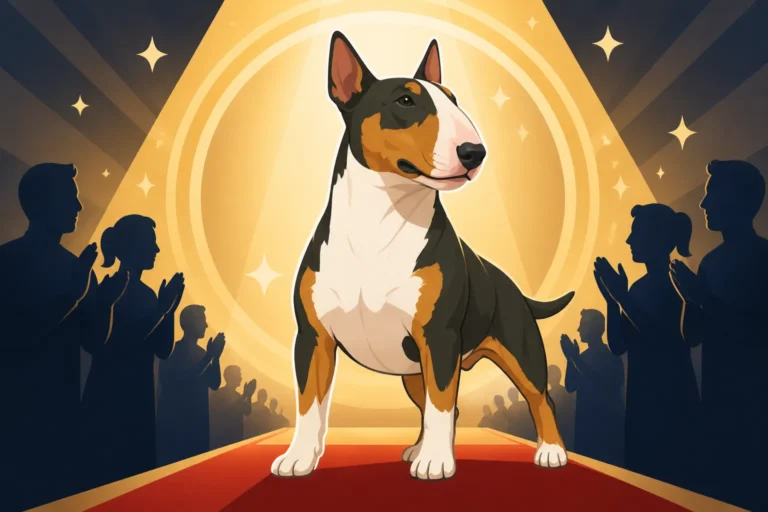
The journey of the Bull Terrier from the gritty streets of industrial England to the pampered comfort of a family sofa is remarkable. They are highly valued in the conformation ring for their distinctive egg-shaped head, powerful build, and elegant lines. Beyond their striking appearance, Bull Terriers are also increasingly seen excelling in dog sports such as obedience, agility, and rally. Their intelligence, coupled with their stubborn yet eager-to-please nature (when they see the point!), makes them capable competitors.
But perhaps most importantly, Bull Terriers are cherished family members. They adapt well to various living situations, provided they receive ample exercise and mental stimulation. Their high energy needs mean they thrive with active families who can provide daily walks, playtime, and enrichment activities. They love to be involved, whether it's lounging on the couch during movie night or romping in the backyard. Their endearing quirks and unwavering loyalty make them truly unique companions, often forming deep, almost familial, bonds with their human counterparts. People who truly get to know the breed understand the depth of their affection and the joy they bring. Many preconceptions fall away once you truly share your life with one, as highlighted in What People Get Wrong About the Bull Terrier.
The Owner's Responsibility
Ultimately, the behavior of any dog, regardless of breed, is profoundly influenced by its upbringing. A Bull Terrier, like any powerful dog, requires responsible ownership, consistent training, and early socialization to thrive. They are not a "set it and forget it" breed; they need commitment and understanding.
Choosing a reputable breeder is the first critical step. A good breeder prioritizes health and temperament, carefully selecting breeding pairs to produce puppies with stable, friendly dispositions. They will also screen for common health issues and provide early socialization for their puppies. Once a Bull Terrier comes home, it's the owner's responsibility to continue that socialization, exposing the puppy to a variety of sights, sounds, people, and appropriate dog interactions from a young age. Consistent, positive reinforcement training is essential to channel their intelligence and energy, teaching them good manners and reinforcing desired behaviors. With this kind of foundation, a Bull Terrier blossoms into a confident, loving, and well-adjusted companion, completely dispelling the outdated and unfair notion that they were bred to fight. Their future, and their reputation, rests in the hands of informed and dedicated owners.
Disclaimer
This article is for general informational purposes only and does not constitute professional advice. Laws, prices and regulations vary by location and change over time. Consult a qualified professional for guidance on your specific situation.