What the Old English Bulldog Gave the Bull Terrier
Many Bull Terrier owners wonder about the origins of their quirky, powerful companions. It's easy to get lost in the whirlwind of myths and legends surrounding the breed's development, especially when trying to understand where that incredible strength and unique character came from. This guide will uncover the significant contributions of the Old English Bulldog to the Bull Terrier, shedding light on how this now-extinct breed shaped the distinctive physical features and spirited temperament we cherish in Bull Terriers today.
A Glimpse into the Past: The Old English Bulldog's Legacy
Before we talk about the Bull Terrier, we really need to cast our minds back to its ancestor, the Old English Bulldog. This wasn't the squat, wrinkly companion we know as a Bulldog today, but a formidable, athletic animal that was central to a very different kind of society. Understanding this foundational breed is crucial to appreciating the roots of our beloved Bull Terriers.
The Original 'Bully' Breed: Describing the Old English Bulldog
The Old English Bulldog was a true force of nature, far removed from its modern, often gentle namesake. Standing taller and leaner than today's Bulldog, it possessed immense power, a deep chest, and a jaw that could lock on with incredible force. Bred specifically for the brutal "sport" of bull-baiting, these dogs were designed for tenacity and strength, holding onto a bull's nose or throat for extended periods. They were courage incarnate, with a low center of gravity, powerful neck, and a fearless attitude that bordered on reckless.
Their appearance reflected their purpose: broad shoulders, muscular legs, and an undershot jaw that allowed them to breathe while gripping. While their lives were often harsh, they were also admired for their unwavering determination and grit. This wasn't a pet in the modern sense; it was a working animal, bred for a very specific, demanding job. You can imagine the kind of raw power and unyielding spirit that flowed through their veins, traits that would later be highly valued in the creation of other breeds.
Beyond the Pit: The Bulldog's Early Influence on Working Dogs
While bull-baiting was eventually outlawed, the Old English Bulldog's influence didn't simply vanish. Its unique combination of strength, courage, and loyalty made it a prized contributor to the development of many other working breeds, particularly those used for guarding, hunting larger game, or even in early police work. Its physical prowess and mental fortitude were seen as invaluable assets for producing dogs capable of great physical feats and unwavering resolve.
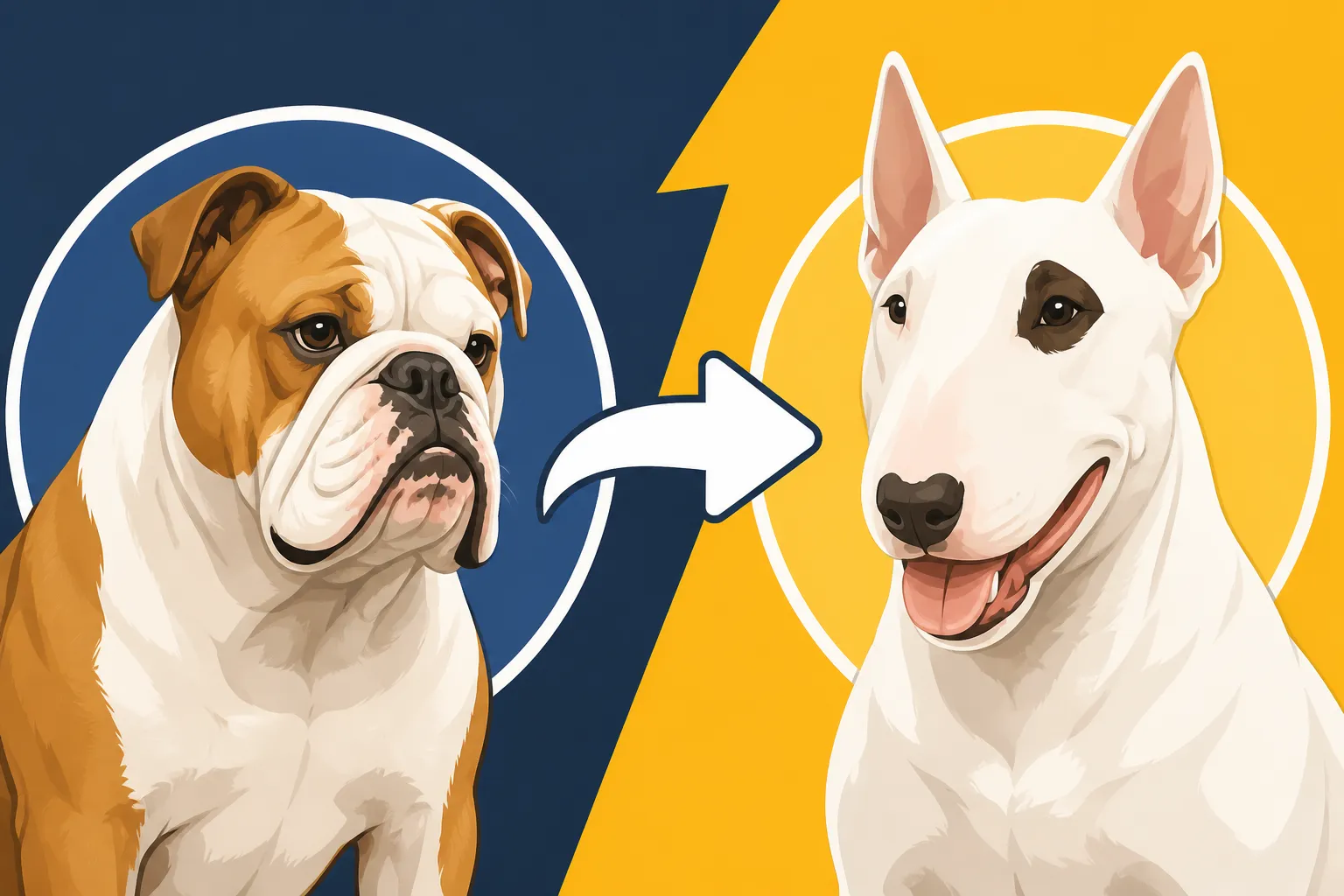
The breed was often crossed with various terriers to create what were known as "bull and terrier" types. These crosses sought to combine the Bulldog's sheer strength and stoicism with the terrier's quickness, agility, and keen hunting drive. It was these early bull and terrier crosses that laid the groundwork for many modern breeds, including the Staffordshire Bull Terrier and, of course, our own Bull Terrier. This lineage highlights how deeply ingrained the Old English Bulldog's characteristics became in the fabric of subsequent generations of dogs, demonstrating a profound and lasting legacy that extended far beyond its initial, grim purpose.
The Fusion: Old English Bulldog Meets the Terrier Spirit
The tale of the Bull Terrier is one of deliberate creation, where the raw power of the Old English Bulldog was carefully blended with the nimbleness and fire of the terrier breeds. This fusion was driven by a specific vision to create a dog that was both formidable and refined, a true gentleman's companion with unmatched courage.
James Hinks' Vision: The Desire for a More Refined Warrior
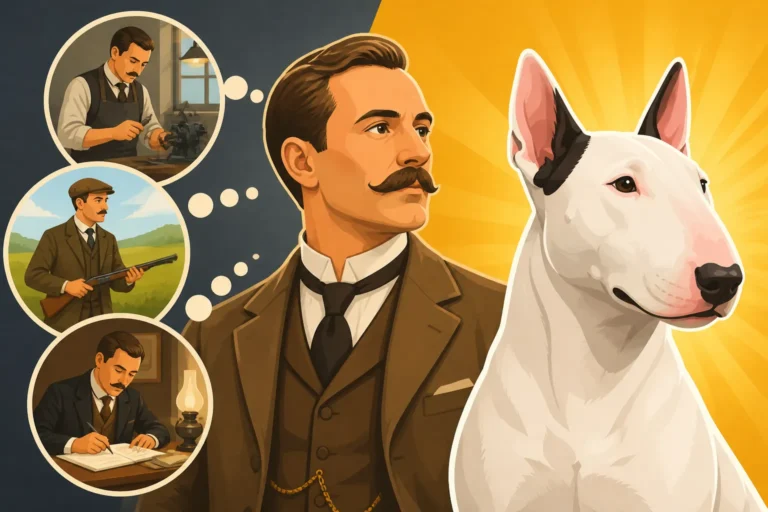
Enter James Hinks, a true visionary from Birmingham in the 1860s. Hinks admired the strength and courage of the bull and terrier crosses, but he saw potential for something more elegant, more distinctive. He envisioned a dog that retained the formidable spirit of its bulldog ancestors but possessed a cleaner outline, a more symmetrical head, and a gentler demeanor suitable for companionship, earning it the moniker "The White Cavalier." James Hinks Built the Bull Terrier in Birmingham in the 1860s
Hinks began selectively breeding, primarily using white Old English Bulldogs, which were already gaining favor, and crossing them with the English White Terrier (now extinct), and possibly other breeds like the Dalmatian for elegance and a sense of refinement. The goal wasn't to create a fighting dog, but a companion that, while looking sharp and brave, was not inherently aggressive. He wanted a dog that could win without a scratch, relying on skill and a composed temperament. This quest for refinement meant softening some of the more extreme "fighting dog" traits while preserving the core strength and courage inherited from the Old English Bulldog. The raw, unyielding power of the Bulldog was a non-negotiable foundation, providing the substance needed for a robust and resilient dog.
Strength, Substance, and Stamina: Physical Traits Inherited
When you look at a Bull Terrier today, you can still see the indelible mark of the Old English Bulldog in its powerful physique. The broad, muscular chest, reminiscent of its heavyweight ancestor, speaks of incredible lung capacity and stamina. This is a dog built for endurance and power, not just quick bursts of speed. Its compact, well-muscled body and sturdy bone structure are direct inheritances, giving the Bull Terrier its characteristic "powerhouse" appearance.
Perhaps the most striking inheritance is the Bull Terrier's formidable jaw. Why a Bull Terrier's Jaw Is So Powerful The Bull Terrier's deep, powerful underjaw and strong teeth are a clear echo of the Old English Bulldog's ability to grip and hold. This isn't just for show; it's a functional structure that allowed the Bull Terrier's ancestors to perform their original duties. Even today, this jaw gives Bull Terriers that distinctive, determined expression and the capability to make short work of less-than-durable chew toys. When you're browsing for toys on sites like Chewy, you'll quickly realize that for a Bull Terrier, you need something truly robust to stand up to that inherited strength!
The "Game" Spirit: Temperamental Contributions
Beyond the physical, the Old English Bulldog also contributed significantly to the Bull Terrier's core temperament, particularly what breeders often refer to as "gameness" or "heart." This isn't about aggression, but rather an unshakeable determination, courage, and a powerful will to please its owner, often coupled with a healthy dose of stubbornness. What a Bull Terrier's Temperament Is Really Like
Bull Terriers are known for their fearlessness, often approaching new situations with a confident curiosity. This inherited trait means they rarely back down from a challenge, be it a tricky puzzle toy or a particularly complex training command. This indomitable spirit, born from generations of Bulldogs, means a Bull Terrier will often put its whole heart into whatever it does. This courage, however, comes with the caveat that they can also be headstrong, sometimes deciding a task is "optional" if they don't see the immediate benefit. It’s that deep-seated tenacity, the drive to see something through, that defines their spirit, a trait directly traceable to their Bulldog ancestry.
Shaping the Modern Bull Terrier: Enduring Bulldog Traits
Even though the Old English Bulldog is long gone, its genetic blueprint lives on in every Bull Terrier. The unique combination of power, distinctive facial features, and a certain unyielding spirit are all direct testaments to this foundational ancestry.
The Unmistakable Build: How Bulldog Proportions Still Show
Take a good look at a Bull Terrier today, and you'll immediately notice its substantial, muscular frame. It's a powerhouse, a solid mass of muscle and bone that projects an undeniable air of strength. This robust, compact build, with its broad chest and powerful hindquarters, is a direct inheritance from the Old English Bulldog. While Hinks refined the breed's lines, making it more agile and aesthetically pleasing, he was careful not to sacrifice the underlying substance that made the Bulldog so formidable.
This isn't a delicate breed; it's built like a tank, capable of immense physical feats. This strong, balanced physique allows the Bull Terrier to move with both power and surprising grace, though their sheer momentum can be a force to reckon with during a playful zoomie session! You can still see the blueprint of those sturdy, unyielding ancestors in every aspect of their conformation, from the broadness across their shoulders to the spring of their ribs. The term "power in repose" truly applies, as even when relaxed, their build suggests an underlying strength and readiness.
That Famous Jaw: A Testament to Bulldog Ancestry
There's no mistaking a Bull Terrier's head, especially that powerful, deep jaw. This is arguably one of the most visible and functional legacies of the Old English Bulldog. The Bull Terrier's strong, punishing bite and broad muzzle allow for an impressive crushing power, far exceeding what you might expect from a dog of its size. This feature, honed for gripping, meant its ancestors could hold onto their quarry without relenting.
Today, this jaw is less about holding bulls and more about holding onto beloved toys, but the strength remains. It’s why Bull Terrier owners often find themselves investing in "indestructible" toys, as anything less durable quickly falls victim to that inherited gripping power. Whether it's a solid rubber chew or a tough rope, if you find yourself needing to replace dog toys often, you're experiencing a direct lineage to that formidable Bulldog bite. It’s a trait that truly sets them apart and is a constant reminder of the physical capabilities embedded in their genes. For durable options, many owners turn to retailers like Chewy, knowing they'll need something extra tough for their strong-jawed companions.
Temperament and Tenacity: Bulldog Traits in Today's Bullie
Beyond their looks, the Bull Terrier's temperament also carries a strong Bulldog imprint. That famed tenacity, often interpreted as stubbornness, is a direct inheritance. Bull Terriers have a strong will and a confident, sometimes cheeky, personality. They are incredibly loyal and devoted to their families, often forming deep bonds. This steadfast loyalty and courage are hallmarks of their Bulldog ancestors, who were known for their unwavering dedication once committed to a task.
However, this tenacity also means they can be incredibly single-minded. If a Bull Terrier decides something is worth pursuing, whether it's a squirrel in the yard or a dropped treat, they will apply themselves with remarkable determination. While this can make training a challenge at times – they truly need to believe it's their idea or worth their effort – it also makes them incredibly resilient and enduring companions. They are playful, sometimes clownish, but always with an underlying gravitas and fearless spirit that shouts "Bulldog." This blend of playful charm and unwavering resolve is what makes the Bull Terrier so captivating and unique. Why a Bull Terrier Is Called a Clown
Dispelling Myths and Appreciating the Ancestry
Understanding the Old English Bulldog's role helps us appreciate the Bull Terrier more deeply, but it also allows us to dispel common misconceptions that often follow breeds with such powerful ancestry.
Not Just a Fighter: The Bulldog's Broader Contributions
It's tempting, when discussing a breed used in bull-baiting, to focus solely on the "fighting dog" aspect. However, this simplifies the historical reality and overlooks the broader contributions of the Old English Bulldog. While their courage and strength were exploited in barbaric sports, these same traits also made them invaluable working dogs in other capacities. They were used by butchers and farmers for managing unruly livestock, and their tenacity was prized in some hunting roles. What the Bull and Terrier Was
The qualities of loyalty, determination, and resilience that they possessed were not solely tied to aggression. In fact, many accounts suggest these dogs, when not provoked or placed in adversarial situations, were quite devoted to their handlers. James Hinks, in particular, sought to highlight and enhance these companionable traits, proving that a dog with a powerful lineage could also be a sophisticated and gentle family member. The "White Cavalier" ideal was precisely about celebrating the Bulldog's noble qualities without endorsing its darker past. The White Cavalier: Why the Bull Terrier Never Started Fights
Responsible Breeding Today: Honoring the Past While Securing the Future
Modern Bull Terrier breeders understand the importance of this lineage. While appreciating the historical context, their focus is firmly on the future, prioritizing health, stable temperament, and adherence to the breed standard. The goal is to produce Bull Terriers that are excellent companions, showcasing the best of their ancestry without any of the negative associations.
Reputable breeders conduct extensive health testing for conditions common in the breed, such as hereditary nephritis, heart issues, and deafness, ensuring that dogs are bred responsibly. What a Bull Terrier Breeder Should Have Tested They also carefully evaluate temperament, aiming for the stable, confident, and affectionate nature that makes Bull Terriers such beloved family members. The physical characteristics inherited from the Old English Bulldog – the powerful build, the distinctive head – are valued for their beauty and uniqueness, not for any vestige of a fighting past. When considering adding a Bull Terrier to your family, researching breeders who focus on these aspects is crucial, ensuring you welcome a well-adjusted dog that honors its ancestry in the best possible way.
Here’s a look at how key traits were passed down:
| Trait | Old English Bulldog (Historical) | Modern Bull Terrier (Inherited) |
|---|---|---|
| Build & Substance | Muscular, powerful, low center of gravity, deep chest, heavy bone. | Robust, compact, well-muscled body, broad chest, sturdy bone. |
| Jaw & Muzzle | Extremely powerful, broad, undershot jaw for gripping and holding. | Strong, deep underjaw, powerful bite, characteristic "Roman finish." |
| Temperament | Fearless, tenacious, high pain tolerance, unwavering determination. | Courageous, confident, sometimes stubborn, loyal, resilient. |
| Head Shape | Broader, more pronounced stop, less refined. | Unique "egg-shaped" head, often referred to as a "downface." |
| Purpose | Bull-baiting, livestock management. | Companion, show dog, various dog sports. |
| Overall Impression | Raw power, unyielding. | Refined power, distinctive elegance, playful spirit. |
This table clearly illustrates how certain core attributes were refined and integrated into the Bull Terrier, transforming a purely working dog's features into the unique characteristics of a companion breed. The elegance of the modern Bull Terrier is a testament to the careful selection and breeding over generations, but the underlying strength and spirit are unmistakable echoes of its Bulldog forebears.
The legacy of the Old English Bulldog within the Bull Terrier is fascinating and profound. From their powerful physique and distinctive jaw to their unwavering courage and sometimes stubborn spirit, Bull Terriers carry the genetic echoes of their robust ancestors. Understanding this history not only gives us a deeper appreciation for this incredible breed but also helps us to cherish the unique blend of strength and charm that defines the Bull Terrier today.
Disclaimer
This article is for general informational purposes only and does not constitute professional advice. Laws, prices and regulations vary by location and change over time. Consult a qualified professional for guidance on your specific situation.