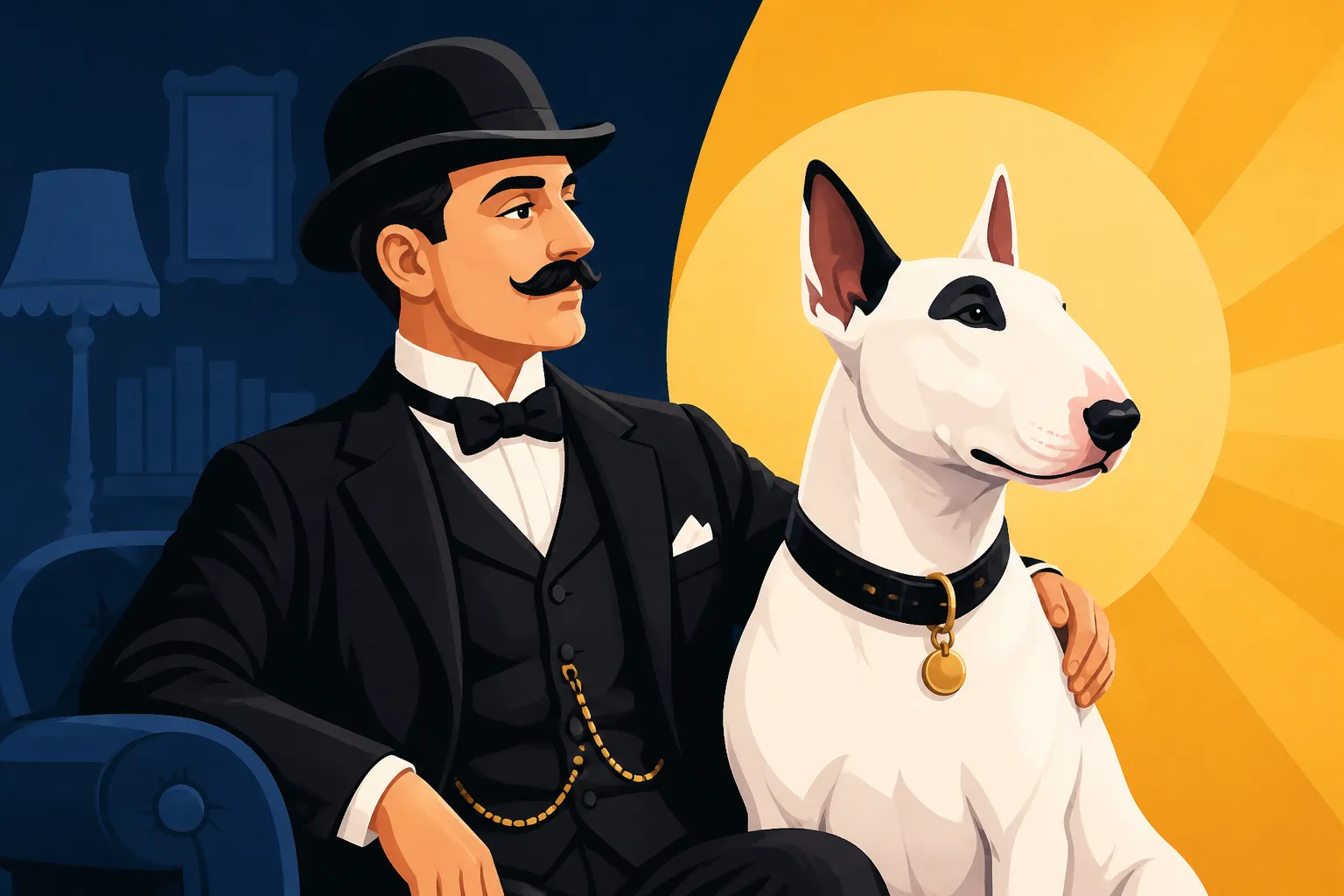
Whether a Bull Terrier Was a Gentleman’s Companion
A Bull Terrier’s fighting-dog ancestry can make its old “gentleman’s companion” reputation sound like a contradiction. It makes more sense once you separate the breed’s origins from the role breeders later promoted: a bold, athletic dog that could also be a devoted household companion. This guide explains how that image developed and what it did—and did not—mean.
How the Bull Terrier Became a Gentleman’s Companion
From bull-and-terrier roots to a distinct breed
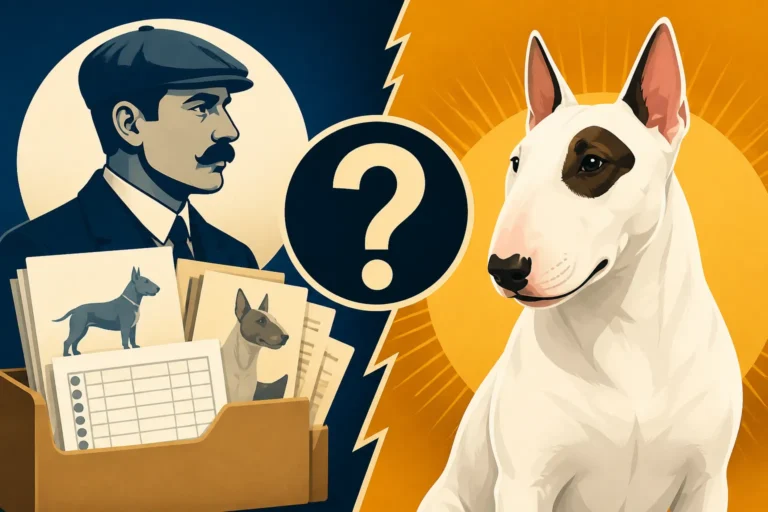
The Bull Terrier developed in nineteenth-century Britain from bull-and-terrier dogs, a broad type rather than one carefully standardized modern breed. These dogs were associated with blood sports and other rough forms of entertainment that were eventually prohibited. Their history is part of the breed’s background, but it does not tell the whole story of what the Bull Terrier was intended to become.
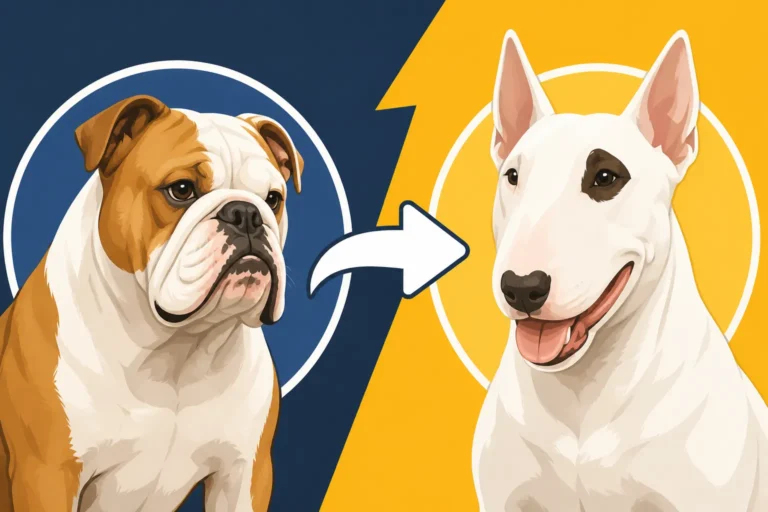
Breeders began shaping a more recognizable, refined dog from those earlier types. James Hinks, a Birmingham breeder, is closely associated with this effort. His dogs helped popularize a cleaner, more distinctive look, including the white coat that became strongly linked with the breed. For more on his role, see Who James Hinks Was and Which Breeds Went Into the Bull Terrier.
The change was not simply a matter of appearance. The dog’s public image shifted too. Instead of being presented only through its rough sporting past, the Bull Terrier could be shown as a confident, well-kept companion suitable for a home and for life alongside its owner. That change helped make “gentleman’s companion” a meaningful part of its story.
What the phrase meant in its own time
“Gentleman’s companion” was a social description, not a formal job title or a guarantee about every dog’s behavior. It suggested a dog that an affluent or socially prominent man might keep as a companion, take into public life, or display as a sign of taste and status. A distinctive dog with a recognizable outline and striking coat could make an impression without being a working farm dog or a lapdog bred solely for ornament.
The phrase also softened the breed’s public reputation. A dog associated with bull-and-terrier ancestry could be introduced as loyal, spirited, and close to its owner rather than defined by the contests that formed part of its history. That did not erase the past; it offered a different way to understand the dog’s place in society.
It is worth reading historical labels with care. The phrase tells us how breeders and admirers wanted the Bull Terrier to be seen, not how every owner treated a dog or how every Bull Terrier behaved. It also reflects the social world in which the label was used, where an owner’s standing and the dog’s appearance could be part of the same public image.
The “White Cavalier” image
The nickname “White Cavalier” reinforced the companionable image. It presented the white Bull Terrier as brave but polished, an assertive dog with a refined presence. The word “cavalier” suggested confidence and style, while “white” drew attention to the coat that helped distinguish these dogs from many other types.
This image could be appealing precisely because it balanced contrasting qualities. The Bull Terrier was not portrayed as timid or decorative. It was muscular, alert, and self-possessed, yet admirers described it as a loyal companion. That combination helped the breed appeal to people who wanted a dog with both personality and presence.
The label was still an ideal, not a complete account of the breed. A striking appearance could help shape the public story, but it could not guarantee an easy household temperament. For background on the nickname, see What the White Cavalier Name Meant.
Was the Bull Terrier Really a Fighting Dog
A complicated history, not a single-purpose identity
The Bull Terrier’s history is connected to bull-and-terrier dogs and the blood sports of their era. That connection should not be glossed over. At the same time, it is too simple to say that every Bull Terrier was bred for fighting, or that the modern breed can be understood only through that history. Breeds change as people select for different traits and as laws, customs, and expectations change.
It also helps to distinguish the Bull Terrier from the wider group of dogs that came before it. The earlier bull-and-terrier type was not identical to the standardized breed that developed later. The Bull Terrier’s recognized look and its promoted role as a companion emerged through selective breeding and changing public tastes. Read Whether the Bull Terrier Was a Fighting Dog alongside Whether a Bull Terrier Was Bred to Start Fights for a closer look at the distinction.
When people ask whether the Bull Terrier was “a gentleman’s companion,” they are often trying to resolve this apparent mismatch: how could a dog with those roots be kept as a companion? The answer is that companionship and ancestry are not mutually exclusive. A dog’s historical origins do not dictate the only role it can have in later generations.
What a companion label did not promise
Being described as a companion did not mean the dog was automatically gentle with every person or animal, easy to train, or suited to every household. Breed descriptions are broad, and individual dogs vary. The same energetic, determined qualities that appealed to some owners could also make daily life challenging for someone who expected a quiet, low-maintenance pet.
Nor does a historical label prove that all owners gave their dogs the kind of care people would expect today. “Companion” describes a relationship or social role, but it does not tell us whether a dog was well exercised, trained, or treated kindly. It is a useful clue about how admirers framed the breed, not a certificate of welfare.
For modern owners, the practical takeaway is to look beyond romantic descriptions. The Bull Terrier’s history can help explain why it has such a distinctive image, but a prospective owner should also consider the individual dog’s needs, training, socialization, and health. A contemporary overview of What a Bull Terrier's Temperament Is Really Like can help balance the historical picture with everyday realities.
What Made the Bull Terrier Appealing as a Companion
A distinctive dog with a strong presence
The Bull Terrier’s unusual appearance was a major part of its appeal. Its muscular build, upright ears, and characteristic head shape made it immediately recognizable. In an era when a dog’s appearance could communicate its owner’s preferences and social identity, a distinctive breed could be a conspicuous choice.
But appearance alone does not explain the companion reputation. Admirers also valued a dog that seemed lively, courageous, and closely attached to its owner. The Bull Terrier could be presented as a dog with personality, not simply a beautiful object. That distinction matters: the historical ideal was a companion with character, rather than a passive accessory.
Those qualities are still part of why people are drawn to Bull Terriers today. They can be affectionate and entertaining, but their enthusiasm and strength need thoughtful management. If the dog’s clownish, people-oriented side is what appeals to you, Why a Bull Terrier Is Called a Clown explores that familiar part of the breed’s reputation. Charm, though, does not replace training or supervision.
Companionship required attention and engagement
A companion dog is not necessarily a dog that can occupy itself all day. Bull Terriers are energetic and people-focused, and many need regular activity, interaction, and clear expectations. A person who admired the breed’s bold presence but did not plan for its daily needs might find that the dog’s enthusiasm became difficult to manage at home.
For a modern household, companionship works both ways: the dog seeks company, and the owner needs to provide time and structure. Short training sessions, walks suited to the individual dog, play, and safe enrichment can give that energy a constructive outlet. A bored or under-engaged dog may invent its own entertainment, which can mean chewing, attention-seeking, or other behavior that owners find frustrating.
Practical preparation matters too. A secure leash and a durable bed are mundane compared with the breed’s history, but they can make daily life easier. If you are assembling basic supplies, Chewy is one place owners may look for leads, bedding, and enrichment toys; choose items for the dog in front of you, and supervise any toy that might be chewed apart or swallowed. A retailer cannot substitute for careful training, suitable activity, or veterinary guidance.
What the Gentleman’s Companion Story Means Today
The phrase is useful history, not a modern temperament guarantee
The phrase helps explain how the Bull Terrier’s identity broadened. The breed was not presented only through its earlier sporting associations; it was also promoted as a polished, loyal household companion. That shift says something about changing fashions, breeding goals, and the desire to give a strong-looking dog a more socially acceptable public role.
It should not, however, be treated as proof that every Bull Terrier is naturally easy to live with. A dog’s temperament is shaped by many factors, including genetics, early experiences, training, health, and the environment it lives in. Someone choosing a Bull Terrier today should meet the dog, ask about its history, and think honestly about whether they can meet its needs.
The history can still be useful. It reminds us that a breed’s public image is made by people and can change over time. It also cautions against reducing a dog to either a romantic nickname or a troubling piece of ancestry. Both can obscure the individual animal.
A realistic way to think about the breed
A Bull Terrier can be a devoted companion, but “devoted” does not mean effortless. A well-matched home will have time for regular interaction and a plan for training, exercise, and safe management. Owners should also take routine care seriously, including veterinary checkups and attention to breed-relevant health concerns.
If you are considering adopting or buying one, focus on the dog’s day-to-day fit with your life rather than relying on historical descriptions. Ask about the dog’s behavior around people and other animals, what routines it already knows, and any medical or behavioral concerns. Make sure household members understand how to interact with it respectfully, especially children, and supervise their time together.
For owners, practical needs can be easier to handle when they are anticipated. Chewy may be useful for comparing everyday supplies such as food-storage containers, grooming tools, or enrichment items, but product choice should follow the dog’s needs and your veterinarian’s advice where health is involved. A suitable home routine matters more than buying a particular accessory. The breed’s old companion reputation becomes meaningful in modern life through the care and relationship an owner builds with the individual dog.
What the label gets right—and what it leaves out
The “gentleman’s companion” image gets one important thing right: the Bull Terrier was not defined forever by its ancestry. Breeders and owners helped shape a new identity for the dog, emphasizing its distinctive appearance, confidence, and closeness to people. That history helps explain why the breed could be admired as both a bold-looking dog and a household companion.
What the label leaves out is the work involved in living with a powerful, energetic animal. It does not describe every dog’s personality, settle questions about dog-to-dog compatibility, or promise that a Bull Terrier will suit every owner. The phrase is best understood as a chapter in the breed’s changing image—not a shortcut to judging the dog in front of you.
Disclaimer
This article is for general informational purposes only and does not constitute professional advice. Laws, prices and regulations vary by location and change over time. Consult a qualified professional for guidance on your specific situation.