Why a Bull Terrier’s Nails Grow Fast
It's a familiar sight for many Bull Terrier owners: you swear you just trimmed their nails, and yet, a week later, they sound like a tap-dancing troupe on your hardwood floors again. This isn't just your imagination, and it's certainly not a flaw in your grooming routine. Bull Terrier nails often seem to grow with a remarkable, almost alarming, speed, leading to endless frustration and the constant battle to keep those claws in check. This guide will delve into the underlying reasons why your Bull Terrier's nails seem to grow so quickly and, more importantly, equip you with practical strategies to manage them effectively, making this endless chore a little less daunting.
The Unique Nature of Bull Terrier Nail Growth
Understanding why your Bull Terrier’s nails grow so fast starts with a little bit of canine anatomy and the lifestyle of a modern companion dog. Unlike wild canids whose nails are constantly worn down by rugged terrain, our domestic dogs, especially those with specific breed traits, often don't get the natural wear and tear they need.
The Anatomy of a Dog's Nail
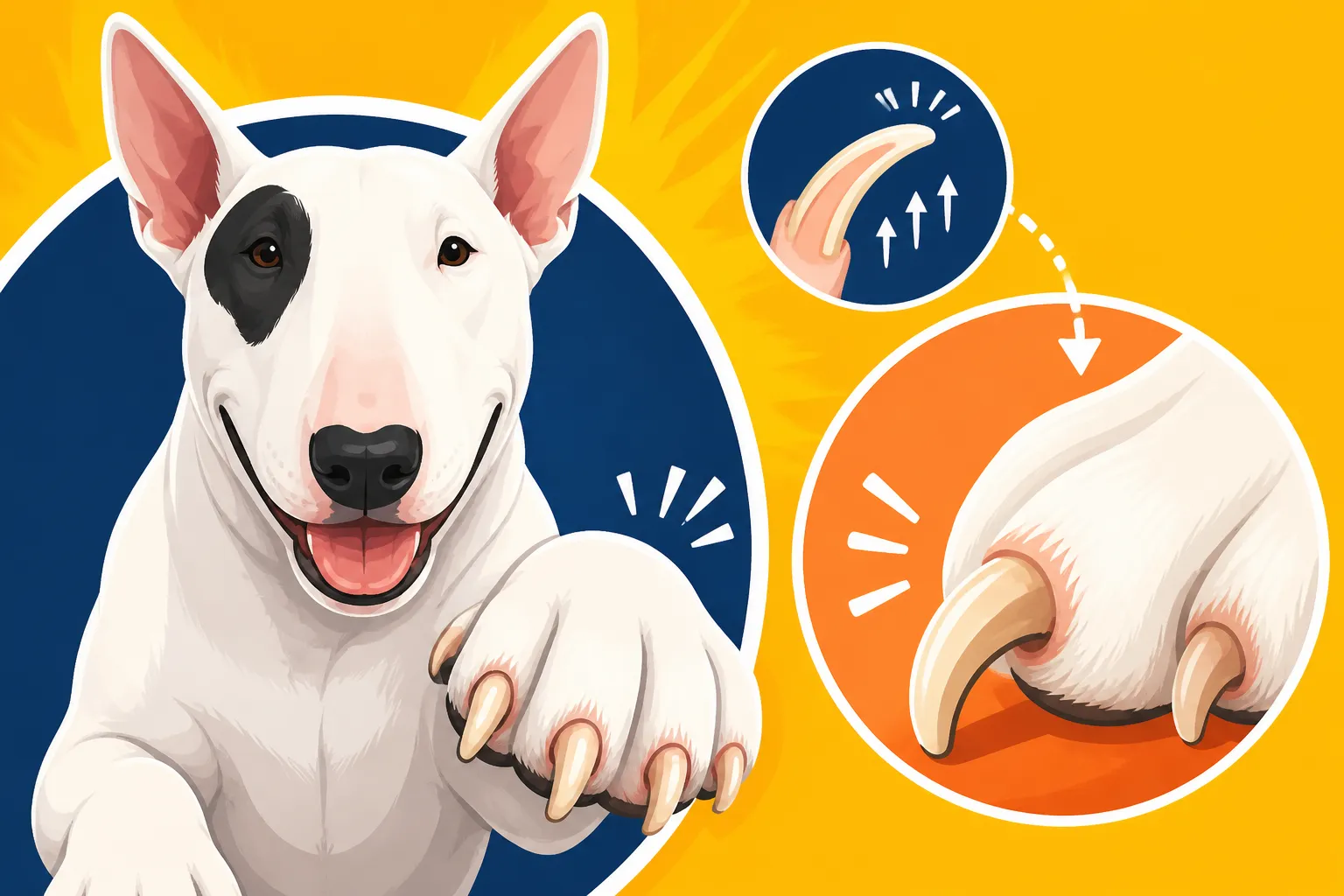
A dog's nail, including a Bull Terrier's, is made up of two main parts: the quick and the nail casing. The quick is a living tissue, containing blood vessels and nerves, which is why cutting it can be painful and bloody. The nail casing is the hard, keratinized outer layer that protects the quick. As the nail grows, the quick also extends. The faster the outer nail grows without being worn down, the longer the quick becomes, making it harder to trim the nail short without hitting the sensitive quick. This creates a vicious cycle where long nails lead to long quicks, which then make it seem like the nails grow even faster because you can't trim them back to a comfortable length.
For Bull Terriers, who often have strong, dense nails, this can be particularly pronounced. Their nails are built for durability, not necessarily for quick natural abrasion on soft surfaces. Many owners find themselves grappling with this exact issue when trying to keep their Bull Terrier's nails neat.
Lack of Natural Wear and Tear
In the wild, dogs spend their days traversing varied terrains – rocks, dirt, sand, and rough vegetation – all of which act as natural files, keeping their nails short and strong. Our beloved Bull Terriers, on the other hand, spend a good portion of their lives on softer surfaces like carpet, grass, or smooth pavement. While a brisk walk on concrete might offer some abrasion, it's rarely enough to counteract the natural growth rate, especially for dogs who are more prone to rapid nail growth.
Think about your Bull Terrier's daily routine. Are they primarily indoor dogs? Do their walks mainly consist of grassy parks or short stints on pavement? If so, those nails aren't getting the workout they would in a wild setting. This lack of natural wear is perhaps the most significant reason why you’re constantly reaching for the clippers or grinder. It's a modern dog problem, and our Bull Terriers, with their robust builds, are no exception.
Factors Influencing Rapid Nail Growth in Bull Terriers
Beyond the basic anatomy and lack of natural wear, several specific factors can contribute to why your Bull Terrier’s nails seem to sprout overnight. It's not usually just one thing, but often a combination that creates this persistent grooming challenge.
Genetics and Breed Predisposition
Let's be honest, Bull Terriers are a unique breed, and their physical traits are often quite distinct. Just as they have their characteristic egg-shaped head and muscular build, some Bull Terriers are simply predisposed to faster nail growth due to their genetics. This isn't a fault, but rather an inherited trait, much like hair color or body shape. Some lines might have thicker, harder nails that grow at an accelerated pace, while others might have slightly softer nails that wear down a bit more easily. You might notice this if you've owned several Bull Terriers over the years, or if you compare notes with other Bull Terrier owners – some seem to battle nails more than others.
It’s not just about the speed of growth, but also the texture and density of the nail itself. Harder, denser nails might chip less, but they also might resist wear more effectively, leading to that rapid apparent growth. This is just one of those things that come with the Bull Terrier package, and understanding it can help manage your expectations and approach to grooming.
Activity Levels and Surface Types
The amount and type of exercise your Bull Terrier gets directly impacts how quickly their nails wear down. A Bull Terrier that spends most of its time lounging on soft carpets or in a grassy yard will naturally have faster-growing nails than one that regularly walks or runs on concrete sidewalks, asphalt trails, or rocky paths.
Consider the difference between a leisurely stroll around the block and a rigorous hike. Even How Much Exercise a Bull Terrier Actually Needs is a topic often discussed, and sufficient, appropriate exercise isn't just for their physical and mental well-being, but also for natural nail maintenance. If your Bull Terrier isn't getting enough opportunities to naturally abrade those nails, you'll be doing a lot more trimming. Even a couple of long, energetic walks a week on a hard surface can make a noticeable difference in reducing the frequency of your grooming sessions.
Diet and Nutritional Impact
While it might not be the primary driver, a Bull Terrier's diet can indirectly influence nail health and growth. A balanced diet, rich in essential vitamins and minerals, supports overall health, including strong, healthy nails. Conversely, deficiencies could theoretically lead to brittle nails that chip, or in some cases, nails that grow at an odd rate or become more prone to issues. For example, some dogs might develop issues with their nails if they have certain nutrient imbalances.
It's not usually about a specific "nail growth supplement," but rather ensuring your dog's complete nutritional needs are met. If you're feeding a high-quality kibble or a well-balanced raw diet, you're likely providing what their body needs for healthy nail growth. However, if you notice other issues alongside rapid growth, such as dull coat or skin problems, a conversation with your vet about their diet might be warranted. For instance, sometimes certain health conditions like Zinc Responsive Dermatosis in a Bull Terrier can manifest with skin and nail issues, underscoring the link between nutrition and external health.
Underlying Health Conditions
Although less common, certain underlying health conditions can affect nail growth. For instance, hormonal imbalances, such as hypothyroidism (Whether a Bull Terrier Gets Hypothyroidism), can sometimes lead to changes in nail and coat quality, including abnormal growth or brittleness. Autoimmune diseases can also, in rare cases, affect the nail beds, causing them to become misshapen, brittle, or grow unusually.
If your Bull Terrier's nails are not only growing fast but also appear discolored, flaky, split, or painful, it's crucial to consult your veterinarian. These could be signs of a fungal infection, a bacterial infection, or a more systemic health issue. A thorough vet check, which might include bloodwork or even a nail biopsy, can help rule out these more serious causes and ensure your Bull Terrier is healthy from paw to nose. The Weekly Skin Check Every Bull Terrier Needs should always extend to their paws and nails.
Managing Fast-Growing Bull Terrier Nails Effectively
Now that we understand why Bull Terrier nails seem to have a mind of their own, let's talk about how to tackle this ongoing challenge. It’s all about consistency, the right tools, and a little patience.
Establishing a Regular Trimming Schedule
The golden rule for fast-growing nails is consistency. You might feel like you're constantly trimming, but a regular schedule is the most effective way to keep the quick from extending. For many Bull Terriers, this means trimming every 1-2 weeks. Yes, really. If you let them go longer, the quick will grow out with the nail, making it impossible to get them short enough without causing pain.
Think of it like this: every time you trim the very tip of the nail, you encourage the quick to recede slightly. Over time, with consistent, frequent trims, you can gradually push the quick back, allowing you to achieve shorter, healthier nails. This process is often called "quick training" or "quick recession." It takes dedication, but the results are worth it, both for your dog's comfort and your peace of mind. Without this, you'll find yourself wondering How Often a Bull Terrier's Nails Need Trimming for optimal results.
Choosing the Right Tools and Techniques
When it comes to trimming, there are two main camps: clippers and grinders. Both have their pros and cons, and the best choice often comes down to your dog's tolerance and your comfort level.
Nail Clippers:
- Guillotine Style: These have a hole you insert the nail into, then squeeze the handle to cut. They work well for medium to large nails.
- Scissor Style: These resemble a pair of pliers with a curved blade. Often preferred for larger, thicker nails, and some find them easier to control.
Pros of Clippers: Quick and efficient if your dog tolerates them.
Cons of Clippers: Can be intimidating, and it's easier to cut too much and hit the quick.
Nail Grinders (Dremel-style tools):
- These tools use a rotating abrasive head to file the nail down.
Pros of Grinders: Allows for more gradual removal, reducing the risk of hitting the quick. It also smooths the nail, preventing sharp edges. Many dogs find the vibration less startling than the "snip" of clippers, though some dislike the noise. Whether a Dremel Suits a Bull Terrier's Nails is a common question, and for many, it's a game-changer.
Cons of Grinders: Can take longer, and the vibration/sound can be a deterrent for some dogs. Nails can heat up if you grind too long in one spot.
No matter which tool you choose, make sure it's sharp and in good working order. Dull clippers can crush the nail, causing pain, and a worn-out grinder won't be effective. You can find quality clippers and grinders on platforms like Chewy or Amazon, ensuring you have the right equipment for the job.
Here's a quick comparison of common tools:
| Tool Type | Pros | Cons | Best For |
|---|---|---|---|
| Scissor Clippers | Strong, quick cuts; good for thick nails. | Risk of cutting quick if not careful; can leave sharp edges. | Confident trimmers, dogs tolerant of clipping. |
| Guillotine Clippers | Easy to use for quick trims on many nail types. | Can crush nails if dull; less control than scissor style for some. | Medium nails, owners who prefer simplicity. |
| Nail Grinder | Gradual removal, less risk of quicking; smooth finish. | Takes longer; noise/vibration can scare some dogs; generates heat. | Nervous dogs, quick-phobic owners, achieving short, rounded nails. |
Training for Nail Trimming Tolerance
For many Bull Terriers, the act of nail trimming is not their favorite pastime. They might struggle, pull their paws away, or even try to nip. It’s critical to approach this process with positive reinforcement, making it as stress-free as possible. If you've ever had to contend with Trimming a Bull Terrier's Nails While It Fights You, you know the struggle is real.
Start slow. Even if you can only touch their paw and give a treat, that's a win. Gradually increase the duration and intensity. Introduce the tools (clippers or grinder) in a positive way – let them sniff it, turn it on briefly while rewarding them, without actually touching their nails at first. Use high-value treats (like small pieces of chicken or cheese) to create positive associations. Work on one paw, or even just one nail, at a time. This isn't a race; it's about building trust and tolerance over weeks or months.
If your Bull Terrier truly struggles, consider having a second person assist, one holding and distracting with treats while the other trims. For some dogs, a professional groomer or veterinary technician might be the best option, at least initially, to get the nails back to a manageable length.
Incorporating More Nail-Wearing Activities
While direct trimming is essential, you can also support healthier nail length through lifestyle adjustments.
- Increase walks on hard surfaces: As mentioned, concrete, pavement, and even rough gravel paths can help naturally file down nails. Aim for a few longer walks each week on these types of surfaces.
- Invest in textured mats or scratch boards: Some owners have success with "scratch boards" – essentially a piece of wood covered with sandpaper – that dogs learn to scratch their front nails on for treats. This can be a fun, engaging way to wear down those front nails, especially for dogs who are less tolerant of traditional trimming.
- Regular play sessions: Active play on rougher ground, like a tennis court or a paved driveway (when not too hot), can also contribute to wear. Just be mindful of their paw pads and the temperature of the surface.
These supplementary methods won't eliminate the need for trimming entirely, but they can extend the time between sessions and contribute to overall paw health.
Beyond Trimming: When to Consult a Vet
While fast-growing nails are often a normal Bull Terrier trait, sometimes they can be a symptom of something more. Knowing when to consult your veterinarian is important for your dog's well-being.
Signs of Pain or Discomfort
If your Bull Terrier's fast-growing nails are also causing them pain or discomfort, it’s a clear signal to seek veterinary advice. This might manifest as:
- Limping or favoring a paw.
- Reluctance to walk or play.
- Excessive licking or chewing at their paws.
- Swelling or redness around the nail bed.
- Unusual vocalizations when walking or when you touch their paws.
Sometimes, long nails can put pressure on the toe joints, causing chronic discomfort that your Bull Terrier might try to hide. How a Bull Terrier Hides Pain is something owners should always be aware of, as they can be stoic creatures. If you notice any changes in their gait or behavior related to their paws, it's best to get it checked out.
Abnormal Nail Appearance
Beyond just growth speed, pay attention to the appearance of the nails themselves. Healthy Bull Terrier nails should be relatively smooth, hard, and uniform in color (though black nails can make it hard to see the quick, which is a separate challenge!). If you observe any of the following, a vet visit is in order:
- Brittleness or Cracking: Nails that easily chip, crack, or split.
- Discoloration: Yellowing, blackening, or unusual streaks on the nail.
- Deformity: Nails that are twisted, unusually thick, or growing in strange directions.
- Loose or missing nails: This could indicate trauma or an infection.
These symptoms could point to fungal infections, bacterial infections, nutritional deficiencies, or even more serious conditions affecting the immune system or endocrine system. Your vet can diagnose the underlying cause and recommend appropriate treatment, which might involve topical medications, oral antibiotics, or dietary changes.
Cost Considerations for Nail Care
Regular nail care is an essential part of responsible Bull Terrier ownership, and it does come with financial considerations, whether you do it yourself or seek professional help. If you opt for professional trimming at a vet's office or a groomer, the cost per visit can add up over time, especially if your Bull Terrier needs frequent trims. Tools like high-quality clippers or a reliable nail grinder also represent an upfront investment, though they last a long time.
It's wise to factor these routine expenses into your What a Bull Terrier Costs a Month Before Any Illness budget. If you find yourself consistently needing professional help because your Bull Terrier is particularly resistant, remember that What a Vet Charges to Trim a Bull Terrier's Nails can vary, so it's worth checking local prices. Sometimes, investing in behavioral training to make nail trims easier at home can be more cost-effective in the long run. Don't forget that if abnormal nail growth points to a health issue, diagnostic tests and treatments will also incur costs. Regular maintenance is always cheaper than treating a problem that has been ignored.
In conclusion, while fast-growing nails might seem like just another Bull Terrier quirk, understanding the reasons behind it and implementing a consistent, positive grooming routine can make a world of difference. Your Bull Terrier deserves comfortable paws, and with a little dedication, you can keep those nails in tip-top shape.
Disclaimer
This article is for general informational purposes only and does not constitute professional advice. Laws, prices and regulations vary by location and change over time. Consult a qualified professional for guidance on your specific situation.