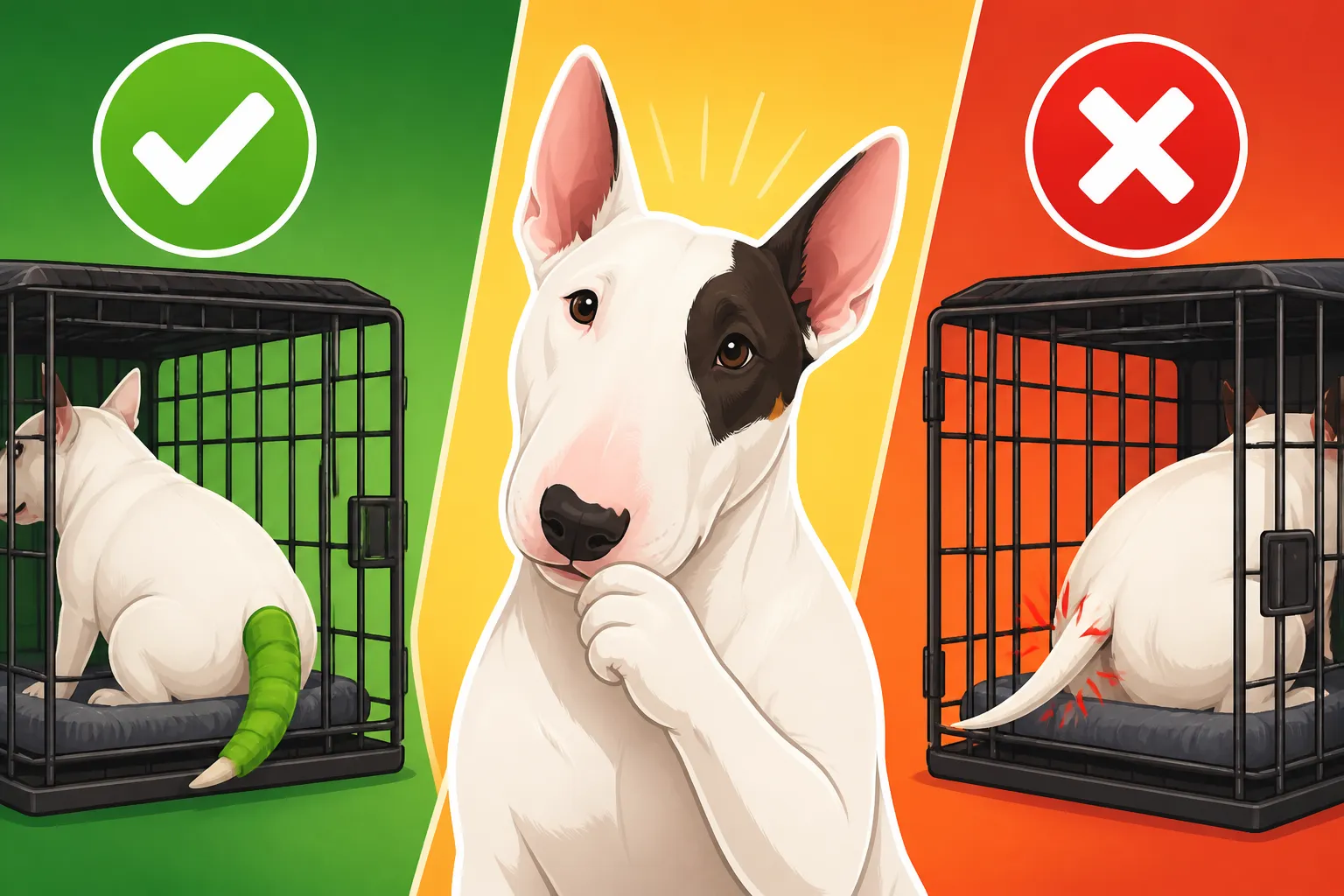
Whether a Bull Terrier’s Tail Should Be Protected in a Crate
The worry of a wagging tail meeting an unforgiving crate wall is a very real one for Bull Terrier owners. These fantastic dogs have tails that are not just expressive but also remarkably powerful, and in the confined space of a crate, that strength can unfortunately lead to painful injuries. This guide is here to walk you through why protecting your Bull Terrier's tail in their crate isn't just a good idea, but often a necessity, and how you can prevent those dreaded "happy tail" injuries from turning into an expensive, distressing reality.
Understanding Your Bull Terrier's Tail and Crate Dynamics
Your Bull Terrier's tail is more than just a wagging indicator of their mood; it's a solid, muscular extension of their spine. Owners quickly learn that a Bull Terrier doesn't just "wag" its tail; it can beat a rhythm against anything in its path with astonishing force. This enthusiastic expression of joy, excitement, or even anticipation, while endearing, can become a source of serious concern when your dog is confined.
The Bull Terrier Tail: A Natural Weapon (of Joy!)
Imagine a powerful drumstick, constantly in motion, and you're getting close to understanding the sheer kinetic energy behind a Bull Terrier's tail. These tails are thick at the base, tapering to a point, and packed with muscle. They are designed for balance and communication, and a happy Bull Terrier will use its tail to full effect, often thumping it against legs, furniture, and anything else in its orbit. It's a hallmark of their goofy, boisterous personality, but this relentless wagging can, unfortunately, be its own undoing.
When your Bull Terrier is excited – whether you've just walked in the door, it's mealtime, or they're about to go for a walk – that tail goes into overdrive. The sheer force generated can be surprising, and in a contained environment, this energy has nowhere to dissipate safely. Many an owner has felt the sting of a Bull Terrier tail against their shins, or seen a coffee table vibrate from the enthusiasm, and it’s this same force that poses a risk within the crate.
It's precisely this spirited use of their tail that gives rise to the infamous "happy tail" syndrome. While the name sounds cheerful, it refers to an injury caused by repeated impact, often seen in breeds with strong, whip-like tails. For our Bull Terriers, who live to express themselves with every fiber of their being, their tail is a primary tool, and one that deserves our protection.
Crate Confinement and the Risk of Injury
The paradox of the crate is that it's meant to be a safe haven, yet for a Bull Terrier's tail, it can inadvertently become a hazard. A typical dog crate, especially a wire one, presents a grid of hard, unyielding surfaces. When an excited Bull Terrier wags its tail against these bars, the repetitive impact can cause anything from minor scrapes to significant open wounds at the tail tip.
Consider the physics for a moment. A powerful wag, repeatedly hitting a narrow metal bar, concentrates all that force on a very small area of the tail tip. This isn't a gentle brush; it's a blunt force trauma delivered dozens, if not hundreds, of times in a short period. Over time, or with one particularly enthusiastic thump, this can lead to the skin breaking, bleeding, and bruising. The problem is compounded by the fact that the tail tip has relatively poor blood supply compared to other parts of the body, making healing a slow and often frustrating process.
Owners often feel a pang of guilt when they discover a tail injury, wondering if they've somehow failed their dog. It's important to remember that this isn't due to neglect; it's often an unforeseen consequence of a Bull Terrier's exuberant nature combined with a necessary training tool. However, acknowledging the risk means we can be proactive in preventing it. This isn't a rare occurrence; many Bull Terrier owners have experienced the disheartening sight of a bleeding tail, and it highlights why understanding and adapting your crating strategy is crucial. How a Bull Terrier Injures Its Tail can be a surprisingly common tale.
Proactive Measures to Protect Your Bull Terrier's Tail in a Crate
The good news is that preventing tail injuries in a crate is entirely possible with some forethought and the right equipment. It's all about minimizing the impact of that powerful wag and creating a softer, safer environment for your Bull Terrier.
Choosing the Right Crate for Tail Safety
When it comes to crate selection, size and material play a huge role in preventing tail injuries. Many owners default to wire crates for their affordability and portability, but these often present the most exposed surfaces for a tail to strike.
Firstly, let's talk size. A crate should be large enough for your Bull Terrier to stand up, turn around, and lie down comfortably, but not so vast that they can gain momentum for a full-body wag that sends their tail crashing into the far side. Too much space can actually increase the risk, as it allows for more vigorous movement. Conversely, a crate that is too small will mean their tail is constantly pressed against the walls, which can also lead to rubbing and discomfort. Finding that "just right" Goldilocks size is key.
Now, consider the material. Standard wire crates are notorious for tail tip injuries due to the narrow, hard bars. If you use a wire crate, you must pad it sufficiently. Plastic crates, often called "airline crates" or "travel kennels," offer smoother, solid walls which can inherently reduce the risk of direct impact injuries to the tail. They might feel a bit more enclosed, but the solid sides are a great defense against bumps and scrapes. For the truly robust and determined Bull Terrier, some owners opt for heavy-duty metal crates, which are often built with thicker gauge bars or solid panels, providing enhanced durability and sometimes a slightly smoother interior design, though they are a significant investment. You can find a range of options on sites like Amazon or Chewy, but always read reviews with tail protection in mind. Which Crate Holds a Bull Terrier securely and safely is a common question, and one that demands careful consideration of materials and construction.
Padding and Protection Within the Crate
Once you have the right crate, the next critical step is to make its interior as tail-friendly as possible. This means padding, and lots of it. Simply throwing in a thin blanket won't cut it for a determined Bull Terrier tail.
Think about comprehensive coverage. You need thick, soft bedding that not only covers the entire floor of the crate but also ideally extends up the lower sides. Crate bumpers, which are padded panels designed to line the interior walls of wire crates, can be an absolute lifesaver. These are designed to cushion impacts and prevent direct contact with the hard bars. If you can’t find specific crate bumpers for your crate size, thick, rolled-up blankets or dense foam wrapped in durable fabric can be used as a makeshift solution, secured firmly to prevent them from being pulled down or chewed.
The material of this padding is also crucial. Given a Bull Terrier's propensity for chewing, any bedding or bumpers need to be robust and chew-resistant. Fleece, canvas, or even durable outdoor fabric options can work well. Ensure there are no loose threads or small parts that could be ingested. Look for heavy-duty, reinforced beds and liners from reliable pet supply retailers like Chewy. A quick search on Amazon for "heavy duty crate pads" or "chew proof crate liners" will yield many options specifically designed for powerful chewers. Remember, the goal is to create a soft buffer zone that absorbs the impact of a wagging tail, protecting it from repetitive trauma. What a Heavy Duty Bull Terrier Crate Costs might give you sticker shock, but it's an investment in both peace of mind and preventing expensive vet bills.
Managing Excitement and Crate Entry
Beyond the physical setup of the crate, managing your Bull Terrier's emotional state around crating can significantly reduce the risk of tail injury. An overly excited dog is much more likely to be a wildly wagging dog, increasing the chances of their tail striking the crate walls.
Establishing a calm, predictable routine around crate entry is paramount. Teach your Bull Terrier that the crate is a quiet, comfortable space, not a prelude to an exhilarating adventure or a place of punishment. Use positive reinforcement to build a positive association. Offer a special, long-lasting chew toy or a stuffed KONG (you can find these on Chewy or Amazon) only when they go into their crate. This not only distracts them and gives them something to focus on other than wildly wagging their tail, but it also reinforces the idea that the crate is a source of good things.
Avoid hyping up your Bull Terrier right before crating them. Keep departures and arrivals low-key. If they’re bouncing off the walls with excitement when you come home, wait for them to calm down before engaging too much. A few minutes of quiet before crating can make all the difference to their tail's safety. This approach helps teach them that calm behavior is rewarded, and reduces the likelihood of an immediate, vigorous tail wag upon entry or when you return. Remember, a crate should be a refuge, not a place of confinement where they feel restless and need to release energy through their tail. Whether a Crate Helps a Bull Terrier Left Alone often depends on how well this positive association is built.
When Tail Injuries Happen: Recognition and Response
Despite our best efforts, sometimes a tail injury still occurs. Bull Terriers are masters of enthusiasm, and accidents can happen. Knowing what to look for and how to respond is crucial for their well-term health and comfort.
Recognizing the Signs of a Tail Injury
Catching a tail injury early can prevent it from escalating into a more serious problem. While a Bull Terrier's tail is often in motion, you'll need to develop a keen eye for any changes.
The most obvious sign is visible trauma to the tail tip. Look for bleeding, open sores, scabs, or a raw, irritated area. The fur around the tip might be matted with dried blood, or you might notice small drops of blood on their bedding or the crate floor. Beyond the visible, swelling is another clear indicator; the tail tip might look thicker or more inflamed than usual. In some cases, repeated trauma can even lead to fur loss in a specific area.
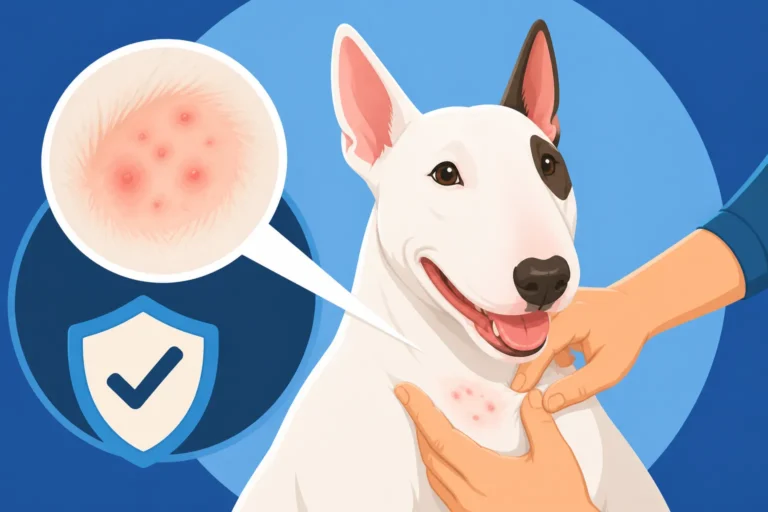
Behavioral changes are also important clues. Your Bull Terrier might start holding their tail lower than usual, or avoid wagging it altogether, especially if it causes pain. They might react sensitively when you touch their tail, flinching or crying out. They might also appear restless, unable to settle, or lick at their tail excessively. Watch for signs of infection, such as pus, a foul odor, increased redness, or heat emanating from the injured area. Regularly checking your Bull Terrier’s tail, especially the tip, should become part of your routine. The Weekly Skin Check Every Bull Terrier Needs should always include a thorough examination of the tail.
First Aid and Veterinary Care for Tail Injuries
If you discover a tail injury, don't panic, but do act promptly. Minor scrapes or superficial cuts can sometimes be managed at home initially, but severe or persistent injuries always warrant a vet visit.
For a small cut or abrasion, gently clean the area with a mild antiseptic solution recommended for pets. Avoid harsh chemicals or human-grade antiseptics that might sting or be toxic if licked. Once clean, you might be able to apply a light, protective bandage. This is often easier said than done on a Bull Terrier's tail, which tapers and is constantly moving! Ensure the bandage isn't too tight, which could restrict blood flow, and change it regularly. You can find pet-specific bandages and wraps at places like Chewy. The challenge, of course, is keeping a Bull Terrier from chewing it off.
However, if the bleeding is heavy, doesn't stop, or the wound is deep, large, or shows signs of infection (pus, strong odor, excessive swelling), it's time to call your veterinarian immediately. Tail injuries, especially "happy tail," can be incredibly difficult to heal due to the constant movement and relatively poor blood supply to the tip. Your vet might need to clean the wound thoroughly, prescribe antibiotics, pain medication, or even apply a more durable, specialized bandage or splint. In very severe, chronic cases that simply won't heal, a partial tail amputation might even be considered as a last resort, though this is rare. Being vigilant and proactive with vet care can often prevent such drastic measures. For more detailed insights into managing this specific issue, check out How to Treat a Bull Terrier's Happy Tail.
Adapting Crate Practices After an Injury
Once a tail injury has occurred, it's a clear signal that your current crating practices need adjustment, at least temporarily. The goal is to prevent re-injury, which is very common with "happy tail" due to the difficulty of complete healing.
During the healing process, you might need to make significant changes. If the injury occurred in a wire crate, switching to a plastic crate with solid sides or even a heavy-duty, non-wire crate might be necessary to completely eliminate the impact points. If a new crate isn't feasible, you'll need to increase the internal padding dramatically, perhaps even securing rolled towels or crate bumpers around the entire lower perimeter of the crate to act as a soft barrier.
Consider the duration of crating as well. Is your Bull Terrier being crated for long stretches? Could boredom or loneliness be contributing to excessive agitation and tail wagging inside the crate? How a Bull Terrier Hides Pain can make it hard to tell how much an injury is bothering them, so it's best to err on the side of caution. During recovery, shorter crating periods, more frequent potty breaks, or supervised time in a larger, dog-proofed area might be beneficial. This period of adaptation is not just about healing the current wound but rethinking your long-term strategy to ensure their tail remains healthy and happy.
Long-Term Crate Use and Tail Health
Successfully protecting your Bull Terrier's tail in a crate isn't just about crisis management; it's about integrating preventative measures into your regular care routine and understanding when the crate might not be the best long-term solution.
Balancing Crate Benefits with Tail Health
Crate training offers undeniable benefits. It's an invaluable tool for house-training puppies, providing a safe den during travel, offering a secure space when you can't supervise your dog, and even giving them a quiet retreat when they need to de-stress. We're not advocating abandoning the crate altogether for your Bull Terrier; rather, we're promoting a mindful approach that acknowledges their unique physical attributes.
The balance lies in continually assessing your Bull Terrier's needs and adjusting their crate environment accordingly. What worked for them as a puppy might not be ideal as an adult, or if they develop a tendency for more vigorous tail wagging. Regularly inspect your crate's interior for signs of wear and tear on padding, and look for any new scuffs or impacts on the bars that might indicate tail contact. Think of it as a continuous improvement project for your Bull Terrier’s comfort and safety. Their well-being should always be the top priority, and sometimes that means evolving beyond the initial crate setup you started with.
Alternative Confinement Options for Bull Terriers
While crates are useful, they aren't the only option for safe confinement, especially if tail injuries become a recurring problem or if your Bull Terrier simply outgrows the need for such a contained space.
For shorter periods, or when you're at home but need your Bull Terrier contained in one area, a sturdy indoor playpen can offer more space for movement, reducing the likelihood of tail impact. Many of these have solid panels or wider gaps than traditional crates, which can be safer for tails. For longer absences, a "dog-proofed" room can be an excellent alternative. This involves securing a dedicated room in your home – perhaps a laundry room, kitchen, or spare bedroom – to ensure there are no hazards, chewable items, or escape routes. This allows your Bull Terrier more freedom to move, stretch, and yes, wag their tail without hitting anything.
For Bull Terriers who are prone to anxiety when left alone, or who have exceptionally high energy levels, professional dog walkers or dog daycare can be a fantastic investment. Reducing the total time they spend in a crate can naturally lower the risk of tail injury, while providing crucial physical and mental stimulation. Many Bull Terriers, with their boundless energy and intelligence, truly thrive with more engagement. While Why a Bull Terrier Cannot Be Left Alone All Day is a crucial consideration for all owners, it becomes even more pronounced when tail health is a concern. Similarly, providing ample mental enrichment and physical outlets can mitigate destructive behaviors, reducing the need for prolonged crating and the associated tail risks. Keeping them busy means less idle, destructive energy, and often, a less frantically wagging tail. You might be surprised to learn that What a Bull Terrier Does When It Is Bored often involves vigorous activity that could accidentally lead to injury.
| Crate Type | Pros for Tail Protection | Cons for Tail Protection | Best Use Case |
|---|---|---|---|
| Wire Crate | Good ventilation, visibility. Can add padding. | Exposed bars are a high risk for tail tip injury if unpadded. | For calm dogs, or heavily padded for Bull Terriers. |
| Plastic Crate | Smoother interior walls, less risk of direct impact with bars. | Less ventilation, can feel more confined. | Good for travel, or for Bull Terriers prone to tail injury. |
| Soft-Sided Crate | Very soft and flexible, low impact risk. | Not chew-proof, not as secure, easily damaged by a determined Bull Terrier. | Short-term, supervised use; very calm dogs. |
| Heavy-Duty Crate | Extremely durable, often smoother interior than standard wire. | Can be expensive and heavy. | Best long-term solution for a robust Bull Terrier, with added padding. |
Disclaimer
This article is for general informational purposes only and does not constitute professional advice. Laws, prices and regulations vary by location and change over time. Consult a qualified professional for guidance on your specific situation.