How Often a Bull Terrier’s Skin Should Be Photographed
It’s a frustrating truth for many Bull Terrier owners: just when you think you’ve got their boisterous energy and stubborn charm figured out, their skin decides to throw a curveball. From mysterious bald patches to relentless itching, dealing with your Bull Terrier’s sensitive hide can feel like a constant battle. This guide isn't just about snapping a few pictures; it’s about empowering you with a visual record to understand, communicate, and effectively manage your Bull Terrier's skin health.
Why Skin Photography Is So Crucial for Bull Terriers
Anyone who lives with a Bull Terrier knows their skin can be a bit… dramatic. Unlike some breeds with thick double coats that hide a multitude of sins, our Bullies have that sleek, short fur that lays bare every little irritation, bump, or rash. But seeing it doesn't always mean understanding it, especially when issues can develop so slowly you might not even notice the progression. That's where photography becomes your secret weapon, a silent witness to changes you might otherwise overlook in the daily hustle.
Bull Terriers and Their Unique Skin Challenges
Let's be real, a Bull Terrier's skin isn't just "skin"; it's a canvas prone to a variety of unique challenges. First off, many Bull Terriers, especially the whites, have rather delicate, unpigmented skin that’s highly susceptible to sun damage. You might have already learned that Why a White Bull Terrier Sunburns is a real and present danger. But it's not just the sun. Our strong-willed clowns are also known for their propensity for allergies, which can manifest as persistent itching, redness, and secondary infections. It can feel like you’re constantly wondering Whether a Bull Terrier Gets Skin Allergies. Then there’s the notorious demodectic mange, often a concern in puppies or dogs with compromised immune systems. Demodectic Mange in a Bull Terrier can pop up seemingly out of nowhere, creating bald spots and crusty lesions that are easily mistaken for something else. All these conditions, and more, mean that A Bull Terrier's Skin Is Its Weakest Point, and you need all the tools at your disposal to keep it healthy. Without a reliable way to track minor changes, these issues can spiral into serious problems, causing discomfort for your dog and significant vet bills for you.
Catching Subtle Changes Before They Worsen
One of the biggest frustrations as a dog owner is when you finally get to the vet, and your dog’s mysterious rash has either gotten better, worse, or simply vanished, leaving you sounding like you imagined the whole thing. This is particularly true for Bull Terriers, who can be stoic about pain until an issue is quite advanced. A small pink patch today might be a full-blown hot spot by tomorrow, or a tiny scab could be the precursor to What a Bull Terrier's Bald Patch Means. By consistently photographing your Bull Terrier's skin, you create a visual diary, a timeline that even the most subtle shifts cannot escape. This isn't just about documenting a problem; it's about establishing a baseline for what your dog's "normal" skin looks like. That way, when something truly out of the ordinary appears, you have a reference point. You're not relying on memory or trying to describe a fleeting symptom; you have concrete evidence to show your vet, helping them diagnose and treat issues more quickly and effectively, preventing a minor irritation from becoming a major ordeal.
How Often to Photograph Your Bull Terrier's Skin
The frequency of your skin photography largely depends on whether you're performing routine wellness checks or actively monitoring a known issue. Think of it like taking family photos – you take them regularly to capture growth and milestones, but if someone gets a cut or scrape, you might take more specific pictures to track healing. Your Bull Terrier's skin deserves the same attention to detail.
Routine Baseline Photos for Proactive Care
Even if your Bull Terrier seems to have skin as tough as their personality, establishing a baseline is paramount. I recommend a monthly full-body photo session when your dog is healthy. This isn't just about looking for trouble; it's about understanding what "normal" looks like for your dog. Their coat might be thicker in winter, their belly might have more freckles after a summer of sunbathing (even if they’re diligently wearing their dog sunscreen!), or they might have a few calluses that are just part of their individual charm.
During these monthly sessions, make sure you take photos of all key areas. Get pictures of their paws, especially between the toes where allergies often start. Snap shots of their belly and armpits, which are common areas for rashes and irritation. Don't forget their ears – inside and out – and the skin around their muzzle. Remember How to Check a Bull Terrier's Skin Weekly? These photos supplement that hands-on check, giving you a comprehensive record. If you spot anything that looks slightly off but isn't concerning enough for an immediate vet visit, make a mental note, or even better, take a specific close-up photo and compare it to last month's. This proactive approach helps you catch Where a Bull Terrier's Skin Trouble Starts before it becomes an emergency. It’s also incredibly helpful to review these images before your annual vet check-up, allowing you to flag any concerns you may have forgotten about.
When to Increase Photo Frequency
Now, if you suspect an issue, or if your vet has diagnosed a skin condition, your photo frequency needs to ramp up considerably. This is where your visual log becomes a vital tool for tracking progression and treatment efficacy.
- Minor Irritations: For something like a small red patch, a bit of scratching, or a slight change in coat texture, I'd suggest taking photos once or twice a week. You want to see if the area is growing, shrinking, becoming more inflamed, or remaining stable.
- Moderate Issues: If you're dealing with a hot spot, persistent itching that's causing hair loss, scabbing, or a diagnosed condition like Zinc Responsive Dermatosis in a Bull Terrier, daily photos might be appropriate, especially for the first few days of treatment. You need to capture the exact appearance of the lesion, its size, color, and any discharge. This provides immediate feedback on whether your current approach is working.
- During Treatment: Once a treatment plan is in place, whether it's medicated shampoos (which you can often find readily on Chewy), oral medications, or a specialized diet (some owners explore options like Ollie for sensitive stomachs), photographing weekly is a good benchmark. This helps you and your vet determine Whether a Bull Terrier's Skin Improves With Diet or if the chosen medication is having the desired effect.
The key is consistency in how you take the photos (more on that next) and keeping them organized so you can easily compare them over time.
Practical Tips for Taking Effective Skin Photos
Taking useful photos isn't just about pointing your phone and clicking. To make your visual log genuinely valuable, you need a little strategy. Good photos tell a story; blurry, poorly lit ones just add to the mystery. Think of yourself as a detective, gathering evidence.
Essential Equipment and Setup
You don’t need fancy photography gear, but a few simple considerations will make a world of difference:
- Camera: Most modern smartphones have excellent cameras perfectly capable of capturing the detail you need. Just make sure your lens is clean!
- Lighting: This is perhaps the most critical factor. Natural daylight is your best friend. Try to take photos near a window or outdoors on a cloudy day to avoid harsh shadows and glare. If natural light isn't an option, use a bright, diffused light source, like a ring light or a desk lamp with a soft light bulb. Avoid direct overhead lights that create deep shadows. Consistency in lighting will help you compare photos accurately over time.
- Background: A plain, contrasting background will make your Bull Terrier's skin stand out. A clean towel or blanket works well. Avoid busy carpets or patterned bedding that can distract from the details you're trying to capture.
- Measurement Tool (Optional but Recommended): For tracking lesions, a small ruler or even a coin placed next to the affected area can provide a size reference in your photo. This is incredibly helpful for demonstrating if a spot is growing, shrinking, or staying the same size. You can find simple, inexpensive rulers on Amazon that are perfect for this.
Before you start, make sure your Bull Terrier is comfortable. A treat or two and a calm environment can make them more cooperative. Some Bull Terriers might even enjoy the attention!
What to Focus On: A Checklist for Your Photo Session
When taking your photos, aim for clarity and detail. Don't just take one shot; take several from different angles.
Here’s a checklist of what to capture:
- Overall Body Shot: Start with a wider shot that shows your Bull Terrier's general appearance. This is great for tracking widespread issues like generalized hair loss or overall coat dullness.
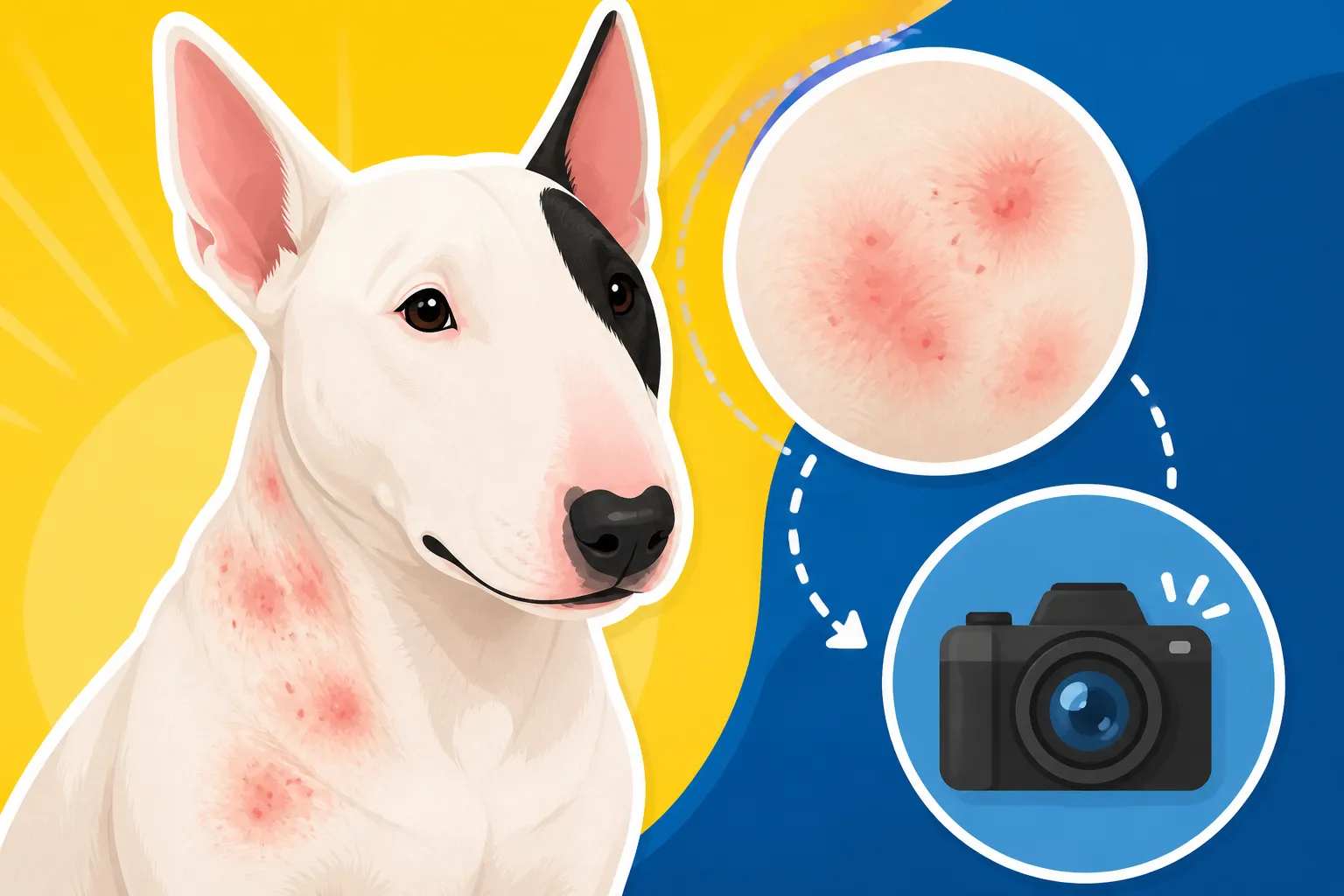
- Close-up of Affected Area: Get in close, but make sure the image isn't blurry. Focus on the texture of the skin, any redness, swelling, scabbing, pustules, or hair loss.
- Multiple Angles: Photograph the spot from at least two or three different angles. What looks like a small bump from one side might reveal a larger inflamed area from another.
- Comparison Shots: If possible, take a photo of the affected area next to a healthy patch of skin on the same dog. This provides an immediate visual comparison for your vet.
- "Before and After" Potential: If your dog is undergoing treatment, try to replicate the initial problematic photos with your follow-up shots. Same lighting, same angle, same distance.
Here’s a quick guide to help you decide on frequency based on what you’re seeing:
| Skin Condition / Status | Recommended Photo Frequency | Key Details to Capture |
|---|---|---|
| Healthy/Baseline | Monthly | General coat appearance, specific spots (elbows, belly, ears), overall body shots. |
| Minor Irritation (redness, light scratching) | Weekly | Close-ups of affected areas, surrounding skin, note size/texture changes. |
| Moderate Issue (hot spot, persistent itch, scabs) | Every 2-3 days | Detailed close-ups, comparison to previous photos, measure lesions if possible. |
| Severe Problem (open wounds, widespread rash, significant hair loss) | Daily | Multiple angles, overall body view to show spread, clear focus on lesion details, measure. |
| During Treatment | Weekly (or as advised by vet) | Show progress of healing (or lack thereof), compare to pre-treatment, note any new issues. |
Remember to keep these photos organized, perhaps in a dedicated album on your phone or computer, clearly labeled with dates. This makes them easy to retrieve when you need them most.
Using Your Photo Log with Your Veterinarian
The ultimate goal of all this diligent photography is to provide actionable information to your veterinarian. They are your partner in your Bull Terrier's health, and good visual documentation can significantly aid their diagnostic process and treatment monitoring. It saves time, reduces guesswork, and ultimately leads to better care for your beloved Bully.
Communicating Changes Clearly with Visual Evidence
Imagine trying to describe a rash that comes and goes, or a subtle change in skin texture, over the phone or in a brief examination room visit. It's tough! Your visual log eliminates this frustration entirely. When you show your vet a series of dated photos, they can instantly see the progression (or regression) of an issue. This can be incredibly helpful for pinpointing What a Bull Terrier is Most Often Allergic To or diagnosing conditions like various dermatoses that have specific visual characteristics.
For example, if you've been battling persistent foot licking, you might show photos of increasingly red and irritated paws over two weeks, leading your vet to suspect contact dermatitis. Or perhaps you've been tracking a small lump, and your photos clearly show it has doubled in size over a month, prompting a more urgent biopsy. This visual evidence isn’t just helpful; it can be game-changing for accurate diagnosis, allowing your vet to make informed decisions faster, without relying solely on your memory or a brief snapshot in time. Don't underestimate the power of showing rather than just telling when it comes to subtle health changes.
Tracking Treatment Efficacy Over Time
Once your vet prescribes a treatment plan – whether it's antibiotics, anti-inflammatory medications, or a special diet – your photo log becomes invaluable for monitoring its effectiveness. Are those medicated wipes from Chewy making a difference? Is the prescription food helping with the itch, or does your vet need to consider another option, perhaps a more specialized one from a brand like Ollie, designed for sensitive dogs? By continuing to photograph the affected areas regularly, you create a tangible record of improvement, or lack thereof.
If, after a week on medication, the redness in your photos looks unchanged or worse, you have concrete proof to show your vet that a different approach might be needed. Conversely, if the photos clearly show the lesions drying up and hair growing back, it confirms the treatment is working. This isn't just about confirming success; it's about avoiding unnecessary prolonged use of medications that aren't working or missing crucial signs that an issue is worsening despite interventions. Consistent photography allows you and your vet to collaborate effectively, making real-time adjustments to your Bull Terrier's care plan, ensuring they get the most appropriate and effective treatment for their sensitive skin.
Disclaimer
This article is for general informational purposes only and does not constitute professional advice. Laws, prices and regulations vary by location and change over time. Consult a qualified professional for guidance on your specific situation.