When a Bull Terrier Reaches Full Weight
One of the most common questions new Bull Terrier parents ask, often with a mix of excitement and a touch of trepidation, is exactly when their energetic, egg-headed companion will finally reach their full size and weight. It's a natural curiosity, stemming from watching these boisterous puppies transform from clumsy bundles of joy into powerful, robust adults. But the journey to "full weight" isn't a simple, linear path with a clear-cut finish line. This guide will delve into the nuanced growth stages of your beloved Bull Terrier, shedding light on what to expect, how to interpret their development, and how to best support them throughout their formative years and beyond.
The Bull Terrier's Growth Timeline: More Than Just Weight
Watching a Bull Terrier grow is a unique experience. They seem to hit growth spurts overnight, sometimes looking lanky and awkward, other times solidifying into their powerful physique. Understanding these stages is key to knowing what "full weight" really means for your individual dog.
The Rapid Puppy Phase 0-6 months
Ah, the puppy days! This is when your Bull Terrier seems to inflate like a balloon. From eight weeks to around six months, they're undergoing their most rapid period of growth. You'll notice changes almost daily: their legs might seem too long for their body, their head might look disproportionately small, and their paws might appear comically oversized. This intense period is all about foundational skeletal development and initial muscle mass. They're absorbing nutrients at an incredible rate, and their energy levels are sky-high as they explore their world.
During this phase, it's easy to worry if your puppy is growing too fast or not fast enough. Resist the urge to overfeed, thinking it will make them bigger or stronger. Rapid growth can actually be detrimental to their developing joints and bones. Instead, focus on providing a high-quality, balanced puppy food specifically formulated for large breeds, even though Bull Terriers aren't giants. The key is controlled growth, allowing their bodies to mature at a healthy pace. Your vet can help you monitor their progress and tell you if they're on track.
The Awkward Adolescent Spurt 6-18 months
Once they hit the six-month mark, the furious pace of puppyhood often slows down, but don't be fooled – they're far from finished. This adolescent period, stretching from roughly six months to eighteen months, is often characterized by what I affectionately call the "ugly duckling" stage. Your Bull Terrier might look gangly, all legs and less body, or appear disproportionately deep-chested compared to their hindquarters. They're still growing taller and longer, and their bone structure is continuing to solidify.
Weight gain during this phase tends to be more gradual, but it's often accompanied by an increase in muscle definition, especially if they're getting appropriate exercise. This is when their signature Bull Terrier head shape really starts to emerge and "fill out." You might notice them getting taller first, then slowly broadening through the chest and shoulders. Hormonal changes also play a big role here, affecting not just their temperament but also their physical development, especially if you're holding off on spaying or neutering until after they've matured, which many reputable breeders and vets recommend for optimal joint and bone health.
The Slow Maturation to Full Weight 18-36 months and beyond
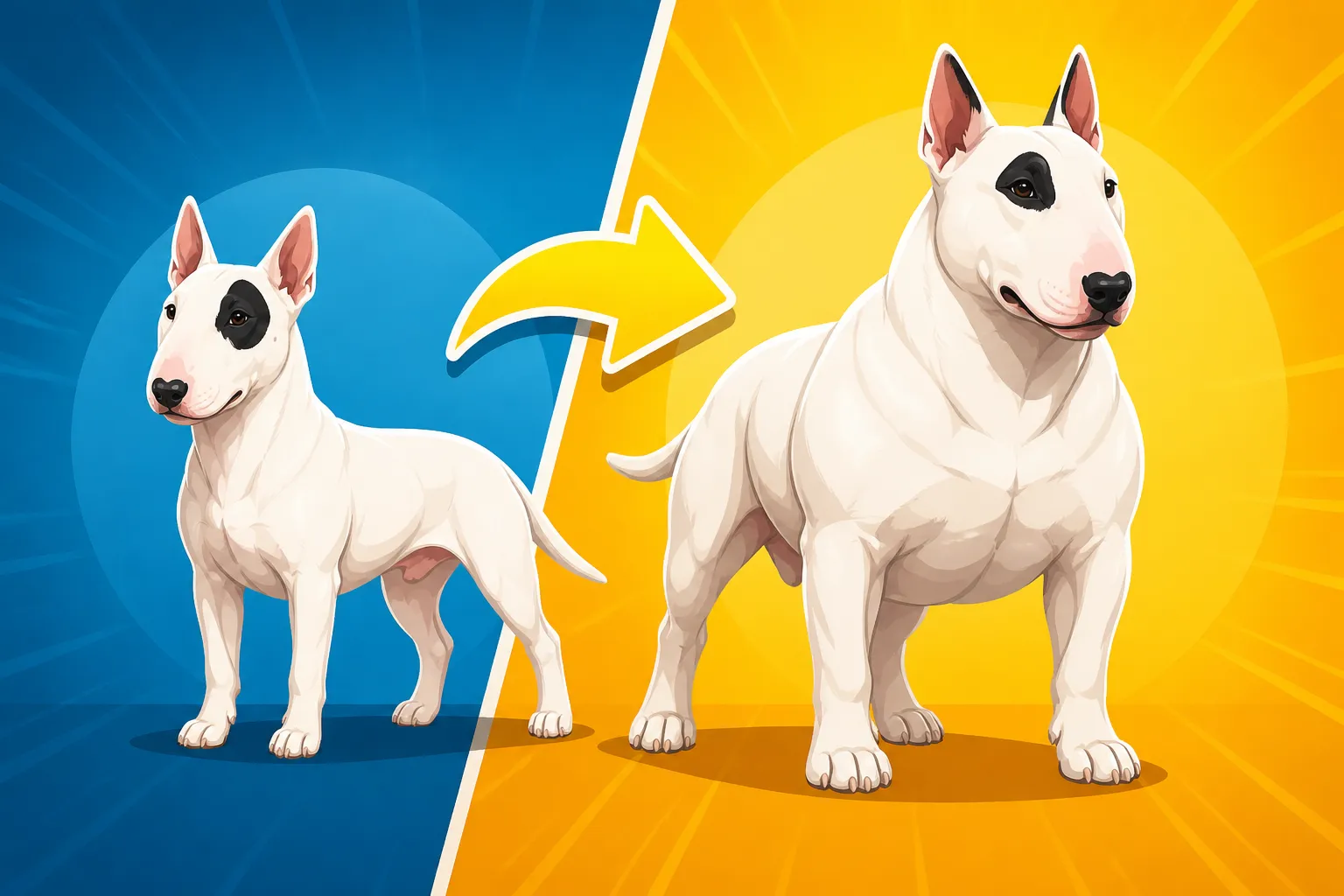
This is where the concept of "full weight" gets a bit more nuanced for a Bull Terrier. While many breeds might hit their full height and weight around a year to eighteen months, Bull Terriers are often late bloomers, particularly when it comes to muscle mass and overall robustness. While they might reach their adult height by eighteen months, their frame continues to fill out, and their musculature continues to develop and mature well into their second, and even third, year.
Many Bull Terrier owners report that their dogs truly don't look "finished" until they are two to three years old. This is when their chests deepen, their powerful shoulders broaden, and their hindquarters become more substantial. Their heads, which are such a distinctive feature, also take time to achieve that characteristic "egg" shape and fill in completely. So, while the scale might not show dramatic increases after eighteen months, don't underestimate the subtle, yet significant, changes still occurring in their body composition and density. This slow, steady maturation is perfectly normal for the breed and contributes to their impressive, sturdy build as adults.
Understanding "Full Weight" for a Bull Terrier
When we talk about a Bull Terrier reaching "full weight," it's crucial to understand that it's not a single, magic number, but rather a range and a reflection of their overall physical development and condition.
It's Not Just a Number: The Role of Condition Score
Unlike some breeds that have very specific weight ranges in their breed standards, the Bull Terrier standard often emphasizes balance, substance, and a sturdy build rather than a hard weight limit. While there might be a typical range, the "full weight" for your Bull Terrier is less about the exact number on the scale and more about their body condition score. A healthy, mature Bull Terrier should be muscular and well-conditioned, with ribs that are easily felt but not visibly prominent, and a distinct waist when viewed from above. Their muscle tone should be firm, giving them that powerful, athletic appearance.
Focusing too much on a specific weight number can be misleading. A Bull Terrier with a heavy bone structure and robust muscle might naturally weigh more than one with a finer build, even if both are at their ideal body condition. What truly matters is that your dog isn't carrying excess fat, which puts undue strain on their joints and organs, or conversely, isn't underweight, which could indicate insufficient nutrition or an underlying health issue. Regular body condition scoring with your veterinarian is a far more reliable indicator of healthy weight than chasing a particular number. How to Feel a Bull Terrier's Ribs is a great resource to learn how to do this yourself at home.
Standard vs. Miniature: Different Trajectories
It's vital to remember that the Standard Bull Terrier and the Miniature Bull Terrier, while sharing many characteristics, are distinct breeds with different growth expectations. A Miniature Bull Terrier, as the name suggests, is a smaller version, and therefore, their "full weight" will be significantly less and their growth timeline often concludes a bit sooner than their standard counterparts. A Standard Bull Terrier can easily weigh between 45 to 80 pounds, sometimes even more for larger males, while a Miniature Bull Terrier typically tops out around 20 to 35 pounds.
Comparing your Standard Bull Terrier's growth to a Miniature, or vice versa, would be like comparing apples and oranges. Both have their own healthy growth curves and expected adult sizes. If you have a Miniature, understand that its developmental milestones will still follow a similar pattern, but scaled down. Their growth plates will still need time to close, and their muscle will still need to mature, just at a different, smaller scale. How Small a Miniature Bull Terrier Is can give you a better idea of their mature size.
Factors Influencing a Bull Terrier's Mature Weight
Several factors play a role in determining your Bull Terrier's eventual full weight and overall size. It's a complex interplay, much like human growth.
- Genetics: This is arguably the biggest factor. The size and build of your Bull Terrier's parents and their lineage will give you the best indication of what to expect. Reputable breeders will be able to show you the parents and even adult relatives, giving you a visual of their mature size. Genetics dictate their bone structure, potential muscle mass, and inherent growth rate. Some lines naturally produce larger, more substantial Bull Terriers, while others tend towards a slightly leaner, more compact build.
- Sex: Generally, male Bull Terriers tend to be larger and heavier than females. They often have more substantial bone structure and a greater muscle mass potential. This difference typically becomes more apparent after the first year of life as they continue to mature.
- Nutrition: While genetics provide the blueprint, nutrition is the fuel. A diet that is too high in calories during puppyhood can lead to overly rapid growth, which can stress developing joints. Conversely, insufficient nutrition can hinder their potential. A balanced, high-quality diet appropriate for their age and activity level is crucial. How Many Cups a Day an Adult Bull Terrier Eats and How Much an Adult Bull Terrier Eats are important considerations.
- Exercise: Regular, appropriate exercise helps build healthy muscle and keeps their frame strong. While over-exercising a puppy can be harmful, consistent, moderate activity as they mature will contribute to their muscular development and overall conditioning, which impacts their "full weight."
Supporting Healthy Growth and Maintaining Ideal Weight
Providing the right care during your Bull Terrier's growth period and maintaining their ideal weight as an adult is paramount for their long-term health and well-being. It's a commitment that lasts their entire life.
Nutrition Through the Growth Stages
Feeding a Bull Terrier correctly is not just about filling their bowl; it's about providing the right nutrients at the right stages. For puppies, a high-quality puppy food specifically formulated for large breeds is often recommended, even though Bull Terriers aren't giant breeds. The reason? These foods typically have a carefully controlled calcium and phosphorus balance, which is crucial for slow, steady bone development, reducing the risk of orthopedic issues later in life. Brands like Ollie offer customized fresh food plans that can be tailored to a puppy's specific growth needs, ensuring they get balanced nutrition without excessive calories.
As your Bull Terrier approaches their first birthday, you'll generally transition them to an adult formula. When a Bull Terrier Puppy Moves to Adult Food is a critical milestone to discuss with your vet. Avoid the temptation to free-feed; Bull Terriers can be enthusiastic eaters, and controlled portions help maintain a healthy weight. Always follow the feeding guidelines on your chosen food, adjusting as needed based on your dog's activity level and body condition. If you ever have questions about diet, discussing it with your veterinarian or a canine nutritionist is always a good idea. Sometimes you can find specialized foods or larger bags for bulk ordering on sites like Chewy, which can be convenient for larger breeds with healthy appetites.
Appropriate Exercise for Growing Bones and Muscles
Exercise is vital for Bull Terriers, but "appropriate" is the keyword, especially during their growth phases. During the rapid puppy stage, intense, prolonged, or high-impact activities should be avoided. Their growth plates are still open, and excessive stress can lead to injury. Think short, controlled play sessions and gentle walks. Letting them self-regulate their play with other puppies in a safe environment is generally better than structured, forced exercise. How Much a Bull Terrier Puppy Should Exercise can provide more detailed guidance.
As they enter adolescence and young adulthood, you can gradually increase the duration and intensity of their exercise. This is when their muscles really start to develop, contributing to that powerful Bull Terrier physique. Activities like brisk walks, controlled running (once growth plates are closed, usually around 12-18 months), and interactive play sessions are excellent. They love to chase and play with toys, and durable fetch toys or flirt poles, easily found on Amazon, can be great ways to burn energy without overexerting them in intense, long-distance runs. Remember, consistency is more important than extreme bursts of activity; regular, moderate exercise helps maintain muscle tone and prevents excessive weight gain.
Recognizing When Weight Becomes a Concern
It's easy to dismiss a little extra weight on a Bull Terrier, especially with their broad chests and powerful build. However, recognizing when their weight is no longer ideal is crucial for their health. Signs a Bull Terrier Is Overweight include not being able to feel their ribs easily, a lack of a discernible waist, and fat deposits over their tail base. An overweight Bull Terrier is at higher risk for joint problems (like patellar luxation, which can occur in the breed), heart disease, diabetes, and a reduced lifespan.
Conversely, a Bull Terrier that is consistently underweight, with ribs and hip bones easily visible, may also have health issues. This could be due to inadequate nutrition, parasites, or more serious underlying medical conditions like Hereditary Nephritis Takes Bull Terriers in Their Prime or other chronic illnesses. If you notice a significant or sudden change in your Bull Terrier's weight, whether up or down, it's always best to consult your veterinarian. They can help determine the cause and recommend a suitable course of action, whether it's adjusting their diet with a specific renal diet if kidney issues are present, or exploring other medical treatments.
Common Misconceptions About Bull Terrier Weight
There are a few persistent myths and misunderstandings about Bull Terrier growth and weight that can sometimes lead owners astray. Let's clear up some of these.
The Myth of the "Fat Puppy" Being a Healthy Puppy
Many people mistakenly believe that a chubby puppy is a healthy puppy, perhaps thinking it signifies robust growth or a strong immune system. For Bull Terriers, this couldn't be further from the truth. While a healthy puppy should be well-fed and have a rounded appearance, being overweight as a puppy can have serious long-term consequences. Excess weight puts undue stress on their rapidly developing joints and bones, increasing the risk of orthopedic issues like hip or elbow dysplasia, even in breeds not typically prone to them. It can also predispose them to obesity later in life, making it harder to manage their weight as adults.
Instead of aiming for a "fat" puppy, focus on a puppy with a healthy, lean physique. You should be able to feel their ribs easily without seeing them, and they should have a slight waist when viewed from above. Why a Bull Terrier Puppy Should Grow Slowly is a concept worth embracing. It's about steady, controlled growth that supports strong skeletal development, rather than rapid weight gain that can overtax their young bodies.
Don't Rush the Growth: Why Slower is Better
Following on from the "fat puppy" myth, another common misconception is that faster growth equals a better, stronger adult dog. For Bull Terriers, just like many larger breeds, the opposite is often true: slower, more controlled growth is highly beneficial. Their muscular, robust build develops best over time, allowing their bones, joints, and ligaments to strengthen gradually. Trying to "bulk up" a young Bull Terrier with excessive food or intense exercise before their body is ready can lead to injuries and health problems that could have been avoided.
Think of it like building a strong foundation for a house – you want it to settle slowly and evenly, not be rushed and crack under pressure. This is why many vets recommend keeping Bull Terrier puppies on large-breed puppy food for longer, and being mindful of intense exercise until their growth plates have definitively closed. Patience during these crucial developmental years will pay off with a healthier, more structurally sound adult Bull Terrier.
When a Bull Terrier's Weight Signals a Health Issue
While fluctuations in weight can be normal during growth spurts or due to changes in diet and activity, a persistent or sudden change in a Bull Terrier's weight can sometimes be a red flag for an underlying health issue. For example, some Bull Terriers are prone to kidney issues, such as hereditary nephritis. A sudden loss of weight, despite a good appetite, could be a symptom of conditions like this, as their body struggles to process nutrients. Regular The Yearly Urine Test Every Bull Terrier Owner Should Book can help catch these issues early.
Conversely, unexplained weight gain, even if diet and exercise haven't changed, could indicate issues like hypothyroidism (though less common in Bull Terriers, it can occur) or other metabolic imbalances. If your Bull Terrier's weight deviates significantly from their ideal body condition, and you can't attribute it to obvious factors, a vet visit is always warranted. It's better to investigate and rule out serious conditions than to ignore a potential symptom. Being proactive about their health can make all the difference in catching and managing conditions early.
| Growth Stage | Approximate Age Range | Key Characteristics | Weight/Size Tendency | Owner Focus |
|---|---|---|---|---|
| Puppy | 0-6 Months | Rapid growth, lanky appearance, disproportionate features (big paws, small head), high energy, intense learning phase. | Significant weight gain, rapid height increase. | High-quality large breed puppy food, controlled growth, gentle exercise, early socialization. Monitor weight regularly with vet. What a Bull Terrier Puppy Eats at Four Months is a good read. |
| Adolescent | 6-18 Months | Continued height and length growth, gradual muscle development, "awkward" phase, hormonal shifts. | Slower weight gain, filling out of frame, chest deepening. | Transition to adult food (around 12 months), increase moderate exercise, continued training & mental stimulation. Keep monitoring body condition. |
| Young Adult | 18-36 Months | Final filling out of muscle and bone, head shape fully develops, reaches full robustness and maturity. | Weight stabilizes, muscle mass increases, full adult physique. | Maintain ideal body condition with balanced adult diet and consistent exercise. Regular vet check-ups. Ensure muscle development is healthy. What an Adult Bull Terrier Should Weigh refers to a target range, but condition is key. |
| Mature Adult | 3+ Years | Stable size and weight (assuming good health), prime physical condition, established routines. | Stable weight within healthy range. | Continue balanced diet, regular exercise, annual vet check-ups including bloodwork and urine tests. Prevent weight gain as metabolism may slow. What Care a Bull Terrier Needs Its Whole Life offers a holistic view. |
Ultimately, your Bull Terrier will reach their full weight, but it's not a race to the finish line. It's a journey of careful nutrition, appropriate exercise, and vigilant health monitoring. Enjoy every stage of their transformation from a boisterous pup to a magnificent, fully-grown Bull Terrier.
Disclaimer
This article is for general informational purposes only and does not constitute professional advice. Laws, prices and regulations vary by location and change over time. Consult a qualified professional for guidance on your specific situation.