Why a Bull Terrier Puppy Should Grow Slowly
It’s an exciting, slightly chaotic, and utterly heartwarming time when you bring home a Bull Terrier puppy. You watch them, mesmerized, as they grow from a clumsy little bundle of energy into a sturdy, confident companion. Every Bull Terrier owner dreams of their puppy growing big and strong quickly, wanting to see them fill out their impressive frame. However, while it might seem counterintuitive, encouraging slow, steady growth is actually one of the kindest things you can do for your Bull Terrier puppy's long-term health. Rushing that growth can lead to a host of problems that might not show up until much later, and this guide will walk you through exactly why a measured approach is best and how to achieve it.
The Hidden Dangers of Rapid Growth for Bull Terrier Puppies
Many new puppy owners, often out of love and a desire to see their dog thrive, unknowingly push for faster growth. They might feed extra portions, offer rich treats, or introduce supplements they think will help. While a Bull Terrier puppy certainly needs robust nutrition to develop its distinctive, powerful build, an accelerated growth rate can put immense, invisible stress on its developing body. It’s like trying to build a magnificent brick house too quickly – the foundation and framing need time to set properly before you pile on all that weight.
Think of those adorable, rapidly expanding paws and that head that seems to double in size every week. Inside, the bones are lengthening, muscles are forming, and cartilage is developing. When this process happens too fast, these delicate structures can't keep up with the demands placed upon them, leading to long-term health complications that are often painful and expensive to manage. This isn't about deprivation; it's about thoughtful, responsible development.
Stress on Developing Joints
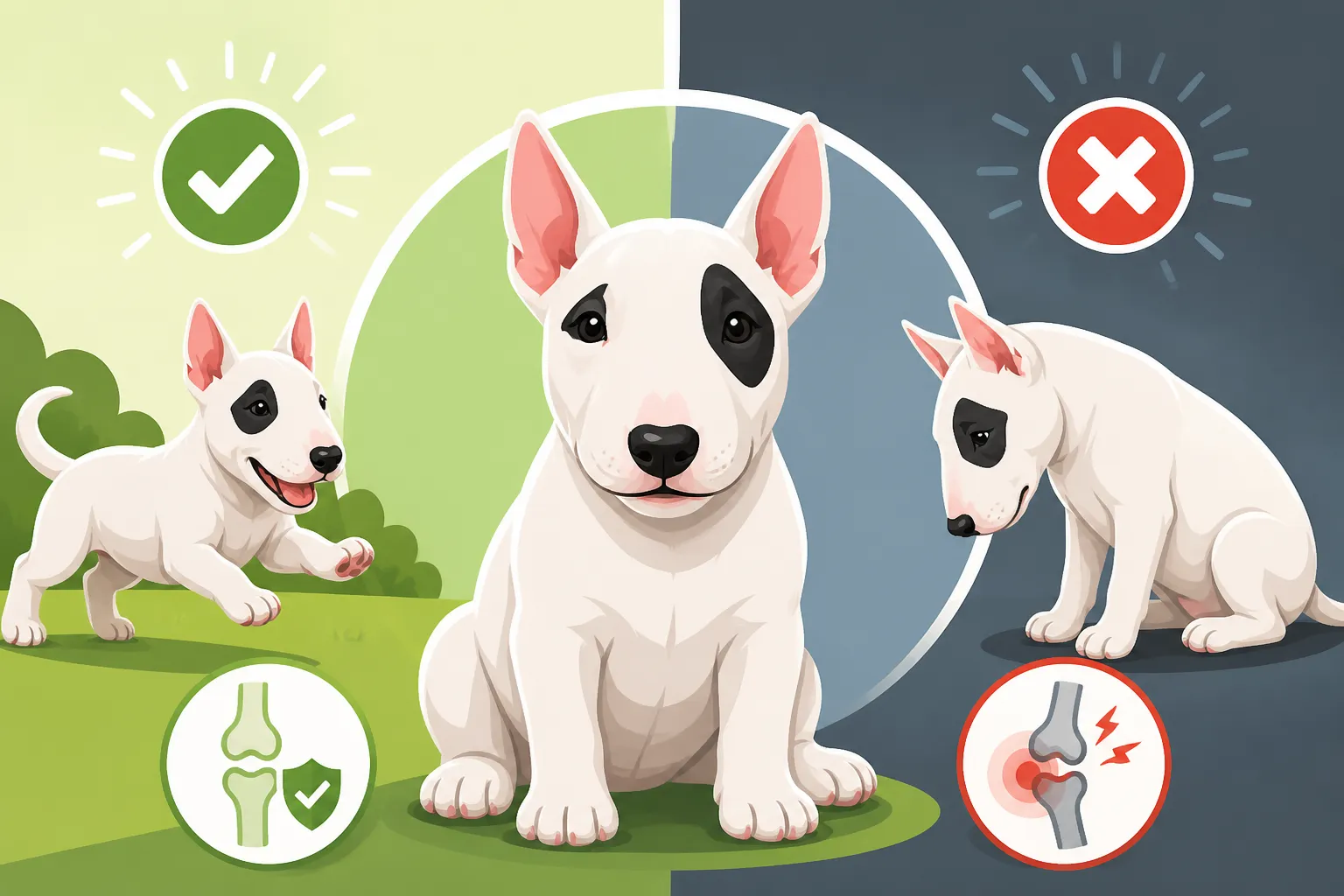
Imagine your Bull Terrier puppy, full of beans, tearing around the yard, pouncing on toys with all the exuberant clumsiness of youth. Now, consider that every single jump, every sharp turn, every awkward landing sends shockwaves through joints that are still forming. When a puppy grows too quickly, especially in terms of weight gain, these developing joints bear an excessive load. The growth plates – areas of cartilage near the ends of bones that allow them to lengthen – are particularly vulnerable.
These growth plates aren't fully closed until a Bull Terrier is often 12 to 18 months old, sometimes even later for larger males. Until then, they are soft, vulnerable points. Rapid weight gain combined with uncontrolled exercise can lead to inflammation, abnormal development, and even early closure or damage to these crucial areas. This sets the stage for chronic pain and limited mobility later in life, issues no Bull Terrier owner ever wants their beloved companion to face.
Predisposition to Skeletal Issues
Bull Terriers are generally sturdy dogs, but like all breeds, they have predispositions to certain skeletal issues. While conditions like severe hip and elbow dysplasia are often more commonly associated with larger, heavier breeds, Bull Terriers can still be affected, and rapid growth can certainly exacerbate them. More specifically for our egg-headed friends, issues like patellar luxation – where the kneecap slips out of place – can be worsened or even triggered by fast growth and excess weight during puppyhood.
When a puppy gains weight too quickly, the soft tissues around the joints, like ligaments and tendons, don't have enough time to strengthen and adapt to the increasing size of the bones. This can lead to laxity in the joints, making them less stable and more prone to injury or malformation. It's a cruel irony: we want them to be strong, but rushing their growth actually makes them weaker in the long run. Many of these issues can lead to significant discomfort and expensive surgeries down the line. It's truly why taking your time is a solid investment in their future.
Impact on Cartilage Development
Cartilage is the unsung hero of healthy joints, providing cushioning and allowing bones to glide smoothly against each other. During puppyhood, this cartilage is still maturing, transforming from softer tissue into the resilient, shock-absorbing material it needs to be. When a Bull Terrier puppy grows too fast, the cartilage may not develop properly or quickly enough to handle the increased stress of a larger, heavier frame.
This can result in conditions like osteochondrosis (OCD), a developmental orthopedic disease where cartilage detaches from the bone, creating painful flaps that can lead to joint mice and chronic arthritis. While Bull Terriers aren't as prone to OCD as some other breeds, the principles of growth still apply. Proper, measured nutrition ensures the body has all the building blocks it needs for strong cartilage and bone, without forcing a speed that compromises quality. This delicate balance is vital for the smooth operation of their strong, athletic bodies throughout their The Ten to Fourteen Years a Bull Terrier Gets.
Nutritional Balance: The Key to Controlled Growth
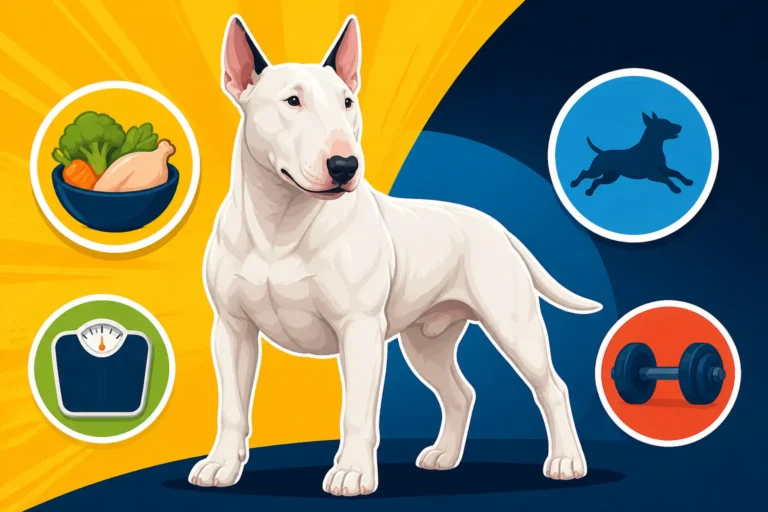
Controlling your Bull Terrier puppy's growth isn't about underfeeding; it's about smart, balanced nutrition. It's about providing exactly what their growing bodies need, not more, and certainly not less. This means paying close attention to the type of food, portion sizes, and avoiding the temptation to over-supplement. Your veterinarian is your best partner in navigating these decisions, as every puppy is a unique individual.
It’s easy to get caught up in the marketing hype of "performance" puppy foods or assume that more food equals a healthier, bigger dog. For a Bull Terrier, whose breed standard values a strong, substantial build, it can be particularly tempting. However, understanding what truly supports healthy growth versus what simply packs on pounds is critical.
Choosing the Right Puppy Food
This is perhaps the most crucial decision you'll make regarding your Bull Terrier puppy's nutrition. Look for high-quality commercial dog foods specifically formulated for "large breed puppies" or "all life stages." These formulas are designed with a careful balance of calories, protein, and minerals like calcium and phosphorus to support steady, controlled growth. They typically have slightly lower calcium and phosphorus levels compared to regular puppy foods, which helps prevent bone and joint issues.
Avoid generic "puppy" foods that aren't specified for large breeds, as these often contain higher calorie and mineral concentrations suitable for smaller, faster-maturing dogs, but detrimental to a larger breed like the Bull Terrier. Brands like Purina Pro Plan Large Breed Puppy, Royal Canin Large Breed Puppy, or even some of the higher-quality options available through platforms like Chewy or Ollie often have appropriate formulations. Always check the nutritional analysis and consult with your vet to ensure the chosen food aligns with your puppy's specific needs. Whether a Bull Terrier Puppy Needs Large Breed Food is a great resource to delve deeper into this.
Avoiding Overfeeding and Supplementation
One of the biggest culprits in rapid puppy growth is simply feeding too much food. Those puppy eyes are masters of manipulation, and it's easy to give in to their pleas for more. However, feeding beyond the recommended guidelines on the food bag – which are often just starting points and need adjustment based on activity level and individual metabolism – is a recipe for accelerated weight gain. Use a measuring cup every time you feed to ensure consistency, and don't eyeball it.
Furthermore, resist the urge to add extra calcium, vitamins, or other supplements unless specifically directed by your veterinarian. While supplements can be beneficial in certain circumstances, an overdose of calcium, for example, can be just as harmful as a deficiency, leading to skeletal abnormalities during rapid growth. A well-balanced large breed puppy food should provide everything your growing Bull Terrier needs. If you're considering a new food or supplement, a quick search on Amazon for specific brands can give you an idea of what's out there, but always follow up with your vet for tailored advice.
The Role of Protein and Calcium
Protein is essential for building muscle and tissue, and a growing Bull Terrier puppy needs a good amount of it. However, the quality and digestibility of protein are often more important than simply a high percentage number on the bag. High-quality animal proteins are crucial. As for calcium and phosphorus, these minerals are vital for strong bone development. The key here is balance and appropriate levels, not excessive amounts.
As mentioned before, too much calcium, particularly when coupled with rapid growth, can interfere with normal bone remodeling and potentially lead to developmental orthopedic diseases. Large breed puppy foods are formulated to have a precise calcium-to-phosphorus ratio and overall lower calcium levels, which supports a slower, more even bone development. Trust these formulations and your vet's guidance rather than trying to customize your puppy's diet with extra components you might find for sale on Chewy or elsewhere, which could inadvertently throw off this delicate balance.
Managing Exercise and Activity Levels
Just like nutrition, exercise needs to be carefully managed for a Bull Terrier puppy to ensure healthy, slow growth. Their boundless energy might make you think they need endless hours of running and playing, but their developing joints need protection. Over-exercising a growing puppy is another common mistake that can lead to long-term orthopedic issues. It's about quality over quantity when it comes to puppy playtime.
A young Bull Terrier is a powerhouse in the making, but that power needs to develop gradually. Their enthusiasm can often outstrip their physical readiness. As their proud owner, it's your job to set boundaries and structure their activity in a way that supports their delicate growth plates and cartilage.
The "Five-Minute Rule" for Exercise
This rule is a lifesaver for growing puppies of all larger breeds, including Bull Terriers. The general guideline is to provide five minutes of structured exercise per month of age, twice a day. So, a three-month-old Bull Terrier puppy would get 15 minutes of structured exercise (like a leash walk) twice a day. A six-month-old would get 30 minutes, and so on. This isn't counting free play in a securely fenced yard, but it does mean limiting strenuous, forced exercise.
This "five-minute rule" helps prevent overexertion and unnecessary stress on their still-developing bones and joints. It allows for mental stimulation and socialization without pushing their physical limits too far. Remember, these walks aren't about covering miles; they're about sniffing, exploring, and learning leash manners. For more specific guidance on their activity needs, you might find How Much a Bull Terrier Puppy Should Exercise to be a helpful read.
Avoiding High-Impact Activities
While your Bull Terrier puppy might love to chase a ball, jump for a frisbee, or race up and down stairs, these high-impact activities should be severely limited, if not entirely avoided, until their growth plates have closed. Repetitive jumping, hard landings, and sudden stops and starts put tremendous strain on vulnerable joints. Even seemingly innocent games like wrestling with other dogs can lead to injuries if not closely supervised and moderated.
Instead, opt for gentler forms of exercise. Short, slow walks on soft surfaces, controlled play sessions on grass, or even mentally stimulating puzzle toys are far better for their developing bodies. Swimming, once they are old enough and properly introduced, can be an excellent, low-impact exercise option for muscle development without joint strain. The goal is to build strength and coordination gradually, not to push them to their physical limits.
Encouraging Controlled Play
Controlled play is all about channeling your Bull Terrier puppy's energy in safe and appropriate ways. Instead of letting them zoomie uncontrollably on slick floors, encourage games like fetch on the grass, hide-and-seek with treats, or gentle tug-of-war (with clear rules about dropping the toy on command). These activities help develop their muscles and coordination without the harsh impacts of uncontrolled running and jumping.
Interaction with other well-socialized, calm adult dogs can also be beneficial, but again, supervision is key. Avoid playdates with overly boisterous dogs who might bowl your puppy over or engage in rough-and-tumble games that are too much for their young bodies. The focus should be on engagement and mental stimulation, allowing their physical development to progress naturally and safely.
Monitoring Your Bull Terrier Puppy's Growth
Monitoring your Bull Terrier puppy's growth isn't just about watching them get bigger; it's about actively tracking their development to ensure they are on a healthy trajectory. This involves regular veterinary visits, learning how to assess their body condition yourself, and even keeping a simple growth journal. Being proactive in monitoring allows you to catch any potential issues early and make necessary adjustments to their diet or exercise routine.
Sometimes, owners are so proud of a hefty puppy they don't realize that robust doesn't always mean healthy. A "chubby" puppy isn't necessarily a healthier puppy; in fact, it can be quite the opposite, setting them up for a lifetime of joint and weight-related problems.
Regular Vet Checks Are Non-Negotiable
Your veterinarian is your most valuable resource in managing your Bull Terrier puppy's growth. Regular check-ups are essential not just for vaccinations and deworming, but also for professional assessment of their development. Your vet will weigh your puppy, assess their body condition, and examine their joints and gait. They can tell you if your puppy is growing too fast or too slowly, and offer tailored advice on diet and exercise.
These visits also provide an opportunity to discuss any concerns you might have, from their What a Bull Terrier Puppy Should Weigh by Month to questions about their energy levels or specific feeding practices. Your vet can provide specific guidance on appropriate food brands, portion sizes, and when it might be time to transition from puppy food to adult formula. The Five Tests a Bull Terrier Breeder Should Have Paid For and Which Health Tests a Bull Terrier Breeder Should Run highlight the importance of responsible breeding and early health screenings, setting a good foundation.
Learning to Body Condition Score
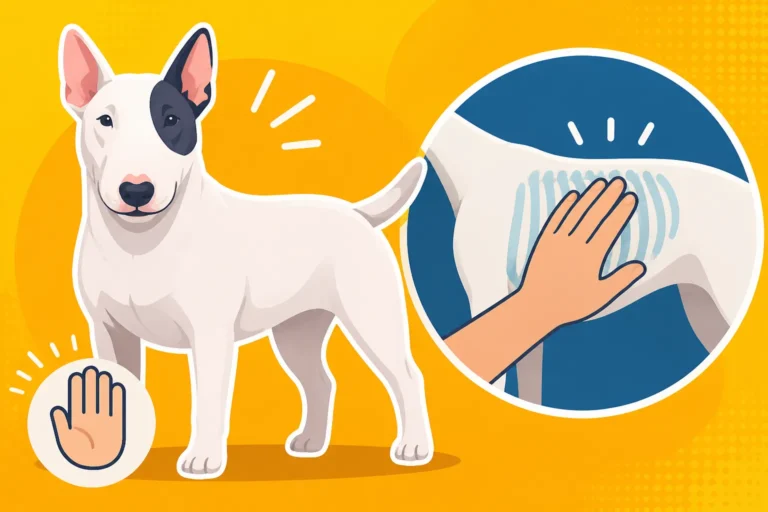
Beyond the numbers on the scale, learning to body condition score (BCS) your Bull Terrier puppy is an invaluable skill. This involves feeling their ribs, spine, and waist to assess their fat coverage, rather than just relying on visual cues. You should be able to easily feel your puppy's ribs without seeing them, and they should have a discernible waist when viewed from above. Their belly should also tuck up slightly when viewed from the side.
If you can't feel their ribs easily, or if they lack a waist, it's a sign they might be overweight and growing too quickly. On the other hand, if their ribs are visibly prominent, they might be underweight. Many vets use a 1-5 or 1-9 scale for BCS. Ask your vet to demonstrate how to properly assess your puppy's condition at their next appointment. This regular, hands-on check helps you adjust food portions proactively.
Keeping a Growth Journal
A simple growth journal can be a surprisingly effective tool. Regularly (perhaps once a week or every other week) record your puppy's weight, height (if you're feeling ambitious and they cooperate!), and any observations about their appetite, energy levels, or gait. You can also take photos from the same angles each time. This creates a visual and numerical record of their development.
This journal can help you spot trends or sudden spikes in growth that might indicate you need to adjust their food intake or activity levels. It also provides valuable data to share with your veterinarian, helping them make more informed recommendations tailored to your Bull Terrier's unique growth pattern. It's a small effort that can make a big difference in ensuring your beloved companion develops into a strong, healthy adult with minimal joint issues, saving you potential heartache and expense down the road.
Disclaimer
This article is for general informational purposes only and does not constitute professional advice. Laws, prices and regulations vary by location and change over time. Consult a qualified professional for guidance on your specific situation.