When a Bull Terrier Puppy Moves to Adult Food
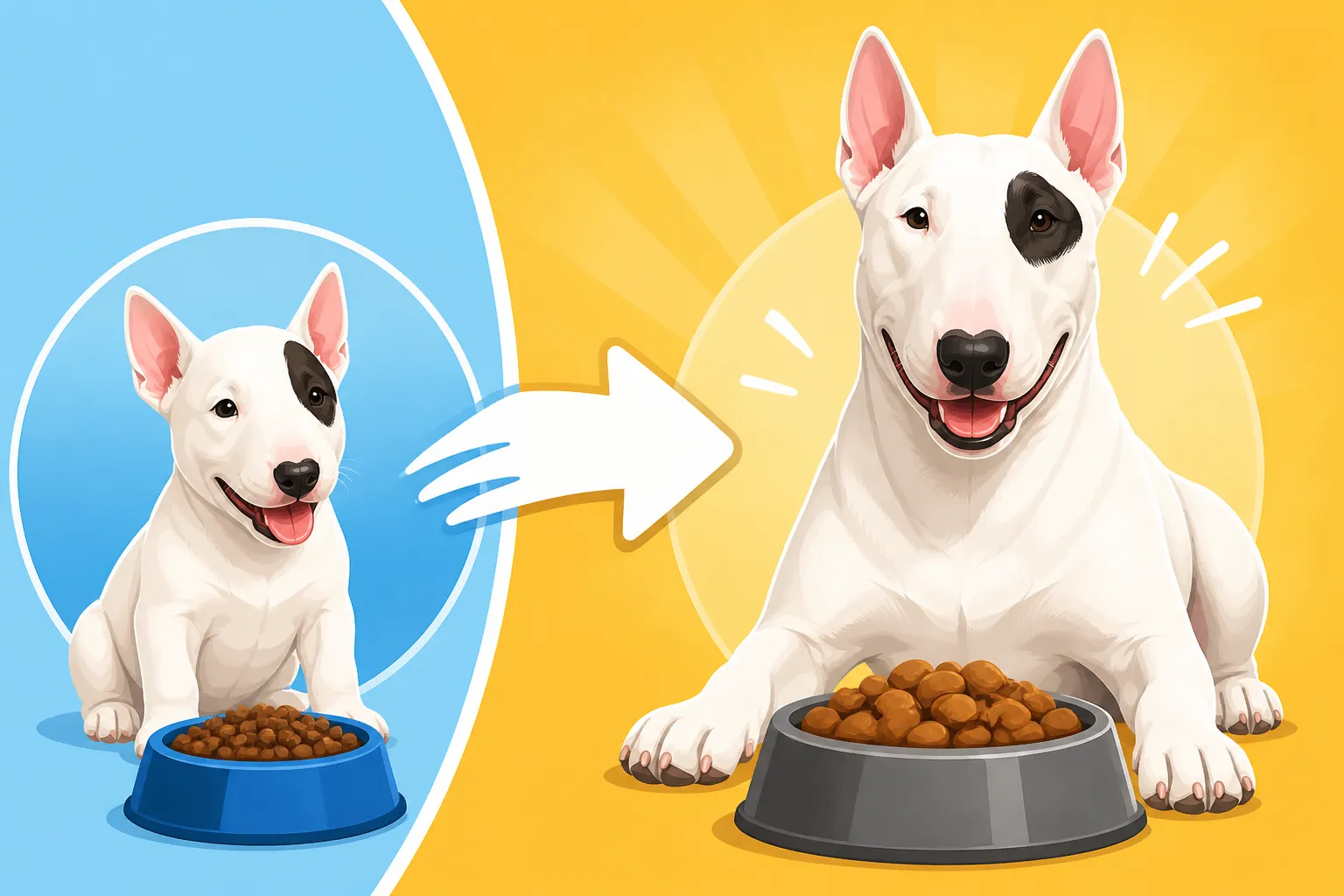
It's a question that many of us Bull Terrier owners have agonized over: when exactly do you switch that goofy, energetic puppy of yours from specialized puppy food to adult kibble? It feels like a monumental decision, fraught with worry that you'll stunt their growth or, worse, make them chubby if you get it wrong. This guide is here to walk you through the nuances of that transition, so you can feed your Bull Terrier puppy confidently, knowing you're supporting their unique development.
Understanding Puppy Growth Stages in Bull Terriers
Our Bull Terriers, with their distinctive egg-shaped heads and sturdy frames, mature at a pace that's a little different from some other breeds. It’s not a one-size-fits-all timeline, and understanding their growth phases is crucial for proper nutrition. This isn't just about getting bigger; it's about building a strong, healthy foundation that will support their playful, robust lives.
The Rapid Growth Phase (0-6 Months)
In these early months, your Bull Terrier puppy is basically a tiny, adorable growth machine. Their bones are lengthening, their muscles are starting to develop, and their internal organs are maturing at an astonishing rate. During this period, their nutritional needs are incredibly high, demanding a diet packed with calories, protein, and essential nutrients specifically formulated for rapid development. Puppy food is designed with this intense early growth in mind, providing the concentrated energy and building blocks they need. Skipping this crucial diet or prematurely switching to adult food can short-change their skeletal development, potentially leading to long-term health issues. Think of it like building a house – you need strong materials and careful construction from the ground up, and for a Bull Terrier, those first six months are precisely that. You might be surprised to learn A Bull Terrier Puppy Eats at Four Months quite a lot to fuel this amazing transformation.
The Adolescent Surge (6-12 Months)
As your Bull Terrier puppy rounds the six-month mark, their growth might visually seem to slow down a touch, but don't be fooled – they are far from finished. This adolescent phase is less about rapid height gain and more about filling out, developing bone density, and increasing muscle mass. Their bodies are consolidating all that initial rapid growth, making their bones stronger and their structure more robust. They're still incredibly active, often testing boundaries and burning through a lot of energy, meaning their calorie needs remain elevated, though perhaps not as intensely concentrated as in the first few months. It's a period where they're transitioning from gangly pup to more solid, young adult. Maintaining them on a quality puppy or large-breed puppy formula during this stage helps ensure they continue to develop properly, supporting both their physical maturation and their boundless energy.
Nearing Maturity (12-18 Months)
This is often the most confusing period for Bull Terrier owners. Many generic guidelines suggest switching to adult food around 12 months, but for a solid, muscular breed like the Bull Terrier, they often benefit from staying on puppy food a little longer. While they might reach their full height around a year, their bodies are still maturing and "filling out" with muscle and bone density until closer to 18 months, sometimes even 24 months for some individuals. Rushing the switch can mean missing out on optimal development during this final consolidation phase. It's about looking at the individual dog, not just the calendar. Are they still growing, or have they truly achieved their adult frame? Understanding When a Bull Terrier Reaches Full Weight can give you a better idea of when their body is truly done with the demands of growth. It’s a subtle shift, but one that warrants careful consideration for the long-term health of your companion.
Why Puppy Food Formulations Differ from Adult Food
It’s easy to look at a bag of puppy food and a bag of adult food and think, "What's the big difference, really?" But there's a world of scientific formulation behind those bags, tailored to the very specific, and dramatically different, needs of a growing puppy versus a fully mature dog. For our active, robust Bull Terriers, these distinctions are particularly vital.
Higher Calorie and Nutrient Density
The most immediate difference you'll notice in puppy food is its higher calorie count and overall nutrient density. Puppies, especially those undergoing rapid growth like our Bull Terriers, are burning through energy at an incredible rate. They need more fuel per bite to support cell division, organ development, and that ceaseless puppy energy that keeps them bouncing off the walls. Puppy formulas typically contain higher fat content, which is a concentrated source of calories, along with a more generous blend of vitamins and minerals. Think of it this way: a growing puppy's metabolism is like a roaring furnace, needing constant, rich fuel. An adult dog, whose "furnace" is merely maintaining, doesn't require that same intense energy input. Feeding an adult formula too early can lead to insufficient caloric intake for proper growth, leaving your Bull Terrier feeling perpetually hungry and potentially hindering their development. Conversely, keeping an already mature Bull Terrier on high-calorie puppy food for too long can quickly lead to weight gain, which is a precursor to a whole host of other health issues.
Protein and Calcium Levels for Growing Bones
Protein is the building block for all tissues, and puppies need a higher percentage of it for muscle development, organ growth, and immune function. Puppy food is formulated with increased, high-quality protein to support this rapid cellular growth. Beyond protein, the levels of calcium and phosphorus are critically balanced in puppy food to promote healthy bone development. For large and medium-sized breeds like the Bull Terrier, too much or too little calcium can actually be detrimental. Excessive calcium, for example, can interfere with normal bone remodeling, potentially leading to orthopedic problems. It might seem counter-intuitive, but rapid growth, especially with unbalanced minerals, isn't always healthy growth. That’s why we always stress Why a Bull Terrier Puppy Should Grow Slowly – controlled, steady growth supported by balanced nutrition is paramount. Adult foods have lower, maintenance levels of these minerals, as their skeletal system is already formed and doesn't require the same intense construction.
DHA for Brain and Vision Development
While often overlooked, the inclusion of Docosahexaenoic Acid (DHA) is another key differentiator in many quality puppy foods. DHA is an omega-3 fatty acid that plays a crucial role in the development of the brain and eyes. Just like human infants benefit from DHA, so too do puppies during their critical developmental window. This nutrient supports cognitive function, learning ability, and sharp vision, all of which are incredibly important for a young, curious Bull Terrier exploring its world. While adult foods might contain omega-3s for skin and coat health, the levels and specific focus on DHA for developmental purposes are generally higher in puppy formulas. This added boost helps set your Bull Terrier up for a lifetime of quick thinking and clear sight, equipping them for training and everyday interactions.
Key Indicators It's Time to Transition
Deciding when to transition your Bull Terrier from puppy to adult food isn't just about reading the age recommendation on a bag; it's about observing your individual dog. Every Bull Terrier is unique, and while general guidelines exist, paying close attention to their physical development and energy levels will give you the most accurate answer. Rushing the switch or delaying it unnecessarily can both have implications for their long-term health and weight management.
Age as a General Guideline
Most dog food manufacturers will suggest switching puppy food around 12 months of age. For many breeds, this guideline works perfectly well, as they are largely finished growing by then. However, for a breed like the Bull Terrier, which is robust and tends to continue filling out and developing muscle mass beyond their first birthday, 12 months should be viewed as a starting point for consideration, not a hard deadline. Some Bull Terriers might be ready right at a year, especially if they're on the smaller end of the breed standard. Others, particularly males who tend to be larger and more heavily muscled, might benefit from staying on a large-breed puppy formula until 15, 18, or even 24 months. It’s about assessing their physical state rather than rigidly sticking to a calendar date. Think of it as a flexible window, not a locked door, and always keep your vet in the loop.
Physical Maturity (Size and Frame)
This is perhaps the most important indicator. Has your Bull Terrier puppy reached its adult height? Have they started to fill out their chest and broaden their skull? When you look at them, do they still have that gangly, "all legs" puppy look, or do they appear more proportioned and solid, like a smaller version of an adult Bull Terrier? You can often tell by looking at their overall frame and muscle development. A puppy that is still actively growing in height or has not yet achieved its mature bone density and muscle mass needs the additional support of puppy food. Once they appear to have reached their adult height and are beginning to fill out laterally, gaining substance, that's a good sign that their intense growth phase is winding down. A great way to assess their condition is to feel their ribs. How to Feel a Bull Terrier's Ribs without seeing them is a good practice to ensure they aren't getting too thin or too chunky during this phase. Their weight is a crucial factor too; remember to check What an Adult Bull Terrier Should Weigh as a guideline, but always prioritize their body condition over a number on the scale.
Activity Level and Energy Needs
Think about the sheer, unbridled energy of a Bull Terrier puppy. They seem to have an endless battery, zooming around, playing intensely, and then crashing hard. This high activity level demands a lot of calories. As they mature, while they certainly don't become couch potatoes, their energy levels tend to become a little more modulated, and their explosive bursts of puppy play might be less constant. If you notice your Bull Terrier's activity starting to level off, or if they seem to be gaining weight despite their usual exercise routine, it could be a sign that the higher calorie density of puppy food is no longer appropriate. Signs a Bull Terrier Is Overweight can be subtle but important to catch early. Continuing to feed puppy food to a dog with a reduced metabolic rate and activity level will inevitably lead to excess weight, which can strain their joints and lead to other health problems down the line. Conversely, if your 15-month-old Bull Terrier is still as wild as a whirlwind, they might still genuinely need those extra calories. Observing their energy output and making sure it aligns with their caloric intake is a vital part of the transition decision.
The Transition Process: How to Switch Safely
Once you've decided it's time to transition your Bull Terrier from puppy to adult food, the actual switch itself needs to be handled with care. A sudden change can easily upset their digestive system, leading to uncomfortable symptoms for your dog and a messy headache for you. A gradual approach is always the best way to introduce new food, ensuring a smooth and stress-free change for everyone.
Gradual Introduction is Key
Imagine suddenly switching your own diet from what you're used to to something completely different overnight. Your stomach probably wouldn't be too happy, right? The same goes for your Bull Terrier. Their digestive systems, especially after being accustomed to one type of food for months, need time to adjust to new ingredients and nutrient profiles. The goal is to slowly introduce the new adult food while phasing out the puppy food over a period of about 7 to 10 days. This allows the beneficial bacteria in their gut to adapt to the new diet, minimizing the risk of digestive upset like diarrhea or vomiting.
Here’s a common, easy-to-follow schedule:
| Day | Puppy Food Ratio | Adult Food Ratio |
|---|---|---|
| Days 1-2 | 75% | 25% |
| Days 3-4 | 50% | 50% |
| Days 5-6 | 25% | 75% |
| Days 7-10 | 0% | 100% |
Some Bull Terriers might have more sensitive stomachs and require an even slower transition, extending the process over two weeks or even a bit longer. Observe your dog closely, and if you notice any signs of discomfort, slow down the process and keep the current ratio for an extra day or two.
Monitoring for Digestive Upset and Pickiness
During the transition, keep a keen eye on your Bull Terrier's stool consistency, appetite, and general demeanor. Loose stools, diarrhea, vomiting, or excessive gas are all signs that the transition might be happening too quickly or that the new food isn't agreeing with them. If you see these symptoms, revert to the previous ratio for a few days until their system settles, then try to reintroduce the new food at an even slower pace. Sometimes, a specific ingredient in the new adult food just doesn't sit well.
You might also encounter some pickiness. Your Bull Terrier might not immediately take to the new flavor or texture. Don't panic! Mixing the foods thoroughly often helps, as does ensuring the new food is a high-quality, palatable option. Brands available through Chewy or Amazon often have a good return policy if a food just isn't working out, which can be a relief when you're trying to find the perfect fit. Some owners find that adding a little warm water to the kibble or a dollop of a fresh food topper, like those from Ollie, can make the new food more enticing during the initial days. However, avoid adding too many extras that could unbalance the diet or contribute to digestive upset. The goal is a smooth transition to their primary adult food.
Choosing the Right Adult Food
Selecting the right adult food for your Bull Terrier is just as important as the transition itself. Look for high-quality adult formulas from reputable brands. Given the Bull Terrier's robust build and potential for joint issues later in life, some owners opt for large-breed adult formulas, even if their dog isn't at the very top end of the size scale. These formulas often have controlled mineral levels to support joint health and help maintain a healthy weight. Always check the ingredient list for whole meat proteins as the first few ingredients, and be mindful of excessive fillers or artificial additives.
Consider your Bull Terrier's individual needs. Do they have any known sensitivities? A single-protein source food might be a good choice if you're unsure. While this article focuses on the transition, it's always worth noting that diet plays a huge role in long-term health, even relating to complex conditions. While not directly linked to the transition phase, Which Diet a Bull Terrier With Kidney Disease Needs shows how specific diets are crucial for certain health conditions, reinforcing the need for careful selection of any food. Consulting with your veterinarian is invaluable here, as they can recommend specific brands or formulations based on your dog's health, activity level, and any predispositions. They can also help you determine How Many Cups a Day an Adult Bull Terrier Eats to ensure proper portion control from the start.
Special Considerations for Bull Terriers
Our unique Bull Terriers, with their distinctive look and personality, also come with some particular considerations when it comes to their diet and transition to adulthood. Understanding these breed-specific aspects ensures you're providing the best possible nutritional foundation for their health and well-being.
Large Breed Formulas and Growth Plate Health
Even though Bull Terriers aren't considered giant breeds, their solid build and substantial bone structure mean they benefit greatly from the careful formulation found in large-breed puppy and adult foods. The primary concern with larger, rapidly growing breeds is the potential for orthopedic issues, such as hip and elbow dysplasia, or conditions like panosteitis. Large breed puppy formulas, in particular, are designed with precisely balanced calcium and phosphorus levels, and often slightly lower calorie counts than standard puppy foods, to promote slower, more controlled growth. This slower growth helps ensure that bones and joints develop properly, minimizing stress on delicate growth plates.
When transitioning to adult food, continuing with a large-breed specific formula can maintain this controlled approach to nutrition. These adult diets are formulated to support joint health with ingredients like glucosamine and chondroitin, and to prevent excessive weight gain that can exacerbate orthopedic problems. It ties directly back to the importance of Why a Bull Terrier Puppy Should Grow Slowly – it’s a strategy for long-term soundness, and these specialized foods are key players in that strategy. Even if your Bull Terrier is on the smaller side of the breed standard, the benefits of these formulations for their sturdy skeletal system are undeniable.
Weight Management and Lean Muscle Mass
Bull Terriers are renowned for their muscular, athletic builds. Maintaining this lean muscle mass without accumulating excess fat is crucial for their overall health and agility. Once your Bull Terrier transitions to adult food, calorie control becomes paramount. Adult foods are less calorie-dense than puppy foods, which helps prevent overfeeding once their rapid growth phase is complete. However, even with adult food, portion control is vital. Bull Terriers can be notoriously enthusiastic eaters, and it's easy for them to pack on pounds if their food intake isn't matched to their activity level.
Regularly assessing your Bull Terrier's body condition by feeling their ribs and looking at their waistline is essential. It can sometimes be tricky to distinguish muscle from fat in a Bull Terrier, so consistent checks are important. If you start noticing Signs a Bull Terrier Is Overweight, even a little bit, it's time to adjust their food portions or increase their exercise. The goal is to keep them at an ideal, lean weight to protect their joints and cardiovascular health, ensuring they can enjoy their characteristic zoomies and playful antics well into their The Ten to Fourteen Years a Bull Terrier Gets. Focusing on Keeping a Bull Terrier Lean When It Carries This Much Muscle is a lifelong commitment, and the transition to appropriate adult food is a major step in that journey.
Consulting Your Veterinarian
Perhaps the most important "special consideration" for any Bull Terrier owner is to maintain an open and honest dialogue with their veterinarian. Your vet knows your specific dog, their health history, and can offer personalized advice based on their physical exams. They can help you determine the optimal time to switch to adult food, recommend appropriate brands, and guide you on portion sizes. They can also perform regular wellness checks, which include evaluating your Bull Terrier's growth rate and body condition, helping to spot any potential issues before they become serious.
Veterinarians can also advise on any specific nutritional needs or sensitivities your Bull Terrier might have, or if certain health predispositions common in the breed, such as kidney issues, suggest a particular dietary approach. For example, What Most Bull Terriers Die Of includes kidney failure, highlighting why regular vet check-ups and appropriate diet choices from a young age are so important. They can help you understand the long-term impact of diet on a breed that, while generally robust, does have its vulnerabilities. Think of your vet as your co-pilot in navigating your Bull Terrier's nutritional journey, offering expert guidance to ensure a healthy and happy life from puppyhood through their senior years, which typically begin around The Age a Bull Terrier Is Considered Senior.
Disclaimer
This article is for general informational purposes only and does not constitute professional advice. Laws, prices and regulations vary by location and change over time. Consult a qualified professional for guidance on your specific situation.