Why a Bull Terrier’s Ears Stand on Their Own
A Bull Terrier’s ears stand upright because the breed naturally develops firm, erect ears—not because they are cropped. In puppies, the ears may begin folded or floppy while cartilage strengthens, so the change can look uneven and take patience. This guide explains what is normal, what not to do, and which signs suggest an ear problem rather than ordinary development.
Why a Bull Terrier’s Ears Stand Upright
The breed’s ears are naturally erect
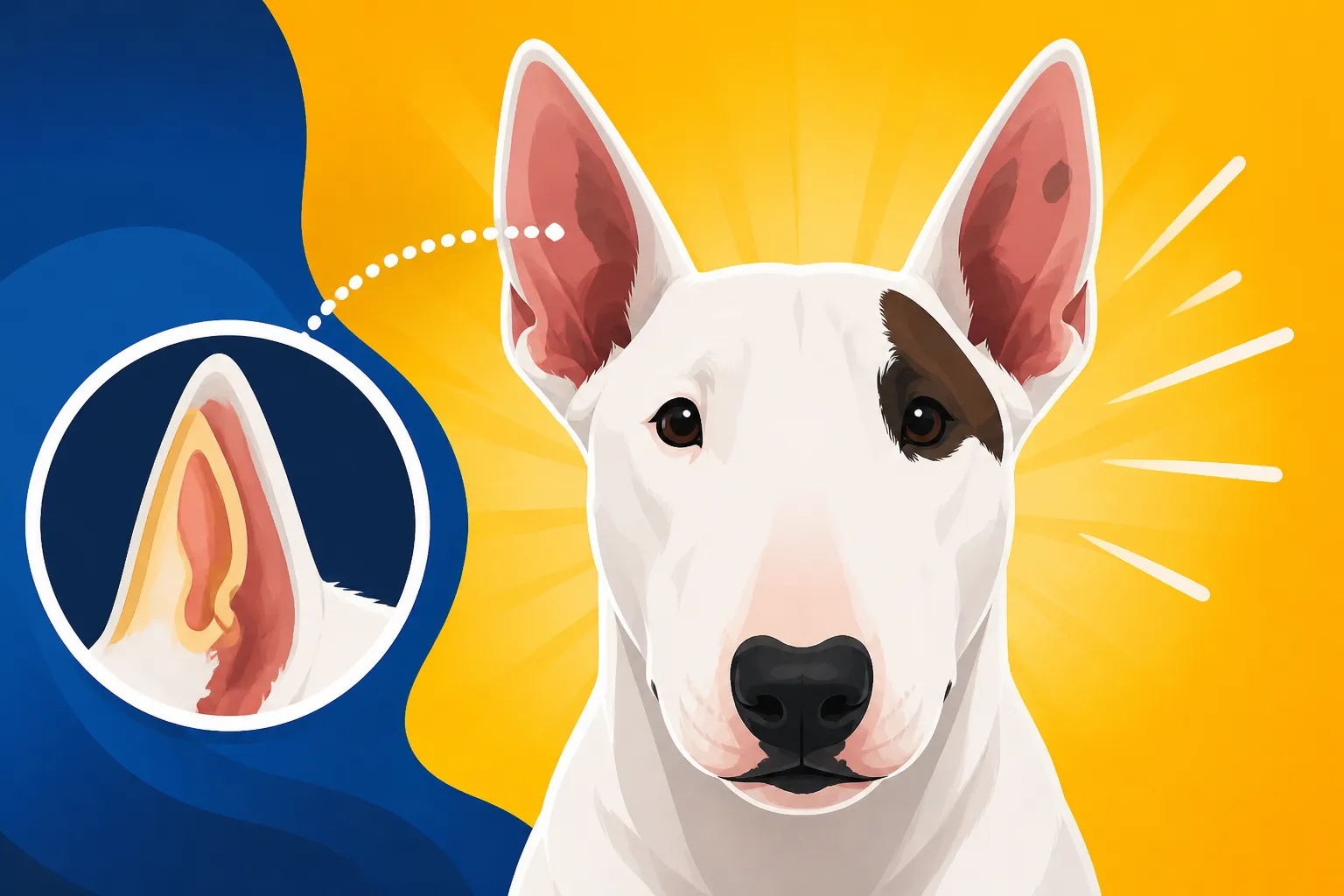
Bull Terriers are known for their upright ears, which sit high on the head and point upward. Their shape is a natural feature of the breed. Unlike breeds whose ears are routinely surgically altered, a Bull Terrier’s ears are not meant to be cropped to achieve an erect appearance. You can read more about that distinction in Why a Bull Terrier's Ears Are Not Cropped.
The visible ear flap is supported by cartilage. As a puppy grows, that cartilage firms up and helps the ears hold their characteristic position. The timing and appearance of this change vary from dog to dog. One ear may lift before the other, or the ears may shift between partly raised and fully upright for a while. That uneven stage can look surprising, but it does not automatically mean anything is wrong.
The breed’s head and ear shape have changed over time through selective breeding, as discussed in How the Bull Terrier's Head Changed Over Time. The result is a distinctive look, but the basic explanation is straightforward: the ears stand because of their natural anatomy and development, not because they need to be shaped by an owner.
Puppy ears can change gradually
A Bull Terrier puppy’s ears may look floppy in the earliest weeks, then begin to rise as the puppy matures. They do not always come up in a neat, matching pair. Some puppies develop an upright ear sooner on one side, while the other catches up later. If you are watching a young puppy’s ears day by day, it is easy to worry over every small change; looking at the overall trend is more useful than judging one moment.
There is no single timetable that applies to every puppy. Age, individual development, and inherited traits can all affect how quickly the ears become firm. For more on the expected process, see When a Bull Terrier Puppy's Ears Come Up. If a puppy is otherwise healthy and the ears are simply changing position, that alone is usually not an emergency.
However, do not assume that every persistent droop is just a developmental phase. If an ear suddenly changes position, becomes painful, swells, or develops discharge or a strong odor, contact a veterinarian. Those signs are different from a puppy’s ears gradually strengthening as it grows.
Erect ears are not a sign of better health
A Bull Terrier’s upright ears are part of its appearance, not a measure of whether the dog is healthy, well bred, or receiving good care. Ear position can vary during puppyhood, and a temporary difference between the two sides does not prove that the puppy has a defect. Likewise, an ear that looks less upright than expected should not be “corrected” without first considering the dog’s age and health.
If you are choosing a puppy, focus on the whole dog: temperament, general condition, clear health information, and the breeder’s willingness to answer questions. Ear carriage alone is not a substitute for appropriate health screening or a veterinary examination. A puppy with a naturally upright ear is not automatically healthier than one whose ears are still developing.
What to Expect as a Bull Terrier Puppy Grows
Watch for gradual change, not a perfect daily pattern
The ears may look different from week to week as the puppy develops. One day they may seem nearly upright; later they may tilt or soften again. That can happen because cartilage is still maturing. Photographs taken every week or two can help you notice gradual change without repeatedly handling the ears or trying to judge them by eye throughout the day.
A useful rule is to pay attention to comfort and overall development. If the puppy is eating, playing, responding normally, and does not seem bothered when the ears are gently touched, there may be no immediate reason to intervene. If you are unsure, ask the breeder what they have observed in the puppy’s litter and bring the question to your veterinarian at the next appointment.
Do not compare your puppy too closely with photos of adult Bull Terriers. Adult dogs have fully developed ears, while a young puppy is still growing. The variety in timing is one reason Whether a Bull Terrier's Ears Need Taping is a question owners often ask; the short version is that taping should never be treated as a routine home fix.
Why owners should be cautious about taping
Taping, splinting, or gluing a puppy’s ears can irritate delicate skin, interfere with normal movement, and cause discomfort if done incorrectly. Adhesive can pull at the skin or trap moisture. A tight wrap may also create pressure, and a puppy that scratches or chews at it could make the situation worse.
Do not use tape or a homemade support simply because one ear is slower to rise. If a breeder suggests an intervention, ask what it is intended to address and discuss it with your veterinarian before applying anything. The vet can check whether there is a medical issue, explain the risks, and help you decide whether any action is appropriate for that individual puppy.
Never use household adhesives, rigid splints, or products intended for human skin on a dog’s ears. If something has already been applied and the skin looks red, raw, damp, or painful, do not pull it off forcefully. Ask a veterinary clinic for advice on removing it safely.
When to ask a veterinarian about ear position
A naturally developing ear is generally not painful. Arrange a veterinary check if the puppy repeatedly shakes its head, scratches one ear, cries when the ear is touched, or develops swelling, redness, discharge, or an unpleasant smell. These symptoms may indicate irritation, infection, injury, or another problem that needs an examination.
A sudden change is more concerning than a slow, gradual shift during puppy growth. For example, an ear that was upright and comfortable but becomes swollen or droops after rough play should be checked. A veterinarian can examine the ear canal and outer ear rather than guessing from appearance alone.
It can also help to bring a clear photo or short video showing the change. Owners often find it difficult to describe whether an ear has been gradually moving or suddenly changed, and a visual record gives the veterinarian useful context. Do not put drops or cleaning solution into a painful ear unless a veterinary professional has recommended them.
Caring for a Bull Terrier’s Ears
Keep ear care gentle and simple
Bull Terrier ears do not need constant cleaning just because they stand upright. A routine look at the outer ear is often enough to notice dirt, redness, swelling, or an unusual smell. Use a soft, damp cloth on the visible outer ear if needed, and avoid pushing cotton swabs or other objects down the ear canal.
If a veterinarian recommends an ear cleanser, follow the product instructions and the clinic’s directions. Some ear problems need prescription treatment, and cleaning alone will not resolve them. If a cleaner causes obvious discomfort, stop and contact the clinic rather than trying several products in succession. The guide How to Clean a Bull Terrier's Erect Ear covers the practical cleaning basics.
When a vet has named a specific cleanser, keep the exact product name and directions handy before shopping; Chewy is one place owners may check for pet-care supplies. If your veterinarian recommends gauze or another simple cleaning material, Chewy may also be a convenient place to compare options. Avoid selecting medicated drops or treatment products based only on a product description, since the wrong product can be unhelpful or harmful in some ear conditions.
Check regularly without overhandling
A brief, calm ear check can be part of a weekly grooming routine. Look at the visible skin and note whether the ear seems clean, comfortable, and free of a strong odor. This does not mean you need to inspect the canal deeply or clean the ears on a fixed schedule regardless of what they look like. The right frequency depends on your dog and any advice from your veterinarian; How Often a Bull Terrier's Ears Need Checking explains what to watch for.
Make the check easy and low-pressure. Choose a quiet moment, let your dog sniff your hand, and gently lift or look at the ear without pinning the dog down. If your Bull Terrier pulls away, becomes tense, or shows pain, stop. Forcing a check can make future handling harder and may aggravate a sore ear.
If your dog has a history of recurring problems, ask the veterinarian how often to examine or clean the ears and what signs should prompt a call. A dog with a past infection may need a different plan from one whose ears remain clean and comfortable. For symptoms that could point to infection, see Whether a Bull Terrier Gets Ear Infections.
Protect the ear tips from cracking and irritation
The ear tips can become dry or irritated, particularly in cold, windy weather or when the skin is already sensitive. Check for small cracks, scabs, or persistent redness, especially if your dog has been rubbing or scratching. Whether a Bull Terrier's Ear Tips Crack in Winter offers more detail on this specific concern.
If you notice a sore or cracked area, avoid applying human creams or household remedies without veterinary advice. Products that are safe for people are not automatically appropriate for dogs, and a dog may lick anything applied to the ear. Keep the area clean and dry, and contact your veterinarian if the skin is bleeding, painful, worsening, or not healing.
For a veterinarian-recommended supply, such as a particular cleanser or protective item, Chewy may be one shopping option to check. Read the label carefully and use only what the clinic has advised. A product listing cannot diagnose whether the problem is dryness, infection, allergy, injury, or another skin condition.
Normal Ears Compared With Signs of a Problem
| What you notice | What it may mean | What to do |
|---|---|---|
| A puppy’s ears gradually changing position | Normal development as cartilage matures | Observe calmly and mention it at a routine visit if you are concerned |
| One ear lifting before the other | Individual variation during growth | Avoid taping or forcing the ear into position |
| A sudden droop with swelling or pain | Possible injury or inflammation | Contact a veterinarian promptly |
| Repeated head shaking or scratching | Possible irritation or ear disease | Arrange a veterinary assessment |
| Strong odor, discharge, or marked redness | Possible infection or another ear problem | Seek veterinary advice; do not use unapproved drops |
| Small dry or cracked areas at the tips | Possible skin irritation or weather-related dryness | Protect the area from further irritation and ask a vet if it persists |
A Bull Terrier’s ears stand on their own because the breed’s natural cartilage and development support an upright shape. Puppy ears may take time to settle, and a brief uneven stage is not necessarily a problem. The safest approach is to let development happen without home taping, keep routine checks gentle, and seek veterinary help for sudden changes, pain, swelling, discharge, or persistent irritation.
Disclaimer
This article is for general informational purposes only and does not constitute professional advice. Laws, prices and regulations vary by location and change over time. Consult a qualified professional for guidance on your specific situation.