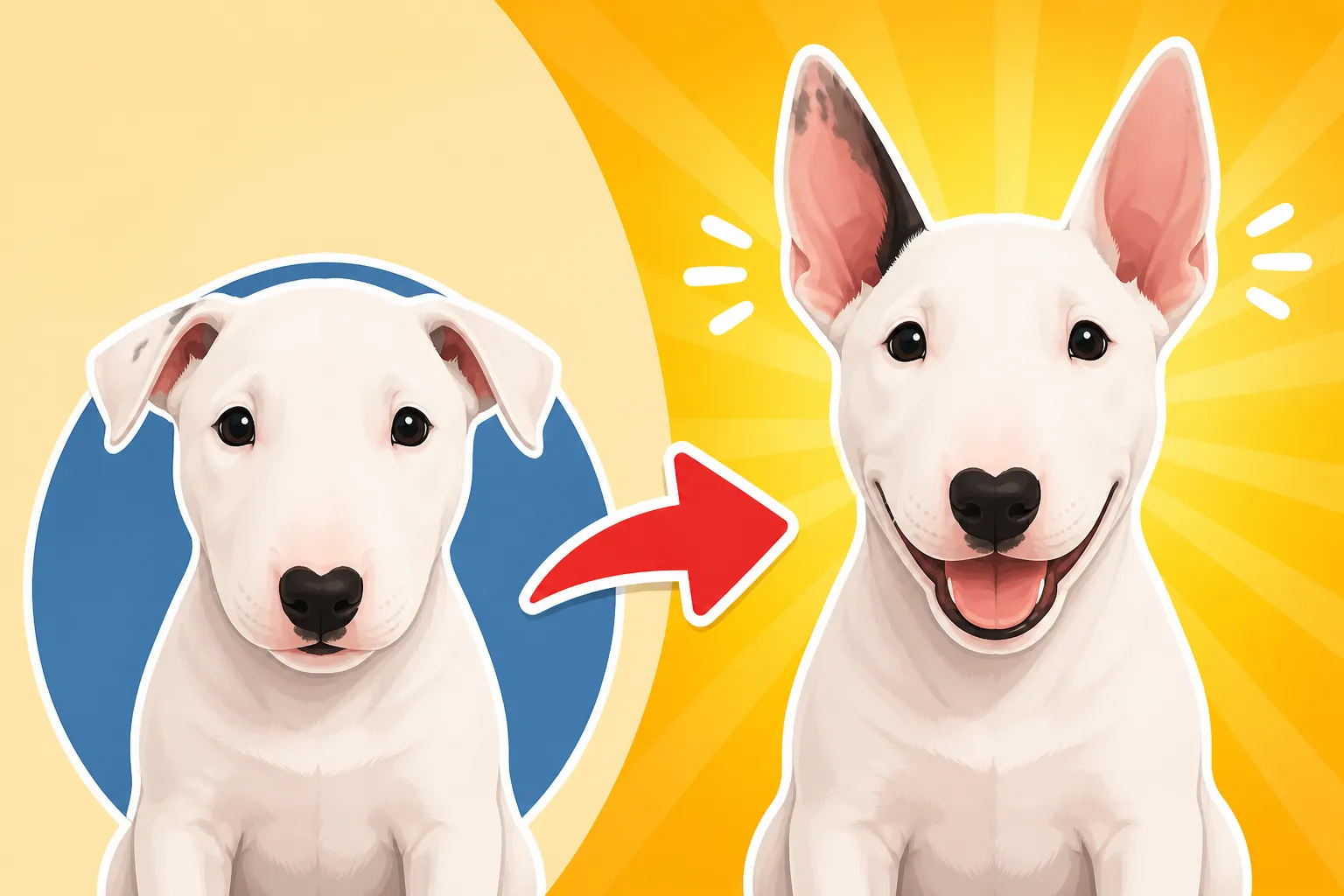
When a Bull Terrier Puppy’s Ears Come Up
One of the most unique and iconic features of our beloved Bull Terriers is that wonderful, alert ear set, standing proudly upright like little triangular beacons. But if you’re a new Bull Terrier puppy owner, you're probably spending a fair bit of time staring at those adorable, floppy little puppy ears, wondering when, or even if, they’re going to make that majestic transition. It’s a common worry, and one that many Bull Terrier enthusiasts have experienced, fretting over every slight twitch and questioning every puppy nap. This guide is here to walk you through the normal development of your Bull Terrier puppy's ears, what to expect, and when to relax.
The Bull Terrier Ear: A Journey from Floppy to Fabulous
Watching a Bull Terrier puppy grow is a joy, filled with clumsy tumbles, sudden bursts of zoomies, and that endearing, sometimes exasperating, "three-year-old in a dog suit" personality. Among all these developmental milestones, the ears standing up is often a highly anticipated event. It’s part of that transformation from a chunky, soft puppy into the distinctive, elegant adult we all adore. You see those ears in all the breed standard photos, standing tall and proud, and it's natural to wonder when your own puppy will achieve that look.
What "Erect" Actually Means for a Bull Terrier
When we talk about a Bull Terrier's ears being "erect," we're not just talking about them standing up. We're referring to a very specific shape and carriage that is part of the breed's signature look. A properly set Bull Terrier ear is triangular, fairly thick, and stands straight up, high on the head, often close together. They should be mobile, swiveling independently to catch every sound, contributing to their intelligent and mischievous expression.
It's a far cry from the soft, folded-over ears that most Bull Terrier puppies start with. Those little floppy ears are charming, don't get me wrong, but they don't quite capture the alert intensity that the breed is known for. The cartilage in the puppy's ears is soft and pliable at birth, gradually hardening as the puppy grows and develops. This hardening of cartilage is what allows the ears to eventually stand. Think of it like building a sturdy tent pole: it starts flexible and gains rigidity over time. Why a Bull Terrier's Ears Stand Up delve into the mechanics of this in more detail.
The Timeline: When to Expect Those Ears to Pop Up
There isn't a single, definitive day when all Bull Terrier puppies suddenly sprout perfectly erect ears. It's a process, and like all things puppy-related, it varies from individual to individual. Generally, you can expect your Bull Terrier puppy's ears to start attempting to stand somewhere between four weeks and six months of age.
The most common window for ears to fully stand is typically around three to five months old. This period often coincides with other major developmental changes, like teething. The calcium and phosphorus crucial for bone and tooth development are also essential for strengthening ear cartilage, so it’s not uncommon for ears to pop up, then flop back down temporarily as the puppy experiences a growth spurt or intense teething. This on-again, off-again phase can be incredibly frustrating for an owner, making you think you're going crazy! Rest assured, it's usually a normal part of the process. Sometimes one ear will stand before the other, or they might stand for a few hours, then flop down, only to return upright the next day. Patience truly is a virtue during this time.
Factors Influencing Ear Set
Several factors can play a role in how quickly or completely your Bull Terrier puppy's ears stand. Genetics, of course, is a huge one. If both parents and their lineage have strong, naturally erect ears, your puppy likely will too. This is why a reputable breeder will often show you pictures of the parents and even past litters.
Beyond genetics, nutrition is absolutely vital. A healthy diet, rich in appropriate nutrients, supports overall growth, including the development of strong cartilage. A deficiency in key minerals, especially calcium and phosphorus, can sometimes delay or hinder the ears from standing. Similarly, general health and robust immunity contribute to healthy development. Stress or illness can temporarily divert resources away from non-essential development like ear cartilage, causing a delay. Even mundane things like rough play with littermates, where ears get bent or pulled, or even a puppy sleeping in a peculiar position, can impact how they stand, though these are usually temporary influences. For more insights on the specifics, check out When a Bull Terrier Puppy's Ears Come Up.
Common Concerns and What's Normal (and Not)
As your Bull Terrier puppy’s ears begin their fascinating journey from floppy to erect, you’re bound to have questions and maybe even a few moments of panic. It’s easy to scrutinize every twitch, every slight lean, and worry if your pup’s ears are “normal.” Let’s demystify some of these common concerns.
The "Lazy Ear" Phenomenon and Asymmetrical Sets
It’s incredibly common for a Bull Terrier puppy to have what we affectionately call a “lazy ear,” where one ear stands confidently while the other stubbornly remains flopped over, or only partially erect. Sometimes, both ears might stand, but one might lean slightly outward or inward, giving a lopsided appearance. This asymmetry is almost always temporary and part of the normal developmental process.
Often, one side of the ear cartilage simply hardens faster than the other, or one ear might have been bent more during sleep or play. Give it time! As the puppy continues to grow and mature, the cartilage will strengthen, and typically, the "lazy" ear will catch up. This stage can last for a few weeks or even a couple of months. It’s also common for ears to pop up and then flop back down during periods of intense teething or rapid growth spurts, as the body temporarily reallocates resources. Unless there's pain, swelling, or persistent floppiness past six to eight months of age, most "lazy ear" situations resolve on their own.
When to Consult Your Vet About Ear Development
While patience is often the best medicine, there are certainly times when a quick chat with your veterinarian is a good idea. If your Bull Terrier puppy's ears haven't shown any signs of attempting to stand by six to eight months of age, or if one ear remains completely floppy and appears noticeably weaker than the other after this point, it’s worth a vet visit. Your vet can examine the ear structure, check for any underlying issues like infection or injury that might be preventing the ears from standing, or assess nutritional deficiencies.
Sometimes, a persistent ear infection or even a small hematoma from head shaking can impact the cartilage's ability to firm up. Though rare, a vet can also rule out congenital cartilage weaknesses. They can also provide reassurance or suggest minor interventions, such as discussing dietary adjustments if they suspect a nutritional link. Remember, early intervention is always best if there’s a genuine concern. You can also discuss general health checks, such as those mentioned in What a Bull Terrier's Yearly Bloodwork Should Cover, to ensure there are no other health issues impacting growth.
Myths and Misconceptions About Helping Ears Stand
The desire for those perfect upright ears often leads owners down rabbit holes of old wives' tales and unproven methods. Let's clear up a few common misconceptions:
- Taping/Posting: Historically, some breeds had their ears taped or "posted" to encourage them to stand. For Bull Terriers, this is generally unnecessary and not recommended by reputable breeders or vets. Their ears are meant to stand naturally if their genetics and health are sound. Attempting to tape them can cause skin irritation, restrict blood flow, and may even permanently damage the delicate cartilage.
- Massaging Ears: While gentle petting is wonderful for bonding, aggressive massaging or manipulating the ears won't make them stand faster. In fact, it could cause discomfort or damage.
- Extra Calcium Supplements: Don't rush to give your puppy extra calcium or other supplements without veterinary guidance. Over-supplementation can be just as dangerous as deficiency, leading to imbalances in phosphorus and other minerals, which can actually harm bone development. A balanced puppy food is usually sufficient.
- Pulling Ear Hair: Some believe pulling hair from inside the ears helps them stand. This is completely unrelated to cartilage strength and can actually lead to irritation or infection. Regular How to Clean a Bull Terrier's Erect Ear is important, but not for promoting standing.
Your best approach is to ensure optimal health and nutrition, and then simply let nature take its course. If you bought your puppy from a reputable breeder, you likely have good genetics on your side. Reputable breeders usually have a strong understanding of their lines' ear development, and they are a fantastic resource for reassurance and advice.
Supporting Healthy Ear Development
While much of your Bull Terrier puppy's ear development is dictated by genetics, there's certainly a lot you can do as an owner to provide the best possible environment for those ears to pop up strong and healthy. It's all about comprehensive care, focusing on overall well-being.
Nutrition's Role in Cartilage Strength
A high-quality, balanced diet is paramount for every aspect of your Bull Terrier puppy's growth, and ear cartilage is no exception. Look for a puppy food specifically formulated for large breeds or all breeds, as these will have the appropriate ratios of calcium, phosphorus, and other essential vitamins and minerals crucial for bone and cartilage development. Brands like Chewy often carry a wide selection of reputable puppy foods, and some, like Ollie, even offer customized fresh food plans that can ensure optimal nutrient intake.
Avoid "bargain" brands that might be loaded with fillers and lack the necessary nutrient density. When a puppy doesn't get enough of these building blocks, its body prioritizes vital functions, and ear cartilage strength might be lower on the list, potentially delaying the ears from standing. Conversely, over-supplementing, particularly with calcium, can also be detrimental, leading to skeletal problems. Always discuss any dietary changes or supplements with your vet to ensure they're appropriate for your growing pup. For general guidance on feeding, you might find How Many Meals a Day a Bull Terrier Needs and What a Bull Terrier Puppy Eats at Four Months useful.
General Health and Its Impact
A healthy puppy is a puppy whose body can dedicate its resources to optimal growth and development. Any illness, chronic stress, or even a persistent parasitic load (like worms) can divert energy and nutrients away from things like ear cartilage. This is why regular veterinary check-ups are so important. Your vet will monitor your puppy's growth, ensure they are up-to-date on vaccinations, and provide preventative care against parasites.
A sick or stressed puppy's immune system will be working overtime, and its body might not be able to invest fully in strengthening ear cartilage. Ensuring your puppy has a calm, stable environment, sufficient rest (which is a lot for puppies!), and proper exercise will all contribute to its overall health. For an idea of the recommended health screenings for the breed, you might want to read Which Health Tests a Bull Terrier Breeder Should Run as part of your research on breeders. Keeping your Bull Terrier free from chronic issues like skin allergies, which are common in the breed, also supports overall well-being. A Bull Terrier's Skin Is Its Weakest Point is a great resource for this.
Gentle Care for Developing Ears
While you shouldn't intervene with taping or aggressive manipulation, gentle care of your Bull Terrier puppy's ears is important. Keep them clean and dry to prevent infections, which can certainly cause discomfort and inflammation that might hinder the ears from standing properly. During your weekly grooming routine, take a moment to gently wipe the visible parts of the ear with a soft cloth or a vet-approved ear cleaning solution if recommended. You can find excellent ear cleaning solutions and cotton pads on platforms like Amazon or Chewy.
Be mindful of how you handle your puppy's head and ears during play. Avoid pulling on them, even accidentally. If your puppy is constantly shaking its head or scratching its ears, this could be a sign of an ear infection, mites, or allergies, and should warrant a vet visit. Beyond that, simply letting your puppy be a puppy, with plenty of safe toys and opportunities for healthy activity, will give its ears the best chance to do what they're naturally meant to do: stand up tall and proud, adding to the unmistakable charm of your Bull Terrier.
| Ear Development Stage | Typical Age Range | Characteristics | What to Expect |
|---|---|---|---|
| Floppy Puppy Ears | Birth – 3-4 weeks | Soft, folded, usually lying flat against the head. | Normal for all puppies. |
| "Working" Ears | 4 weeks – 6 months (peak 3-5 months) | Ears start to twitch, partially stand, fold, or alternate standing. | Very common, often asymmetrical, may flop back down. |
| Fully Erect Ears | 3-6 months and beyond | Ears stand firm, triangular, high on the head, mobile. | Should be mostly consistent once established. |
| Persistent Floppy | 6-8 months + | Ears remain completely soft and do not stand at all. | Consult a vet to rule out underlying issues. |
Disclaimer
This article is for general informational purposes only and does not constitute professional advice. Laws, prices and regulations vary by location and change over time. Consult a qualified professional for guidance on your specific situation.