Why a Bull Terrier Fixates on a Dog Across the Street
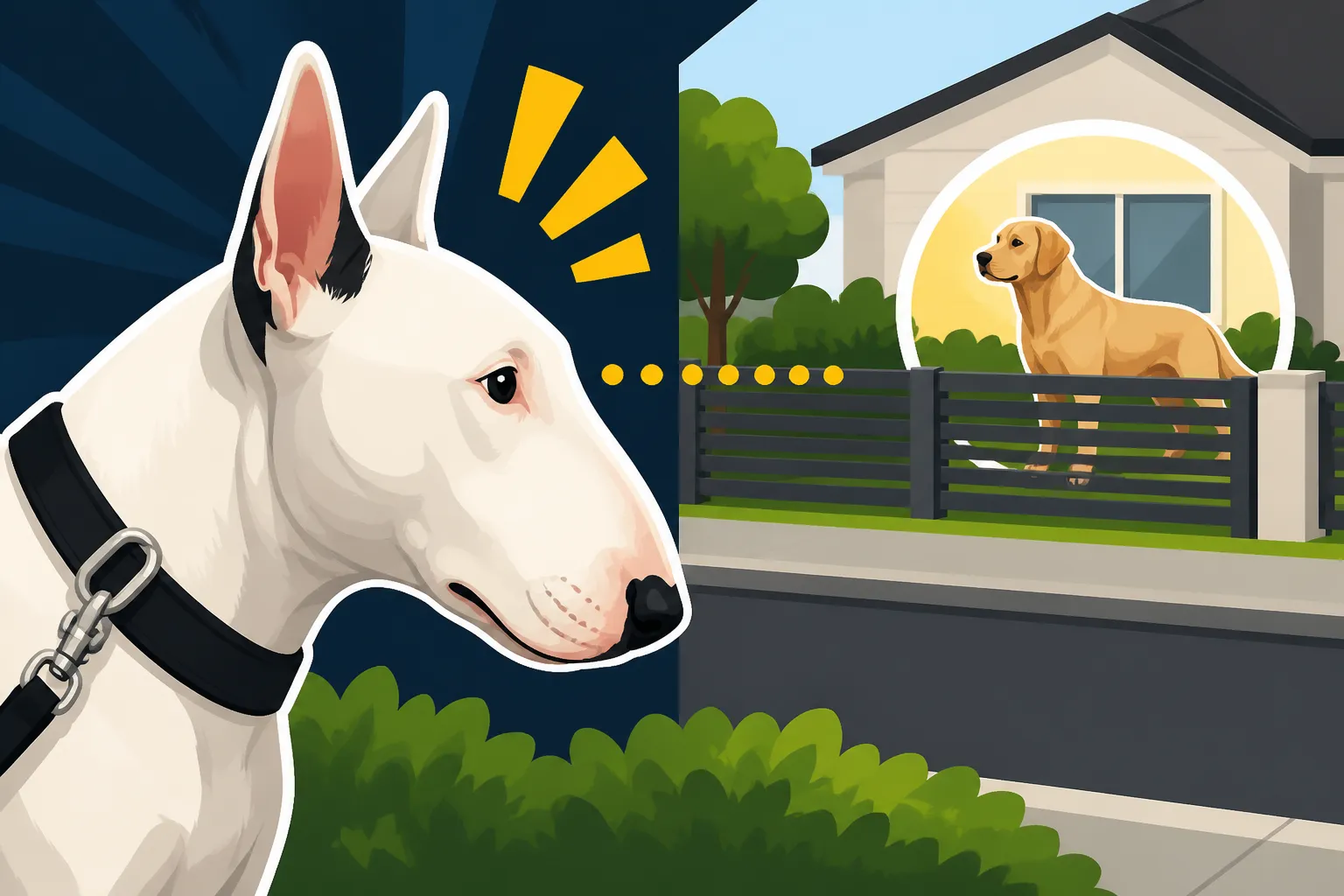
It can be incredibly frustrating when you're out for a peaceful walk with your beloved Bull Terrier, only for them to suddenly lock eyes with a dog across the street and transform into a lunging, barking, or intensely focused machine. One moment they're trotting along, seemingly enjoying the sniff-fest, and the next, they're completely ignoring you, consumed by the other dog. This guide will explore the deep-seated reasons behind this common Bull Terrier behavior and offer practical, empathetic strategies to help you manage and redirect your dog's intense fixations.
Understanding the Bull Terrier's Intense Focus
Bull Terriers are known for their unique personalities – they're clowns, yes, but also incredibly strong-willed, intelligent, and often possess an intense focus that can be both a blessing and a curse. When that focus locks onto another dog, it can feel like you've completely lost their attention, and it's easy to wonder if they're just being stubborn or intentionally defiant. However, there's usually a complex mix of instinct, learning, and emotion at play.
The Genetic Blueprint of an Intense Breed
Let's be real, Bull Terriers weren't originally bred for their easy-going nature around other canines. While the "White Cavalier" reputation means they were never meant to start fights, they were certainly bred to hold their own and have a strong, tenacious spirit. This means they often come with a heightened sense of awareness and a "game on" attitude when confronted with other dogs. It's not necessarily aggression, but often an over-the-top interest or frustration.
Their genetics contribute to a certain intensity. They are strong, powerful dogs with a significant prey drive and a profound sense of self-importance. When another dog enters their visual field, especially at a distance where they can't properly interact or disengage, that inherent intensity can manifest as a deep, unwavering gaze, sometimes accompanied by a stiff body, low tail, or even a sudden halt in their walk. It's their way of processing the world, even if it's inconvenient for us! Understanding this background helps us approach their behavior with more patience and less personal offense.
Frustration, Excitement, or Uncertainty?
When your Bull Terrier fixates, it's not always a single emotion driving the behavior. Often, it's a complicated cocktail. Think about it from their perspective: they see another dog, and they can't get to it. This can lead to immense frustration – they want to investigate, play, or even simply chase, and being held back by a leash can be incredibly irritating for a strong-willed breed like ours. This frustration can quickly boil over into barking, lunging, or pulling.
Conversely, it can be pure, unadulterated excitement. Some Bull Terriers are just so thrilled at the prospect of a doggy friend that their arousal levels go through the roof. They might whine, pull with all their might, or even jump, all in an effort to get closer. They lack the social finesse to calmly approach, and their enthusiasm becomes overwhelming.
Then there's uncertainty or a touch of anxiety. Maybe they're not sure if the other dog is friendly. Maybe they've had a bad experience in the past. This uncertainty can lead to a "defense is the best offense" mentality, where they stare, stiffen, and perhaps bark to create distance. The fixation here is a form of vigilance. Knowing which emotion is primarily at play can help tailor your training approach. If you notice your Bull Terrier tends to tense up, tuck their tail slightly, or give a hard stare, it might be more rooted in caution than exuberant friendliness.
Common Triggers and Underlying Causes for Fixation
It's rare for a Bull Terrier to fixate on every dog, every time. There are often specific circumstances or deeper reasons that contribute to this intense focus. Pinpointing these triggers is the first step toward effective management and training.
Lack of Early and Positive Socialization
Many Bull Terrier owners, myself included, have fallen into the trap of thinking a few puppy classes or dog park visits are enough. But true, positive socialization for a Bull Terrier is an ongoing process throughout their lives, especially during their critical developmental stages. If a Bull Terrier wasn't exposed to a wide variety of dogs, environments, and positive interactions as a puppy and young adult, they might not have developed the appropriate coping mechanisms or social etiquette.
Imagine a Bull Terrier who primarily interacts with dogs in a high-arousal environment like a dog park, where greetings are often chaotic and rude. They might learn that approaching other dogs is an all-or-nothing, highly energetic event. When they see a dog across the street, their brain might scream, "GO! INTENSE ENGAGEMENT REQUIRED!" rather than "Observe calmly." This lack of nuanced social understanding can make distant dogs incredibly stimulating and hard to ignore. How a Bull Terrier Gets On With Other Dogs explains more about their unique social needs.
Leash Frustration and Barrier Reactivity
This is a huge one for many strong, physical breeds like the Bull Terrier. When a dog is on a leash, they're physically restrained from making their own choices about approaching or retreating from another dog. This restriction itself can cause immense frustration, often termed "leash reactivity" or "barrier frustration." They want to get to the dog, but they can't. The leash, which should be a tool for safety and communication, becomes a symbol of their thwarted desires.
This frustration builds up, and the moment another dog appears, it's like a pressure cooker exploding. They might bark, lunge, or pull relentlessly. It's less about the other dog being inherently threatening and more about their inability to control their own interaction. We've all been there, trying to walk a Bull Terrier that thinks it's a sled dog in pursuit of a squirrel or another dog. Teaching a Bull Terrier to Walk Without Pulling is a lifelong endeavor for many of us!
Insufficient Mental and Physical Exercise
A bored Bull Terrier is a destructive Bull Terrier, but a physically and mentally under-stimulated Bull Terrier is also a highly reactive Bull Terrier. These dogs are intelligent and robust; they need a "job" or at least plenty of opportunities to burn off both physical and mental energy. A simple trot around the block twice a day often isn't enough to satisfy their keen minds and powerful bodies.
If their energy isn't channeled productively, they'll find their own outlets, and fixation on other dogs can certainly be one of them. They might be looking for stimulation, a chase, or just something interesting to focus their pent-up energy on. Providing adequate enrichment, like puzzle toys, scent work, or structured play, can make a huge difference in their overall calmness and ability to ignore distractions on walks. What a Bull Terrier Does When It Is Bored goes hand-in-hand with this issue.
Previous Negative Experiences or Fear
While often playful, Bull Terriers can also be sensitive. A single negative encounter with another dog, even if it seemed minor to us, can leave a lasting impression. Perhaps they were startled by an off-leash dog, snapped at during puppy class, or had a tense standoff. Their fixation might then stem from a defensive posture, where they're trying to communicate "stay away" through their intense stare and body language.
They might not be overtly aggressive, but rather anticipatory of a bad interaction. This kind of underlying fear can be subtle, manifesting as freezing, hard stares, or a low growl rather than a full-blown attack. It's important to differentiate this from pure excitement, as the training approach will be different. If you suspect fear is at play, approaching the situation with extra caution and positive reinforcement is key.
Strategies to Manage and Redirect Your Bull Terrier's Fixation
Dealing with a Bull Terrier's fixation on other dogs requires a multi-faceted approach involving management, training, and a deep understanding of your dog's individual needs. Patience is not just a virtue here; it's an absolute necessity.
Proactive Management: Avoiding the Trigger
The first step in addressing fixation is often to prevent the behavior from happening in the first place, especially in the early stages of training. This means being a hawk on walks, constantly scanning your environment, and noticing other dogs before your Bull Terrier does.
- Change paths: If you see a dog approaching or across the street, calmly and quickly change direction, cross the street yourself, or duck behind a parked car or bush. The goal is to keep your Bull Terrier under their reactivity threshold, preventing them from "practicing" the unwanted behavior.
- Optimal walking times: Try walking your Bull Terrier during off-peak hours when fewer dogs are out. Early mornings or late evenings can often be quieter, allowing for more relaxed walks where you can practice skills without constant triggers.
- Invest in good gear: A well-fitting, secure harness that discourages pulling, rather than stimulating it, can be a game-changer. Front-clip harnesses or head halters (if introduced gently and positively) can give you more control without causing pain or discomfort. Brands like Amazon offer a wide range of highly-rated, durable harnesses specifically designed for strong pullers, so you can find something that truly holds your Bull Terrier without chafing. Which Harness Holds a Bull Terrier might be a useful read.
Desensitization and Counter-Conditioning
This is the heart of behavior modification for reactivity. The goal is to change your Bull Terrier's emotional response to other dogs from negative (frustration, fear, over-excitement) to positive or neutral.
- Find their threshold: Identify the distance at which your Bull Terrier notices another dog but doesn't react. This is their "threshold." It might be 50 feet, 100 feet, or even further. You want to work below this threshold.
- Positive associations: When your Bull Terrier sees another dog at a comfortable distance (below their threshold), immediately start feeding them high-value treats (like cooked chicken, cheese, or hot dogs). The moment the other dog disappears, the treats stop. The idea is: "Other dog appears = yummy treats! Other dog disappears = treats stop." Over time, your Bull Terrier will start to associate the sight of other dogs with good things happening.
- Gradual exposure: Slowly, over weeks or months, you can gradually decrease the distance as your Bull Terrier's comfort level improves. This isn't about rushing; it's about consistent, calm, and positive experiences. If your dog reacts, you've gone too close, too fast. Retreat and try again.
Teaching a "Look at That" or "Engage-Disengage" Game
This is a specific training exercise that works wonders.
- Spot a dog: As soon as you spot another dog, before your Bull Terrier fixates, say "Look at that!" (or whatever cue you prefer).
- Reward for looking: The moment your Bull Terrier glances at the other dog, then looks back at you, mark the behavior (with a clicker or "yes!") and reward them with a super high-value treat.
- Repeat: Continue this pattern. The other dog is the cue for them to look at you for a reward. This teaches them to check in with you rather than fixate. This technique re-channels their focus. It takes time, consistency, and truly enticing treats, but it genuinely changes their default response over time.
Structured Walks and Engagement
Your walks shouldn't just be about getting from point A to point B. They should be opportunities for engagement and training.
- Practice obedience cues: Even simple "sit," "stay," or "touch" cues can be incorporated into your walks. When you see a potential trigger, ask for a known cue, reward them heavily, and then continue moving. This breaks their focus and reinforces that you are the most interesting thing on the walk.
- Vary your routes: Keep your Bull Terrier guessing and provide novel sniffing opportunities, which are incredibly enriching mentally.
- High-value rewards: Forget the stale kibble. For a Bull Terrier, you need something truly irresistible to break that intense focus. Cooked meats, spray cheese, or special store-bought training treats are often necessary.
When to Seek Professional Help and Resources
There are times when even the most dedicated owner needs an extra hand. If your Bull Terrier's fixation is severe, causing you significant stress, or impacting their quality of life, don't hesitate to reach out for professional guidance.
Consulting a Certified Professional Dog Trainer or Behaviorist
A professional can assess your Bull Terrier's specific body language, identify underlying motivations, and create a tailored training plan. They can also teach you advanced leash handling skills and timing for rewards that are crucial for success. Look for trainers who use positive reinforcement and force-free methods. A trainer certified in behavior, like a Certified Professional Dog Trainer (CPDT-KA) or a Certified Dog Behavior Consultant (CDBC), will have the expertise to help.
Many services, like BAXTER & Bella, offer comprehensive online training programs and even virtual consultations that can be incredibly valuable for addressing specific behavioral challenges like reactivity. They provide structured lessons and support that can guide you through the process, even if you don't have a local in-person trainer readily available. Their approach often emphasizes building a strong foundation of positive communication and engagement, which is exactly what a Bull Terrier needs to learn to look to you instead of the dog across the street. Whether a Bull Terrier Owner Should Hire a Behaviorist delves deeper into this decision.
Considering Medication (in severe cases)
For some Bull Terriers, anxiety or intense arousal can be so high that training alone struggles to make a dent. In these cases, a veterinary behaviorist might recommend medication in conjunction with behavior modification. Medication isn't a "magic pill" but can help lower your dog's anxiety or arousal levels enough for them to be receptive to training. It makes the training you're already doing more effective, allowing your Bull Terrier's brain to actually learn instead of being perpetually on high alert. This is always a decision made with a qualified vet or veterinary behaviorist.
Consistency, Patience, and Realistic Expectations
Training a Bull Terrier out of deep-seated fixation is not a quick fix. It's a marathon, not a sprint, and there will be good days and bad days. Your Bull Terrier isn't being "bad" on purpose; they're reacting to stimuli based on their instincts and learned experiences.
- Celebrate small victories: Did they glance at the other dog and then back at you? Huge win! Did they walk past a dog fifty feet away without a full-blown meltdown? Break out the party hats!
- Don't get discouraged: Every "mistake" is an opportunity to learn what their threshold is and how to better manage the situation next time.
- Build a strong bond: Ultimately, a Bull Terrier that trusts you, respects your guidance, and feels safe in your presence is more likely to disengage from distractions and look to you for direction. This bond is built on consistent, positive interactions, clear communication, and a whole lot of love.
Navigating the world with a Bull Terrier whose attention is glued to every dog across the street can be tough, but with understanding, consistent effort, and the right strategies, you can help them become a calmer, more confident walking companion. It’s all about teaching them a new, more desirable way to respond, and reminding them that you’re their partner in crime, no matter what distractions cross your path.
Disclaimer
This article is for general informational purposes only and does not constitute professional advice. Laws, prices and regulations vary by location and change over time. Consult a qualified professional for guidance on your specific situation.