How a Bull Terrier Seizure Differs From a Spin
It’s a sight that can make any Bull Terrier owner’s heart pound: your normally goofy, confident companion suddenly transforms into a blur of frantic motion, chasing their tail with an intensity that seems beyond normal play. You might wonder, is this just typical Bull Terrier quirkiness, or am I witnessing something more serious, like a seizure? This guide is here to help you unravel the distinct differences between a Bull Terrier’s unique spinning behavior and a genuine neurological seizure, empowering you to know when to observe and when to seek urgent veterinary care.
The Curious Case of Bull Terrier Spinning: More Than Just a Game
Bull Terriers are renowned for their unique personalities and sometimes peculiar behaviors, and intense tail chasing, often referred to as "spinning," is certainly one of them. While many breeds might chase their tails occasionally, for Bull Terriers, it can become an obsessive, ritualistic act that looks deeply concerning to an uninformed observer. It’s crucial to understand what this behavior truly entails before jumping to conclusions.
What Bull Terrier Spinning Looks Like
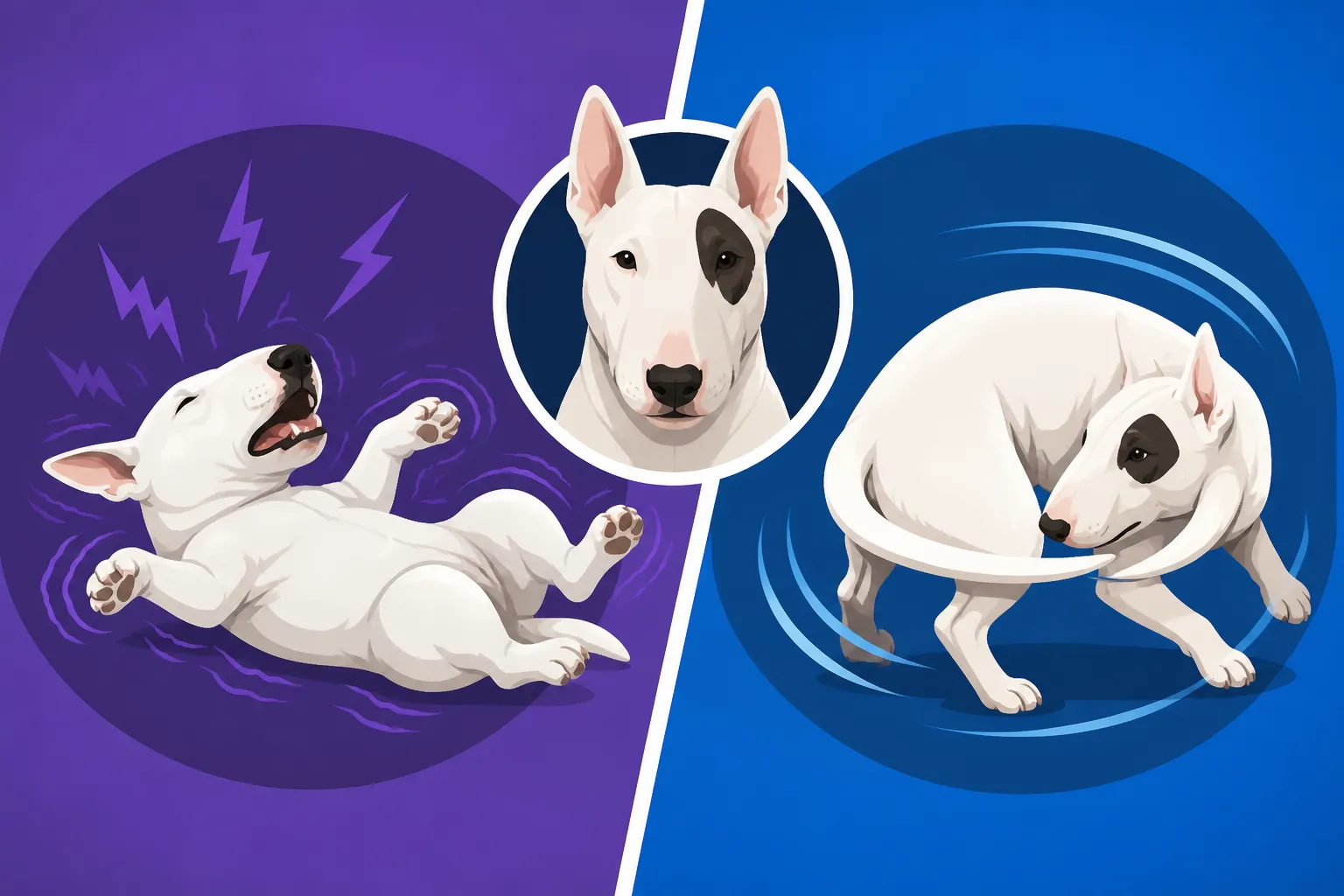
When a Bull Terrier starts spinning, it’s not just a casual wag-and-grab. This is often a sudden, fast, and repetitive circling, sometimes for minutes at a time. The dog might be running in tight, frantic circles, trying desperately to catch its tail, almost as if it’s possessed by an unseen force. Their focus is singular, often to the exclusion of everything else around them – you might call their name, offer a treat, or try to interrupt, and they simply don’t seem to hear or acknowledge you, continuing their dizzying pursuit. This behavior commonly starts when they are still relatively young, often around the time they reach adolescence, a period detailed in "The Age Bull Terrier Tail Chasing Starts".
Imagine your Bull Terrier, usually sprawled out contentedly, suddenly springs up, tucks their head, and begins to whirlwind around, their body rigid with concentration, ears often pinned back. They might grunt or whine, pant heavily, and even snap at the air as they try to catch that elusive tail. This isn’t a playful nip; it’s an urgent, almost desperate attempt. Owners often report that the dog seems to be in a trance, completely absorbed in the act, which is a key reason why it can be so alarming and easily mistaken for a seizure. It’s a very distinct behavioral pattern that sets it apart from typical canine play or excitement.
The triggers for spinning can be varied and sometimes hard to pinpoint. For some Bull Terriers, it might be an increase in excitement, like seeing their owner come home or hearing the jingle of a leash. For others, it could be stress, boredom, or a way to burn off excess energy. The repetitive nature is what truly defines it, and it can escalate quickly from an occasional quirk to a more frequent, intense, and disruptive habit. Understanding "Why a Bull Terrier Chases Its Tail" delves deeper into the psychological and physical factors contributing to this intriguing behavior.
Is Bull Terrier Spinning a Type of Seizure?
This is perhaps the most pressing question for many Bull Terrier owners, and it's a perfectly valid concern given the intensity of the behavior. While spinning can look incredibly dramatic and uncontrolled, it is generally not considered a classic epileptic seizure. Instead, it’s often classified as a complex compulsive disorder, a form of Canine Compulsive Disorder (CCD). This is an important distinction, as the underlying neurological mechanisms and treatment approaches are quite different. While some compulsive behaviors can have neurological roots, they are not typically the electrical brain storms associated with epilepsy.
The intense, repetitive nature and the dog's apparent inability to self-interrupt are what make it seem seizure-like. However, a key difference lies in the dog’s state of consciousness and responsiveness. During a spin, even if your Bull Terrier appears unresponsive, they are usually still technically conscious and aware of their surroundings, even if their focus is completely fixated on their tail. If you were to physically intervene, gently but firmly, they could theoretically be interrupted, though it might take significant effort and they might immediately resume. This contrasts sharply with a true seizure, where consciousness is typically impaired or lost.
The confusion is so common that there's specific discussion around "Whether Bull Terrier Tail Chasing Is a Seizure" within the breed community. While the behavior is definitely abnormal and warrants attention, it's generally distinguished from seizure activity by several key factors, which we will explore further. It's not a voluntary act in the sense of a dog deciding to "play a game," but rather an impulse that overtakes them, a behavioral loop they struggle to break out of on their own.
Understanding True Seizures in Bull Terriers
Seizures are fundamentally different from spinning. They are not behavioral quirks but manifestations of abnormal electrical activity in the brain. When a Bull Terrier has a seizure, it’s a medical emergency or a serious medical event that requires prompt attention and often long-term management. These events can be terrifying to witness, leaving owners feeling helpless and panicked.
What a Bull Terrier Seizure Entails
A typical, generalized seizure (often called a "grand mal" seizure) in a Bull Terrier is usually unmistakable. It begins with a sudden loss of consciousness, often causing the dog to collapse. Their body will then undergo a series of uncontrolled, violent muscle contractions. This can manifest as stiffening (tonic phase) followed by rhythmic paddling of the limbs (clonic phase). During this time, the dog might salivate excessively, foam at the mouth, vocalize (whine, growl, bark), and even lose control of their bladder and bowels. Their eyes might dart erratically or be fixed and dilated. The entire event typically lasts from a few seconds to a few minutes, though it can feel like an eternity to the owner.
Beyond generalized seizures, Bull Terriers, like any breed, can experience focal or partial seizures. These are often more subtle and can be harder to recognize, leading to further confusion. A focal seizure might involve twitching in only one part of the body, like a single leg, an eyelid, or one side of the face. The dog might appear dazed, "fly snap" at imaginary flies, or display odd, repetitive behaviors that seem out of character but are distinct from spinning. The key is that even in a focal seizure, the dog’s normal awareness is usually altered, even if they don’t completely lose consciousness. For a Bull Terrier owner, this makes observation critical.
The full seizure event is often described in three phases:
- Pre-ictal phase (aura): This can be subtle and might include changes in behavior hours or minutes before the seizure. The dog might appear anxious, clingy, restless, or seek solitude. Owners might notice their Bull Terrier staring blankly or acting strangely just before the event.
- Ictal phase: This is the actual seizure itself, characterized by the uncontrolled physical manifestations described above.
- Post-ictal phase: Following the seizure, the Bull Terrier will likely be disoriented, confused, wobbly, and temporarily blind or deaf. They might pace aimlessly, seem ravenously hungry or thirsty, or hide. This period can last from minutes to hours, and it’s a clear indicator that a significant neurological event has occurred. This disoriented recovery is a stark contrast to how a dog usually behaves after a spinning episode.
Common Causes of Seizures in Bull Terriers
While any dog can have a seizure, some breeds, including Bull Terriers, have a predisposition to certain neurological conditions. The most common cause of recurrent seizures for which no underlying cause can be found is called idiopathic epilepsy. This is often genetic, and unfortunately, Bull Terriers are one of the breeds known to be affected. If you suspect your Bull Terrier has epilepsy, it's vital to work closely with your veterinarian to understand their condition, especially as discussed in "Whether a Bull Terrier Gets Epilepsy".
However, seizures aren't always idiopathic. They can be symptomatic of a wide range of underlying health issues. These might include structural problems within the brain, such as tumors, cysts, or inflammation. Head trauma, even an old injury, can also lead to seizure activity. Metabolic disorders, where the body's chemistry is out of whack, are another significant cause. Conditions like severe low blood sugar (hypoglycemia), liver disease (which can cause a buildup of toxins), or kidney failure can all trigger seizures by affecting brain function.
Additionally, exposure to certain toxins can induce seizures. This could range from ingesting antifreeze or rat poison to certain household chemicals or even some medications if given incorrectly. Infectious diseases affecting the brain, such as canine distemper or fungal infections, can also be culprits. Diagnosing the cause of seizures often involves a comprehensive workup, including blood tests (to check organ function and rule out toxins), urinalysis, and sometimes advanced imaging like an MRI of the brain, as well as a cerebrospinal fluid analysis. This diagnostic journey can be costly, highlighting the value of pet insurance plans from providers like Healthy Paws, which can help cover these unexpected expenses.
Key Differences: Spinning vs. Seizures
Distinguishing between spinning and a seizure is vital for your Bull Terrier's well-being and your peace of mind. While both can be alarming, their characteristics, the dog's state during the event, and their recovery patterns are distinctly different. Observing these differences carefully will help you provide accurate information to your veterinarian and ensure your dog gets the right care.
Observable Characteristics and Dog's Awareness
One of the most telling differences between a Bull Terrier spinning and having a seizure lies in the dog's level of consciousness and responsiveness. During a compulsive spinning episode, even if your Bull Terrier appears intensely focused and hard to interrupt, they are generally still aware of their environment. If you make a very loud noise, offer an irresistible treat, or manage to gently break their focus, there's a good chance they might pause, even if momentarily, before potentially resuming the spinning. Their eyes will track, and there might be an almost frustrated, yet conscious, quality to their pursuit. It’s an obsessive behavior, but they are still "in there."
In contrast, a Bull Terrier experiencing a generalized seizure loses consciousness. Their eyes might be glazed over, dilated, or unfocused, and they will not respond to their name, treats, or any external stimuli. The muscle activity is involuntary and beyond their control. Imagine trying to get a response from a dog that looks completely detached and robotic, their body moving in ways they clearly cannot stop. This profound disconnect from their surroundings is a hallmark of a true seizure. For focal seizures, awareness might be altered rather than completely lost, meaning they might be dazed, confused, or unresponsive to commands, but not necessarily collapsed or exhibiting full-body convulsions. The dog acts as if they are not fully present, which is still very different from the hyper-focused, albeit obsessive, state of a spinner.
To illustrate, consider two hypothetical scenarios:
- Scenario A (Spinning): Luna, a 2-year-old Bull Terrier, begins her intense tail chase. She spins rapidly, grunting, utterly fixed on her tail. You drop a favorite squeaky toy right in her path. She might briefly hesitate, perhaps even glance at the toy, before resuming her chase with renewed vigor, or she might stop to grab the toy if it's compelling enough, though she often goes right back to spinning after. She's aware, just overwhelmingly compelled. You could try strategies outlined in "Whether a Spinning Bull Terrier Can Be Distracted".
- Scenario B (Seizure): Max, a 3-year-old Bull Terrier, is resting on the rug. Suddenly, he stiffens, collapses onto his side, and all four legs begin to paddle frantically. His jaw chomps, he drools heavily, and he voids his bladder. You call his name loudly, but his eyes are vacant, unresponsive. He is completely unconscious, a world away from you.
Here's a comparison table to help visualize these differences:
| Feature | Bull Terrier Spinning (Compulsive Tail Chasing) | Bull Terrier Seizure (Epileptic Event) |
|---|---|---|
| Consciousness | Generally conscious, aware but hyper-focused | Impaired or lost consciousness (generalized) |
| Responsiveness | Can be difficult to interrupt, but potentially responsive to strong stimuli | Unresponsive to external stimuli, vacant gaze |
| Movement | Repetitive, circular tail chasing, often frantic | Uncontrolled muscle contractions, paddling, rigidity, chomping |
| Duration | Varies, from minutes to longer episodes | Typically 30 seconds to a few minutes |
| Bodily Functions | Usually retains bladder/bowel control | Loss of bladder/bowel control is common |
| Vocalization | Grunting, whining, heavy panting | Moaning, growling, yelping (involuntary) |
| Post-Event Behavior | Often alert, may seem tired/hyped, but no disorientation | Disoriented, confused, wobbly, temporary blindness/deafness, excessive thirst/hunger |
| Trigger | Excitement, stress, boredom, habit | Abnormal electrical activity in the brain, often unprovoked |
Post-Event Behavior and Recovery
The period immediately following the event, known as the post-ictal phase for seizures, provides another critical distinction. After a generalized seizure, a Bull Terrier will almost invariably enter a state of disorientation. They might stumble, bump into furniture, appear temporarily blind or deaf, and seem genuinely confused about where they are or who you are. This confusion can last for minutes or even hours. They might pace endlessly, stare blankly at walls, or excessively drink water and seek food. This post-ictal period is a direct consequence of the brain's "resetting" after an electrical storm and is a significant indicator of a seizure.
In stark contrast, after a spinning episode, a Bull Terrier generally "snaps out of it" much more quickly. They might still be panting heavily from the exertion and excitement, and perhaps a little hyped up or agitated if the spinning was interrupted or particularly intense. However, they will typically recognize you, respond to their name, and navigate their surroundings normally. They might settle down relatively quickly, or even transition into another activity, sometimes looking a bit sheepish or just tired. There isn’t the profound cognitive impairment or physical incoordination seen after a seizure. They might be mentally exhausted from the obsessive behavior, but not neurologically impaired in the same way.
For instance, if your Bull Terrier has been spinning for a few minutes, and then suddenly stops, they might immediately come over for cuddles, or go find a toy, or just collapse for a nap. They are fully present and aware of their actions. Whereas if they just had a seizure, they might walk into a wall, not respond to you for several minutes, or wander around looking completely lost. Understanding "How a Bull Terrier Seizure Differs From a Spin" is about recognizing these subtle yet profound variations in behavior and recovery.
When to Call the Vet: Urgency and Treatment Paths
Recognizing the difference between spinning and seizures is the first step, but knowing when to act is equally important. Both behaviors warrant attention, but seizures often demand a far more immediate and specialized veterinary response. Always err on the side of caution if you're unsure.
What Warrants an Immediate Veterinary Visit
Any suspicion of a seizure in your Bull Terrier should prompt a call to your veterinarian. This is not a "wait and see" situation. There are specific circumstances that absolutely demand immediate veterinary attention:
- First-Time Seizure: If your Bull Terrier has never had a seizure before, it's crucial to get them checked immediately. This helps rule out serious underlying causes like toxins, head trauma, or metabolic emergencies that could be life-threatening if not addressed promptly.
- Cluster Seizures: These are multiple seizures occurring within a 24-hour period, with the dog regaining consciousness between episodes. This indicates a higher level of brain instability and requires urgent intervention.
- Status Epilepticus: This is a single, continuous seizure lasting more than five minutes, or multiple seizures without full recovery of consciousness between episodes. This is a severe medical emergency that can lead to permanent brain damage or even death if not stopped quickly. If your Bull Terrier is experiencing this, it's a dire situation requiring emergency veterinary care without delay.
- Seizures After Trauma: If your Bull Terrier has recently suffered a head injury, even a seemingly minor one, and then experiences a seizure, this is a red flag for potential brain damage and warrants immediate assessment.
When you contact your vet, be prepared to describe the event in as much detail as possible: what the dog was doing before, during, and after the episode, how long it lasted, and any unusual behaviors observed. Your veterinarian might recommend a thorough physical exam, neurological assessment, blood work, and possibly advanced diagnostics. These tests can be expensive, and having a comprehensive pet insurance policy, such as one from Healthy Paws, can be incredibly beneficial in covering the costs of emergency visits, diagnostic imaging, and subsequent treatment, allowing you to focus on your Bull Terrier's health rather than the financial strain.
Managing Spinning and Seizures
The treatment and management strategies for spinning and true seizures diverge significantly, reflecting their different underlying causes.
For Bull Terrier spinning, since it's typically a compulsive behavior, the approach is often multi-faceted:
- Environmental Enrichment: Providing plenty of mental and physical stimulation can reduce boredom and anxiety, which can be triggers for spinning. This includes regular exercise, puzzle toys, and training sessions to give your Bull Terrier a "job." Think about the content in "Whether Exercise Reduces Bull Terrier Spinning" and "Whether a Spinning Bull Terrier Can Be Distracted" for practical advice.
- Behavioral Modification: Working with a certified professional dog trainer or behaviorist can help you interrupt and redirect the spinning behavior into more appropriate outlets. This often involves positive reinforcement techniques to reward calm behavior and prevent the spinning from escalating.
- Medication: In more severe or persistent cases, your veterinarian might prescribe medication to help manage the compulsive disorder. Selective serotonin reuptake inhibitors (SSRIs) like fluoxetine (Prozac) are sometimes used to reduce compulsive behaviors by altering brain chemistry. This area is explored further in "Which Medication Stops a Bull Terrier Spinning". It's important to remember that behavioral medications are typically most effective when combined with environmental and training adjustments.
For Bull Terrier seizures caused by epilepsy or other neurological conditions, the management is primarily medical:
- Anticonvulsant Medication: If your Bull Terrier is diagnosed with epilepsy or recurrent seizures, your vet will likely prescribe anticonvulsant drugs like phenobarbital, potassium bromide, or levetiracetam (Keppra). The goal is to reduce the frequency and severity of seizures, not necessarily to eliminate them entirely. This is a lifelong commitment, and finding the right dosage and combination of medications can take time and regular monitoring.
- Regular Monitoring: Bull Terriers on seizure medication require regular blood tests to monitor drug levels and assess liver and kidney function, as these medications can have side effects. Your vet will advise you on "What a Bull Terrier's Yearly Bloodwork Should Cover" to keep them safe.
- Dietary Adjustments: For some epileptic dogs, certain diets, particularly those rich in medium-chain triglycerides (MCTs) like Purina Pro Plan Veterinary Diets Neurocare, have shown promise in reducing seizure frequency. Discuss this option with your vet.
- Emergency Protocols: Your vet might also provide you with emergency medication (often rectal diazepam) to administer at home if a seizure lasts too long or if your dog experiences cluster seizures.
- Specialist Referrals: In complex cases, a referral to a veterinary neurologist may be necessary. These specialists have advanced training and diagnostic tools to pinpoint causes and tailor treatment plans, particularly for conditions where "Whether a Bull Terrier Tolerates Anesthesia" for an MRI might be a concern.
Living with a Bull Terrier that experiences either spinning or seizures can be challenging, but with the right knowledge and veterinary partnership, both can be managed effectively. Proactive care and financial planning, perhaps through a robust pet insurance policy like those offered by Healthy Paws, can make a significant difference in handling the ongoing costs of medication, diagnostics, and specialist consultations, ensuring your beloved Bull Terrier receives the best possible care throughout their life.
Disclaimer
The information provided in this guide is intended for general informational purposes only and does not constitute veterinary medical advice. Always consult with a qualified veterinarian for any health concerns or before making any decisions related to your Bull Terrier's care. Never disregard professional veterinary advice or delay seeking it because of something you have read here.