Whether Bull Terrier Tail Chasing Is a Seizure
It can be incredibly alarming to watch your beloved Bull Terrier suddenly fixate on its tail, spinning relentlessly in tight circles, sometimes for minutes on end. Many owners immediately jump to the frightening conclusion that their quirky companion is having a seizure, and that fear is completely understandable. This guide aims to clear up the confusion, explain the nuances of Bull Terrier tail chasing, and help you understand when it's a behavioral quirk and when it's something more serious.
The Puzzling Phenomenon of Bull Terrier Tail Chasing
For a Bull Terrier owner, there's a certain acceptance of the breed's unique quirks. They're often described as "a three-year-old in a dog suit" for a reason – their energetic, often mischievous, and sometimes downright bizarre behaviors are part of their charm. But when that playful energy turns into an obsessive, repetitive act like tail chasing, it can quickly shift from endearing to genuinely concerning. It’s not just a cute little puppy chasing its tail; it can be an intense, focused activity that seems to take over their entire being.
More Than Just a Playful Nuisance
While many puppies might occasionally chase their tails in play, the Bull Terrier's version often goes beyond typical puppy antics. We’re talking about an intense, almost trance-like state where they seem oblivious to their surroundings, often spinning in the same spot, sometimes even growling or snapping at their tail. This isn't just a brief moment of entertainment; it can escalate into a persistent, hard-to-interrupt pattern. It’s a behavior that can appear suddenly, sometimes in young dogs, leaving owners bewildered and worried about its origin and what it might mean for their dog's health. You might find yourself wondering, is this normal for a Bull Terrier, or is something deeper going on?
It’s crucial to recognize that prolonged or obsessive tail chasing is rarely just play, especially in an adult Bull Terrier. It often indicates an underlying issue, whether it’s behavioral, genetic, or even medical. Ignoring it or dismissing it as "just being a Bull Terrier" can prevent you from addressing a problem that could impact your dog's quality of life. The intensity of the spinning, the difficulty in distracting them, and any signs of distress or injury to the tail are all red flags that warrant a closer look.
The Breed's Predisposition to Repetitive Behaviors
Bull Terriers, much like certain other breeds, have a well-documented predisposition to what are known as "stereotypical" or "compulsive" behaviors. These are repetitive, unvarying behaviors that have no obvious goal or function. Tail chasing is one of the most common compulsive disorders seen in the breed. It’s not simply boredom, though boredom can exacerbate it; there appears to be a genetic component that makes some Bull Terriers more susceptible to developing these fixed action patterns.
This isn't to say every Bull Terrier will develop tail chasing, but the breed's genetic makeup, possibly stemming from their unique brain structure or neurochemical imbalances, makes them more prone to this specific manifestation of compulsive behavior. This predisposition is something that breeders should be acutely aware of, and it’s a characteristic that sets Bull Terrier tail chasing apart from the occasional spin of a happy-go-lucky Labrador. Understanding this breed-specific tendency is the first step in approaching the problem with the right mindset and seeking appropriate help.
Differentiating Compulsive Chasing from Seizures
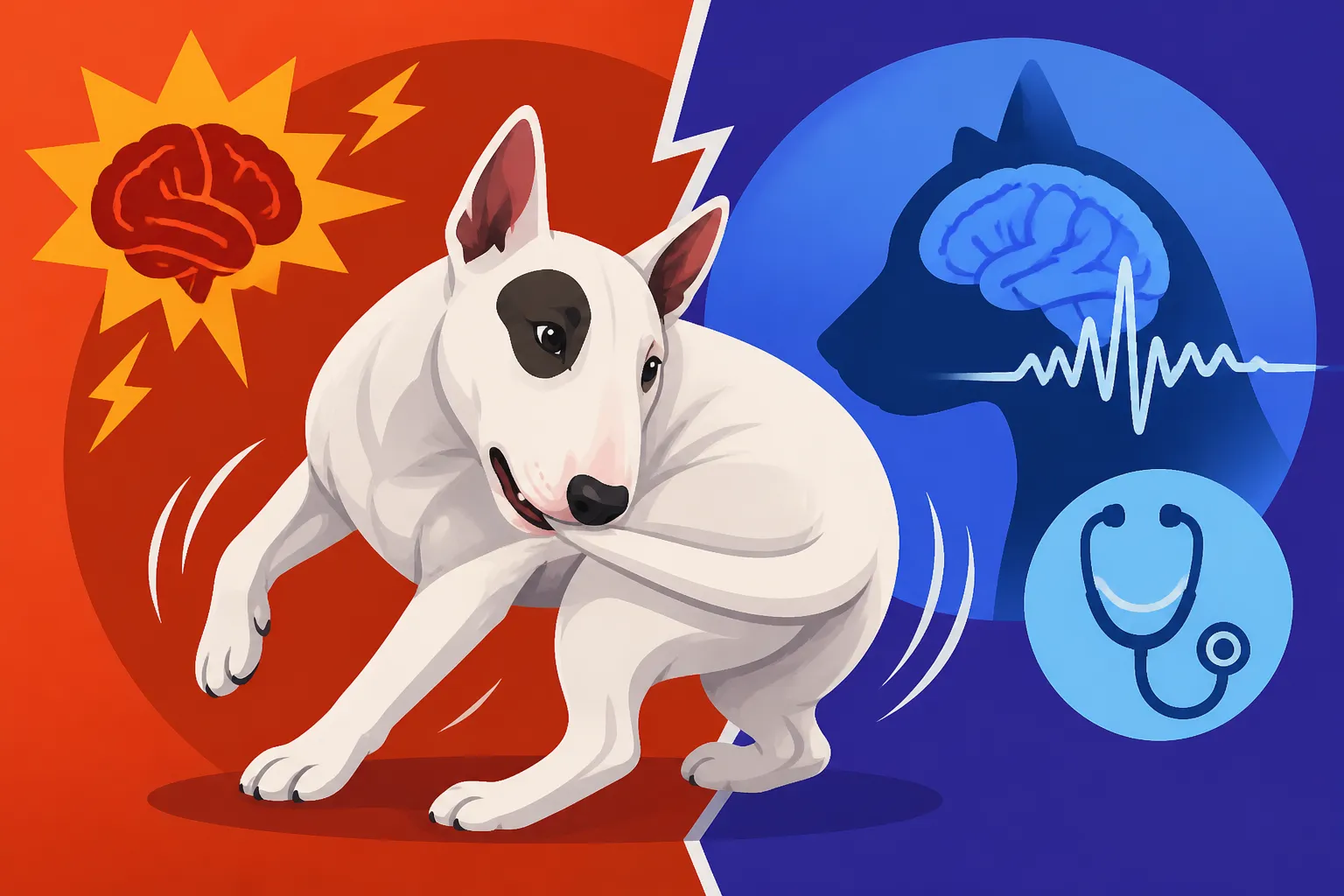
The immediate thought for many owners witnessing intense tail chasing is, "Is my dog having a seizure?" It's a valid concern because some forms of seizures can indeed manifest as repetitive, abnormal movements. However, there are distinct differences between typical compulsive tail chasing and an actual seizure, especially a focal or partial seizure that might involve motor activity. Knowing these differences can help you determine the urgency of veterinary intervention and what information to provide your vet.
The Hallmarks of a Compulsive Tail Chase
A compulsive tail chase in a Bull Terrier typically involves the dog spinning rapidly in circles, often chasing or snapping at its tail. The dog might appear intensely focused on the tail, almost as if it's a separate entity. You might notice specific characteristics:
- Awareness (to a degree): While engrossed, a dog in a compulsive chase might still briefly react to your voice or a loud noise, even if it quickly reverts to spinning. They might ignore you, but they aren’t unconscious.
- Gradual Onset and Offset: The behavior might start subtly and gradually increase in intensity and duration. Similarly, it doesn't usually end abruptly with a post-ictal (post-seizure) phase of confusion or disorientation.
- Triggers: Often, compulsive chasing can be triggered by excitement, stress, frustration, or even boredom. It might occur at specific times of day or in particular situations. You might notice The Age Bull Terrier Tail Chasing Starts can vary, but it's often seen in younger dogs.
- Consistency: The spinning pattern tends to be consistent each time it occurs.
- No Loss of Consciousness: The dog remains conscious throughout the episode, even if it seems "zoned in" on its tail.
For a deeper dive into why your dog might be doing this, you might find information on Why a Bull Terrier Chases Its Tail particularly insightful.
Recognizing the Signs of a Focal Seizure
Focal seizures (also known as partial seizures) originate in a specific part of the brain and can manifest in various ways, often affecting only a part of the body. While a generalized (grand mal) seizure is unmistakable, a focal seizure can be more subtle and might involve repetitive movements.
- Loss of Awareness/Altered Mental State: Even if the dog isn't fully unconscious, its mental state will likely be altered. It might stare blankly, appear confused, or not respond to its name.
- Abrupt Onset and Offset: Seizures typically start and end suddenly.
- Automatisms: These are involuntary, repetitive movements that can include lip-licking, jaw-snapping, fly-biting, or indeed, tail chasing. The key is that these movements are involuntary and the dog has no control over them.
- Post-ictal Phase: After a seizure, dogs often enter a post-ictal phase characterized by disorientation, confusion, temporary blindness, excessive thirst or hunger, or extreme fatigue. This phase can last minutes to hours.
- Lack of Trigger Association: While some seizures can have triggers, they often appear to happen out of the blue, without a clear preceding event related to excitement or frustration.
- Progression: A focal seizure can sometimes generalize into a grand mal seizure.
It's a scary thought, but understanding How a Bull Terrier Seizure Differs From a Spin is critical for proper diagnosis and care.
Key Differences in Presentation
To help clarify the distinction, here's a table comparing common characteristics:
| Feature | Compulsive Tail Chasing | Focal Seizure |
|---|---|---|
| Consciousness | Fully conscious, though intensely focused | Altered consciousness; may seem "zoned out" or unaware |
| Responsiveness | May briefly respond to redirection, then resumes | Unresponsive or only partially responsive to stimuli |
| Onset/Offset | Gradual build-up and winding down | Sudden, abrupt onset and termination |
| Post-event Behavior | Returns to normal immediately, perhaps still agitated | Often disoriented, confused, tired, or unusually hungry/thirsty |
| Triggers | Excitement, stress, boredom, frustration, specific routines | Often unpredictable; can occur during sleep or rest; sometimes stress-induced |
| Involuntary Nature | Seems purposeful (chasing the tail), but driven by compulsion | Clearly involuntary, automatic movements |
| Risk of Injury | Self-trauma to tail is common from biting/licking | Injury from falling or uncontrolled movements |
If you're unsure, always film the episode if possible and show it to your veterinarian. This visual evidence can be incredibly helpful for diagnosis. Remember, insurance providers like Healthy Paws often cover diagnostic testing for these kinds of neurological or behavioral conditions, highlighting the importance of early intervention and thorough investigation.
Underlying Causes and Contributing Factors
Understanding why your Bull Terrier might be engaging in this perplexing behavior is key to managing it effectively. It's rarely one simple cause but rather a complex interplay of genetic, neurological, and environmental factors that converge to create this intense spinning.
Genetic Links and Inherited Tendencies
The Bull Terrier breed has a recognized genetic predisposition to compulsive tail chasing. It's not just a random act; research suggests there's an inherited component that makes certain lines more susceptible. This is why a responsible breeder should be transparent about any history of tail chasing or other compulsive behaviors in their breeding lines. While the exact gene or genes aren't fully identified, the pattern of inheritance indicates a strong genetic influence.
Some studies suggest that compulsive disorders, including tail chasing, might be linked to abnormalities in brain chemistry, specifically neurotransmitters like serotonin and dopamine, similar to obsessive-compulsive disorder (OCD) in humans. This means that while environmental factors can trigger or exacerbate the behavior, the underlying wiring that makes a Bull Terrier prone to it is likely passed down through its parents. This makes the question of Whether Bull Terrier Spinning Is Inherited a significant consideration for breeders and prospective owners alike.
Environmental Triggers and Boredom
Even with a genetic predisposition, environmental factors play a huge role in whether tail chasing manifests and how severe it becomes. Bull Terriers are intelligent, high-energy dogs that require a lot of physical exercise and mental stimulation. If they don't get enough of either, boredom and frustration can easily set in.
A dog that is under-exercised or left alone for long periods without enrichment can turn to repetitive behaviors as a coping mechanism or simply out of sheer lack of anything else to do. Think about a Bull Terrier confined to a small yard all day, or one that only gets a quick leash walk once a day. This lack of appropriate outlets for their energy and intellect can quickly lead to self-stimulating behaviors. For some Bull Terriers, spinning is a way to relieve pent-up energy or anxiety. If you're concerned about your dog's activity levels, exploring What a Bull Terrier Does When It Is Bored can offer valuable insights and ideas for enrichment.
Neurological Explanations Beyond Epilepsy
While the initial fear might be epilepsy, not all neurological causes for tail chasing are seizure-related. There are other neurological conditions that can present with repetitive, unusual behaviors. For instance, some dogs with certain brain lesions or imbalances in specific brain regions might exhibit compulsive acts. Even peripheral nerve irritation in the tail itself, perhaps from an old injury or skin condition, could theoretically initiate a compulsive loop.
It's also important to consider that compulsive disorders are, by definition, neurological in nature. They involve complex pathways in the brain that become stuck in a repetitive loop. So, while it might not be a "seizure" in the traditional sense of uncontrolled electrical activity, it is still a disorder of the nervous system. This is why a thorough veterinary examination, potentially including neurological assessments, is crucial to rule out other medical conditions and arrive at an accurate diagnosis for Why a Bull Terrier Chases Its Tail.
When to Seek Veterinary Guidance and What to Expect
Seeing your Bull Terrier in a persistent tail-chasing loop can be distressing, and knowing when to call the vet is important. Any time you suspect a seizure, or if the compulsive behavior is escalating, causing injury, or significantly impacting your dog's quality of life, it's time for professional help. Don't wait until the behavior becomes entrenched or causes harm.
The Initial Veterinary Consultation
When you first notice concerning tail chasing, your regular veterinarian should be your first point of contact. They will perform a comprehensive physical examination and ask a lot of questions about the behavior. To prepare for this appointment, try to gather as much information as possible:
- When did it start?
- How often does it happen?
- How long do episodes last?
- What does it look like exactly? (Video recordings are incredibly helpful here!)
- Are there any specific triggers you’ve noticed? (e.g., excitement, being left alone, certain sounds)
- Does your dog respond to you during an episode?
- Are there any other symptoms? (e.g., limping, changes in appetite, lethargy, skin irritation on the tail)
- Is there a history of similar behaviors in their parents or littermates?
Your vet will be trying to determine if it’s truly a compulsive behavior, rule out medical causes, or if it might lean more towards a focal seizure. They might also discuss your Bull Terrier's daily routine, diet, and overall health history. Knowing How Often a Bull Terrier Needs a Wellness Exam is key to catching these things early.
Diagnostic Tools and Exclusion
Your vet’s primary goal will be to rule out other medical conditions that could be causing or contributing to the tail chasing. This often involves a series of diagnostic tests:
- Physical Exam: To check for injuries to the tail (e.g., "happy tail" syndrome, bites, skin irritation, nerve damage) that might initiate the behavior. A skin exam is crucial, as A Bull Terrier's Skin Is Its Weakest Point and local irritation can prompt licking and chasing.
- Blood Work: To check for underlying systemic illnesses, metabolic imbalances, or organ dysfunction that could manifest in neurological or behavioral changes.
- Urinalysis: Another general health screen.
- Neurological Exam: The vet will assess your Bull Terrier’s reflexes, coordination, and mental status to look for signs of neurological impairment.
- Imaging (X-rays, MRI): If a neurological issue is strongly suspected, particularly a seizure disorder or a structural problem in the brain or spine, an MRI might be recommended. This is a more advanced diagnostic tool typically performed by a specialist. While the cost can be a concern, comprehensive pet insurance plans, like those offered by Healthy Paws, often provide substantial coverage for such in-depth diagnostics, making these vital tests more accessible.
The process is often one of exclusion – ruling out other possibilities until a diagnosis of a compulsive disorder, or rarely, a focal seizure, is reached.
The Importance of a Detailed History
As an owner, you are the most important source of information about your Bull Terrier's behavior. A detailed, accurate history of the tail chasing episodes is invaluable for your vet. Try to describe not just what happens, but when and how it happens. Does it occur after specific events, like coming inside after a walk, or when you leave the room? Does it seem worse in certain environments?
Consider keeping a log of the episodes, noting the date, time, duration, perceived triggers, and your dog's behavior before and after. This consistent record can help identify patterns that might not be obvious to you in the moment. Your observations, coupled with video evidence, will be the cornerstones of getting an accurate diagnosis and formulating an effective treatment plan. Without this detailed history, it’s much harder for a vet to get a full picture of what’s truly going on, especially with something as complex as a potential neurological or compulsive disorder.
Managing and Treating Tail Chasing Behavior
Once a diagnosis is made, whether it's determined to be a compulsive disorder or a focal seizure, the good news is that there are strategies and treatments available to help manage the behavior. The approach will vary significantly depending on the underlying cause, but a multi-faceted plan is usually the most effective.
Behavioral Modification Strategies
For compulsive tail chasing, behavioral modification is often the first line of defense. The goal is to reduce the triggers and redirect the dog’s energy into more appropriate activities.
- Increase Exercise and Mental Stimulation: Bull Terriers need a lot of both! Daily structured exercise, like long walks, runs, or vigorous play sessions, can help burn off excess energy. Mental stimulation through puzzle toys, training sessions, and scent work is equally important. Think about activities that engage their powerful jaws and intelligent minds. You can find more ideas on What Enrichment a Spinning Bull Terrier Needs.
- Avoid Reinforcing the Behavior: While it's hard to ignore, giving attention (even negative attention like scolding) during a spin can inadvertently reinforce the behavior. Try to interrupt and redirect before the spin becomes intense.
- Redirection: When you see the early signs of spinning, immediately redirect your dog to a command it knows, like "sit" or "down," and reward them for compliance. Or offer a high-value chew toy. Check out How to Interrupt a Bull Terrier's Tail Chasing for practical tips.
- Routine and Predictability: A consistent daily routine can help reduce anxiety and uncertainty, which can be triggers for some compulsive behaviors.
- Environmental Management: Identify and try to minimize known triggers. If certain noises or situations reliably set off the spinning, see if you can modify the environment or desensitize your dog to those triggers gradually.
Consistency is key with behavioral modification. It requires patience and dedication, but over time, these strategies can significantly reduce the frequency and intensity of the spinning.
Medication Options for Compulsive Disorders
When behavioral modification alone isn't enough, or if the tail chasing is severe and causing injury, medication may be prescribed. These medications aim to modulate brain chemistry to reduce the compulsive urge.
- Selective Serotonin Reuptake Inhibitors (SSRIs): Medications like fluoxetine (Prozac) are commonly used to treat compulsive disorders in dogs. They work by increasing serotonin levels in the brain, helping to reduce anxiety and obsessive behaviors.
- Tricyclic Antidepressants (TCAs): Clomipramine (Clomicalm) is another frequently prescribed medication, acting similarly to SSRIs to alter neurotransmitter levels.
- Anti-Anxiety Medications: In some cases, short-term anti-anxiety medications might be used to help during periods of high stress or to aid in the initial stages of behavioral training.
It's important to understand that these medications are not a "cure" but rather a tool to help manage the behavior. They work best when combined with ongoing behavioral modification. It can take several weeks to see the full effect of these drugs, and your vet will carefully monitor your dog for side effects and adjust dosages as needed. This is where pet insurance, such as a plan from Healthy Paws, can really make a difference by helping cover the ongoing costs of prescription medications and vet visits for chronic conditions. Knowing Which Medication Stops a Bull Terrier Spinning is often a journey of trial and error with your vet.
Environmental Enrichment and Routine
Beyond just increasing exercise, true environmental enrichment involves providing opportunities for your Bull Terrier to engage in natural, species-appropriate behaviors. This means more than just a toy thrown in the backyard.
- Interactive Toys: Toys that dispense food or require problem-solving (e.g., KONGs stuffed with frozen peanut butter, puzzle feeders) can keep their minds busy. For their powerful jaws, ensure you're using durable, "Bull Terrier-proof" toys.
- Scent Work: Bull Terriers have incredible noses. Engaging them in scent games, where they have to find hidden treats or toys, can be incredibly mentally tiring and satisfying.
- Chewing Outlets: Provide plenty of appropriate, safe chew items. Chewing is a natural stress reliever for dogs and can help redirect oral fixations away from their own tail.
- Structured Training: Short, positive-reinforcement based training sessions throughout the day can build confidence and provide mental stimulation. Teaching new tricks or reinforcing basic obedience gives them a job to do.
- Safe Spaces: Ensure your Bull Terrier has a quiet, comfortable "den" or crate where they can retreat and relax without being overstimulated.
Establishing a predictable routine for feeding, walks, play, and quiet time can greatly reduce anxiety and contribute to a more balanced and less compulsive dog. The more engaged and fulfilled your Bull Terrier feels, the less likely they are to resort to self-stimulating, repetitive behaviors like tail chasing.
Living with a Spinning Bull Terrier
Managing a Bull Terrier with compulsive tail chasing can be a lifelong commitment, but it's one that can lead to a much happier and healthier dog. It requires patience, consistency, and a deep understanding of your unique companion.
Support for Owners and Long-Term Outlook
It's natural to feel frustrated, worried, or even guilty when your dog develops a compulsive behavior. Remember, it's not your fault. These behaviors have complex origins, often with significant genetic components. Seeking support from your veterinarian, a certified veterinary behaviorist, or even breed-specific online communities can provide reassurance and practical advice. You are not alone in this journey.
The long-term outlook for Bull Terriers with compulsive tail chasing varies. With consistent management, including behavioral modification and sometimes medication, many dogs can experience a significant reduction in the frequency and intensity of spinning. Some dogs may even cease the behavior entirely. However, for others, it may be a chronic condition that requires ongoing management. The key is persistence and a proactive approach to their physical and mental well-being. Understanding How a Spinning Bull Terrier Is Treated can empower you to make informed decisions for your pet's welfare.
Insurance Considerations for Chronic Conditions
Living with a chronic condition like compulsive tail chasing, especially if it requires ongoing medication or specialized veterinary care, can become expensive over time. This is where comprehensive pet insurance can be a real lifeline. Policies from providers like Healthy Paws often cover behavioral therapy and prescription medications for conditions that are not pre-existing.
When considering pet insurance, it’s crucial to enroll your Bull Terrier before any symptoms of tail chasing or other health issues emerge. Once a condition is documented, it typically becomes "pre-existing" and may not be covered. Having robust insurance can alleviate the financial burden of managing a chronic condition, allowing you to focus on providing the best possible care for your spinning Bull Terrier without the added stress of exorbitant vet bills. It’s definitely worth looking into Insuring a Bull Terrier Against What It Actually Gets early in your dog’s life.
Disclaimer
The information provided in this article is for educational purposes only and is not intended to be a substitute for professional veterinary advice, diagnosis, or treatment. Always seek the advice of your veterinarian or other qualified animal health provider with any questions you may have regarding a medical condition or treatment, and before undertaking a new health care regimen.