Whether a Miniature Bull Terrier Acts the Same
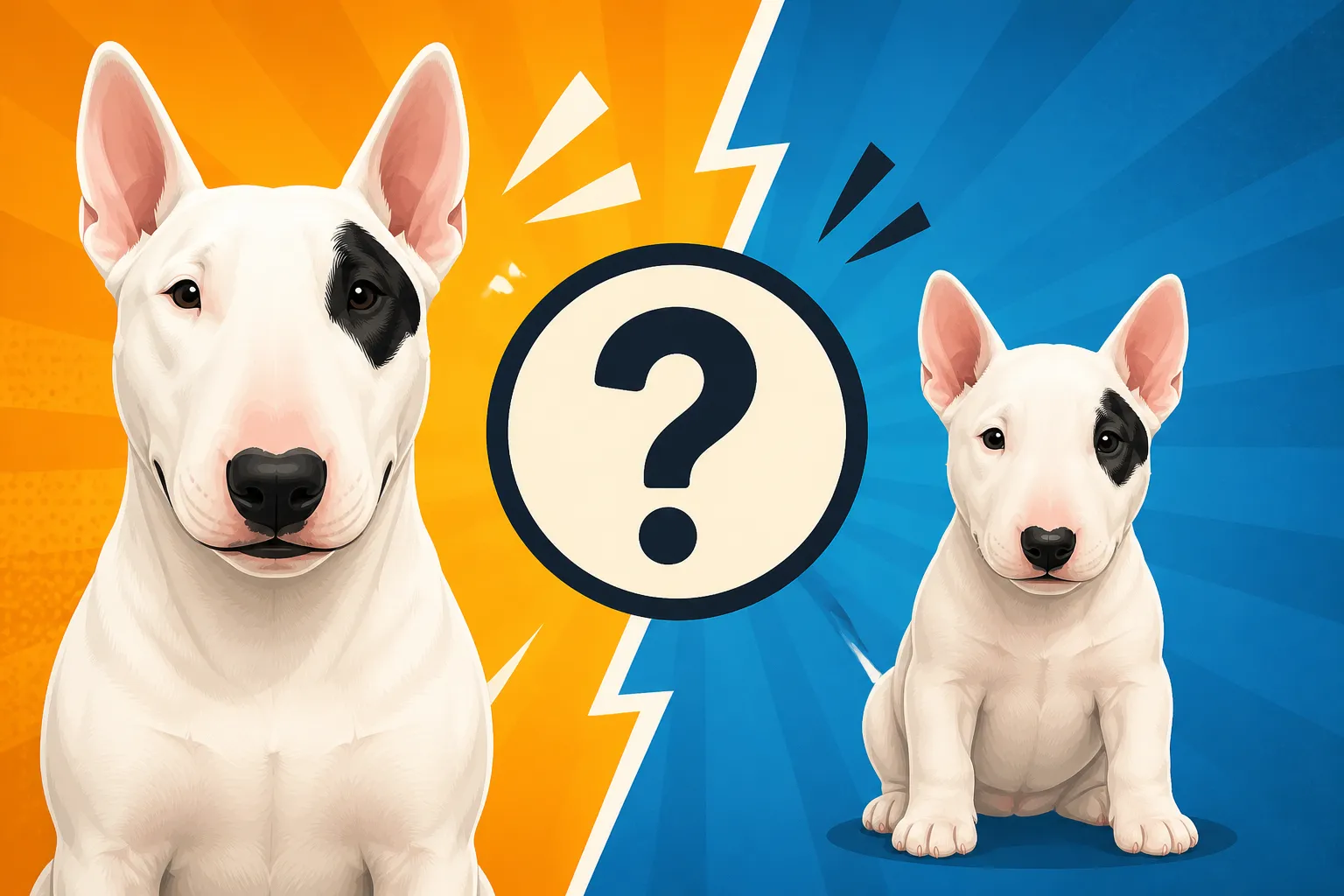
A Miniature Bull Terrier may look like a smaller version of a Standard Bull Terrier, but size alone does not tell you what living with one will be like. Both are lively, affectionate, strong-minded dogs, yet individual temperament and everyday needs can vary. This guide explains what they tend to share, where practical differences show up, and how to decide whether a Mini suits your home.
How similar are Miniature and Standard Bull Terriers
They share a recognizable Bull Terrier temperament
Miniature Bull Terriers generally have the same broad personality traits people associate with Bull Terriers: they can be playful, people-focused, energetic, confident, and wonderfully silly. They may turn an ordinary moment into a game, lean against you for attention, or decide that the toy you just put away is still very much part of the conversation.
They can also be determined. A Mini may understand a cue perfectly well and still pause to consider whether your suggestion is more interesting than what it was already doing. This is not the same as being unintelligent or impossible to train. It means training tends to work best when it is upbeat, rewarding, and broken into short, manageable sessions. The same general approach helps with a Standard. For more on the shared personality, see What a Bull Terrier's Temperament Is Really Like and How Stubborn a Bull Terrier Is.
Clownish behavior is another familiar theme. A Mini can be just as likely as a Standard to invent a game, bounce around the room, or make a dramatic display of settling down. That playful streak is part of the appeal, but it can be demanding if the dog is bored or has not learned how to relax. How Clownish a Bull Terrier Is offers a closer look at that entertaining—and sometimes exhausting—side of the breed.
Similar temperament does not mean identical behavior
A breed description is a starting point, not a personality guarantee. One Mini may greet visitors with enthusiastic affection; another may take a little time to warm up. Some are easygoing around familiar dogs, while others need careful management and training. Early experiences, socialization, health, breeding, and the household environment all influence how a particular dog behaves.
Age matters too. A young Mini may be impulsive, mouthy, and busy, while an adult may be more settled after consistent training and maturity. Even then, “settled” does not necessarily mean low-energy. A dog that has learned to rest indoors may still need regular exercise, interaction, and opportunities to use its brain.
The same caution applies when comparing a Mini with a Standard you already know. Your previous dog was an individual, not a promise of what the next one will be like. If you are choosing a puppy, ask the breeder about the temperaments of the parents and close relatives, and pay attention to how the puppy responds to ordinary handling and new experiences. If you are adopting an adult, ask what the rescue or previous home has observed in real situations.
What the smaller size changes and what it does not
A Mini is not automatically an easier Bull Terrier
The smaller frame can make some everyday logistics more manageable. A Mini may take up less room on the sofa, be easier to lift in an emergency, or fit more comfortably in a smaller vehicle. Those advantages can matter, especially in a home where space or mobility is a consideration.
But a smaller dog is not necessarily calmer, gentler, or less demanding. Minis still have muscular bodies, enthusiasm, and the potential to pull, jump, or barrel into people when excited. A dog can be compact and still be surprisingly powerful. If you are hoping that choosing a Mini will eliminate the need for training or supervision, that expectation is likely to lead to frustration.
The size difference also changes how you manage physical interactions. A Mini may be less physically overwhelming than a Standard, but it can still knock over a small child or an older person while playing. Teach children to give the dog space, avoid climbing on or grabbing it, and let an adult supervise interactions. The dog also needs a safe place to rest where children will not follow it.
| Everyday question | What may be different with a Mini | What to plan for with either size |
|---|---|---|
| Space at home | A Mini may fit more easily in a smaller living area | Provide room to move, play, and rest without constant interruption |
| Handling | The dog may be easier to lift than a Standard | Teach calm handling and use secure equipment |
| Strength on walks | The smaller body may be easier to manage physically | Train leash manners before the dog is fully grown |
| Exercise and play | The Mini may be smaller, not less interested | Offer regular activity suited to age, health, and fitness |
| Training | The dog may be physically smaller during lessons | Use consistency, rewards, and clear household rules |
For a more detailed comparison of size and type, see How a Bull Terrier Differs From a Miniature Bull Terrier. The key is to consider the whole dog—not just its height or weight—when deciding what will fit your household.
Their needs for activity and engagement remain real
A Mini still needs purposeful activity. That does not mean every day has to involve an exhausting run. Walks, training games, scent-based activities, food puzzles, and play can all help provide variety. The right mix depends on the dog’s age, physical condition, and preferences. Puppies, for instance, need play and learning but should not be pushed into strenuous exercise simply to tire them out.
Mental engagement matters as much as physical activity for many Bull Terriers. A short training session that asks the dog to wait, find a hidden treat, or settle on a mat can be more useful than repeatedly throwing a ball until everyone is overstimulated. If you are putting together an enrichment kit, look for toys that are appropriately sized and durable enough for the individual dog. Whether you shop locally or browse Chewy, check the product guidance and supervise your dog with new toys, especially if it tends to chew or swallow pieces.
A dog left with nothing to do may find its own occupation: chewing an unsuitable object, pestering family members, or demanding attention at the exact moment you sit down. Building a routine with activity, quiet time, and training can help prevent that pattern. Why a Bull Terrier Needs a Job and How Much Exercise a Bull Terrier Actually Needs provide useful context for planning an engaging day.
Training and social life with a Miniature Bull Terrier
Use the same patient, reward-based approach
A Mini’s smaller size is not a reason to skip basic training. Practise skills such as coming when called, walking on a loose leash, waiting at doors, settling on a mat, and giving up an object when asked. These habits make daily life safer and calmer, whether your dog is heading through a busy doorway or greeting someone at home.
Keep practice brief enough that the dog stays interested. Reward the behavior you want, then gradually add distractions. If your Mini pulls toward every interesting smell, for example, begin in a quiet area and reward moments of checking in with you. Expecting a young dog to perform perfectly beside a busy street before it has learned the skill in easier settings is likely to leave both of you exasperated.
Household consistency helps. If one person allows jumping and another consistently discourages it, the dog has to guess which rule applies. Decide together what the cues mean and what behavior earns attention. If you are considering a Mini as your first dog, think honestly about your time for training and supervision, not just the dog’s size. Whether a Bull Terrier Suits a First Time Owner can help you assess the broader demands of the breed.
Socialization is not the same as making every dog a playmate
Introduce a Mini to people, places, sounds, handling, and other dogs in a thoughtful way. The goal is not to force the dog into every situation or to make it greet everyone. A calm dog that can notice something new and remain comfortable is learning a valuable skill, even if it chooses to stay beside you rather than approach.
Dog-to-dog relationships deserve particular care. Some Bull Terriers enjoy certain canine companions; others are selective or become less tolerant as they mature. A pleasant puppy-class experience does not guarantee that an adult dog will enjoy every unfamiliar dog later. Observe body language, avoid forcing greetings, and use a leash and distance to keep interactions manageable. For additional perspective, see How a Bull Terrier Gets On With Other Dogs.
When choosing toys or equipment for shared play, consider the dogs’ individual habits rather than assuming that a smaller dog needs delicate or lightweight items. If you are comparing options at a pet shop or on Chewy, check the size and intended use, and supervise until you know how your Mini handles the item. A toy that is safe for one dog may not be a good match for another that chews intensely or guards possessions.
Choosing the right Mini for your household
Look beyond the label and meet the individual dog
If you are working with a responsible breeder, ask to meet the puppy’s mother and, where possible, learn about the father and other close relatives. Ask how the dogs behave at home, around visitors, and in ordinary situations—not only how they look in photographs or behave during a brief introduction. A breeder should be willing to discuss both the appealing traits and the challenges they have seen in their lines.
Pay attention to how the puppy responds to a new person or mild novelty. You are not looking for a puppy that never hesitates; a brief pause can be normal. Instead, notice whether it can recover, explore, and engage again. Ask what early experiences the puppies have had and what support is available after they go home.
With an adult rescue Mini, ask for specific examples of behavior. “Good with dogs” can mean many things. Does the dog walk calmly past dogs on the street? Has it lived with another dog? How does it respond to handling, visitors, food, or being left alone? The clearer the answers, the better you can judge whether the dog’s needs match your household.
Consider health, lifestyle, and support as part of temperament
A dog’s behavior can change when it is in pain, unwell, frightened, or overwhelmed. A Mini that suddenly becomes reluctant to play, unusually irritable, withdrawn, or sensitive to touch should be assessed by a veterinarian rather than dismissed as stubborn. Changes in appetite, sleep, movement, or social behavior may also be worth discussing with your vet.
Before bringing a puppy home, ask about appropriate health screening for the breed and request documentation for relevant tests. The Miniature Bull Terrier is not simply a Standard Bull Terrier in a smaller package; it has its own breed considerations. Learn about the breed’s health needs and ask a veterinarian how to plan routine care for the individual dog. Health problems do not determine personality, but discomfort can affect how a dog feels and acts.
Finally, think about the household you can realistically offer. A Mini may be a good match if you enjoy active companionship, are willing to train consistently, and can provide company and enrichment. It may be a poor fit if you want a reliably quiet dog that can be left without much interaction or if you expect small size to remove the need for boundaries. The best match is not the Mini that fits an image of the breed; it is the individual dog whose needs and temperament you can meet.
Disclaimer
This article is for general informational purposes only and does not constitute professional advice. Laws, prices and regulations vary by location and change over time. Consult a qualified professional for guidance on your specific situation.