Whether a Bull Terrier’s Eye Should Be Dark
A Bull Terrier’s eyes are meant to look very dark, but “dark” does not always mean the iris is literally black. Their small, triangular eyes can appear nearly black because the iris is deeply pigmented and the pupil takes up much of the visible area. This guide explains what is typical, when a lighter eye deserves attention, and how to spot changes that need a veterinarian.
What color should a Bull Terrier’s eyes be
The expected look is very dark
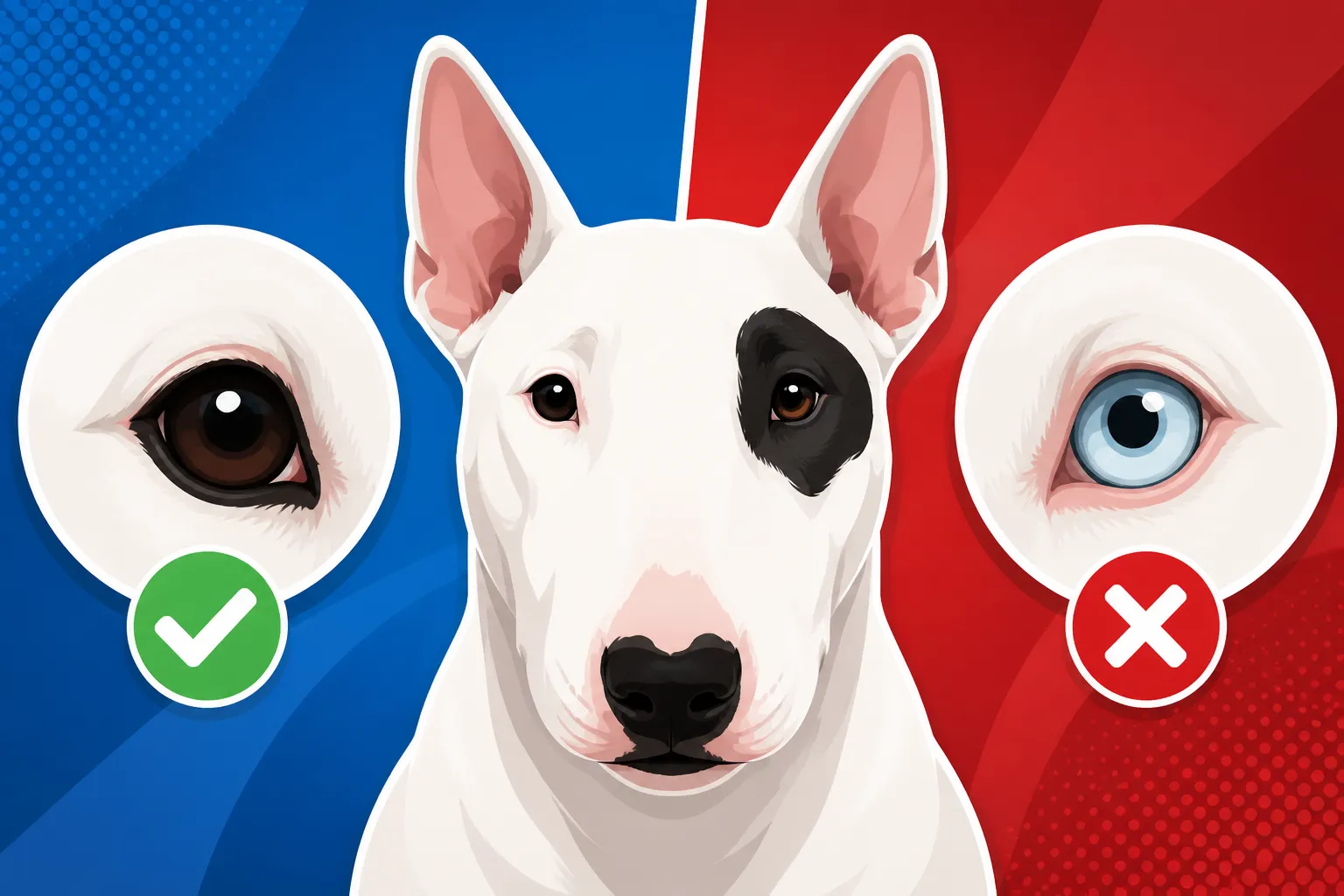
Bull Terrier eyes are traditionally described as dark, with a deep, keen expression. In good light, an owner may be able to see that the iris is dark brown rather than pure black. From across the room, though, the eye can look almost black. That is usually the appearance people mean when they say a Bull Terrier’s eyes should be dark.
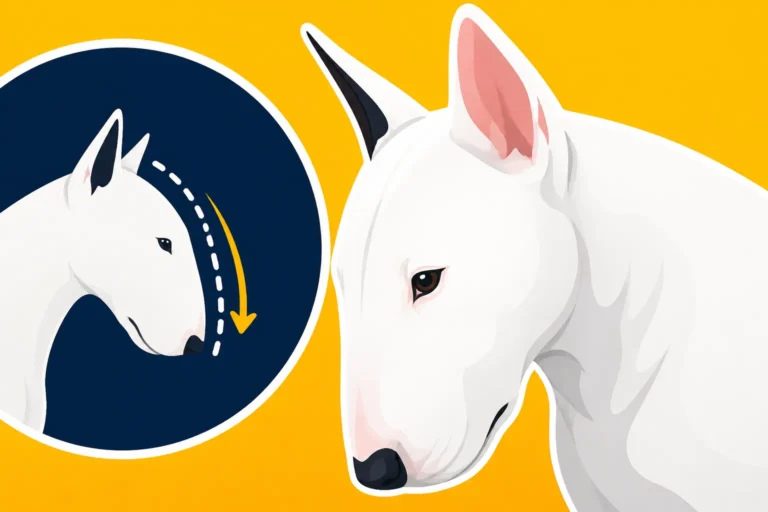
The shape matters as much as the color. A Bull Terrier’s eyes are small, triangular, and set obliquely in the skull, giving the breed its distinctive expression. The combination of a dark iris, a large-looking pupil, and that unusual shape can make the eyes seem especially intense. For more on the breed’s characteristic eye shape, see The Bull Terrier Is the Only Breed With a Triangular Eye and Why a Bull Terrier's Eye Is So Small.
A dark eye is a breed-type feature, not a measure of whether a dog is loving, healthy, or well bred. Owners sometimes worry that a brownish tone means something is wrong, especially when a close-up photo makes the iris look lighter than it does in person. Check the eye in ordinary daylight without using a flash: lighting and camera exposure can exaggerate subtle color differences.
Dark brown is not the same as a sudden color change
A stable, very dark brown iris can be entirely normal. The important distinction is whether the color has always looked that way or whether it has changed. A naturally dark-brown eye is different from an eye that suddenly appears cloudy, pale, blue-gray, red, or uneven compared with the other eye.
A puppy’s appearance can also change as it grows. The eye color you notice very early may not be the final shade, and photos taken in different lighting can make the same eye look different. If you are unsure, compare clear photos taken in similar conditions over time rather than judging from a single flash picture. If a puppy’s eye looks unusually pale or the color seems to be changing, ask your veterinarian to examine it rather than trying to diagnose the cause from a photo.
Eye color alone cannot confirm that vision is normal. A dog can have dark eyes and still have an eye problem, while a difference in shade does not automatically mean that the dog is unwell. If the appearance seems unusual for your dog, describe what you have noticed and when it began. A veterinarian can check the eye itself and decide whether any further examination is needed.
Breed standards and everyday pet health are different questions
If you are thinking about conformation shows or breeding, check the standard used by the relevant kennel club or registry. Breed standards describe the desired appearance, and their wording and judging practices can vary. A breeder or show judge can explain how eye color is considered under the rules that apply to a particular event.
For a family pet, the more practical question is whether the eye is comfortable and functioning normally. A shade that is less typical does not, by itself, tell you whether a dog can see well or whether there is disease. Likewise, a very dark eye does not rule out a problem. Keep appearance questions separate from medical questions, and get veterinary guidance if you notice pain, discharge, cloudiness, or a change in vision.
When a lighter or unusual eye needs attention
A naturally lighter-looking eye is not automatically an emergency
Some owners notice a brown or amber cast in the iris, especially in bright light. If the eye has looked that way for a long time and the dog is not squinting, rubbing it, or showing other signs of discomfort, it may simply be the dog’s natural pigmentation. A veterinary exam is still the right way to resolve uncertainty, particularly if you have no earlier photos for comparison.
Blue eyes are a separate appearance question. The Bull Terrier breed standard generally favors very dark eyes, and a blue eye may be considered undesirable or treated differently under the rules of a particular registry. That does not make eye color a diagnosis. If you are curious about whether blue eyes can occur, see Whether Blue Eyes Occur in Bull Terriers. If you are choosing a puppy, ask the breeder what they know about the puppy’s eye development and whether a veterinarian has examined it.
Do not assume that eye color predicts hearing. Questions about deafness are addressed through appropriate hearing assessment, not by looking at the iris. For an overview of color and hearing, see Whether a Colored Bull Terrier Is Safer From Deafness. If hearing is a concern, ask your veterinarian or breeder about formal testing rather than relying on coat or eye appearance.
A new change matters more than the original shade
A change in one eye, especially if it appears quickly, deserves attention. For example, an eye that suddenly looks cloudy after a walk, becomes red, or appears different from the other eye may have been injured or may have developed a medical problem. A dog may not show obvious pain, so do not wait for dramatic behavior before taking a change seriously.
Contact a veterinarian promptly if you notice any of the following:
- Squinting, holding an eye closed, or blinking more than usual
- Redness, swelling, or a visible change in the surface of the eye
- Cloudiness, a blue-gray haze, or a white spot
- Excessive tearing or thick discharge
- Pawing at the face or rubbing the eye on furniture
- Bumping into objects, hesitating on stairs, or seeming less confident in familiar spaces
- A pupil that looks unusually large, small, or different from the other pupil
Some eye problems need timely treatment to protect comfort and vision. If the eye is painful, suddenly cloudy, or visibly injured, call your veterinary clinic for instructions rather than waiting to see whether it clears up. Avoid using human eye drops, leftover medication, or products intended for another animal unless a veterinarian has told you to use them.
How to check your Bull Terrier’s eyes at home
Make a simple baseline record
A quick, calm check can help you notice changes early. Choose a familiar spot with even daylight, and look at both eyes without shining a bright light directly into them. Notice whether the eyes look equally clear, whether there is unusual redness or discharge, and whether your dog seems comfortable when you approach.
Take a photo occasionally if your dog will tolerate it, using similar lighting and distance each time. A dated photo can be more useful than trying to remember exactly what the eye looked like several months earlier. Keep the pictures with basic notes, such as which eye looks different and when you first noticed the change. That record can help your veterinarian understand whether a difference is longstanding or new.
Do not force the eyelids open or touch the surface of the eye. If your dog pulls away, seems painful, or becomes distressed, stop. You are looking for visible changes, not trying to perform an examination at home. Your veterinarian can assess details that are difficult to judge safely without the right equipment.
Keep cleaning gentle and use products only when needed
A small amount of dried material at the corner of an eye can happen, but frequent discharge, staining, or irritation should not be treated as a grooming problem by default. If the eye looks red, your dog is rubbing it, or the discharge is unusual, ask a veterinarian what to do before cleaning it. The cause may need attention rather than a wipe.
If a veterinarian recommends a specific eye-cleaning product for your dog, follow their instructions and check that the product is intended for use around dogs’ eyes. A retailer such as Chewy may carry pet-care products, but the product should match the veterinarian’s recommendation; do not substitute a general-purpose wipe or medicated product. For safe handling and routine care questions, see How to Clean a Bull Terrier's Eyes and Signs a Bull Terrier's Eye Is Irritated.
Avoid putting contact-lens solution, antiseptics, or human eye medication into your dog’s eye unless the veterinarian specifically directs you to do so. If you have been prescribed eye medication, use it exactly as instructed and ask the clinic or pharmacy if you are unsure about storage, timing, or whether the bottle is still appropriate to use. Chewy may be one option for ordering an item your veterinarian has approved, but the prescription or professional directions—not a product listing—should guide its use.
| What you notice | What it may mean | What to do |
|---|---|---|
| Both eyes have looked very dark and clear for a long time | Typical pigmentation may be likely | Mention it at routine checkups if you remain unsure |
| The iris looks brown in bright light but the eye is comfortable | Lighting may make a dark iris easier to see | Compare in ordinary daylight and monitor |
| One eye suddenly looks cloudy, red, or different | Possible injury or eye disease | Contact a veterinarian promptly |
| Squinting, rubbing, or keeping an eye closed | Possible discomfort or pain | Call a veterinary clinic for advice |
| Gradual change in vision or confidence | Vision may need assessment | Arrange a veterinary examination |
What to ask your veterinarian or breeder
Useful questions for a puppy breeder
If you are considering a Bull Terrier puppy, ask what the breeder has observed about the puppy’s eyes and whether a veterinarian has examined them. If the eyes appear to be different shades, ask whether that appearance has been present consistently or whether it has changed as the puppy has grown. A responsible answer should be straightforward and should not rely on eye color as proof that the puppy can see normally.
You can also ask what health information is available for the puppy and its parents. Eye appearance is only one small part of choosing a healthy dog, and no single feature can replace appropriate health checks or veterinary care. If you want to understand the breed’s eye shape and possible concerns more broadly, Whether a Bull Terrier's Small Eye Causes Problems is a useful related topic.
If you are buying a dog for showing or breeding, ask which registry’s standard applies and how its rules describe eye color. For a pet home, focus on the puppy’s comfort, behavior, and veterinary assessment rather than treating a particular shade as a guarantee of health. A breeder should be willing to explain what they know and direct you to a veterinarian for medical questions.
Useful questions during a veterinary visit
When you book an appointment, tell the clinic whether the eye’s appearance is new, whether one eye or both are affected, and whether you have noticed rubbing, discharge, or changes in how your dog moves around. Bring dated photos if you have them. Mention any recent injury, outdoor activity, or medication, since those details may help the veterinarian assess the situation.
You might ask whether the change appears to involve the iris, the clear surface of the eye, or the area around the eye. Those parts can look similar to an owner but point to different questions for an examination. If the veterinarian recommends monitoring, ask what specific changes should prompt a follow-up and how soon to call if they occur.
Some eye conditions, including lens problems, are not identified by color alone. If you are concerned about a hereditary or structural eye issue, ask whether your dog’s signs fit a condition such as Primary Lens Luxation in a Bull Terrier or Ectropion in a Bull Terrier. The purpose is not to self-diagnose from a title or a photograph, but to make sure your concerns are clearly discussed.
A practical way to think about “dark eyes”
For most owners, the simplest rule is this: a Bull Terrier’s eyes should generally look very dark, but a stable dark-brown appearance can still look nearly black in ordinary viewing. The exact shade is less important for day-to-day care than whether the eye is clear, comfortable, and unchanged.
Take note of what is normal for your dog, and do not dismiss a sudden difference as “just eye color.” If you are preparing a routine-care kit, keep only veterinarian-approved products on hand. Chewy may be convenient for replenishing an approved item, but never use a product in or around the eye simply because it is marketed for pets.
Disclaimer
This article is for general informational purposes only and does not constitute professional advice. Laws, prices and regulations vary by location and change over time. Consult a qualified professional for guidance on your specific situation.