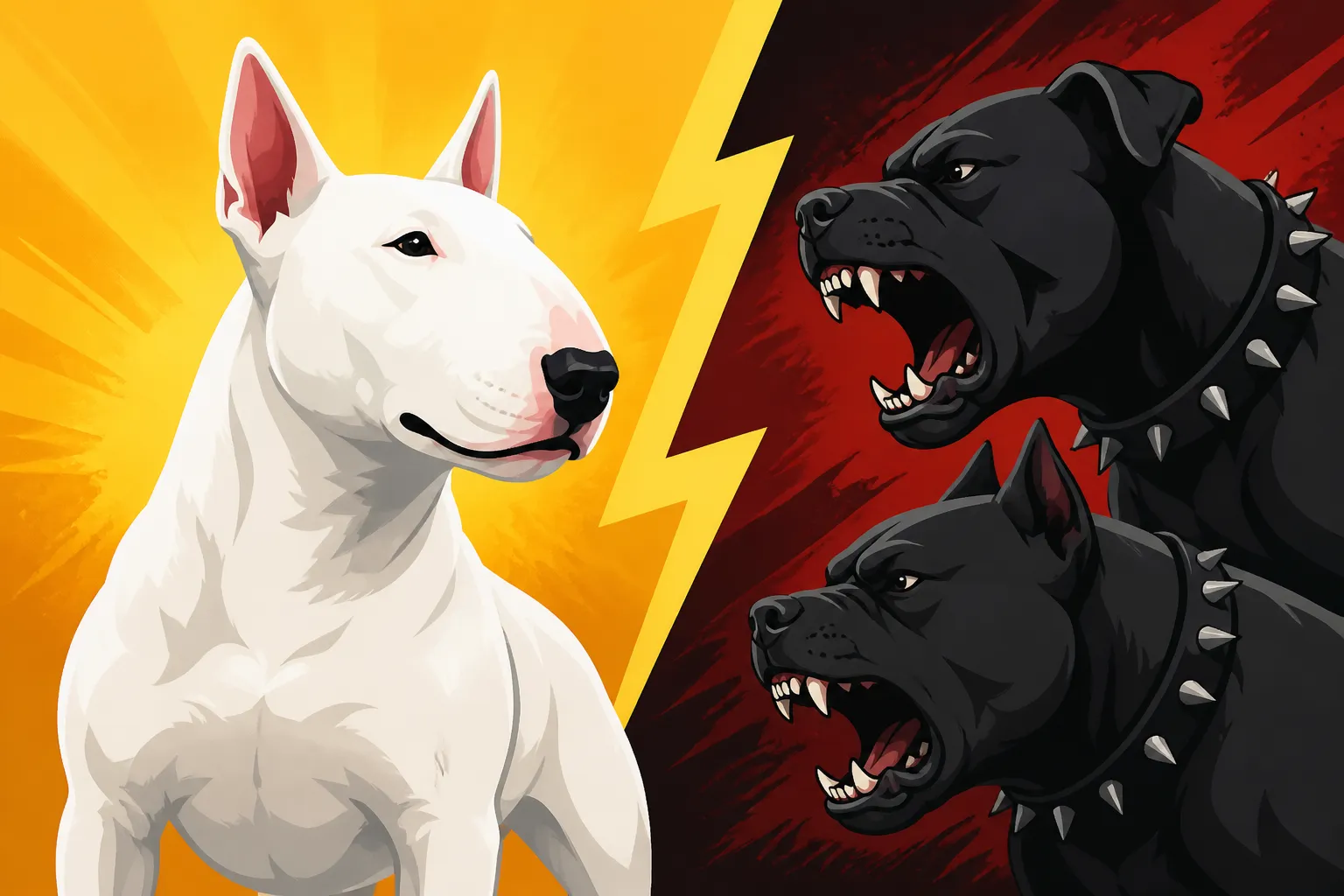
Whether a Bull Terrier Was Meant to Take a Fight
A Bull Terrier’s ancestry is tied to Britain’s old blood sports, but that history is more complicated than “the breed was made to fight.” The Bull Terrier emerged as a distinct type after dog fighting had been outlawed, from stock with earlier fighting connections. This guide separates those facts, explains what the dogs were bred for, and clarifies what their past does—and does not—say about them today.
What people mean when they ask if Bull Terriers were meant to fight
The short answer depends on which dogs you mean
Bull Terriers have ancestry connected to dogs used in fighting, but the modern breed’s story is not simply that breeders created it to be a fighting dog. The confusion comes partly from using “Bull Terrier” to describe different things across different periods: bull-and-terrier crosses, early dogs resembling the later breed, and the established Bull Terrier breed.
In earlier Britain, dogs bred from bulldog and terrier stock were used in blood sports, including dog fighting and bull baiting. Those activities shaped the ancestry from which several later breeds emerged. The historical mix of dogs and local breeding practices was not as standardized as a modern pedigree breed, so it is misleading to treat every dog called a bull-and-terrier as if it were a registered Bull Terrier of today.
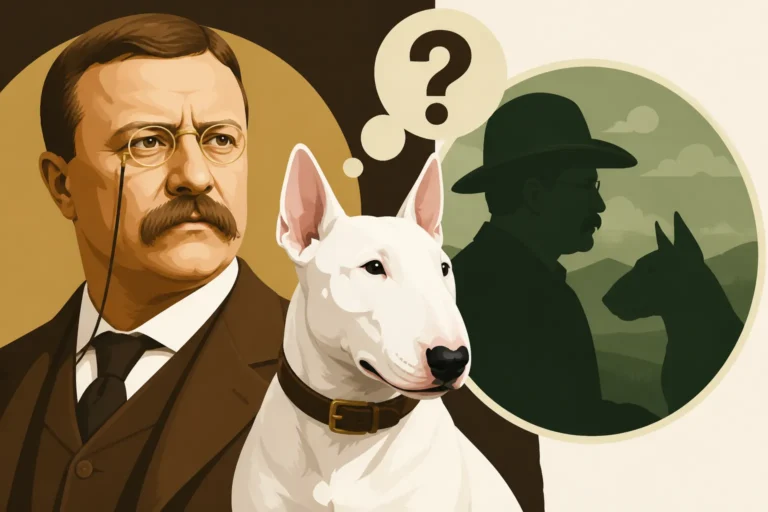
The Bull Terrier as a recognizable breed developed later, associated especially with James Hinks in Birmingham in the 19th century. Its origins are explored in Where the Bull Terrier Comes From and What the Bull and Terrier Was. The distinction matters: an ancestor’s use in a particular activity does not, by itself, prove that the later breed was created for exactly that purpose.
What “taking a fight” meant historically
In this context, “take a fight” usually refers to being put into a contest against another dog. It does not mean that Bull Terriers were bred to attack people. The old term “bull-and-terrier” described dogs associated with blood sports and related work, not a single modern breed with one fixed standard.
Dog fighting was illegal in Britain from the 19th century onward, although the existence of a ban did not instantly end every underground contest. The legal and social setting was changing while the Bull Terrier was taking shape. That shift makes it difficult to reduce the breed’s development to one purpose or one moment in history. How a Fighting Ban Changed the Bull Terrier looks more closely at how prohibition affected the dogs and the practices around them.
It is also worth separating historical function from romanticized stories. Claims that a dog was “born to fight” can make a complicated history sound inevitable, as if every individual dog must behave in a certain way. That is not a sound way to understand either the breed’s past or a particular dog in front of you.
How the Bull Terrier took shape after blood sports were outlawed
The breed developed from older stock but gained a new identity
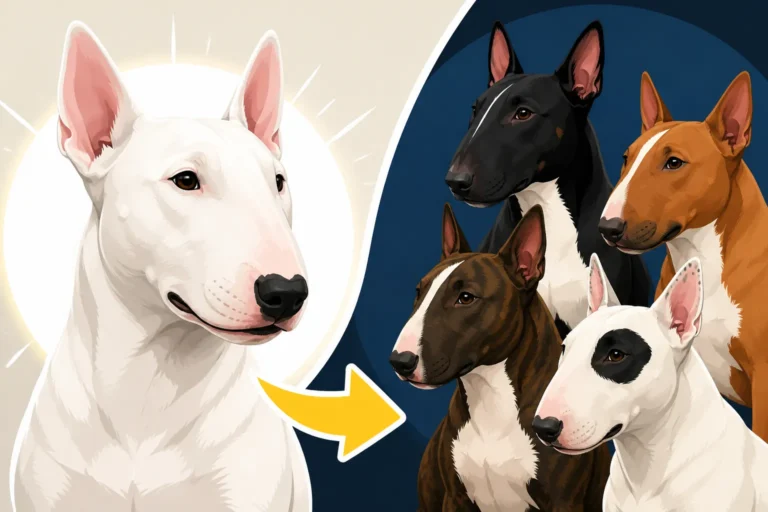
James Hinks is widely associated with developing the Bull Terrier into a more distinct and recognizable breed. His work took place in a period when public dog shows and companion animals were becoming increasingly important. The dogs associated with Hinks were known for a cleaner, more uniform appearance than many earlier bull-and-terrier types, and the white coat became a defining part of the breed’s public image.
That does not mean every detail of the breed’s ancestry is known with certainty. Historical breeding records are incomplete by modern standards, and people have debated which other breeds may have contributed to the Bull Terrier’s development. What can be said more safely is that the breed arose from older British bull-and-terrier stock and was shaped into a distinct type for a changing era.
The story of James Hinks and the breed’s development is covered in Who James Hinks Was and How the Bull Terrier's Head Changed Over Time. It is useful context because it shows that the breed’s identity was not frozen at the moment its ancestors were used in blood sports. Breeders and owners were shaping a dog for public display and life alongside people as well.
Shows and companionship helped change the public image
Dog shows gave breeders a reason to emphasize appearance, consistency, and presentation. The 1862 Cremorne show is often discussed in accounts of the Bull Terrier’s early public history, and What Happened at the 1862 Cremorne Show explains its place in the breed’s story. Show culture did not erase the ancestry, but it helped give the emerging breed a different public role from that of dogs used in illegal contests.
The white Bull Terrier became known as the “White Cavalier,” a name that conveyed a polished, companionable image. The nickname itself is part of the breed’s history, not proof that every dog was gentle in every circumstance. Still, it points to a real change in how breeders and admirers wanted the dog to be seen: not just as a descendant of working or fighting stock, but as a distinctive show dog and companion. What the White Cavalier Name Meant explores that image.
Accounts of the breed’s early years sometimes use dramatic anecdotes to show courage or toughness. Such stories can be entertaining, but they should not be mistaken for a complete breeding record or a reliable guide to modern behavior. A single tale cannot tell us what every dog in a line was like, how it was raised, or how a modern Bull Terrier will respond in a home.
| Question | Careful answer |
|---|---|
| Did Bull Terriers have ancestors used in fighting? | Yes. Their broader bull-and-terrier ancestry is connected to dogs used in historical blood sports. |
| Was the modern Bull Terrier created only to fight? | That is too simple. The distinct breed developed later, as dog shows and companion roles became more prominent. |
| Were they bred to attack people? | The fighting history refers mainly to contests between dogs, not a purpose of attacking people. |
| Does ancestry determine an individual dog’s behavior? | No. Behavior varies with the individual, breeding, socialization, training, health, and environment. |
What the fighting history does and does not tell us about temperament
Ancestry is not a prediction for every individual dog
A breed’s history can help explain its physical traits and how people once used dogs, but it cannot predict the exact temperament of an individual. Dogs are shaped by many factors, including inherited tendencies, early experiences, socialization, health, and the way people manage them. Even dogs from the same litter can differ in confidence, sociability, energy, and tolerance.
Bull Terriers are strong, active dogs, and some individuals can be intense or physically exuberant. That is a practical ownership consideration, not evidence that a dog is destined to fight. A young dog that launches itself into a greeting may need calm, consistent training and careful management; it does not need a dramatic story about its ancestry attached to every behavior.
If you are considering a Bull Terrier, look at the dog in front of you and ask about its parents, upbringing, and behavior in ordinary situations. A responsible breeder or rescue should be willing to discuss temperament honestly rather than relying on either a “tough fighter” image or an equally simplistic claim that every Bull Terrier is automatically gentle.
Responsible ownership focuses on the dog you have
Because Bull Terriers are powerful and often enthusiastic, early training should make everyday life safer and less chaotic. Practise loose-leash walking, calm greetings, and settling on a mat in short, rewarding sessions. For example, if a dog tends to surge toward visitors, use a lead or a barrier while teaching it to pause and greet only when it can keep its feet on the floor.
Supervision and thoughtful introductions matter around other dogs, children, and unfamiliar visitors. This is true of many breeds, especially when size and excitement can make play rough without the dog intending harm. Learn to notice stress signals and give dogs space instead of forcing an interaction. A dog park is not automatically the right place to teach social skills; controlled, positive experiences may be a better fit for some dogs.
For day-to-day enrichment, owners may use food puzzles, training treats, and sturdy toys that suit their dog’s chewing style. Retailers such as Chewy carry a range of these supplies, but no toy is indestructible or safe for every dog; supervise new items and remove anything that breaks into swallowable pieces. The point is to meet the individual dog’s needs, not to treat its ancestors as a behavior manual.
How to discuss the breed’s past without repeating myths
Avoid both the “born fighter” story and the sanitized version
The “born fighter” label turns history into destiny. It can unfairly stigmatize an individual dog, encourage owners to expect aggression, and obscure the everyday factors that influence behavior. It also mixes up dogs used in earlier blood sports with a later breed that developed a separate public identity.
The opposite claim—that the Bull Terrier has no connection to fighting history at all—is also misleading. The breed’s background is connected to bull-and-terrier stock, and those earlier dogs were used in blood sports. A clear account can acknowledge this without glorifying it or pretending that the modern breed is simply a direct continuation of a fighting dog.
The most useful explanation is a nuanced one: the Bull Terrier has ancestry linked to fighting dogs, but the distinct breed took shape in a changing social period and came to be associated with showing and companionship. Whether the Bull Terrier Was a Fighting Dog and Whether Hinks Bred the Fight Out of the Bull Terrier address related questions from different angles.
Use history as context, not as a shortcut
When reading about the breed, check whether an account is talking about early bull-and-terrier dogs or the later Bull Terrier. Notice whether it distinguishes dog fighting from other blood sports, and whether it treats a historical anecdote as evidence for a broad claim. These small distinctions make a big difference. “Some ancestors were used in fighting” is a more careful statement than “Bull Terriers were bred to attack anything.”
For prospective owners, ask practical questions about health, temperament, and the dog’s daily needs. For example, ask how puppies are introduced to ordinary household sounds, what the parents are like around people, and how the breeder or rescue evaluates a dog’s comfort around other animals. The aim is not to find a dog with a mythical past or a spotless one, but to understand the individual you may be bringing home.
If you already live with a Bull Terrier, its ancestry does not replace observation and training. Pay attention to what your dog enjoys, what makes it uncomfortable, and how it responds in specific situations. Some owners also use enrichment products from retailers such as Chewy to make feeding and play more engaging; choose items based on your dog’s size, chewing habits, and supervision needs. A third-party retailer can be a place to browse, but suitability comes down to the dog and the product.
The most fair and useful answer is neither sensational nor evasive: Bull Terriers have historical roots in bull-and-terrier dogs associated with fighting, yet the distinct breed developed beyond that role. Knowing the history helps explain the breed’s background. It does not define every modern Bull Terrier’s character, and it is no substitute for responsible breeding, thoughtful training, or judging a dog as an individual.
Disclaimer
This article is for general informational purposes only and does not constitute professional advice. Laws, prices and regulations vary by location and change over time. Consult a qualified professional for guidance on your specific situation.