Why the Bull Terrier Is Called the White Cavalier
A Bull Terrier’s nickname, “the White Cavalier,” can sound like an official title or proof that the breed was always gentle. It is neither. The name reflects the image early breeders promoted: a striking white dog presented as a polished companion. This guide explains where the nickname came from, what it meant, and why it shouldn’t be mistaken for a guarantee about any dog’s temperament.
What “the White Cavalier” means
A nickname, not an official breed name
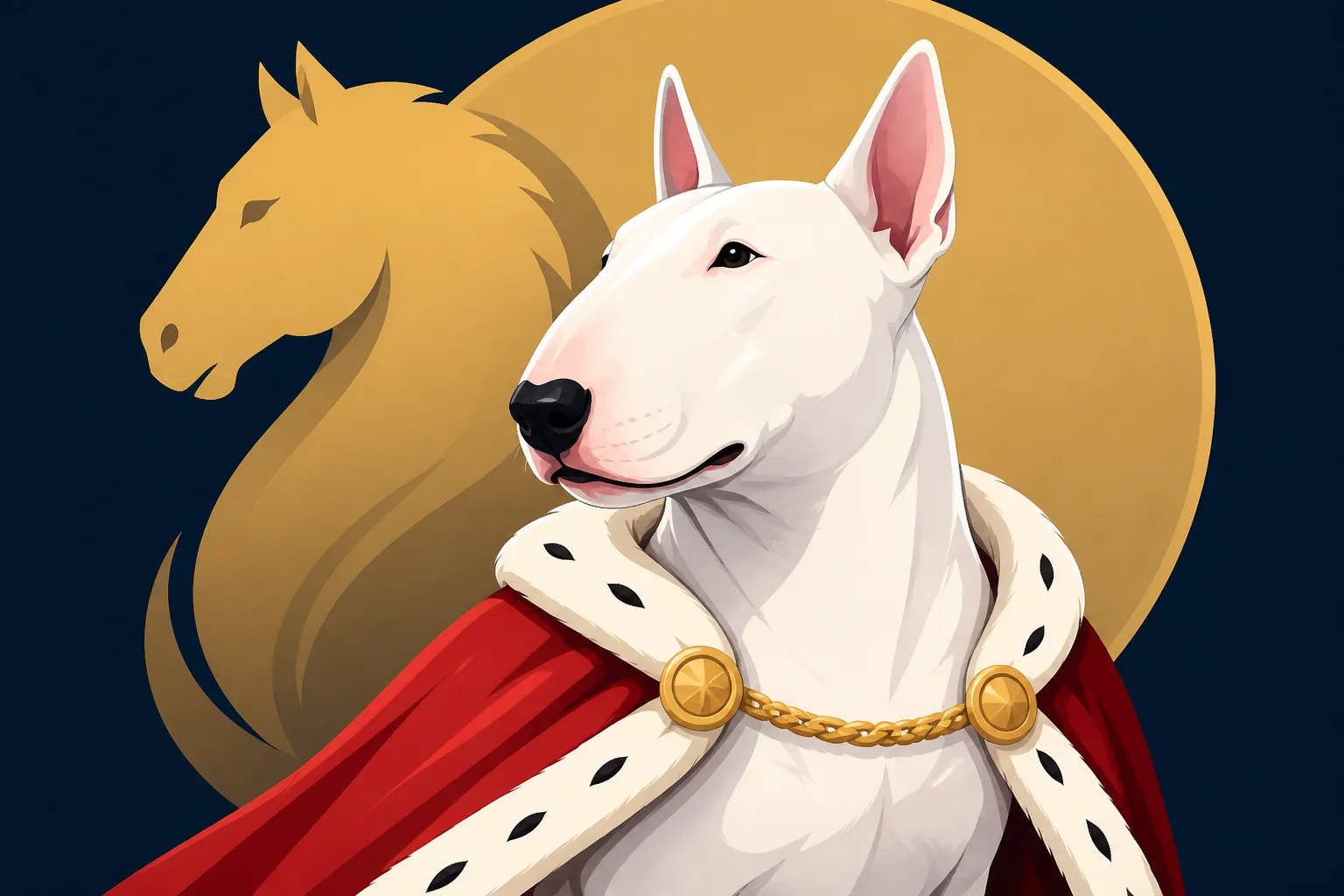
“The White Cavalier” was a descriptive nickname associated with the early all-white Bull Terrier. It was not a separate breed, a formal registration category, or a title that every Bull Terrier earned. The name helped give a distinctive identity to dogs that stood apart from the rougher-looking bull-and-terrier types of the period.
The word cavalier carried a flattering tone. It suggested a gentlemanly, composed companion rather than a dog defined by its working or fighting ancestry. In the Victorian era, that sort of image mattered: breeders and owners were presenting the dog not simply as a tough animal, but as an elegant one suited to respectable company.
That image is part of the breed’s story, but it can be easy to read too much into it. A nickname tells us how people wanted a dog to be perceived; it doesn’t establish that every dog had the same temperament, or that the breed had no difficult history. For a closer look at the phrase itself, see What the White Cavalier Name Meant.
Why whiteness became part of the image
The early Bull Terrier’s mostly white appearance made the nickname especially memorable. A clean white coat gave the dog a dramatic look and helped distinguish it from many dogs with more varied markings. Appearance, in other words, was part of the message: these were not being presented as anonymous, rough-and-ready dogs, but as a recognizable type with a carefully cultivated look.
The emphasis on white is also tied to the breed’s early development and the preferences of its influential breeders. James Hinks is closely associated with the refined, white Bull Terrier that helped shape the breed’s public image. If you’re curious about the man behind that chapter, Who James Hinks Was and Why Hinks Wanted an All White Dog offer useful background.
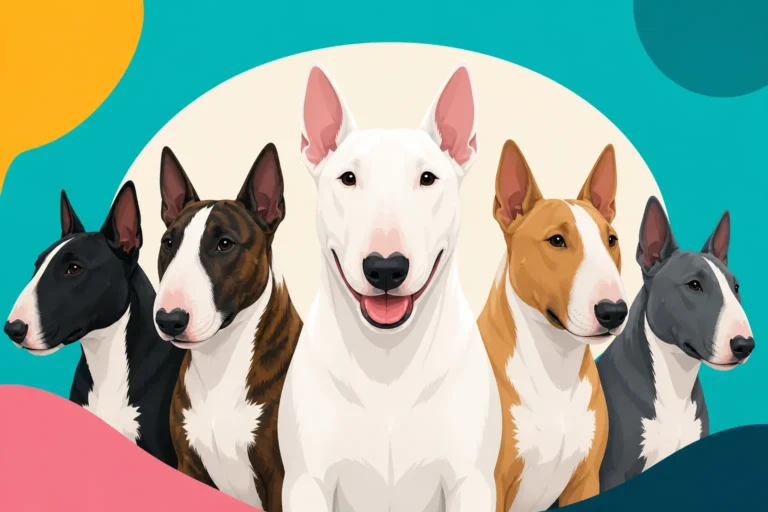
There’s a difference, though, between saying that white was central to the early image and saying that every Bull Terrier has to be white. The breed later came to include colored dogs as well. The nickname refers to a particular historical image, not a rule about the appearance of all Bull Terriers today. The wider development of the breed is explored in Where the Bull Terrier Comes From.
How the nickname shaped the breed’s reputation
From a rougher type to a polished companion
The Bull Terrier emerged from bull-and-terrier dogs, a group associated with a mix of strength, courage, and working ability. Early breeders helped shape a more distinct breed and promoted it as a companion as well as a show dog. The White Cavalier label captured that change in presentation: it emphasized refinement and social respectability alongside the breed’s physical power.
That kind of image-building wasn’t unique to Bull Terriers. Breed reputations often grow through a combination of appearance, stories, show-ring success, and the way owners talk about their dogs. A striking silhouette and a memorable nickname can stick in the public mind long after the reasons for choosing them have faded.
It’s also worth separating a polished public image from the realities of the breed’s origins. The name doesn’t mean the dog had no connection to the bull-and-terrier type, nor does it prove that all early Bull Terriers were bred for the same purpose. For a more detailed discussion of those complicated beginnings, see Whether the Bull Terrier Was a Fighting Dog and Whether a Bull Terrier Was Bred to Start Fights.
Why people sometimes misunderstand “cavalier”
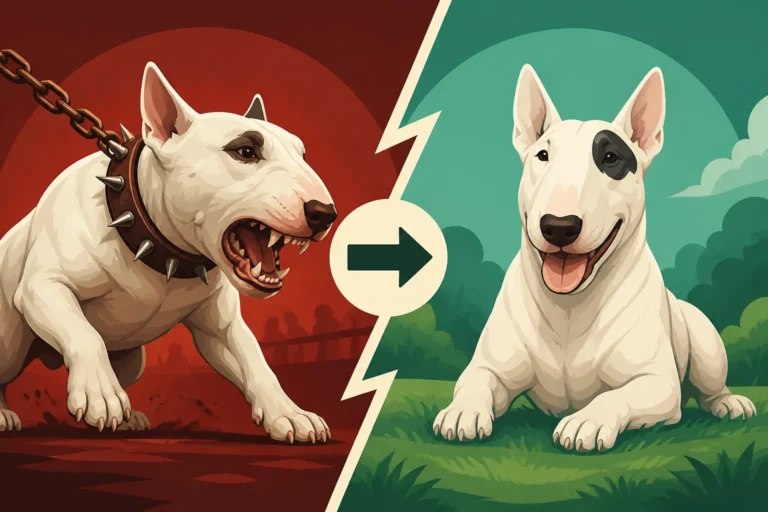
Today, cavalier can sound like a promise: calm, gracious, and automatically safe with everyone. That reading is understandable, but it turns a historical nickname into a temperament claim it was never able to make. Individual dogs vary, and upbringing, health, training, and everyday management all affect how a dog behaves.
The label can also encourage an oversimplified story that the Bull Terrier was transformed from a fighting dog into a harmless one in a single stroke. Breed history rarely works that neatly. Over time, breeders and owners shaped the breed’s appearance and role, but that does not erase its background or mean every dog will respond alike in every situation.
A famous story from the breed’s early history is another place where public image and historical interpretation can get tangled. The account of Puss, a Bull Terrier associated with a wager at the Cremorne Show, has become part of the breed’s lore. You can explore that story in What Happened at the 1862 Cremorne Show and Puss, the Bull Terrier That Won a Wager Without a Scratch.
| The phrase or idea | What it tells you | What it does not prove |
|---|---|---|
| White Cavalier | A flattering nickname linked to the early white Bull Terrier | That it was an official breed name |
| White coat | A prominent feature of the breed’s early public image | That every Bull Terrier must be white |
| Cavalier image | How breeders and admirers presented the dog | That every individual dog is calm or sociable |
| Bull-and-terrier roots | Part of the breed’s historical background | That every modern Bull Terrier behaves the same way |
What the name does and doesn’t say about temperament
A nickname cannot assess an individual dog
A Bull Terrier’s actual temperament is something you learn from the dog in front of you, not from a historical label. Some are exuberant, affectionate, persistent, and comical; others may be more reserved or have specific sensitivities. Even dogs from the same litter can differ in confidence, sociability, and how they respond to new experiences.
That’s why it’s more useful to ask practical questions than to rely on a reputation. How does this dog behave around unfamiliar people? Can it settle after play? Does it cope with handling, visitors, and everyday noise? What situations make it tense or overexcited? Those observations tell you more about an individual dog than the word cavalier ever could.
If you’re trying to understand the breed beyond its nickname, What a Bull Terrier's Temperament Is Really Like offers a more direct starting point. It’s sensible to think about training and supervision, too. A strong, energetic dog benefits from consistent, reward-based teaching and clear routines, regardless of how elegant its historical image may sound.
Affection and good manners still need support
Many Bull Terrier owners describe dogs that are deeply attached to their people and eager to be part of whatever is happening. That affection can be delightful. It can also come with enthusiastic greetings, physical play, and a knack for taking up more space than you expected. “Gentlemanly” is not the same as naturally quiet or perfectly mannered.
A dog can be loving and still need help learning how to greet visitors, share space, and settle when excitement rises. For example, a young Bull Terrier may adore the family but launch itself toward a guest at the door. That doesn’t mean the dog is bad or that the White Cavalier image was a lie; it means the household needs a safe greeting routine and consistent practice.
The phrase is best treated as an interesting piece of history rather than a shortcut for choosing or judging a dog. If you’re considering a Bull Terrier, meet the individual dog, ask about its background, and think carefully about whether its energy and needs fit your home. A romantic nickname can introduce the breed’s story, but daily life is shaped by the dog’s character and the care it receives.
The White Cavalier in modern Bull Terrier life
Respect the history without repeating its myths
The White Cavalier label is useful when it opens a conversation about how people shaped the Bull Terrier’s identity. It becomes less useful when it’s treated as proof that the breed was always harmless, or that all Bull Terriers share one predictable personality. History can explain why a nickname caught on; it cannot tell you how a particular dog will behave in your kitchen, on a walk, or around another animal.
That distinction matters for prospective owners. A breed’s history is one part of responsible decision-making, alongside health, training, exercise, socialization, and the practical realities of living with a muscular, lively dog. The name might make the breed sound composed, but a successful match comes from understanding the actual dog and preparing for its needs.
It also matters for current owners who hear assumptions based on appearance or reputation. You don’t need to defend every part of the breed’s history to explain your dog. You can acknowledge the nickname, describe what it meant, and then talk about the individual Bull Terrier you know.
Caring for a white coat today
The historical emphasis on a white coat has a modern practical side: some white Bull Terriers have pale or pink skin that needs thoughtful sun protection. The nickname itself offers no care instructions, of course, but a sunny afternoon can turn a history question into a very ordinary owner concern. Look for shade, limit prolonged exposure during intense sun, and ask your veterinarian what protection is appropriate for your dog.
Dog-specific sunscreen and lightweight sun-protective clothing may be useful options for some dogs. If you’re comparing products at a retailer such as Chewy, check that any sunscreen is labeled for dogs and ask your veterinarian before applying it, especially near the face or areas your dog can lick. A sun shirt from Chewy may be another option to assess for fit and comfort; it should not trap heat or restrict movement.
If you’re ordering supplies through Chewy, remember that a product listing doesn’t replace veterinary guidance. Dogs differ in skin sensitivity, and new redness, sores, or persistent irritation deserve a professional check rather than a quick change of sunscreen. For more on the issue, Sunburn on a White Bull Terrier explains why pale skin deserves attention.
The lasting appeal of “the White Cavalier” is that it captures a particular chapter in the Bull Terrier’s public image: a striking white dog presented as a refined companion. It’s a memorable name, but it’s not a temperament test, a guarantee of behavior, or a complete account of the breed. Understanding both the story and the individual dog makes for a more realistic, respectful picture.
Disclaimer
This article is for general informational purposes only and does not constitute professional advice. Laws, prices and regulations vary by location and change over time. Consult a qualified professional for guidance on your specific situation.