Why a Bull Terrier Ends Up in Your Bed
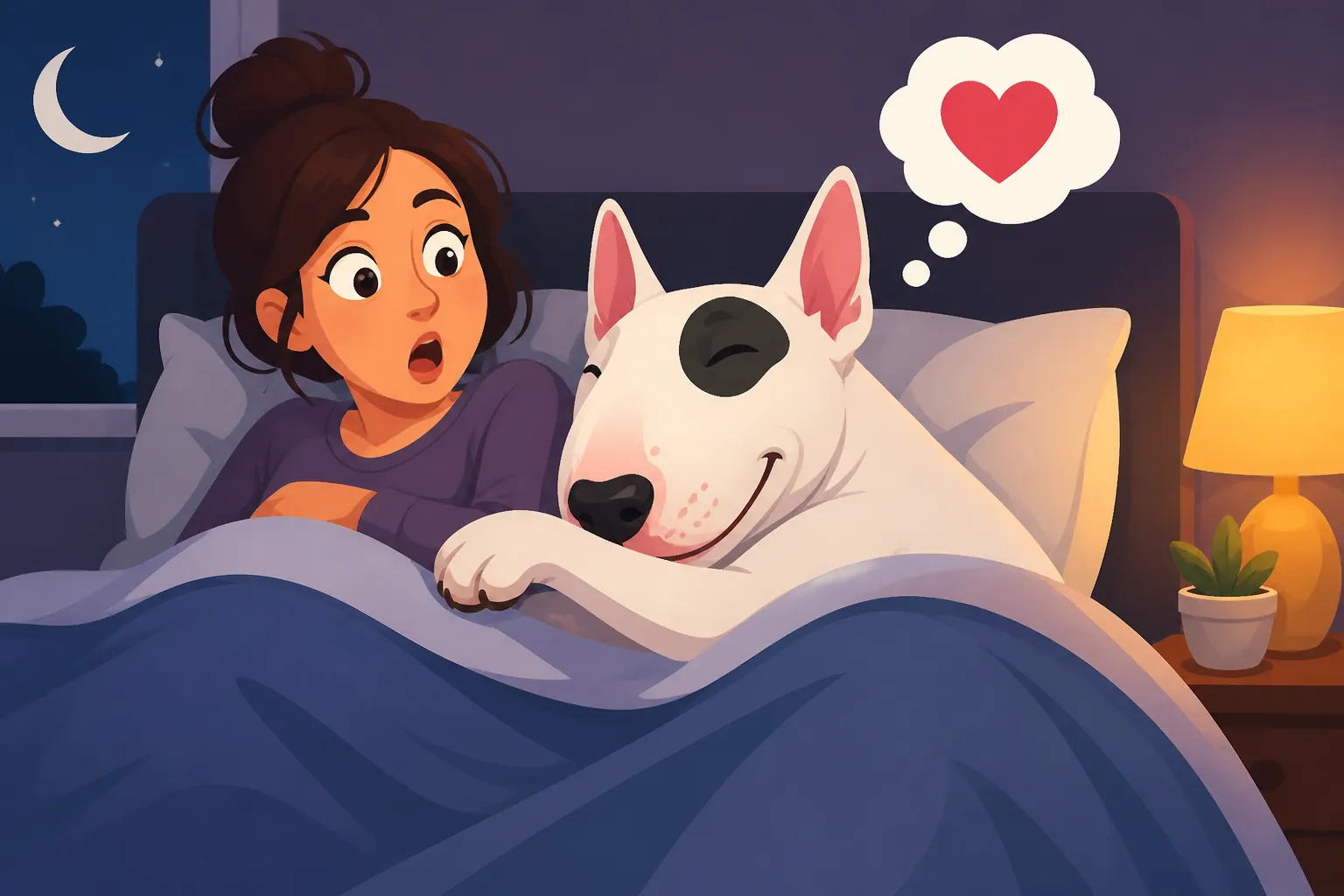
It's a common dilemma for Bull Terrier owners: you swear you'll never let your dog sleep in the bed, and then one morning, you wake up to a solid, snorting, utterly content Bull Terrier hogging two-thirds of the mattress. It happens to the best of us. These incredibly affectionate, often stubborn, and always-in-your-business dogs have a way of worming their way not just into your heart, but right under your covers. This guide will explore the deep-seated reasons why your Bull Terrier gravitates towards your bed, and offer realistic perspectives on managing this endearing (and sometimes challenging) behavior.
The Inescapable Lure of the Human Bed for a Bull Terrier
For a Bull Terrier, your bed isn't just a soft spot; it's a prime piece of real estate, loaded with comfort, security, and a deep connection to their favorite person in the world. They aren't just looking for a nap; they're looking for your nap, your smells, and your proximity. It's a fundamental part of their being, often misunderstood by those who don't live with these unique characters.
The Comfort and Security Appeal
Think about it from your Bull Terrier's perspective. Your bed is likely the warmest, softest, most elevated spot in the house. It's often strategically placed in a room where you spend a significant amount of time, especially during those quiet, vulnerable sleeping hours. For a breed that thrives on comfort and can be surprisingly sensitive despite their tough exterior, a human bed offers unparalleled coziness. It’s a plush haven that dampens outside noises and creates a safe, den-like atmosphere. They feel secure knowing you are right there, a comforting presence through the night.
Moreover, your bed carries your scent – a potent cocktail of everything familiar and reassuring to your dog. They are scent-driven creatures, and being enveloped in your smell, particularly when you're also present, is the canine equivalent of a security blanket. It reinforces their feeling of belonging and safety. This primal need for a secure resting place, combined with their desire for closeness, makes your bed an irresistible magnet. For a breed that often seeks physical contact, a soft mattress and a warm body are the ultimate luxury, explaining why even a perfectly comfortable dog bed might be ignored in favor of yours.
Mimicking the Pack Dynamics
While modern domestic dogs aren't strictly "pack animals" in the wild sense, they do operate within a social structure, and a Bull Terrier sees their human family as their core group. In this context, sleeping together, or in close proximity, is a natural and instinctual behavior. In the wild, canids often huddle together for warmth and protection, particularly during sleep. By ending up in your bed, your Bull Terrier is, in a way, acting on these ancient instincts. They want to be part of the inner circle, sharing resources and mutually protecting one another.
This isn't about dominance, as outdated theories once suggested; it's about affiliation and bonding. Your Bull Terrier views you as a crucial part of their world, and being in your bed solidifies that bond. They might lean into you, rest their head on your chest, or even wedge themselves under your arm. These are all behaviors aimed at maximizing contact and demonstrating their affection and trust. It's a testament to the strong connection you share, and for many Bull Terrier owners, this intense need for closeness is one of the breed's most charming, if occasionally inconvenient, traits. How Physically Affectionate a Bull Terrier Is dives deeper into their tactile expressions of love.
Understanding the Bull Terrier's Deep-Seated Need for Closeness
Bull Terriers are famously known for their unique personalities and equally unique appearance, but beneath that egg-shaped head lies a heart that craves connection. Their desire to be physically close to their people isn't just a quirk; it's fundamental to their temperament. It’s an integral part of what makes them the delightful, if sometimes overbearing, companions they are.
The "Velcro Dog" Phenomenon
If you own a Bull Terrier, you're likely already intimately familiar with the term "Velcro dog." These dogs don't just follow you from room to room; they practically fuse to your side. Whether you're cooking, showering, or simply sitting down to read, your Bull Terrier will often be right there, a shadow in canine form. This intense desire for proximity extends seamlessly into their sleeping habits. Why would they choose a solitary bed when the ultimate comfort – you – is available? Why a Bull Terrier Follows You Everywhere expands on this pervasive trait.
This "Velcro dog" tendency is driven by a strong emotional connection and a genuine need for companionship. They thrive on human interaction and can become quite sad or anxious if left alone for extended periods. Your bed offers the maximum level of "togetherness," ensuring they're never truly separated from their beloved human. For them, it’s not just about a comfortable sleep; it’s about reinforcing their place within the family unit and ensuring they don't miss out on any potential affection or interaction, even when everyone is asleep. This constant seeking of physical contact is a hallmark of the breed, and understanding it is key to comprehending why your bed often becomes their preferred nighttime perch.
Affectionate by Nature, Not by Accident
Bull Terriers were originally bred to be loyal companions, and that inherent devotion translates into a highly affectionate nature. They often express their love through physical touch – leaning, nudging, snuggling, and yes, sharing your bed. This isn't a learned behavior; it's deeply ingrained in their genetic makeup. They are intelligent and sensitive dogs who form incredibly strong bonds with their owners, and that bond often manifests as an intense desire for physical closeness.
Their affection isn't always subtle, either. A Bull Terrier's way of showing love can involve a full-body lean that nearly knocks you over, or a determined burrowing under your arm until they're perfectly snuggled. They don't just want to be near you; they want to be on you. This powerful affectionate drive makes resisting their charm at bedtime particularly difficult. When you see those little triangular eyes gazing up at you, desperate for a cuddle, it's almost impossible to say no. They understand the power of their presence and use it effectively to secure their spot, making your bed a shared sanctuary of mutual adoration.
The Impact of Early Experiences
A Bull Terrier puppy's early experiences can also profoundly shape their comfort levels and expectations regarding sleep arrangements. Puppies that are allowed to sleep with their littermates and mother learn the comfort and security of contact sleeping. When they transition to a new home, replicating that warmth and closeness, especially in the form of a human bed, can feel incredibly natural and safe to them. A new puppy, feeling vulnerable in an unfamiliar environment, will often gravitate towards the warmest, most reassuring presence available – you. How Much Sleep a Bull Terrier Puppy Needs often involves a lot of cuddles.
If a puppy is consistently allowed in the bed from a young age, it quickly becomes their established routine and expectation. It's much harder to change this habit once it's deeply ingrained. For example, if you brought your Bull Terrier puppy home and felt a pang of guilt about them sleeping alone, letting them up for "just one night" can quickly snowball into a permanent arrangement. They learn that the human bed is where they belong when it's time to rest, making it increasingly difficult to enforce boundaries later on. Consistency from day one, whether you choose to share your bed or not, is crucial in shaping these early behaviors.
Setting Boundaries or Embracing the Cuddle: What It Means for You
Deciding whether your Bull Terrier sleeps in your bed is a deeply personal choice, and there’s no universally “right” answer. What works for one owner might be a nightmare for another. The important thing is to make an informed decision that suits your lifestyle, your dog's needs, and your sleep quality.
The Pros and Cons of Co-Sleeping
Let's be real, sharing your bed with a Bull Terrier has its definite upsides and downsides. On the one hand, there's nothing quite like waking up to the soft weight of your beloved companion, feeling their steady breath, and knowing they're safe and sound beside you. Many owners find it incredibly comforting and feel a deeper bond with their dog. For a Bull Terrier, who craves that closeness, it can reduce separation anxiety and promote a sense of well-being. It’s also incredibly warm on a cold night, especially if you have a short-coated Bull Terrier without much undercoat.
However, the downsides are equally potent. Bull Terriers, even standard size ones, are dense, muscular dogs who can take up a surprising amount of space. They snore, dream-kick, and can radiate heat. Your sleep quality might suffer if you're constantly being nudged, squashed, or woken by their nocturnal antics. There's also the practical consideration of dog hair, dander, and dirt in your bed, regardless of how often you brush them. For individuals with allergies, it can be a non-starter. Furthermore, if your Bull Terrier has any resource guarding tendencies, sharing a bed could potentially lead to issues, though this is less common with their people. How Much a Bull Terrier Snores might surprise you!
Here's a quick overview of some common considerations:
| Aspect | Pros of Co-Sleeping | Cons of Co-Sleeping |
|---|---|---|
| Bonding | Strengthens emotional connection, fosters trust. | Can lead to over-reliance, separation anxiety when apart. |
| Security & Comfort | Dog feels safe, reduces anxiety, warmth. | Can disrupt human sleep quality, dog might overheat. |
| Behavior | May reduce destructive behavior from loneliness. | Can reinforce "Velcro dog" tendencies, boundary issues. |
| Hygiene | Minimal impact if dog is clean and groomed. | Hair, dander, dirt, potential for fleas/ticks. |
| Space & Sleep | Comfort of dog's presence. | Reduced human sleep space, dog's movements, snoring. |
| Health (Human) | May lower stress, improve mood. | Can exacerbate allergies, transfer of zoonotic diseases. |
Gentle Methods for Bedtime Boundaries
If you've decided that your bed is a human-only zone (or you're trying to reclaim some space!), consistency is absolutely paramount with a Bull Terrier. They are intelligent and can be stubborn, so a wishy-washy approach won't work. The key is to provide an equally appealing, dedicated sleeping space for them and make it clear that that is their bed. Start by choosing a high-quality, comfortable dog bed, perhaps one from a brand known for durability or orthopedic support that you can easily find on Amazon. Place it close to your bed initially, so they still feel connected to you.
When they try to jump on your bed, gently but firmly redirect them to their own bed. Use a consistent cue like "Off" or "Your bed." Reward them lavishly with praise and a small, high-value treat when they are in their bed. Avoid scolding or harsh punishments; Bull Terriers are sensitive and shut down under pressure. The goal is to make their bed a positive place, not a place of punishment. You might need to physically lead them, or even use a short leash for a few nights to guide them to their spot. For more structured guidance, resources like BAXTER & Bella’s online puppy school can provide excellent positive reinforcement techniques for teaching boundaries and appropriate resting places. Be prepared for some initial protests, sulking, and attempts to sneak back up. It’s a marathon, not a sprint, when changing a Bull Terrier's established habits.
Making the Bed a Safe and Comfortable Space (for both of you)
For those who embrace co-sleeping, there are ways to make the experience more comfortable and safe for everyone involved. First, consider the size of your bed. A king-sized bed offers significantly more room than a queen or full, which can be crucial when sharing with a seventy-pound Bull Terrier. Invest in durable bedding that can withstand paws and occasional chewing, and consider a washable duvet cover that can be laundered frequently to manage hair and dander. A good mattress protector is also a wise investment.
Ensuring your Bull Terrier is clean before bed is also important. A quick wipe-down of paws (especially during muddy seasons) and a regular grooming routine can minimize the amount of dirt and hair they bring to bed. Pay attention to your dog's comfort too. If they seem too warm, perhaps a cooler blanket or a space closer to the edge of the bed would be better. Above all, establish clear rules if you need them. For example, some owners allow their dog on the bed but only after they've been invited, or only on a designated blanket. These small boundaries can help ensure a harmonious sleep environment for both you and your loving, if expansive, Bull Terrier. Which Bed Survives a Bull Terrier might offer some good ideas for their own dedicated space too, even if it's right next to yours.
Disclaimer
This article is for general informational purposes only and does not constitute professional advice. Laws, prices and regulations vary by location and change over time. Consult a qualified professional for guidance on your specific situation.