What a Bull Terrier Does to Drywall
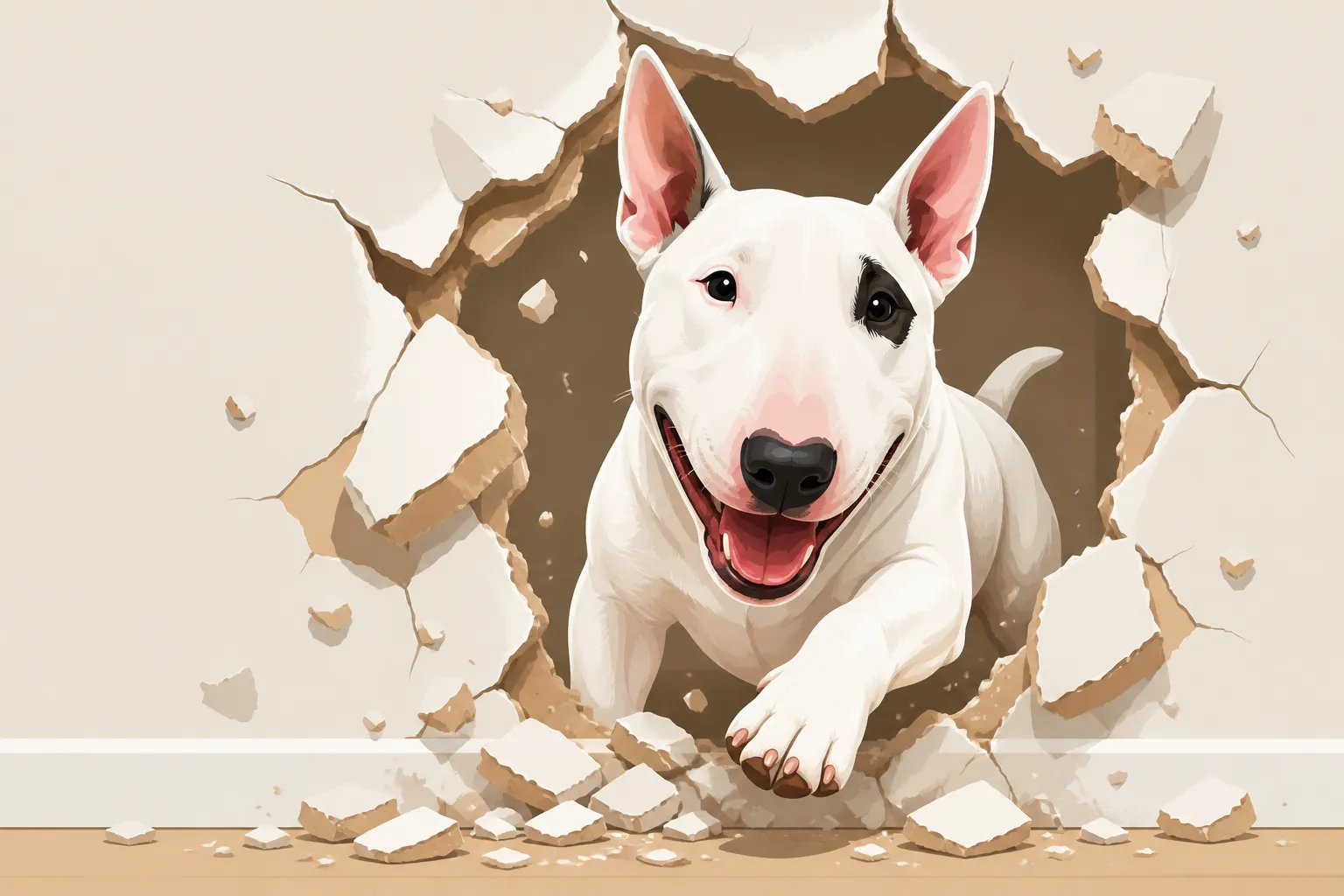
Finding your beautiful, egg-headed Bull Terrier staring innocently at you while a gaping hole reveals your home's inner skeleton is a homeowner's nightmare. It’s an infuriatingly common scenario for Bull Terrier owners, who often feel like they’re locked in a battle of wills with a furry, four-legged wrecking ball. This guide will walk you through why your Bull Terrier might be turning your walls into Swiss cheese, how to deal with the immediate aftermath, and most importantly, how to prevent this destructive behavior in the future.
Why Your Bull Terrier Sees Drywall as a Chew Toy
It’s easy to get angry when you see the damage, but understanding why your Bull Terrier is fixating on your drywall is the first step toward a solution. These aren't malicious acts; they're almost always a symptom of an unmet need, whether physical or emotional. Our Bull Terriers are incredibly intelligent, strong-willed, and, let's be honest, often utterly bored if left to their own devices.
Boredom and Lack of Mental Stimulation
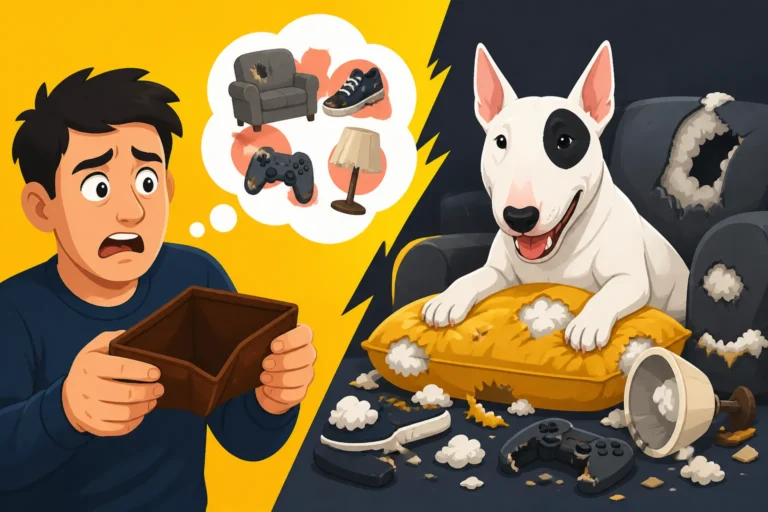
Bull Terriers are thinkers, even if their expressions sometimes suggest otherwise. They need a "job," and if you don't give them one, they'll invent their own, which often involves redecorating your home with their teeth. A Bull Terrier left alone for long stretches with nothing to do will become restless. Imagine being cooped up all day with boundless energy and a powerful urge to do something. That drywall corner, that doorframe, that cabinet — it all becomes an exciting, textured project. They're not just chewing; they're exploring, shredding, and creating their own entertainment. It's a satisfying sensory experience for them, especially if they're particularly mouthy dogs.
They're not trying to be bad; they're simply responding to an internal drive. This is why you'll often hear Bull Terrier owners talking about needing to stay two steps ahead of their pups. If their mind isn't engaged, their jaws certainly will be. For more on this, consider reading What a Bull Terrier Does When It Is Bored.
Separation Anxiety and Stress
Another huge culprit behind drywall destruction is separation anxiety. Bull Terriers are intensely loyal and bond deeply with their people. Being left alone can be a genuinely distressing experience for them, leading to anxiety, panic, and destructive outbursts. Chewing and digging can be self-soothing behaviors, a way for them to cope with the stress of your absence. They might start with digging at a door, then move to chewing the frame, and eventually graduate to the drywall itself. It’s not just about missing you; it’s about a profound sense of unease and even fear.
Signs of separation anxiety can include howling, barking, pacing, inappropriate urination or defecation, and, of course, destructive chewing concentrated around exit points or areas where you spend a lot of time. This isn't just a mischievous dog; it's a dog in distress. Understanding Signs a Bull Terrier Has Separation Anxiety can help you differentiate between boredom and genuine anxiety. If you suspect anxiety, it's vital to address the underlying emotional issue, not just the symptom.
Teething and Oral Fixation
While drywall destruction is more common in adolescent or adult Bull Terriers due to the sheer power required, puppies aren't exempt. Young Bull Terriers, like all puppies, go through a teething phase. Their gums are sore, and chewing provides relief. If appropriate chew toys aren't readily available or enticing enough, anything within reach becomes fair game. This includes baseboards, furniture legs, and yes, drywall. Their powerful jaws are already developing, and that urge to chew can be overwhelming.
Even beyond puppyhood, many Bull Terriers simply have a strong oral fixation. They love to chew, period. It's part of their genetic makeup, harkening back to their "bull and terrier" ancestors who were bred for strength and tenacity. If they aren't provided with a consistent supply of durable, engaging chew items, they will inevitably find something else to satisfy that urge. They don't differentiate between your expensive wall and a bully stick.
Seeking Attention
Sometimes, a Bull Terrier learns that destroying something gets a reaction from you, even if it's a negative one. For a dog that thrives on interaction, any attention can be seen as positive. If you rush in, yell, or chase them away from the drywall, they might inadvertently learn that this behavior is an effective way to get you to engage with them. This is especially true if they aren't getting enough consistent, positive attention and interaction otherwise. They’re smart enough to connect the dots: chew the wall = human pays attention.
This isn't to say you should ignore them ripping up your house, but it highlights the importance of understanding the motivation behind the action. Addressing attention-seeking behaviors requires redirecting their energy to appropriate activities and rewarding calm, desired behavior generously.
The Extent of Drywall Damage and What to Do Immediately
Bull Terriers are built like tanks, with powerful jaws and an incredible amount of determination. When they decide to tackle drywall, they don't do it subtly. You're not likely to find a tiny scratch; you're more likely to find a significant crater.
What Drywall Damage Looks Like
The typical drywall damage from a Bull Terrier often starts around corners, doorframes, or low on the wall where they can easily access it. You might see:
- Scrapes and Gouges: Initial investigation where they test the texture.
- Shredded Paper Backing: The outer layer of the drywall can be peeled off, leaving the gypsum core exposed.
- Deep Holes: Once they get past the paper, they can easily dig into the softer gypsum, creating surprisingly deep holes.
- Exposed Studs and Wires: In severe cases, they can chew through the drywall entirely, exposing the wooden studs, insulation, and even electrical wiring. This is where it becomes not just a costly repair but a serious safety hazard.
The amount of damage can escalate quickly. What starts as a small exploratory nibble can turn into a full-blown excavation project in a remarkably short time, especially if the dog is left unsupervised or if the behavior isn't interrupted.
Immediate Safety Measures
The moment you discover drywall damage, your priority shifts to safety – for your dog and your home.
- Remove Your Dog from the Area: Calmly but firmly remove your Bull Terrier from the damaged area. Don't scold them aggressively; they likely won't connect the punishment to the act if time has passed, and it could worsen anxiety. Redirect them to a safe, secure space with an appropriate chew toy.
- Inspect the Damage for Hazards:
- Ingested Materials: Check your dog's mouth for any drywall pieces, paint chips, or insulation. Drywall isn't inherently toxic in small amounts, but large pieces can cause gastrointestinal upset, blockages, or cuts. Paint chips, especially in older homes, could contain lead.
- Exposed Wires: If electrical wiring is exposed, immediately turn off the power to that circuit at your breaker box. This is a severe electrocution risk for both you and your dog.
- Sharp Edges: Look for sharp edges of drywall that could cut your dog or anyone else.
- Contain the Area: Block off the damaged section with furniture, a baby gate, or a temporary barrier to prevent your Bull Terrier from accessing it again. This is crucial even before you begin repairs.
If you suspect your Bull Terrier has ingested a significant amount of drywall or other materials, or if they show any signs of discomfort (vomiting, lethargy, loss of appetite), contact your veterinarian immediately. These unexpected vet visits can be costly, highlighting the importance of having an emergency fund or considering pet insurance. Many pet parents find providers like Healthy Paws can help mitigate the financial shock of such incidents, covering things like foreign body removal surgery.
Preventing Future Drywall Destruction
The best offense is a good defense. Proactive prevention is key when you live with a Bull Terrier. It involves a multi-pronged approach addressing their physical, mental, and emotional needs.
Exercise, Enrichment, and Mental Stimulation
A tired Bull Terrier is a good Bull Terrier, but a mentally stimulated Bull Terrier is even better. They need both physical exertion and brain games to keep them happy and out of trouble.
- Physical Exercise: Aim for at least 60-90 minutes of vigorous exercise daily. This isn't just a leisurely stroll. Think fast-paced walks, fetch, flirt pole play, or safe running in a secure, fenced area. A Bull Terrier with pent-up energy will find an outlet, and it might just be your wall. Remember that even though they are muscular, they aren't built for endurance running over long distances, but bursts of speed and play are perfect. How Much Exercise a Bull Terrier Actually Needs is a great resource.
- Mental Enrichment: This is often overlooked. Puzzle toys, interactive feeders, scent work, and training sessions are vital. Instead of just putting food in a bowl, make them work for it with a Kong or a slow-feeder toy. Brands like
Chewyoffer a fantastic selection of durable puzzle feeders and robust chew toys that can stand up to a Bull Terrier's powerful jaws. Regular, short training sessions (5-10 minutes, several times a day) not only reinforce good behavior but also provide mental exercise. Bull Terriers love to learn, especially if it's fun and rewarding. - A "Job" for Your Dog: Bull Terriers thrive when they have a purpose. This could be anything from carrying a backpack on walks (if physically mature and conditioned), practicing obedience commands, or even just being your constant companion during daily tasks. Giving them a consistent routine and predictable activities can reduce anxiety and boredom.
Crate Training and Safe Spaces
A properly introduced and utilized crate can be a lifesaver for Bull Terrier owners, especially when you need to leave them alone. It provides a safe, secure den that your dog can call their own, and it protects your home from destruction.
- Introduce Positively: Never use the crate as punishment. Make it a positive place with comfy bedding, favorite toys, and high-value treats.
- Appropriate Size: The crate should be large enough for your Bull Terrier to stand up, turn around, and lie down comfortably.
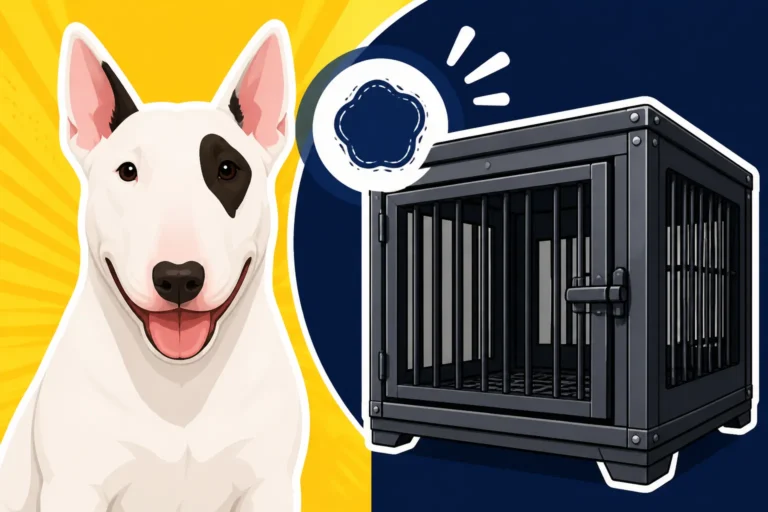
- Durable Crate: For a Bull Terrier, a standard wire crate might not cut it if they are truly determined. Many Bull Terrier owners invest in heavy-duty, reinforced crates made of steel to prevent escapes and damage. Which Crate Holds a Bull Terrier offers great insights into robust options.
- Limited Time: Even with a crate, a Bull Terrier should not be left alone for excessively long periods. A general rule is no more than 4-5 hours for an adult dog. If you work long hours, consider a dog walker, doggy daycare, or having a trusted friend check on them. Leaving them for too long, even crated, can exacerbate anxiety.
Behavioral Modification and Training
Addressing the root cause of the behavior through training is essential.
- Positive Reinforcement: Always focus on rewarding desired behaviors. If your Bull Terrier is chewing an appropriate toy, praise them lavishly or give them a small treat.
- Redirection: If you catch them eyeing the drywall, immediately redirect their attention to an appropriate chew toy or a short training game. Make the approved option more appealing than the wall.
- Manage Alone Time: Gradually increase the time your Bull Terrier is left alone. Start with very short intervals (minutes), rewarding calm behavior upon your return. This helps build their confidence and reduces anxiety.
- Professional Help: If destructive chewing is severe, constant, or accompanied by other signs of extreme distress, don't hesitate to consult a certified professional dog trainer or a veterinary behaviorist. They can help diagnose separation anxiety and develop a tailored behavior modification plan. Sometimes, medication might be necessary in conjunction with training for severe anxiety cases.
Bull Terrier-Proofing Your Home
Beyond managing the dog, you need to manage the environment.
- Remove Temptations: If there's a specific corner they target, move furniture to block it off temporarily. Remove or secure anything that might be alluring.
- Chew-Proof Barriers: Install corner guards, use bitter apple spray (though results vary wildly with Bull Terriers – some find it a tasty addition!), or even cover vulnerable areas with robust materials like plexiglass or metal flashing during the training phase.
- Plenty of Appropriate Chews: Always have a variety of durable chew toys available. Rotate them to keep things interesting. Consider options from
Chewythat are specifically designed for power chewers. Marrow bones (raw, appropriately sized), bully sticks, and hard rubber toys are often good choices. - Consistent Routine: Bull Terriers thrive on routine. Predictable feeding times, walks, and playtime can help reduce anxiety and provide a sense of security. Providing high-quality, consistent meals, perhaps from a brand like
Ollie, as part of this routine can contribute to overall well-being and a calmer demeanor.
Repairing the Damage and Cost Considerations
Dealing with drywall damage isn't just a headache; it's a drain on your wallet. From materials to potential professional help, the costs can add up quickly.
DIY Drywall Repair Steps
For small holes or surface damage, you might be able to tackle the repair yourself.
- Preparation: Clear the area. If there are loose pieces of drywall or torn paper, carefully cut them away with a utility knife, creating a clean, squared-off opening.
- Patching Small Holes (under 4 inches): Use a self-adhesive drywall patch. Apply joint compound over the patch with a putty knife, feathering the edges. Let it dry completely.
- Patching Larger Holes (over 4 inches):
- Cut a piece of new drywall to match the size and shape of the hole.
- Cut two pieces of wood furring strip (about 1×2 inches) slightly longer than the hole's height. Insert them into the hole, one on each side, behind the existing drywall. Secure them with drywall screws, creating a backing.
- Fit your new drywall patch into the hole and screw it into the furring strips.
- Apply fiberglass mesh tape over the seams, then spread a thin layer of joint compound over the tape and feather the edges.
- Sanding and Finishing: Once dry, lightly sand the patched area until smooth. Apply additional thin coats of joint compound as needed, sanding between coats.
- Priming and Painting: Prime the patched area, then paint to match the surrounding wall.
This process requires patience and multiple drying times. For extensive damage, uneven surfaces, or if you're uncomfortable with DIY, calling a professional is always an option.
Understanding the Financial Impact
The costs associated with Bull Terrier drywall destruction can be broken down into several categories:
| Category | Potential Costs | Notes |
|---|---|---|
| Repair Materials (DIY) | Drywall patches, joint compound, sandpaper, utility knife, putty knives, primer, paint, brushes/rollers, wood strips, screws | These are relatively inexpensive if bought individually, but can accumulate quickly. A basic repair kit might be a good investment. |
| Professional Repair | Hourly labor rates for a handyman or drywall specialist, plus materials. | This is significantly more costly than DIY. Rates vary widely based on location and severity of damage. Expect to pay for their expertise, tools, and time. |
| Preventative Measures | Durable chew toys, puzzle feeders, reinforced crates, bitter sprays, baby gates, corner guards. | While an upfront investment, these can save you thousands in future repairs and vet bills. Chewy often has sales on robust items that can withstand a Bull Terrier's enthusiasm. |
| Behavioral Training | Puppy classes, private trainer sessions, veterinary behaviorist consultations. | Investing in training is investing in peace of mind and the longevity of your home. A single session with an expert can provide invaluable strategies. For severe anxiety, vet behaviorist fees can be substantial. |
| Potential Vet Bills | Emergency visits for ingested materials, treatment for cuts, dental injuries, medications for anxiety. | This is often the hidden cost that truly blindsides owners. Drywall ingestion could lead to intestinal blockages requiring surgery. Pet insurance from providers like Healthy Paws can be a financial lifeline, helping cover these unexpected medical emergencies. Think of it as a crucial part of your What a Bull Terrier's Emergency Fund Should Hold. |
| Replacement Furniture/Items | If the drywall destruction is part of a larger destructive pattern, you might face costs for replacing chewed furniture, carpets, or other household items. | It’s not just the walls that suffer. A Bull Terrier's destructive tendencies can quickly encompass nearly everything in their reach if not properly managed. |
As you can see, the costs of a Bull Terrier's drywall destruction extend far beyond just patching a hole. They encompass prevention, professional help, and potential emergency vet care. It’s a stark reminder that pet ownership, especially with a strong-willed breed like the Bull Terrier, comes with a significant financial commitment. This is why many experienced Bull Terrier owners emphasize the importance of budgeting for What the First Year With a Bull Terrier Costs and considering ongoing expenses for What a Bull Terrier Costs a Month Before Any Illness.
Living with a Bull Terrier means accepting their unique quirks and boundless energy. While drywall destruction is certainly frustrating, it’s a solvable problem that often points to a need for more engagement, clearer boundaries, or help with underlying anxiety. By understanding the "why" and implementing consistent preventive strategies, you can protect your home and foster a happier, healthier relationship with your beloved "clown in a dog suit."
Disclaimer
This article is for general informational purposes only and does not constitute professional advice. Laws, prices and regulations vary by location and change over time. Consult a qualified professional for guidance on your specific situation.