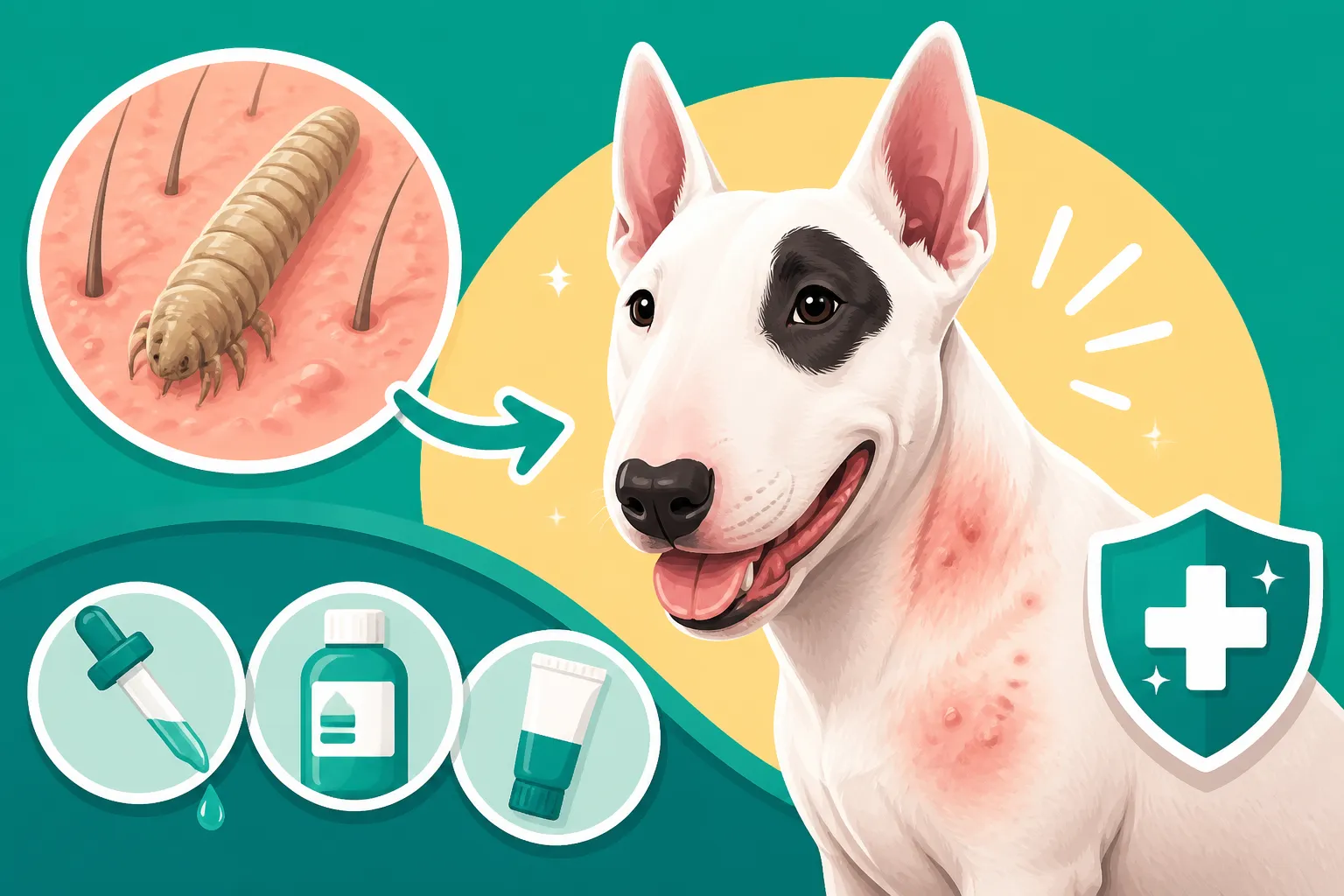
How Demodex on a Bull Terrier Is Treated
Seeing your beloved Bull Terrier develop unexplained bald patches and relentless itching can be incredibly alarming. You scrutinize every bump and scratch, worrying that something serious is happening to their usually robust skin. This guide is here to walk you through understanding Demodectic mange in Bull Terriers, how it's diagnosed, the most effective modern treatments, and what you can do to help your dog heal and prevent future issues.
Understanding Demodectic Mange in Bull Terriers
Demodectic mange, often just called "demodex," is a skin condition caused by microscopic mites that live in the hair follicles of dogs. It’s a bit of a tricky subject because Demodex canis mites are actually a normal part of a dog's skin flora. Most dogs live their entire lives with these mites without ever showing a single symptom. The problem arises when a dog's immune system isn't functioning quite as it should, allowing the mite population to explode.
The Uninvited Guest: Demodex Canis Mites
Imagine tiny, cigar-shaped creatures, too small to see with the naked eye, living in harmony on your dog's skin. These are Demodex canis mites, and they’re passed from a mother dog to her puppies during nursing in the first few days of life. This initial transfer is completely natural and doesn't cause any issues for a healthy puppy. The mites simply reside in the hair follicles, eating dead skin cells and oils, generally keeping a low profile. It's when an underlying problem allows their numbers to grow unchecked that clinical signs of mange begin to appear. This isn't like scabies, which is highly contagious; Demodex mites are typically not contagious to other dogs or humans because they require a specific host environment and a compromised immune system to proliferate.
Why Bull Terriers Are Susceptible
Unfortunately, Bull Terriers, both standard and miniature, can have a predisposition to demodectic mange. This often comes down to genetics affecting their immune system, making them more vulnerable. In young Bull Terriers, especially puppies, the condition is referred to as juvenile-onset demodex. This form often indicates an immature or transiently suppressed immune system that struggles to keep the mite population in check. If you have a young Bull Terrier puppy showing signs, it's really important to consider Why Demodex Appears on a Bull Terrier Puppy.
For adult Bull Terriers, demodex can sometimes appear if their immune system is compromised by another health issue, significant stress, or certain medications. Conditions like Cushing's disease, hypothyroidism, or even certain cancers can weaken a dog's immune response, allowing dormant mites to multiply. Even prolonged use of steroids can sometimes trigger a flare-up. Therefore, when an adult Bull Terrier develops demodex, it’s not just about treating the mites; it’s also about thoroughly investigating any potential underlying health problems that might be weakening their defenses. In such cases, your vet will likely recommend a broader workup to ensure no other issue is at play. The question of Whether Demodex Means a Bull Terrier's Immunity Is Weak is often at the forefront of an owner's mind, and with good reason.
Recognizing the Red Flags: Signs of Demodectic Mange
Catching demodex early can make treatment much smoother. While the mites themselves are invisible, the damage they cause to your Bull Terrier's skin and coat is usually quite noticeable.
Localized Versus Generalized Demodex
Demodectic mange manifests in two primary forms: localized and generalized. Understanding the difference is crucial for both diagnosis and prognosis.
- Localized Demodex: This is the milder form, typically seen in puppies, and it's characterized by small, well-defined patches of hair loss. These bald spots, which may appear red or scaly, are often found around the eyes, mouth, and on the front legs. It usually involves no more than four lesions and can often resolve on its own as the puppy's immune system matures. The frustrating thing for owners is seeing these spots and not knowing what they are. You might initially mistake them for scrapes from rough play or a mild allergy. While localized cases can resolve naturally, veterinary confirmation is still important to rule out other, more serious skin conditions and to prevent it from progressing to the generalized form.
- Generalized Demodex: This is the more severe and widespread form. It involves multiple patches of hair loss over large areas of the body, often covering the head, trunk, and legs. These patches are not just bald; the skin beneath them can become red, thickened, scaly, and deeply inflamed. In generalized cases, secondary bacterial infections are almost always present, complicating the picture further and causing intense itching and discomfort for your Bull Terrier. This form requires immediate and aggressive veterinary intervention. It doesn't typically resolve on its own and can be quite debilitating if left untreated.
Beyond Hair Loss: Other Symptoms
While hair loss is the hallmark sign, there are other symptoms that can alert you to the presence of demodectic mange, especially in its more advanced, generalized form. The skin can become very red and inflamed, often developing what looks like tiny pimples or pustules. These are usually a sign of a secondary bacterial infection setting in, which thrives on the damaged skin barrier. Your Bull Terrier might also develop crusty lesions and scales, and the skin can become greasy to the touch.
Intense itching, while not always the primary symptom of demodex itself (the mites don't typically cause severe itch), becomes a major issue when those secondary bacterial or yeast infections take hold. Your Bull Terrier might scratch, lick, or chew at the affected areas relentlessly, leading to further skin trauma and infection. You might notice a strong, unpleasant odor emanating from their skin, a classic sign of a deep-seated bacterial or yeast infection. The bald patches themselves, which can vary in size and shape, are certainly a cause for concern. For a visual guide to what these skin issues look like, consider looking into What a Bull Terrier's Bald Patch Means. Sometimes, the foot pads can also be affected, becoming swollen, painful, and prone to secondary infections, making walking difficult for your otherwise energetic dog.
The Path to Recovery: Diagnosis and Treatment
Once you suspect demodex, getting a proper diagnosis from your veterinarian is the crucial next step. Self-treating or delaying a vet visit can lead to the condition worsening and becoming much harder to manage.
Getting a Definitive Diagnosis
When you bring your Bull Terrier to the vet with suspicious skin lesions, the first and most important diagnostic tool will be a skin scrape. This simple, non-invasive procedure involves scraping the surface of the skin with a sterile blade, often after applying a small amount of mineral oil, to collect skin cells and hair follicles. The collected material is then placed on a slide and examined under a microscope. Because Demodex canis mites live deep within the hair follicles, sometimes multiple deep skin scrapes are needed to find them. Don't be surprised if your vet does several in different areas.
In some cases, especially with thickened or scarred skin, a skin biopsy might be necessary if mites aren't found with scrapes. This involves taking a small tissue sample, usually under local anesthetic, for pathological examination. This might sound scary, but it's a routine procedure that can provide definitive answers when scrapes are inconclusive. Your vet will also likely perform a thorough physical exam and may recommend blood tests to check for any underlying systemic illnesses that could be contributing to immune suppression. This comprehensive approach ensures that not only are the mites identified, but any predisposing factors are also uncovered and addressed.
Modern Treatment Protocols
Thankfully, modern veterinary medicine offers highly effective treatments for demodectic mange. The days of harsh, toxic dips are largely behind us, though they still have a place in specific situations. Today, the gold standard for treating generalized demodex involves oral medications known as isoxazolines.
These revolutionary drugs, such as Bravecto, Simparica, Nexgard, and Credelio, work by disrupting the mites' nervous system, leading to their death. They are typically given as a chewable tablet and are incredibly effective, often resolving cases within a few weeks to a few months. The exact duration and frequency will depend on the specific medication and your vet's recommendation. These medications are a game-changer for Bull Terrier owners dealing with this frustrating condition, offering a much safer and more convenient option than previous treatments.
For localized demodex, especially in puppies, your vet might recommend a wait-and-see approach, as many cases resolve on their own. However, if it's not improving, or if it progresses, they may prescribe a topical medication or a shorter course of the oral isoxazolines. Sometimes, a medicated shampoo will be recommended to help manage the secondary issues. It's vital to follow your vet's instructions precisely, as inconsistent treatment can lead to recurrence or resistance. While these new medications are fantastic, they do come with a cost, and it's worth knowing What Skin Treatment Costs a Bull Terrier Owner. Having pet insurance from providers like Healthy Paws can be incredibly helpful in offsetting these veterinary expenses.
Addressing Secondary Infections
Almost inevitably, generalized demodex leads to secondary bacterial skin infections (pyoderma) or yeast infections. These infections are what often cause the intense itching, redness, pustules, and foul odor that make your Bull Terrier so miserable. Treating the mites alone isn't enough; these secondary invaders must also be addressed for your dog to fully heal.
Your vet will likely prescribe oral antibiotics to combat bacterial infections. The course of antibiotics can be quite long, often extending for several weeks beyond the point where the visible infection seems to have cleared, to ensure all bacteria are eradicated. It’s crucial to complete the entire course, even if your Bull Terrier looks better, to prevent antibiotic resistance and a relapse. In addition to oral medications, medicated shampoos are often recommended. These shampoos, containing ingredients like chlorhexidine or benzoyl peroxide, help to kill bacteria and yeast on the skin's surface, reduce inflammation, and remove crusts and debris. Your vet will advise you on How to Bathe a Bull Terrier With Demodex and how often to use the specific shampoo.
In cases where yeast infections are present, antifungal medications, either oral or topical, will be added to the treatment plan. Regular bathing with these specialized shampoos can provide immense relief and accelerate healing, making your Bull Terrier much more comfortable during their recovery. It’s a multi-pronged attack to get your dog's skin healthy again.
Long-Term Management and Prevention
Successfully treating demodex is a huge relief, but the journey doesn't always end there. Long-term management and preventative strategies are key to keeping your Bull Terrier's skin healthy and preventing recurrence.
Supporting Immune Health
Since demodex is fundamentally an immune system issue, supporting your Bull Terrier's overall health and immune function is paramount. A high-quality, balanced diet is foundational. Ensure your dog is eating food appropriate for their life stage and activity level, rich in essential fatty acids (like omega-3s and omega-6s) which are vital for skin and coat health. Sometimes, supplementation with fish oil can be beneficial, and it's worth discussing Whether a Bull Terrier's Skin Improves With Diet with your vet.
Stress can also play a role in suppressing the immune system, so maintaining a stable, predictable routine and a calm environment is important. Regular exercise, appropriate for a Bull Terrier's energetic nature, helps manage stress and keeps them physically fit. Avoid over-exercising or under-exercising, finding that sweet spot that keeps them happy and tired. Good hygiene, including regular grooming and The Weekly Skin Check Every Bull Terrier Needs, also contributes to overall skin health. Your vet might also recommend specific immune-boosting supplements, though these should always be used under professional guidance. Remember, a robust immune system is your Bull Terrier's best defense against a host of issues, including those pesky mites.
Monitoring and Follow-Up
The treatment for demodectic mange isn't a one-and-done deal. Regular follow-up appointments with your veterinarian are critical to ensure the mites are truly eradicated. These appointments will typically involve repeat skin scrapes every few weeks. Your vet will continue treatment until two consecutive skin scrapes, usually a month apart, show no mites. This thorough approach is absolutely essential, even if your Bull Terrier's skin looks completely clear and healthy. Stopping treatment too soon is a common reason for recurrence, as a few lingering mites can quickly multiply again.
It can be frustrating to continue medication when your dog looks fine, but patience and diligence pay off here. Your vet will also monitor for any signs of secondary infections returning and adjust medication as needed. This ongoing vigilance ensures that your Bull Terrier remains mite-free and their skin stays healthy for the long term. This rigorous monitoring is another area where a pet insurance plan like Healthy Paws can help manage the costs of multiple vet visits and tests, making it easier for you to provide the best care without financial strain.
The Role of Responsible Breeding
For juvenile-onset generalized demodex, there is a strong genetic component suspected. While the exact mode of inheritance is still being studied, it's widely accepted that dogs with generalized demodex should not be bred, as they can pass on this immune vulnerability to their offspring. Responsible breeders are diligent about this and will typically remove affected dogs from their breeding programs.
When choosing a Bull Terrier puppy, it's always wise to ask about the health history of the parents and the litter, specifically inquiring about any instances of demodex. A reputable breeder will be transparent about health concerns and will have completed various health screenings on their breeding stock. For more insight into what to expect from a responsible breeder, you might want to read Which Health Tests a Bull Terrier Breeder Should Run. By supporting ethical breeders who prioritize health, you contribute to the overall well-being of the Bull Terrier breed and reduce the incidence of preventable genetic conditions like generalized demodectic mange.
Demodex Treatment Options at a Glance
Here's a quick look at the common approaches to treating demodectic mange in Bull Terriers, keeping in mind that your veterinarian will tailor the best plan for your individual dog.
| Treatment Type | Primary Use Case | Mechanism of Action | Pros | Cons | Typical Duration |
|---|---|---|---|---|---|
| Oral Isoxazolines | Generalized Demodex (Gold Standard) | Disrupts mite nervous system | Highly effective, convenient oral chew, few side effects | Prescription only, can be expensive (though often covered by insurance like Healthy Paws) | 1-3 months (until 2 negative scrapes) |
| Topical Medications | Localized Demodex, Adjunctive | Kills mites on skin surface | Direct application, less systemic | Less effective for generalized, can be messy, may irritate skin | Varies, often short-term |
| Medicated Shampoos | Secondary infections, adjunctive care | Kills bacteria/yeast, removes debris | Soothes skin, addresses secondary issues | Doesn't kill mites effectively on its own, requires frequent bathing | As needed, often throughout treatment |
| Oral Antibiotics | Secondary Bacterial Infections | Kills bacteria | Essential for resolving secondary infections | Requires long course, risk of resistance if not completed | Weeks to months, as prescribed |
| Oral Antifungals | Secondary Yeast Infections | Kills yeast | Addresses yeast overgrowth | Prescription only | Weeks, as prescribed |
Disclaimer
The information provided in this article is for general informational purposes only and does not constitute veterinary advice. Always consult with a qualified veterinarian for any health concerns or before making any decisions related to your Bull Terrier's health or treatment.