How a Bull Terrier’s Skin Changes With Age
One of the most heart-wrenching realities of sharing your life with a Bull Terrier is watching them age, and often, this journey brings noticeable changes to their once-vibrant, taut skin. Many owners worry about every new lump, dry patch, or thinning spot, wondering if it's just a normal part of getting older or a sign of something more serious. This guide will walk you through the typical skin transformations your Bull Terrier might experience as they mature, help you understand what's normal, and equip you with practical steps to keep their skin as healthy and comfortable as possible through their golden years.
Understanding Your Bull Terrier's Skin at Different Life Stages
From the moment you bring home a bouncy Bull Terrier puppy, their skin is a canvas of health, but it's also often a surprising source of challenges for the breed. Unlike some dogs with thick, insulating coats, our Bull Terriers have short, sleek hair that offers less protection, leaving their underlying skin quite vulnerable. Understanding this baseline is crucial before we dive into the changes that come with age.
Puppy and Young Adult Skin: The Foundation
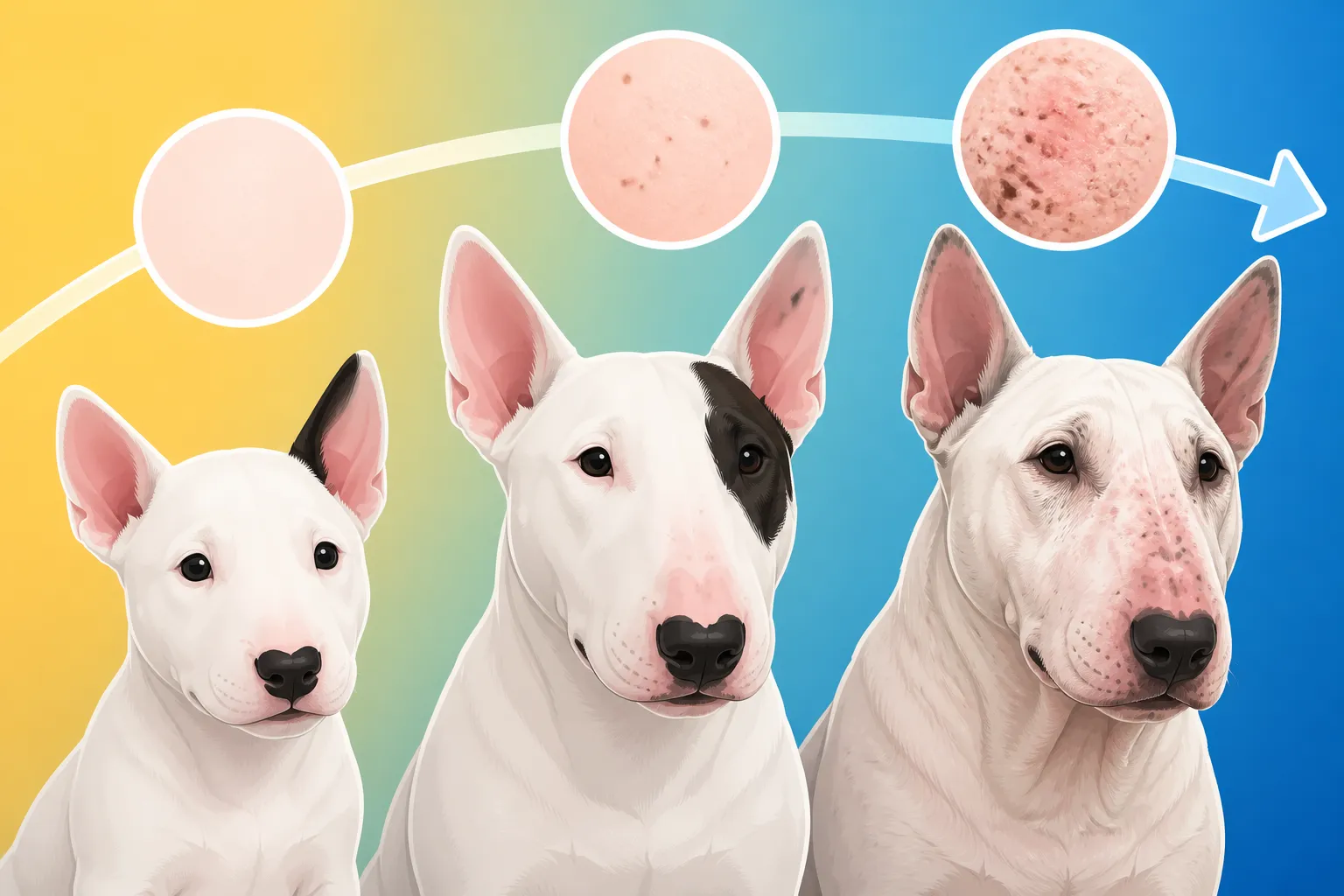
When your Bull Terrier is a puppy, their skin is generally supple, elastic, and quick to heal. However, even at this early stage, you might encounter issues like Demodectic Mange in a Bull Terrier, a common condition for puppies due to their developing immune systems. Their short coat, especially for white Bull Terriers, means they're prone to sunburn if left exposed, which can start a lifetime of skin damage if not addressed. This early period sets the stage for how resilient or sensitive their skin will be. As they mature into young adults, their immune system strengthens, and many of these initial puppy skin woes often resolve, leaving them with robust, healthy skin. But this isn't a guarantee, and some Bull Terriers, unfortunately, carry skin sensitivities throughout their lives. It's a constant vigil, even when they're young and full of beans.
Adult Skin: The Prime Years
For most adult Bull Terriers, their skin hits its prime. It should be clear, free of flakes, and their coat should have that signature Bull Terrier sheen. However, this is also when underlying genetic predispositions, or chronic environmental factors, can start to manifest more clearly. We know that A Bull Terrier's Skin Is Its Weakest Point, and many adult Bull Terriers can develop Whether a Bull Terrier Gets Skin Allergies to pollen, certain foods, or even dust mites. These allergies often present as itchy skin, redness, hot spots, or recurring ear infections. It’s a frustrating cycle for both dog and owner, trying to pinpoint triggers and manage flare-ups. Regular bathing with appropriate shampoos and a careful eye on their diet become part of the routine to maintain comfort. For white Bull Terriers, consistent sunscreen application is still vital, as years of sun exposure can lead to more serious problems down the line. It's not just about comfort; it's about prevention.
Common Skin Changes as Your Bull Terrier Ages
As your Bull Terrier moves past their prime and into their senior years – typically after The Age a Bull Terrier Is Considered Senior – their skin, much like ours, begins to tell the story of their life. These changes aren't always a cause for alarm, but they do require more attentive care and observation.
Thinning Hair and Dryness
One of the most noticeable changes you might observe is a general thinning of the coat. While your Bull Terrier might not have had a luxuriously thick coat to begin with, as they age, their hair follicles can become less active, leading to a sparser appearance, especially over the back, flanks, and tail base. This can make their already vulnerable skin even more exposed. Along with thinning hair, dryness is a widespread complaint. The skin's natural oil production tends to decrease with age, resulting in a duller coat and flakier, less elastic skin. You might notice more dandruff or a rougher texture to their coat. This dryness can sometimes lead to mild itching, making your dog scratch more than usual, which can further irritate delicate senior skin.
This dryness is more than just cosmetic. It can compromise the skin barrier, making your senior Bull Terrier more susceptible to minor infections or irritations. Imagine your own skin feeling constantly tight and a little itchy – that's often how an older dog's skin can feel. Supplementing their diet with omega-3 fatty acids, often found in fish oil, can sometimes help improve skin hydration and coat quality from the inside out. There are also hydrating shampoos specifically designed for dry, sensitive skin that can offer temporary relief. When choosing products, always look for gentle, pH-balanced formulas to avoid further irritation.
Lumps, Bumps, and Growths
Ah, the dreaded lumps and bumps. If you own an older Bull Terrier, you're almost certainly familiar with this. As dogs age, it's incredibly common for them to develop various skin growths. These can range from benign fatty tumors (lipomas) that feel soft and movable under the skin, to warts, skin tags, and cysts that might rupture and become infected. While many of these are harmless, every new lump warrants a check by your veterinarian. They can determine if it's something benign that simply needs monitoring, or if it's something more concerning that requires further investigation, like a fine needle aspirate.
It's a reality that we need to face: some skin growths can be cancerous. The good news is that many are not, but early detection is key for those that are. Regularly checking your Bull Terrier's skin during petting sessions or grooming can help you spot new developments quickly. Keep a mental map, or even jot down notes, about where bumps are, their size, and when you first noticed them. This detailed information is incredibly helpful for your vet. Don't be shy about asking questions or pushing for a definitive diagnosis if a lump changes or concerns you.
Pigmentary Changes and Sun Damage
Over the years, your Bull Terrier's skin, especially in areas frequently exposed to the sun, can undergo pigmentary changes. For white Bull Terriers, repeated sunburns can lead to thickened, leathery skin, and dark spots or freckles, often referred to as lentigo. Why a White Bull Terrier Sunburns is a crucial piece of knowledge throughout their lives, but it becomes even more critical in their senior years. These areas of chronic sun damage are more prone to developing squamous cell carcinoma or other forms of skin cancer. Even colored Bull Terriers can develop age spots or areas of hyperpigmentation, though the risk of sun-induced cancer is typically lower than in their white counterparts.
It’s important to understand that years of sun exposure can accumulate, and the effects might not be fully visible until later in life. This is why sun protection, from sunscreen to protective clothing, is not just for puppies and young adults but a lifelong commitment for many Bull Terriers. Keep a close eye on their nose, ear tips, and thinly furred areas. Any persistent scabs, non-healing sores, or strange-looking growths in these areas must be examined by a vet immediately.
Managing and Supporting Aging Bull Terrier Skin
When your Bull Terrier's skin starts showing its age, it's not a time to despair, but rather a call to action. With a proactive approach and a few adjustments to their routine, you can significantly improve their comfort and quality of life.
Enhanced Grooming and Hygiene
Maintaining excellent hygiene becomes even more vital as your Bull Terrier ages. Regular, gentle grooming sessions, ideally weekly, can help remove loose hair, distribute natural oils, and stimulate circulation. A soft rubber curry brush or a grooming mitt works wonders on their short coat, helping to exfoliate dry skin without irritation. When it comes to bathing, seniors might need more frequent baths if they're experiencing skin issues, or less frequent if dryness is the primary concern. The key is to use a gentle, moisturizing shampoo specifically formulated for sensitive or aging skin.
After bathing, ensure your Bull Terrier is thoroughly dry, especially in skin folds or between their toes, to prevent yeast or bacterial growth. This is particularly important because older dogs might not dry as quickly, or they might not be able to groom themselves as effectively. I've often recommended lukewarm water and a soft towel, followed by air-drying in a warm room, perhaps with a dog-safe hair dryer on a cool setting if they tolerate it. The goal is to keep their skin clean and free from irritants without stripping away precious moisture.
Dietary Adjustments and Supplements
What goes into your Bull Terrier's bowl can have a profound impact on their skin health, especially as they age. A high-quality diet rich in easily digestible proteins, essential fatty acids, and antioxidants is paramount. Some commercial dog foods, like those found on Chewy or Ollie, offer formulas specifically designed for senior dogs, which often contain higher levels of omega fatty acids, vitamins E and C, and other skin-supporting nutrients. These ingredients help support skin barrier function, reduce inflammation, and promote a healthy coat. How a Bull Terrier's Skin Improves With Diet is a topic many owners explore, and it's particularly relevant for seniors.
Beyond their regular food, specific supplements can be incredibly beneficial. Fish oil, rich in EPA and DHA, is a popular choice for its anti-inflammatory properties and its ability to support skin hydration. Zinc supplements might also be considered, especially if your Bull Terrier shows signs of Zinc Responsive Dermatosis in a Bull Terrier, a condition that can sometimes mimic or worsen with age-related skin issues. Always consult your vet before adding any new supplements, as they can recommend appropriate dosages and ensure there are no interactions with existing medications or health conditions. They can help you tailor a nutritional plan that addresses your specific dog's needs.
Environmental Considerations and Sun Protection
Creating a supportive environment is crucial for an aging Bull Terrier's skin. This means ensuring they have comfortable bedding that is kept clean and dry, as prolonged contact with damp or dirty surfaces can lead to skin irritation or pressure sores. If they are prone to lying on hard floors, an orthopedic bed can not only support their joints but also reduce pressure on vulnerable skin areas. For white Bull Terriers, or any Bull Terrier with thinning hair, continued vigilance against sun exposure is non-negotiable.
Limit walks during peak sun hours, apply dog-safe sunscreen to exposed areas like the nose, ear tips, and belly, and consider light, breathable sun shirts for extended outdoor time. You can find excellent dog-specific sunscreens on Amazon, but always double-check the ingredients to ensure they are zinc oxide-free (zinc is toxic if ingested by dogs). Ensuring they have ample shade outdoors is a simple yet effective protective measure. Remember, preventing sunburn now can prevent more serious skin conditions later.
| Skin Change | Common Appearance | Potential Cause | Management Strategy |
|---|---|---|---|
| Thinning Hair | Sparser coat, especially on back and flanks | Reduced follicle activity, hormonal | Gentle brushing, hydrating shampoos, diet supplements |
| Dry/Flaky Skin | Dandruff, rough texture, mild itching | Decreased oil production | Moisturizing baths, omega-3 supplements, humidifiers |
| Lumps/Bumps | Fatty tumors (lipomas), warts, cysts, skin tags | Normal aging, genetic, sun damage | Vet check for new growths, monitor changes, surgical removal if needed |
| Pigment Changes | Dark spots, thickened skin, freckles | Chronic sun exposure, aging | Sun protection, regular skin checks |
| Increased Sensitivity | Redness, irritation, slower healing | Thinner skin barrier, reduced immunity | Gentle products, avoid irritants, prompt vet attention for sores |
When to Call the Vet: Red Flags for Senior Bull Terrier Skin
While many age-related skin changes are benign and manageable, some can signal underlying health issues or require professional intervention. Knowing when to escalate your concerns to your veterinarian is crucial for your senior Bull Terrier's well-being.
Persistent Itching or Discomfort
It's one thing for an older dog to have a casual scratch now and then, but persistent, relentless itching that disrupts their sleep, causes them to chew or lick excessively, or leads to redness and sores, is a definite red flag. This isn't just a nuisance; it can indicate a flare-up of existing allergies, a new environmental sensitivity, or even parasitic infestations that an aging immune system might struggle to ward off. Older dogs can also develop secondary bacterial or yeast infections due to constant scratching, turning a simple itch into a painful problem.
Your vet can help identify the root cause of the itching through various tests, including skin scrapes, fungal cultures, or allergy panels. They might prescribe medicated shampoos, oral antihistamines, or other anti-inflammatory medications to bring relief. Ignoring persistent itching can lead to a cycle of discomfort, infection, and further skin damage, impacting your Bull Terrier's overall quality of life. Early intervention can make a world of difference.
Non-Healing Sores or Wounds
Any wound, cut, or sore on a senior Bull Terrier that doesn't seem to heal within a reasonable timeframe (a few days to a week) or appears to be getting worse, needs immediate veterinary attention. Older dogs often have slower cell turnover and a less robust immune response, which can significantly delay wound healing. A simple scratch that a young dog would shrug off can become a chronic issue for an older Bull Terrier. These non-healing areas are ripe for secondary infections, which can spread and become more difficult to treat.
Furthermore, a persistent sore or a patch of skin that looks abnormal and just won't resolve could be a sign of something more serious, like a cancerous lesion, especially in sun-exposed areas. This is where What a Bull Terrier's Skin Biopsy Costs can become a necessary diagnostic step. Don't try to self-treat these wounds with over-the-counter creams without a vet's diagnosis, as some products can do more harm than good or mask critical symptoms. A vet can properly clean, debride, and dress the wound, and if necessary, perform diagnostic tests to rule out serious conditions.
Changes in Existing Lumps or New, Rapidly Growing Growths
While senior Bull Terriers are prone to benign lumps, it's vital to monitor all growths carefully. Any existing lump that suddenly changes in size, shape, color, or texture, or becomes painful, inflamed, or starts to bleed, is a cause for concern. Equally, any new growth that appears and starts to expand rapidly, or has an irregular shape, warrants a prompt vet visit. This vigilance is part of Caring for an Old Bull Terrier, which becomes more focused on overall health rather than just the absence of disease.
Your vet will likely recommend a fine needle aspirate (FNA) or a biopsy to determine the nature of the lump. While it's natural to fear the worst, remember that many growths are benign. However, for those that are malignant, early detection and removal can significantly improve prognosis. Keeping a detailed record of your Bull Terrier's lumps, including photos and measurements, can be incredibly helpful for your vet in tracking changes over time. Your watchful eye is often the first line of defense against potentially serious health issues. Remember, your Bull Terrier can be stoic and How a Bull Terrier Hides Pain, so sometimes these skin issues are the only visible signs of discomfort. It's also worth noting that many systemic diseases, including kidney disease, which is common in Bull Terriers, can impact skin health, so How Often an Aging Bull Terrier's Kidneys Should Be Checked ties into this holistic approach to senior care.
Disclaimer
This article is for general informational purposes only and does not constitute professional advice. Laws, prices and regulations vary by location and change over time. Consult a qualified professional for guidance on your specific situation.