Whether a Red Smut Bull Terrier Is Standard
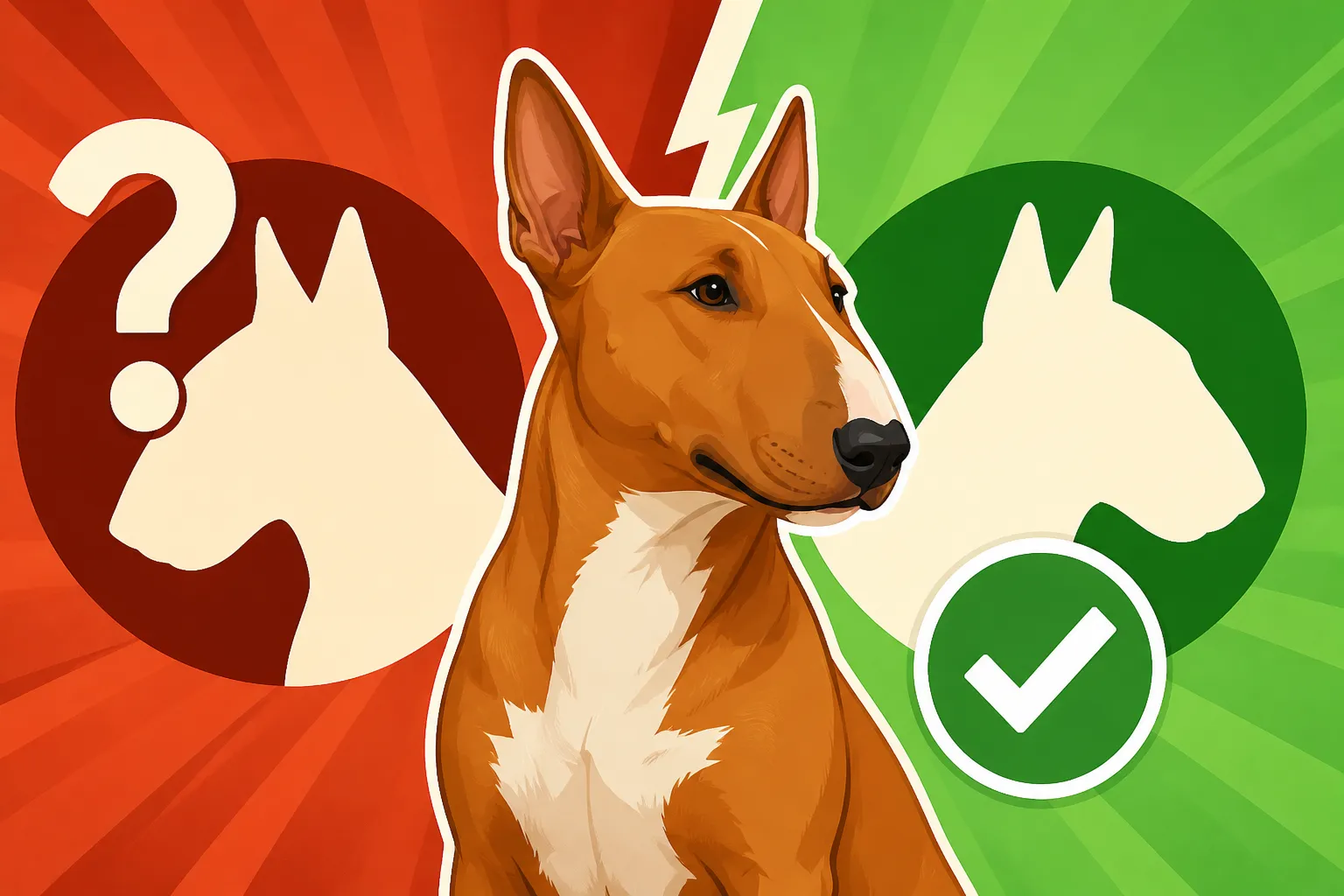
A red smut Bull Terrier has a red coat with darker shading, often most noticeable around the muzzle or face. The name can sound like a separate color category, but it is generally a descriptive term rather than a distinct show classification. Here’s how to understand the coloring, what breed standards say, and what to check when evaluating a dog or puppy.
What red smut means on a Bull Terrier
Red coat, dark shading
“Red smut” usually describes a red or rich reddish-brown coat with darker, often blackish, shading. The shading may appear on the muzzle, face, ears, or elsewhere, and its depth can vary from dog to dog. It is a way of describing the look of the coat—not, by itself, a diagnosis or a sign of poor health.
The word smut can sound harsher than the appearance actually is. In everyday use, it refers to darker pigment layered into or over the red coloring. One dog might have a subtle shadow around the muzzle; another may have more noticeable dark coloring on the face. Photos can also make the pattern look stronger or weaker depending on lighting, so seeing the dog in person can help.
Color terminology is not always used consistently by breeders, owners, and show communities. One person may call a dog red smut, while another may describe the same dog as red with dark shading. It’s useful to ask what someone means by the label rather than assume it refers to a precise, universally defined pattern.
Is red smut a separate official color?
Usually, no. Red smut is best understood as a descriptive phrase, not a separate color category in the main Bull Terrier breed standards. Breed standards generally distinguish between white dogs and colored dogs, with recognized colored coats including shades such as red, fawn, brindle, and tricolor. The exact wording and judging details can vary by kennel club.
That distinction matters if you are reading a puppy listing or discussing show eligibility. A seller may use “red smut” to communicate a dog’s appearance, but the phrase alone does not establish how a kennel club would classify the coat. For a show-related question, check the standard used by the organization hosting the show and ask an experienced Bull Terrier breeder or judge how that dog’s coloring would be described.
For more background on accepted coat shades, see Which Colors a Bull Terrier Comes In. The practical answer is that “red smut” is generally a descriptive label within the broader discussion of colored Bull Terriers—not a stand-alone official class.
Red smut compared with other colored coats
It helps to separate the base color from the markings. A red smut dog is typically being described as red with darker shading. A brindle dog, by contrast, has a pattern of darker stripes over a lighter base. A tricolor coat combines three colors, while a red-and-white dog has red areas and white markings. These descriptions can overlap in casual conversation, but they are not interchangeable.
| Coat description | General appearance | What the term usually emphasizes |
|---|---|---|
| Red smut | Red coat with darker shading | Red base color and darker areas, often on the face |
| Red and white | Red patches with white areas | Distribution of red and white |
| Brindle | Darker stripes over a lighter ground color | Striped pattern |
| Tricolor | Three distinct coat colors | Combination of colors rather than one base shade |
A dog’s coat may not fit neatly into a short label, especially in a puppy whose coloring is still developing. If the wording matters for a registration, show entry, or breeding discussion, rely on the relevant organization’s rules and documentation rather than a casual color description. For comparisons, What a Brindle Bull Terrier Looks Like and What a Tricolor Bull Terrier Looks Like explain two patterns that people sometimes confuse with red smut.
Do breed standards accept a red smut Bull Terrier?
The standard focuses on the overall coat
In broad terms, Bull Terrier standards recognize colored dogs, and red is among the commonly described colored varieties. A red dog with darker shading is not automatically excluded simply because someone calls the shading “smut.” The key question is how the dog’s overall coat fits the standard used by the relevant kennel club.
Standards may differ in phrasing, preferences, or details, so there is no single answer that applies to every registry and every show. Some standards express a preference for brindle among colored coats, for example, while also recognizing other colors. A preference is not the same thing as saying that every other accepted color is disqualified.
If you are considering showing a dog, confirm the current rules with the specific organization involved. Ask whether the dog’s registered color, markings, and overall appearance meet that organization’s requirements. A breeder’s description can be useful, but it does not replace the written standard or an official decision in the ring.
Registration, show eligibility, and color labels
Color descriptions on paperwork can be more limited than the terms people use at home. A registration form may ask for a general coat color, while a breeder or owner might use “red smut” to describe a finer detail. Those labels do not necessarily conflict: one can be the broad category and the other a more specific visual description.
Show eligibility also involves more than color. Structure, movement, condition, temperament, and adherence to the breed standard all matter. A dog should not be judged as suitable for the show ring—or unsuitable for it—based on a single informal color phrase.
If you are buying a puppy with plans to show, ask the breeder how the color will be recorded and whether they expect it to meet the rules of the relevant registry. Request clear, recent photos and, if possible, meet the puppy and its parents. For questions to bring to that conversation, Which Questions to Ask a Bull Terrier Breeder offers a useful checklist, and What a Bull Terrier Breeder Should Have Tested covers health information that matters regardless of coat color.
Color does not tell you whether a dog is a good fit
It is easy to focus on a striking coat when choosing a puppy, especially when a label like red smut sounds unusual. But color does not tell you whether a dog has a suitable temperament, has been responsibly bred, or will fit your household. It also does not guarantee that the adult coat will look exactly like a puppy’s coat.
Ask about health screening, early socialization, the parents’ temperaments, and the breeder’s plans for the litter. Spend time learning about the breed’s energy, strength, and training needs before making a decision. What People Get Wrong About the Bull Terrier and Whether a Bull Terrier Suits a First Time Owner can help set realistic expectations beyond appearance.
What to check when you see a red smut puppy
Look at the coat in natural light
Indoor lighting, phone filters, and shadows can all distort coat color. If you are evaluating a puppy, look at it in natural light when practical, and ask for unedited photos from more than one angle. Notice the base coat and the darker areas separately: is the dog predominantly red, or does it have a different pattern that is being described loosely as red smut?
A puppy’s coat can also look different as it matures. Rather than expecting a precise adult appearance from one photograph, ask the breeder whether the puppy’s coloring has changed over time and how the parents are colored. A clear explanation is more useful than a confident label with no supporting detail.
If the dog is already registered, compare the registration description with the breeder’s informal wording. Differences in wording are not automatically a problem; they may simply reflect the difference between a broad paperwork category and a detailed description. If the dog is intended for competition, verify the classification with the relevant show organization.
Check skin and coat health separately from color
Red smut is a coat description, not a health assessment. Look for healthy-looking skin and a coat without persistent redness, scabs, bald patches, or obvious irritation. If you notice itching, inflamed areas, sores, or unusual hair loss, ask a veterinarian rather than assuming the problem is related to pigment.
Bull Terriers can have skin concerns, and a white or colored coat does not eliminate the need to pay attention to the skin underneath. Routine checks can help you notice changes early. For a broader checklist, read How to Check a Bull Terrier's Skin Weekly and Whether a Bull Terrier Gets Skin Allergies.
For everyday supplies, you might compare suitable grooming or skin-care options through your veterinary clinic or a retailer such as Chewy, but choose products based on veterinary guidance—not on the dog’s color label. If a vet recommends a particular type of shampoo or another product, check that the item is intended for dogs and follow the label instructions. Chewy can be one place to look for pet-care supplies, but product availability and suitability should be confirmed for your dog’s needs.
Ask the breeder direct, practical questions
A responsible breeder should be able to explain what they mean by “red smut” and show you how they describe the puppy on any relevant paperwork. Ask whether the puppy’s color is expected to change, what color the parents are, and whether the breeder is describing a general red coat or a particular pattern. Clear answers should not depend on vague claims that the color is rare or automatically more valuable.
You can also ask for the health records and screening information available for the puppy and its parents. Coat color is not a substitute for health testing, and a distinctive-looking puppy is not necessarily a healthier or better-bred one. If a seller puts most of the emphasis on color while avoiding questions about health, temperament, or documentation, slow down and gather more information before committing.
If you are comparing puppies, make notes on the practical details: the breeder’s description, the registry wording, the puppy’s visible markings, and the documents you have received. That makes it easier to ask a club, show official, or experienced breeder a specific question later. For more on the breed’s appearance and background, How the Bull Terrier's Head Changed Over Time provides additional context on why appearance descriptions can carry so much weight among enthusiasts.
Caring for a red smut Bull Terrier
Make care decisions based on the individual dog
A red smut coat does not require a special diet or a unique grooming routine simply because of its color. A short coat still benefits from regular brushing, routine checks for skin changes, and basic care suited to the dog’s activity and environment. If your dog develops a skin problem, treat it as an individual health concern rather than trying to correct the coat color with supplements or home remedies.
Sun exposure is another reason to pay attention to skin, especially on areas with less coverage or visible pink skin. Ask your veterinarian what protection is appropriate for your dog and where it should be applied. If you are shopping for pet-safe sun protection, Chewy may offer options to compare, but check with your vet and read the product directions carefully before using anything.
For broader coat-care guidance, A Bull Terrier's Coat Is Easy and Its Skin Is Not explains why a short-haired dog can still need thoughtful skin care. The same principle applies regardless of whether the coat is red, white, brindle, or described as red smut.
Keep color in perspective
A red smut Bull Terrier can be a striking dog, but the label is only one small part of the picture. It usually describes a red coat with darker shading rather than a separate official color category. Breed standards generally assess the dog within broader coat-color descriptions, and the exact interpretation depends on the kennel club or show organization involved.
If the question is about a pet, focus on health, temperament, responsible breeding, and whether the dog suits your home. If the question is about showing or registration, check the relevant standard and paperwork rather than relying on the phrase alone. Chewy and other pet retailers can help you locate routine supplies, but they cannot determine whether a coat meets a breed standard; that answer belongs with the appropriate registry or knowledgeable breed professional.
Disclaimer
This article is for general informational purposes only and does not constitute professional advice. Laws, prices and regulations vary by location and change over time. Consult a qualified professional for guidance on your specific situation.