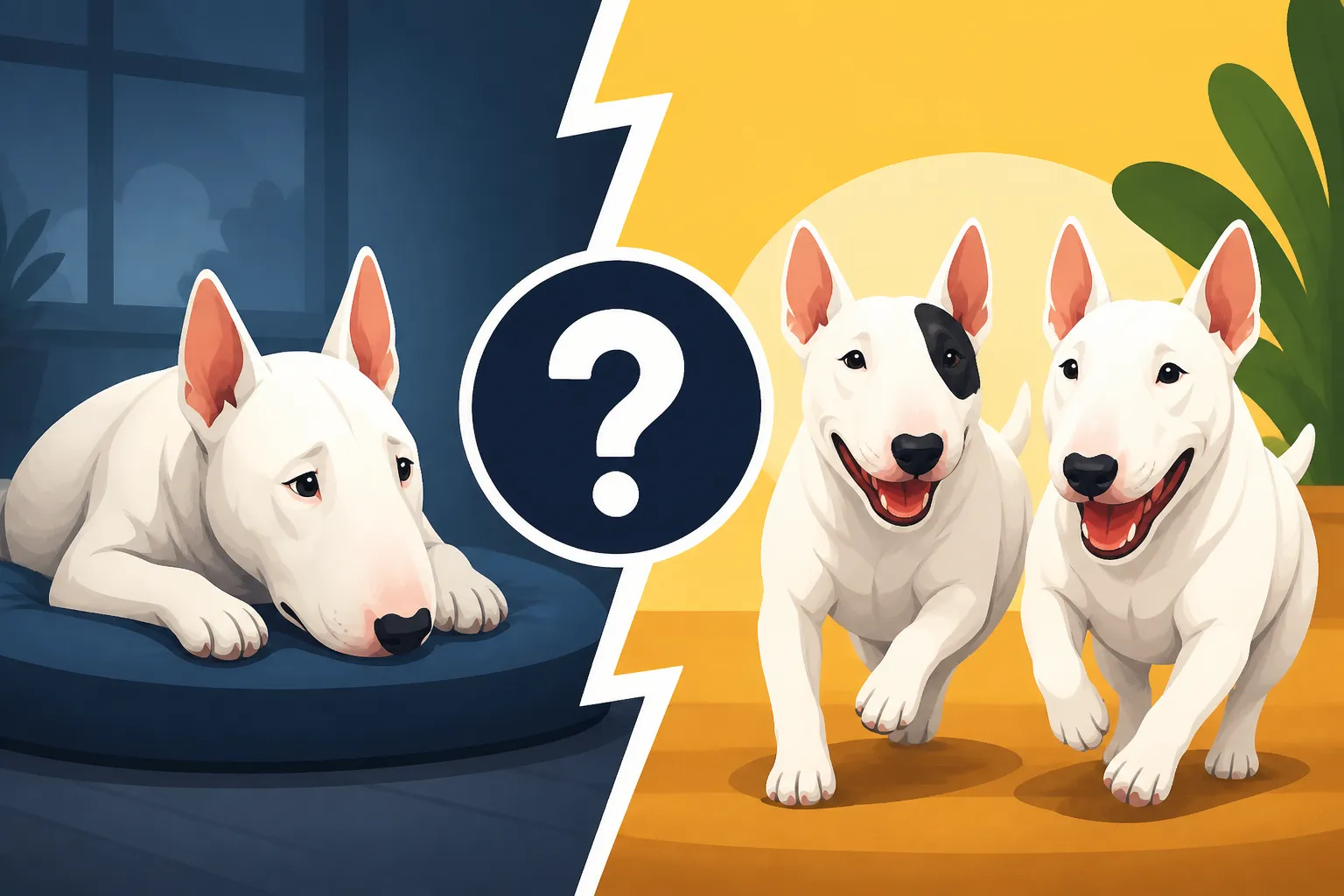
Whether a Second Dog Fixes a Lonely Bull Terrier
It’s a heartbreak no Bull Terrier owner wants to face: walking in the door to destruction, incessant barking from your neighbor's complaint, or worse, finding your beloved clown of a dog looking genuinely sad and withdrawn. You might see their bright eyes dimmed, their usually boisterous spirit subdued, and the thought inevitably creeps in: "Maybe they're lonely. Maybe they need a friend." The idea of bringing a second dog into the home to 'fix' a lonely Bull Terrier is a common one, fueled by good intentions and the hope of providing companionship. But as any veteran Bull Terrier owner will tell you, the world of these unique dogs is rarely that simple. This guide will delve deep into why your Bull Terrier might be lonely, whether a second dog is truly the solution you're looking for, and what critical steps you need to consider before making such a significant addition to your family.
Understanding Your Bull Terrier's Need for Company
Let's be real, Bull Terriers aren't known for being aloof. They are famously devoted, often described as "three-year-olds in a dog suit" due to their playful, sometimes clumsy, and utterly attention-seeking personalities. This isn't a breed that thrives in isolation; they were bred to be companions, albeit boisterous ones. When a Bull Terrier acts out, it's often a cry for help, signaling a deeper need that isn't being met.
The Bull Terrier's Innate Closeness to Their People
If you’ve ever owned a Bull Terrier, you know they are utterly glued to their people. They want to be where you are, doing what you're doing, and preferably getting a belly rub while they're at it. This isn't just a quirky trait; it's a fundamental aspect of their temperament. They form incredibly strong bonds with their human families, often choosing one or two primary "favorites" but lavishing affection on everyone in their inner circle. They thrive on being involved in daily activities, whether it's watching you cook dinner, "helping" you garden, or simply snoozing at your feet while you work.
This intense need for connection means that extended periods of solitude can be genuinely distressing for them. They aren't the kind of dog content to be left in the backyard all day, nor are they typically satisfied with only a quick walk and then hours of being ignored. Their bright, intelligent minds crave interaction, problem-solving, and a sense of purpose within their human pack. When that connection is broken or insufficient, they can become genuinely distressed, leading to a host of behavioral issues that are often misinterpreted.
Signs of a Lonely or Under-Stimulated Bull Terrier
It’s easy to dismiss destructive chewing or endless barking as simply "naughty dog" behavior, but with a Bull Terrier, it’s almost always a symptom of a deeper problem. A lonely or under-stimulated Bull Terrier isn't just being a "bad dog"; they're expressing discomfort and unmet needs.
One of the most common signs you might observe is destruction, particularly of items that carry your scent, like shoes, blankets, or even furniture. This isn't maliciousness; it’s often an attempt to cope with stress or boredom, finding comfort in something familiar or simply expending pent-up energy. A Bull Terrier’s powerful jaws are designed for serious work, and if they don't have appropriate outlets, your sofa might become the next victim. You might come home to shredded pillows, gnawed door frames, or even attempts to dig through carpets or drywall. These are classic indicators that your Bull Terrier is trying to self-soothe or relieve stress when left alone. What a Bull Terrier Does When It Is Bored provides even more examples of these behaviors.
Another prominent sign is excessive vocalization. This can manifest as relentless barking, howling, or whining, often reported by exasperated neighbors. This isn't just a noise complaint; it’s an animal crying out for attention or expressing anxiety. House soiling, even in a previously house-trained dog, can also be a sign of extreme stress or separation anxiety. A dog that is truly overwhelmed by loneliness or anxiety might lose control of their bladder or bowels, even if they know better. In some more severe cases, a Bull Terrier might resort to self-harm, such as obsessive licking or chewing at their paws or tail, creating "hot spots" or raw skin. These behaviors are their way of coping with intense emotional distress. It’s critical to recognize these as cries for help and not just bad manners. For a more in-depth look at specific anxiety behaviors, you might find Signs a Bull Terrier Has Separation Anxiety helpful.
Why a Bull Terrier Cannot Be Left Alone All Day
The reality is that Bull Terriers simply aren't built to be solitary creatures for long stretches of time. Their inherent need for companionship and mental engagement makes them poor candidates for spending entire workdays alone. Imagine a bright, energetic, intelligent toddler left in an empty room for eight hours with nothing to do. That's a pretty good analogy for what a Bull Terrier experiences.
While they might tolerate it for a few hours, pushing past that limit often leads to trouble. They crave interaction, structure, and novelty. A tired Bull Terrier is a good Bull Terrier, but a mentally stimulated Bull Terrier is an even better one. Physical exercise alone, while crucial, isn't enough to prevent boredom. They need brain games, training sessions, and social interaction to truly thrive. If they're left alone for too long, their energy, intelligence, and powerful jaws will find their own, often destructive, outlets. For further reading on this specific challenge, check out Why a Bull Terrier Cannot Be Left Alone All Day and How Long a Bull Terrier Lasts Alone Before It Chews.
The Promise and Pitfalls of a Second Dog for Companionship
The thought of getting a second dog often comes from a place of love and genuine concern. We see our Bull Terrier lonely, and we imagine a furry friend who will fill the void, providing endless play and comfort. While this can sometimes work out beautifully, it's far from a guaranteed fix and comes with its own set of significant challenges.
Potential Benefits: A Playmate and Distraction
When it works, a second dog can be a wonderful addition to a lonely Bull Terrier's life. The primary benefit is companionship. Instead of staring at an empty house, your Bull Terrier has another living, breathing creature to interact with. This can lead to shared naps, gentle nudges, and even a bit of playful wrestling. This companionship can genuinely alleviate boredom and loneliness, especially during the hours you're away.
A compatible playmate can also provide a fantastic outlet for a Bull Terrier's boundless energy. Instead of bouncing off the walls or gnawing on furniture, they might engage in games of tug-of-war, chase each other around the yard, or engage in healthy, reciprocal play. This can lead to a more relaxed and content Bull Terrier when you return home, as their physical and mental needs have been partially met through interaction with their canine companion. Furthermore, a new dog can sometimes serve as a positive distraction, drawing the Bull Terrier's focus away from obsessive behaviors or anxiety triggers. In some cases, a well-adjusted second dog can even model calm behavior, teaching a more anxious Bull Terrier how to cope better in certain situations. It’s like having a live-in therapist and playmate rolled into one.
The Reality Check: More Than Just a Playmate
Here's where the dream often clashes with reality: a second dog is not just a "fix" for your current dog's issues. It's another complex individual with its own needs, personality, and potential problems. Adding a second dog means you are now responsible for two dogs, not one. This doubles everything: food, vet bills, grooming needs, training time, and individual attention.
You can't simply assume that two dogs will automatically get along and play nicely. In fact, introducing a new dog can create an entirely new set of dynamics within your household, some of which might be challenging. Resource guarding (over toys, food, or even your attention), competition for prime sleeping spots, and different play styles can all lead to tension or even conflict. Your Bull Terrier's intense personality needs to be considered – will they tolerate a younger, more energetic pup? Or will they see a new arrival as an unwelcome intruder?
It's also crucial to understand that if your Bull Terrier's loneliness stems from true separation anxiety – a deep-seated panic at being left alone – simply adding another dog might not solve the core issue. In some cases, the anxiety can transfer to the new dog, or both dogs can develop separation anxiety together, creating a much larger and more complex problem to tackle. The new dog might even exacerbate the existing anxiety by mirroring the distressed behaviors.
Why a Second Dog Can Make Things Worse
While the intention is good, there are many scenarios where a second dog can actually make things considerably worse for a lonely Bull Terrier and for you. One of the most common pitfalls is mismatched personalities. If your Bull Terrier is a calm, mature dog, bringing in a boisterous, unfiltered puppy could be a recipe for stress for both animals. The puppy might annoy the older dog, leading to growls, snaps, or even fights. Conversely, a very high-energy Bull Terrier might overwhelm a more timid newcomer.
Consider also the potential for competition. Bull Terriers can be strong-willed, and if they've been the sole focus of your attention, introducing a rival can lead to resource guarding – of toys, food bowls, prime sleeping spots, or even you. This can manifest as subtle stiffening, growling, or escalating to actual altercations. You might suddenly find yourself constantly mediating squabbles instead of enjoying peaceful companionship. For an exploration of how Bull Terriers get along with other dogs generally, take a look at Whether Two Bull Terriers Can Live Together.
Furthermore, if the initial loneliness stemmed from a lack of human interaction or mental stimulation, and you simply add another dog without increasing your engagement, you could end up with two bored, under-stimulated dogs who are now causing double the trouble. It's a common misconception that dogs entertain themselves completely. They still need human guidance, training, and individual attention to thrive. Without this, you could find yourself dealing with two sets of behavioral issues, rather than just one.
Crucial Considerations Before Bringing Another Dog Home
Deciding to get a second dog is a monumental decision, even more so when your goal is to help an existing dog. For a Bull Terrier, this isn't a choice to be made lightly or impulsively. There are several critical factors you absolutely must weigh to give both your current dog and the potential newcomer the best chance at a happy, harmonious life together.
Temperament and Compatibility Are Paramount
This is arguably the most important factor. You cannot just pick any dog and expect it to be a good fit for your Bull Terrier. Think about your Bull Terrier's specific personality. Are they dominant or more submissive? Do they enjoy rough-and-tumble play, or are they more reserved? How do they react to other dogs they encounter on walks – are they aloof, friendly, or reactive? Knowing your dog's true temperament, not just what you wish it were, is crucial.
When considering a second dog, look for a temperament that complements your Bull Terrier's, rather than clashes. Often, a dog of the opposite sex can work well, as same-sex aggression, particularly between two females or two intact males, can be an issue with many breeds, including Bull Terriers. A slight age difference can also be beneficial, allowing for a mentoring dynamic rather than constant competition. A more mature Bull Terrier might do well with a playful, but not overly boisterous, puppy, while a younger, more energetic Bull Terrier might benefit from an older, calmer companion who can teach them the ropes. Avoid bringing home another dog with known behavioral issues, as this is almost guaranteed to create stress and conflict. Consider breeds known for their stable, tolerant temperaments, or mature rescue dogs with a known history of getting along with other dogs. For insights into ideal pairings, read Which Pairing Works Best for a Bull Terrier. Also, be mindful of The Age a Bull Terrier's Dog Tolerance Changes, as their willingness to accept new canine companions can shift over time.
Managing Introductions and Establishing Harmony
The first impression can be everything, and a poorly managed introduction can set the stage for a lifetime of tension. Do not simply bring a new dog into your home and expect them to figure it out. Introductions should always be slow, supervised, and in a neutral territory first. This means meeting at a park or an unfamiliar outdoor space where neither dog feels territorial. Both dogs should be on leashes, handled by calm, confident people. Allow them to sniff each other, observe their body language, and keep initial interactions short and positive.
Once they've met outside, bring them into your home separately, one after the other, to sniff around and get accustomed to the new scents before they're allowed to interact again. Supervise all interactions closely for the first several weeks, separating them when you can't actively watch them. Feed them in separate rooms to prevent resource guarding, and provide ample, individual sleeping spaces. Use gates to manage access to different areas of the house. Consistency, patience, and positive reinforcement are key. Reward calm, polite interactions, and redirect any signs of tension before they escalate. It's a delicate dance, and your role as the pack leader is to ensure fairness and safety for both animals.
Training and Management of Two Bull Terriers (or a Bull Terrier and another breed)
If you thought training one Bull Terrier was an adventure, prepare yourself for managing two! The truth is, adding a second dog means your training responsibilities double, if not more. You’ll need to commit to individual training sessions for each dog, ensuring they both understand basic obedience cues like sit, stay, and come, even when distractions are present. While they might learn from each other, they also need one-on-one time with you to solidify their bond and confidence. Consider taking both dogs to separate basic obedience classes or working with a professional trainer. Services like BAXTER & Bella, which offers online training programs and support, can be incredibly helpful for navigating multi-dog households and ensuring consistent training methods.
Resource management becomes even more crucial. Everything from food bowls and water dishes to beds and toys needs to be considered. Ensure there are enough resources for both dogs, and that they are not forced to compete for essentials. For instance, having multiple water bowls in different locations can prevent territorial disputes. Providing a variety of durable toys, perhaps from retailers like Amazon, can help ensure both dogs have appropriate outlets for chewing and play without having to fight over a single favorite item. This also helps prevent one dog from constantly hoarding all the toys. Remember to continue providing individual enrichment activities, such as puzzle feeders or one-on-one playtime, to keep both dogs mentally stimulated and prevent new behavioral issues from cropping up. Even small training refreshers daily can make a huge difference, as outlined in guides like Teaching a Bull Terrier to Sit and Stay.
Financial and Time Commitments Double
This is the practical reality that often gets overlooked in the excitement of getting a new puppy or rescue. Bringing a second dog into your home means doubling your financial outlay and significantly increasing your time commitment.
Let’s talk about money. You’re looking at double the cost for:
- Food: Two hungry mouths mean twice the kibble, twice the treats. If one or both dogs have special dietary needs, this cost can quickly add up.
- Veterinary Care: Routine check-ups, vaccinations, parasite prevention, and unexpected emergencies all come in pairs. And remember, Bull Terriers are prone to certain health issues, so budgeting for potential specialized care for two is wise. What the First Year With a Bull Terrier Costs and What the First Year With a Bull Terrier Totals provide excellent breakdowns of these expenses for a single dog, so just imagine that multiplied!
- Supplies: Beds, crates, leashes, collars, bowls – you’ll need duplicates of most things. And if your Bull Terrier is a chewer, you'll be replacing items like beds and toys (even heavy-duty ones from Amazon) at an accelerated rate.
- Training & Enrichment: Classes, professional behaviorist fees, puzzle toys, chews, and potentially dog walkers or daycare. These are all expenses that increase with each additional dog.
Here's a quick table outlining some common doubled costs:
| Category | Single Bull Terrier (Example) | Two Bull Terriers (Estimated Double) |
|---|---|---|
| Food (Monthly) | Moderate | Significantly Higher |
| Vet Visits (Yearly) | Routine Checks, Vaccinations | Double Routine Checks, Vaccinations |
| Flea/Tick/Heartworm | Monthly Dose | Double Monthly Dose |
| Grooming (Occasional) | Basic brushing/bathing | Double Basic brushing/bathing |
| Toys & Chews | Regular purchases | Constant purchases, more durability |
| Training | Classes, behaviorist (if needed) | Double classes, potential for more behaviorist |
Then there's your time. You'll need to dedicate time to:
- Individual attention: Each dog needs one-on-one cuddle time, play sessions, and training.
- Walks: Managing two dogs on leash can be a challenge, especially if one is a strong Bull Terrier puller. You might need to walk them separately at first.
- Cleanup: Two dogs mean twice the shedding, twice the muddy paw prints, and twice the potential for accidents.
- Supervision: Especially during the initial adjustment period, you'll spend a lot of time monitoring their interactions.
The truth is, while a second dog might help with loneliness, it will almost certainly demand a greater investment of your resources. Are you truly prepared for that commitment for what could be the next decade or more?
Exploring Alternatives When a Second Dog Isn't the Answer
It’s completely understandable if, after reviewing the commitment involved, you realize that a second dog isn't the right solution for your family right now. But that doesn't mean your lonely Bull Terrier is doomed! There are many effective strategies you can implement to address their need for companionship and stimulation without adding another furry family member.
Boosting Mental and Physical Enrichment
Often, what appears as loneliness is actually boredom or a lack of appropriate outlets for a Bull Terrier's intelligent mind and energetic body. One of the best ways to combat this is by significantly upping their mental and physical enrichment.
Start with physical exercise. While a simple walk is good, Bull Terriers need more. Can you incorporate more vigorous activities like fetch, flirt pole play, or even short bursts of running (if your dog is healthy enough)? A long walk in a varied environment, allowing for lots of sniffing, is far more mentally stimulating than a quick loop around the block.
Beyond physical activity, focus on mental stimulation. This breed thrives on having a "job." Puzzle toys are your best friend here. Fill KONGs with peanut butter or yogurt and freeze them, use snuffle mats for mealtime, or invest in interactive treat dispensers. Retailers like Amazon offer a huge variety of durable puzzle toys designed to stand up to a Bull Terrier's enthusiastic chewing. These force your dog to use their brain to "earn" their food or treats, which is incredibly satisfying for them and burns mental energy. Which Puzzle Toys Occupy a Bull Terrier offers a deep dive into specific options.
Consider introducing scent work games. Hiding treats around the house and encouraging your Bull Terrier to "find" them is a fantastic way to engage their nose and brain. Even short, daily training sessions where you teach new tricks or reinforce old cues can be incredibly enriching. Five to ten minutes, two or three times a day, is far more effective than one long, tedious session for a Bull Terrier. This consistent engagement strengthens your bond and gives them a positive way to interact with you.
Professional Training and Behavior Modification
If your Bull Terrier is exhibiting severe signs of loneliness, such as destructive behaviors, excessive barking, or separation anxiety, a second dog is unlikely to be the magic cure. In fact, it might create more problems. This is where professional help becomes invaluable.
A certified professional dog trainer or a veterinary behaviorist can help you identify the root cause of your Bull Terrier’s issues. They can differentiate between simple boredom, mild separation distress, and full-blown separation anxiety, each of which requires a different approach. They can then work with you to develop a tailored behavior modification plan using positive reinforcement techniques. This might involve counter-conditioning your dog to associate being alone with positive experiences, gradually increasing their time alone, or teaching them relaxation protocols.
For Bull Terriers, who can be incredibly stubborn but also highly sensitive, positive reinforcement is crucial. Harsh corrections can shut them down or make anxiety worse. A professional can guide you on how to effectively use rewards, build confidence, and address specific triggers. They might also suggest management strategies like crate training (if done positively and correctly) or specific exercises to reduce stress. Don't hesitate to seek out a qualified expert, especially if you're feeling overwhelmed. A great resource for understanding when to bring in the pros is Whether a Bull Terrier Owner Should Hire a Behaviorist.
Daycare, Dog Walkers, and Human Interaction
Sometimes, the simplest solution for a lonely Bull Terrier is more human interaction when you can’t provide it. If your schedule means long hours away from home, consider supplementing your dog's social needs with external services.
- Doggy Daycare: For some Bull Terriers, a well-run doggy daycare can be a godsend. It provides hours of supervised play, social interaction with other dogs, and human attention, leaving them delightfully tired and content by the time you pick them up. However, it's vital to research daycares carefully. Not all Bull Terriers thrive in large group settings, especially if they have strong personalities or don't appreciate certain play styles. Look for facilities with experienced staff, good dog-to-staff ratios, and separate play areas for different temperaments and sizes. A cautious approach to finding the right fit is discussed in Whether Daycare Will Take a Bull Terrier.
- Dog Walkers/Pet Sitters: If daycare isn't a fit or is too expensive for daily use, hiring a reliable dog walker for midday visits can make a huge difference. A walker can break up your Bull Terrier’s day, provide a potty break, some fresh air, and crucial human companionship. This prevents them from being alone for excessive periods and offers a much-needed mental break. A professional pet sitter who comes to your home can also provide companionship and care for your Bull Terrier in their familiar environment, which can be less stressful than boarding. You can explore the costs and benefits of this in What a Dog Walker Charges for a Bull Terrier.
- Friends & Family: If you have trusted friends, family, or neighbors who love dogs, they might be willing to stop by for a quick visit or a short walk while you’re at work. Even a brief ten or fifteen-minute interaction can significantly brighten your Bull Terrier’s day and break up the monotony of solitude.
The goal is to provide consistent, positive interaction and engagement for your Bull Terrier, whether that comes from you, another dog, or a trusted human professional. Ultimately, addressing loneliness is about meeting their profound need for connection and mental activity.
Disclaimer
This article is for general informational purposes only and does not constitute professional advice. Laws, prices and regulations vary by location and change over time. Consult a qualified professional for guidance on your specific situation.