Why a Bull Terrier Pushes Its Head Into You
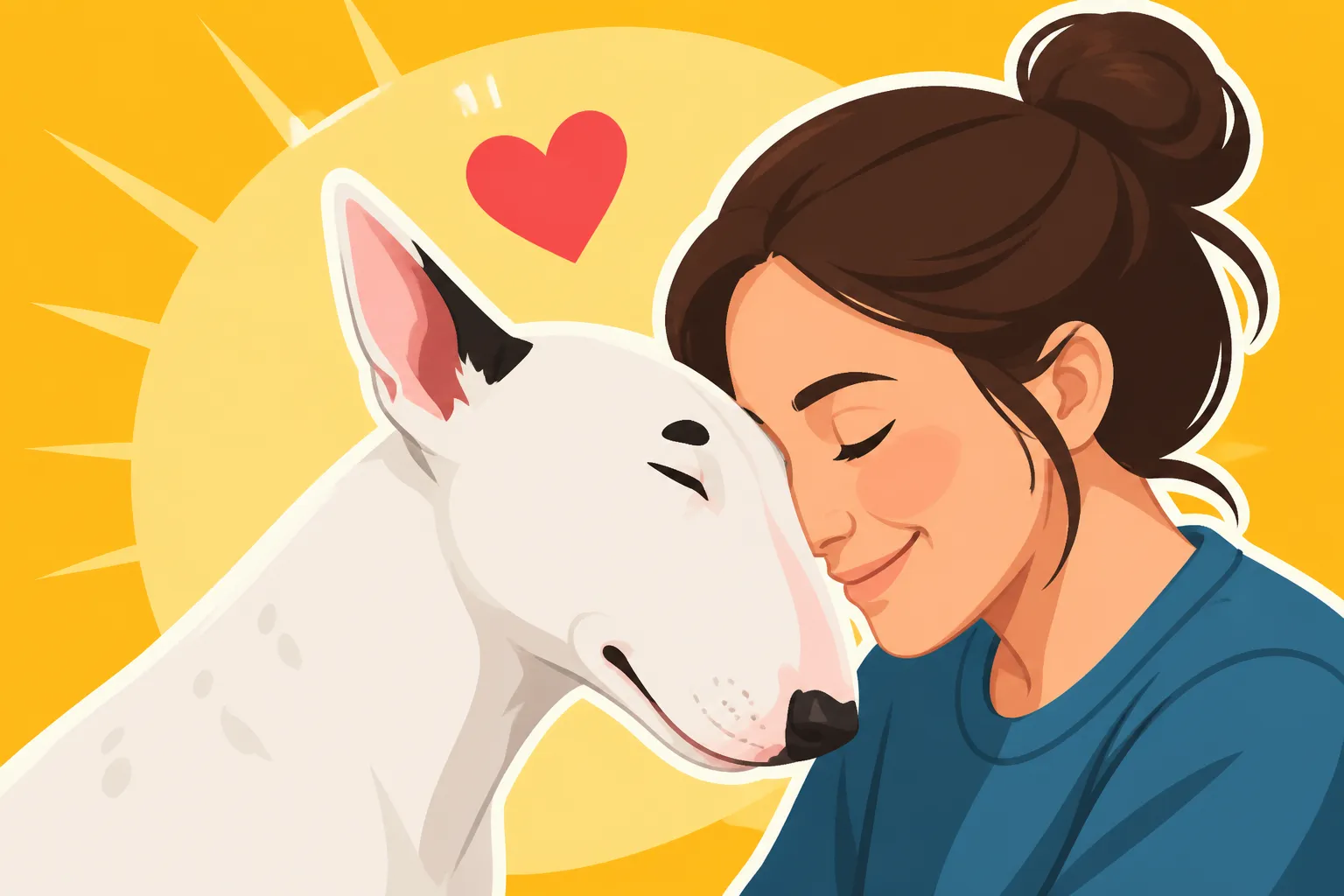
If you’ve ever owned a Bull Terrier, you know that their affection isn’t always subtle. One minute you’re enjoying a quiet cup of coffee, and the next, a sturdy, egg-shaped head is firmly pressed into your side, your lap, or even your back. It’s a signature move, often accompanied by a deep sigh of contentment, and while it’s undeniably endearing, it can sometimes leave you wondering, "Why exactly are you trying to fuse with me, buddy?" This guide will delve into the various reasons behind your Bull Terrier’s head-pushing antics, helping you understand this charming, albeit sometimes overpowering, display of canine love.
Understanding the Bull Terrier's Unique Affection
Bull Terriers are known for their larger-than-life personalities, and their demonstrations of affection are no different. They aren't the kind of dog to delicately place a paw on your leg; they are a breed that loves with their entire being, and that often translates into a full-body experience for both them and you. Their physical presence is a huge part of their charm, even if it means you occasionally lose your balance.
It's Not Just About Cuddles: The Bull Terrier Lean
When a Bull Terrier pushes its head into you, it’s often part of a broader behavior pattern known as "leaning." This isn't just a casual bump; it's a deliberate act of pressing their weight against you, creating a strong physical connection. Think of it as their way of saying, "You are my human, and I want to be as close to you as physically possible right now." It's a fundamental expression of their desire for closeness and security, a direct line to their favorite person.
This leaning and head-pushing behavior can manifest in many scenarios. Perhaps you're standing in the kitchen, and your Bull Terrier ambles over, then slowly but surely, leans their entire solid body against your legs, concluding with a firm head push into your hip. Or maybe you're sitting on the sofa, and they nudge their head under your arm, forcing it up and then settling in tight, demanding to be pet right there. It’s their way of initiating contact, a clear communication that they want to engage with you, whether for pets, reassurance, or just to share your space in the most intimate way they know how.
Compared to other breeds, a Bull Terrier's physical approach can feel quite distinct. Many dogs will nudge with their nose, paw at you, or rest their head gently. Bull Terriers, however, often commit to the full body press, making their affection hard to ignore. This isn't aggression or dominance; it's almost a primal urge to be physically connected to their pack leader. It’s a testament to their incredibly strong bond with their chosen people and their desire to always be included in whatever you're doing.
A Breed Known for "Whole Body" Love
Bull Terriers are often described as "three-year-olds in a dog suit," and their loving displays certainly fit that description. They don't do anything by halves, and that includes showing affection. Why a Bull Terrier Shows Affection With Its Whole Body delves into this more, but in short, when a Bull Terrier loves you, they demonstrate it with every ounce of their considerable strength and enthusiasm. A head push is just one facet of this all-encompassing love.
Their dense build and powerful neck muscles mean that when they decide to push their head into you, it's not a light touch. It's a substantial, grounding force that lets you know they are truly there and fully engaged. This isn't always comfortable, especially if you're caught off guard or if they choose a particularly sensitive spot, like your jaw. But for them, it's a completely natural, unfiltered way of expressing their adoration and seeking attention.
This physical intensity is rooted in their breed history and temperament. They were never meant to be delicate lap dogs; they are robust companions who thrive on interaction and physical closeness. Their capacity for "whole body" affection means that they engage all their senses and their full physical presence in their interactions with you. It's a unique and sometimes overwhelming form of love, but one that many Bull Terrier owners wouldn't trade for anything.
Common Reasons Behind the Head Push
So, beyond just "they love me," what are the specific impulses driving your Bull Terrier to push their head into you? It turns out there are several layers to this behavior, all rooted in their desire for connection and comfort. Understanding these nuances can help you respond more effectively and deepen your bond.
Seeking Attention and Connection
More often than not, a Bull Terrier pushing its head into you is a straightforward bid for attention. They want to be noticed, acknowledged, and ideally, showered with pets and praise. Bull Terriers are incredibly people-oriented dogs; they thrive on interaction with their humans and often develop a deep attachment to one or two primary caregivers. This strong bond means they crave your presence and validation almost constantly.
Consider the classic scenario: you're engrossed in a book or scrolling through your phone. Your Bull Terrier, seeing that your attention isn't entirely on them, might start with a soft nudge, then escalate to a full-on head push. They're essentially inserting themselves into your personal space, trying to break your focus and redirect it towards them. They might be asking for a belly rub, a scratch behind the ears, or simply for you to acknowledge their existence. Why a Bull Terrier Follows You Everywhere is a closely related behavior, as it all stems from their desire to be involved in your life.
This attention-seeking isn't necessarily a negative trait; it's part of their charming, sometimes demanding, personality. It shows how much they value your companionship. However, it's important to differentiate between a polite request for attention and a forceful demand. If not managed, this behavior could become a way for your Bull Terrier to control interactions, so gentle guidance on appropriate ways to ask for attention is key.
Comfort and Security
Beyond just wanting your attention, your Bull Terrier might be pushing their head into you because they find immense comfort and security in the physical contact. There's something incredibly reassuring for them about pressing against their trusted human, feeling your warmth and scent. It’s a grounding sensation that helps them feel safe and loved, much like a child seeking comfort from a parent.
You might notice this behavior intensify during times of stress or uncertainty for your dog. For instance, if there's a loud thunderstorm outside, or if unfamiliar guests have just arrived, your Bull Terrier might be more prone to pressing their head into you. It's their way of seeking reassurance, a silent plea for you to confirm that everything is alright. In these moments, your steady presence provides a haven.
This need for physical closeness often extends to bedtime too. Many Bull Terriers, despite their size, firmly believe they are lap dogs and will try to wedge themselves into the smallest spaces next to you. Why a Bull Terrier Ends Up in Your Bed is another manifestation of this deep-seated need for comfort and security. That firm head push can be their signal that they’re settling in for a long cuddle, or simply confirming that you’re still there to keep them safe.
Communication: "I Need Something!"
Sometimes, the head push isn't just about general affection or comfort; it's a very specific form of communication. Your Bull Terrier might be trying to tell you that they need something. This could range from the mundane to the urgent, and learning to read their other cues alongside the head push is essential.
For example, a head push followed by a gaze towards the door might mean, "Hey, it's time for our walk!" If they push their head into your hand and then nudge their bowl, they're clearly signaling, "My stomach is rumbling, human!" They might even be trying to direct your attention to a particular toy or object they want to play with. This kind of communication shows their intelligence and their ability to associate specific actions with desired outcomes.
Differentiating between a general plea for affection and a specific request often comes down to context and consistency. Does the head push happen at a particular time of day? Is there an object nearby that they seem to be indicating? Over time, you'll start to recognize your individual Bull Terrier's subtle (or not-so-subtle) cues. Teaching them polite alternatives, like a "sit" for attention, as discussed in Teaching a Bull Terrier to Sit and Stay, can also help them communicate their needs more clearly without resorting to a physical shove.
Managing the Head Push (and Loving It Anyway)
While a Bull Terrier's head push is a true sign of affection, it can sometimes be a bit much. Their robust nature means that a "gentle" push can still be quite powerful, potentially knocking over children, older adults, or simply sending your coffee flying. Finding a balance between embracing their loving nature and establishing respectful boundaries is key to a happy household.
Establishing Boundaries Without Crushing Their Spirit
The goal isn't to stop your Bull Terrier from showing affection, but rather to teach them how to do it in a way that works for everyone. You want to avoid crushing their affectionate spirit, as their unique way of loving is one of the joys of owning the breed. Instead, focus on redirection and rewarding desired behaviors.
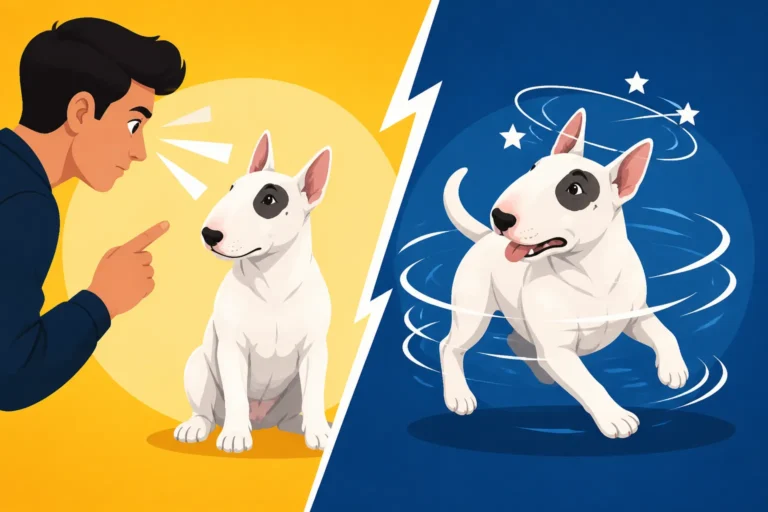
When your Bull Terrier performs a head push that is too forceful or inconvenient, gently interrupt the behavior without scolding. You can say "off" or "no push" and then immediately redirect them to a more appropriate action, such as sitting or lying down next to you. Once they comply, reward them with praise and gentle pets, focusing on areas that don't encourage pushing. Consistency is vital here. If sometimes you allow it and sometimes you don't, they'll become confused.
Consider teaching a "place" command or sending them to a designated dog bed when you need a break from the physical contact. Online training resources, like those offered by BAXTER & Bella, can provide structured programs to help you teach these polite behaviors effectively. They often emphasize positive reinforcement, which is crucial for a sensitive breed like the Bull Terrier. This way, they learn that calm, polite interaction leads to positive attention, while over-the-top demands do not.
Providing Adequate Physical and Mental Stimulation
A Bull Terrier with excess energy or boredom is often a Bull Terrier who will seek out attention in more insistent ways, including head pushing. Ensuring they receive enough physical exercise and mental enrichment can significantly reduce the frequency and intensity of these demanding behaviors. A tired Bull Terrier is generally a well-behaved Bull Terrier.
Consider their daily exercise routine. How Much Exercise a Bull Terrier Actually Needs is often underestimated; they're muscular and athletic dogs who need more than just a quick stroll around the block. Engaging them in vigorous play, long walks, or even structured training sessions can help burn off that excess energy. A Bull Terrier that has had a good physical and mental workout is more likely to settle down calmly beside you, rather than trying to physically insert themselves into your space.
Mental stimulation is just as important. Bull Terriers are intelligent and love a challenge. Puzzle toys, available widely on platforms like Amazon, can keep their minds engaged, working for their treats instead of demanding your attention. Strong chew toys also provide a healthy outlet for their oral fixation and can occupy them for extended periods. Which Puzzle Toys Occupy a Bull Terrier provides great ideas for keeping their clever minds busy.
Embracing Their Unique Quirks
Ultimately, a Bull Terrier's head push is a fundamental part of their charm and personality. It's a reminder of their deep connection to you and their desire to be an integral part of your life. While managing the more forceful instances is important, it's equally important to embrace this unique quirk for what it is: a sign of profound affection.
Learning to anticipate their movements, especially if you have young children or elderly family members around, can prevent accidental bumps. How Easily a Bull Terrier Knocks You Over is a real concern with this breed, so awareness of their physical presence is key. Many Bull Terrier owners learn to adjust their own posture or position to accommodate their dog's leaning and pushing, finding a comfortable compromise that allows for shared affection.
It’s about understanding that this isn't malice or disobedience; it’s just your Bull Terrier being a Bull Terrier. Their "clownish" nature and their unyielding devotion often come wrapped in a very physically expressive package. By establishing clear, gentle boundaries, providing plenty of outlets for their energy, and simply appreciating their big-hearted, full-bodied love, you can enjoy this special bond to the fullest.
| Reason for Head Push | Bull Terrier's Implied Message | Recommended Response |
|---|---|---|
| Seeking Attention | "Look at me! Pet me! Acknowledge me!" | Acknowledge calmly, then redirect to a "sit" or "down" before rewarding. |
| Seeking Comfort/Security | "I feel safe with you. Stay close." | Offer calm pets and reassurance. Allow them to lean within reason. |
| Specific Request | "I need to go out," "I'm hungry," "Let's play." | Check for context (e.g., door, bowl, toy) and respond appropriately. |
| Over-excitement/Play | "Let's roughhouse!" (Often accompanied by nudges) | Redirect to an appropriate toy or outdoor play. Avoid encouraging roughhousing indoors. |
| Establishing Proximity | "You are my person, I want to be right here." | Allow gentle leaning. Use a "place" command if space is needed. |
Disclaimer
This article is for general informational purposes only and does not constitute professional advice. Laws, prices and regulations vary by location and change over time. Consult a qualified professional for guidance on your specific situation.