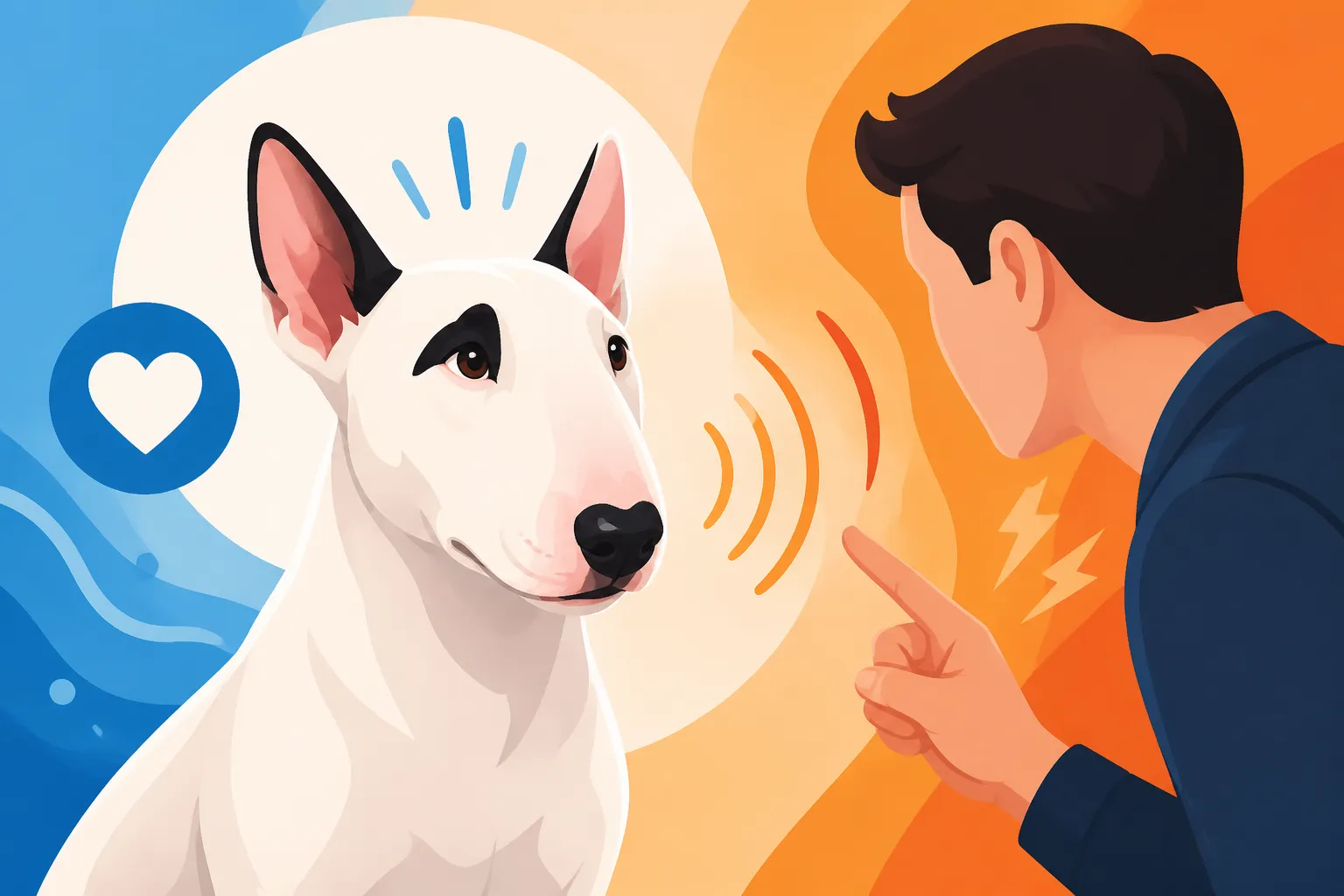
How Sensitive a Bull Terrier Is to Tone
One of the most surprising things many new Bull Terrier owners discover, often to their frustration, is just how deeply perceptive these clownish characters truly are. You might think their stubborn, independent streak means they're impervious to your moods, but the reality is quite different. This guide will delve into the profound sensitivity of Bull Terriers to vocal tone, helping you understand how your pitch, volume, and inflection shape their behavior and emotional state, and ultimately, how to use your voice as a powerful tool for connection and cooperation.
The Bull Terrier's Inner World: Why Tone Matters So Much
Beneath that strong, egg-shaped skull and perpetually playful demeanor, a Bull Terrier is an incredibly intelligent and emotionally complex creature. They are often described as "a three-year-old in a dog suit" for a reason – they possess a child-like curiosity, a deep desire for connection, and a surprising vulnerability to the nuances of human interaction. Unlike some breeds that might shrug off a sharp word, a Bull Terrier tends to internalize it. Their world revolves around their people, and your voice is a primary conduit of information, reassurance, and sometimes, perceived disapproval.
Think about it from their perspective: they don't understand our complex language. "Sit" is just a sound until it's paired with an action and a reward. What they do understand, instantly and instinctively, is the feeling behind the sound. The rise and fall of your voice, the speed of your speech, the softness or harshness in your tone – these are all powerful signals that convey your emotional state and expectations far more effectively than the actual words themselves. A sharp, angry tone might mean nothing to a passing stranger, but to your Bull Terrier, it can feel like a direct assault, even if you’re not angry at them. They absorb that emotional energy, and it impacts their confidence and willingness to engage.
This sensitivity isn't a weakness; it's a profound aspect of their character. It’s what allows them to bond so deeply and respond with such exuberance when they sense joy or excitement from you. But it also means they can shut down or become anxious when they perceive anger, frustration, or disappointment in your voice. Ignoring this aspect of their personality is akin to trying to teach a child while constantly yelling at them – it erodes trust and makes learning far more difficult. Understanding How Smart a Bull Terrier Really Is helps us appreciate the depth of their comprehension beyond mere commands.
Decoding Your Bull Terrier's Reactions to Your Voice
Bull Terriers exhibit a wide range of responses to different vocal tones, from subtle shifts in body language to outright avoidance or, conversely, enthusiastic engagement. Learning to read these cues is essential for effective communication and building a strong, trusting relationship with your quirky companion.
The Subtle Signs of Discomfort
When you use a harsh or frustrated tone, even if it's not directed at your Bull Terrier, you might notice them displaying subtle signs of discomfort. Their ears might flatten slightly, their body posture might become a little more rigid or they might shift their weight away from you. They might blink more frequently, or offer a slight head turn, trying to avert their gaze. Some Bull Terriers might even offer a quick lip lick or yawn, which are often stress signals indicating they’re feeling uneasy. These are not signs of defiance, but rather indicators that your tone has registered as unsettling or negative, and they are trying to diffuse the situation or cope with their unease.
Consider a common scenario: your Bull Terrier is intently investigating something on the floor, perhaps a crumb they shouldn’t have. You, stressed from a long day, might snap "No!" with more force than intended. Instead of immediately disengaging, your Bull Terrier might freeze, then slowly look at you with wide eyes, perhaps taking a step back. They're not just reacting to the word "No"; they're reacting to the sharp, disapproving sound of your voice. This can lead to them developing an aversion to your voice in certain contexts, making future training more challenging. They might start to link your raised voice with feeling "bad" rather than understanding what action was wrong. In fact, if you're too harsh, you might find Why a Bull Terrier Shuts Down Under Pressure.
The Joy of an Encouraging Tone
On the flip side, a warm, encouraging, and playful tone can bring out the absolute best in a Bull Terrier. Their characteristic clownishness flourishes when they feel safe, loved, and encouraged. A high-pitched, enthusiastic "Good boy!" or "Yes!" can elicit a full-body wiggle, a happy snort, or a burst of zoomies. Their tails will wag vigorously, their eyes will sparkle, and they'll eagerly lean into your touch. This positive vocal reinforcement tells them they've done something right, reinforcing desired behaviors and strengthening your bond.
Imagine you're trying to teach your Bull Terrier to Teaching a Bull Terrier to Sit and Stay. If you use a monotone, repetitive voice, they might get bored or simply not understand the importance of the action. But if you use an upbeat, varied tone, praising them enthusiastically with a cheerful "Sit! Yes! GOOD SIT!" their engagement levels will soar. They associate the positive sound with the successful action and the reward that follows, making them far more likely to repeat it. This is why many successful trainers, including those at programs like BAXTER & Bella, emphasize the power of positive vocal cues. It's not just about the treats; it's about the entire emotional context you create with your voice.
The Impact on Specific Behaviors
A Bull Terrier's sensitivity to tone can also manifest in specific behavioral patterns. For instance, if you're consistently harsh with your voice during leash walks, they might become more anxious and reactive to external stimuli, associating the walk itself with your stress. Conversely, a calm, steady, and reassuring tone can help them feel more secure and confident in new environments.
Think about how a Bull Terrier often tries to Why a Bull Terrier Follows You Everywhere. This isn't just seeking proximity; it's often a bid for connection and reassurance. If your tone is frequently sharp or dismissive when they are near, you might inadvertently teach them that seeking your presence isn't always welcome, which can lead to insecurity. Similarly, if they are prone to sulking, your tone can either exacerbate or alleviate this behavior. Why a Bull Terrier Sulks often stems from a perceived slight or misunderstanding, and a gentle, inviting tone can often be the first step in winning them back over.
Crafting Your Vocal Approach: Positive Reinforcement and Communication
Understanding your Bull Terrier's sensitivity is the first step; the next is learning how to leverage your voice effectively to foster a harmonious relationship. This means being mindful of your tone in all interactions, not just during formal training sessions.
Consistency in Tone
While variety keeps things interesting, consistency in your general tone for commands is helpful. Your "request" tone should be clear, calm, and firm, but never angry or aggressive. For example, when asking for a "stay," your voice should be steady and low, conveying confidence and expectation. When praising, it should be high-pitched, energetic, and joyous. Bull Terriers thrive on clear communication, and this includes distinct vocal cues for different situations.
A good rule of thumb: if you find yourself raising your voice in frustration, take a breath. Step away for a moment if you need to. Yelling at your Bull Terrier will almost always be counterproductive. It confuses them, erodes their trust, and can lead to anxiety or avoidance. They won't understand why you're yelling; they'll only feel the intensity of your negative emotion. Instead of yelling, try a sharp, short clap or a specific "uh-uh" sound with a neutral but firm tone to interrupt an undesirable behavior, then redirect them to something appropriate.
Using Different Tones for Different Purposes
Mastering your vocal range is a powerful tool in your communication arsenal.
- Happy, High-Pitched Tone: Reserve this for praise, encouragement, and play. This is your "everything is wonderful!" voice. When your Bull Terrier performs a desired action, celebrate it vocally. "YES! GOOD PUPPY!" This is the tone that makes their ears perk up and their whole body wag.
- Calm, Level Tone: Use this for general commands and when you want to convey a sense of calm and predictability. "Sit," "Stay," "Wait." This tone says, "I'm in charge, and everything is okay."
- Low, Growly "No": For interruptions or warnings about inappropriate behavior, a low, guttural "No" or "Eh-eh!" can be effective, provided it's not delivered with anger, but rather with a deep, authoritative rumble. This should be used sparingly and always followed by redirection to the correct behavior. The goal isn't to scare them, but to get their attention and communicate a clear boundary.
- Whisper/Soft Tone: This can be surprisingly effective for attention-seeking or calming a mildly overstimulated Bull Terrier. A soft, gentle "Hey there, buddy" can be a powerful way to re-engage them without adding to any external noise or excitement.
Training resources and online platforms, such as those offered by BAXTER & Bella, often provide excellent modules on how to develop and consistently use these varying tones for optimal dog training. They understand that canine learning is deeply tied to vocal nuance.
Incorporating Clicker Training
For Bull Terriers who are particularly sensitive or shut down easily, How a Clicker Lands With a Bull Terrier can be an invaluable tool. A clicker provides a precise, emotionally neutral marker for desired behavior. It’s always the same sound, devoid of human emotion or fluctuation, which can be less intimidating than a human voice for a sensitive dog. Once the click is associated with a reward, it becomes a powerful positive reinforcer.
You can then pair your enthusiastic vocal praise with the click. For example, click when they sit, immediately give a treat, and then follow with a happy, high-pitched "Good sit!" This combines the clarity of the clicker with the emotional warmth of your voice, offering a robust learning experience. Many guides available on platforms like Amazon offer detailed instructions on how to start clicker training effectively with your Bull Terrier.
Beyond Tone: Holistic Communication for Your Bull Terrier
While vocal tone is a crucial element, it’s just one piece of the larger communication puzzle with your Bull Terrier. They are constantly reading your entire body language, facial expressions, and overall demeanor. To truly connect with and understand your Bull Terrier, you need to consider the whole picture.
Body Language Speaks Volumes
Your physical presence amplifies or contradicts your vocal tone. If you're saying "Good boy!" in a happy tone but your body is stiff, your hands are clenched, or your shoulders are hunched, your Bull Terrier will likely pick up on the conflicting signals. They might become confused or hesitant, unsure of how to interpret your mixed messages. Conversely, if you're using a firm tone for a command, but your body is relaxed and open, they'll perceive it as less threatening.
For example, when teaching your Bull Terrier to walk politely on a leash, a calm, confident posture combined with a steady, reassuring tone will be far more effective than a tight grip and a strained voice. They'll feel your confidence and be more likely to follow your lead, rather than feeling your tension and reacting with their own anxiety or pulling. Teaching them to walk without pulling is not just about the leash, it's about your entire presence. Teaching a Bull Terrier to Walk Without Pulling truly benefits from a holistic communication approach.
Facial Expressions and Eye Contact
Bull Terriers are surprisingly adept at reading human facial expressions. A soft gaze and a relaxed face convey warmth and acceptance, while a furrowed brow or direct, unblinking stare can be interpreted as a challenge or threat. When you're interacting with your Bull Terrier, be mindful of what your face is communicating.
Direct eye contact can be a sign of affection and trust when paired with a soft gaze and gentle tone, but it can also be intimidating if your expression is hard or your voice is sharp. Learning to use soft, intermittent eye contact, combined with a gentle voice, can strengthen your bond. Conversely, avoiding eye contact when you need to disengage or interrupt an undesirable behavior can also be a valuable tool, especially if your Bull Terrier is already prone to Why a Bull Terrier Leans on People for attention.
Environmental Context
The environment itself plays a huge role in how your Bull Terrier interprets your tone. A cheerful "Let's go!" might be exciting at home, but if you're in a busy park with lots of distractions and you say it with the same enthusiasm, it might contribute to overstimulation. In such situations, a calmer, more measured tone might be more appropriate, even for exciting activities.
Consider their unique personality traits, too. While Bull Terriers are famously known for their playful "clowning," they also have moments of deep thought and sensitivity. Your tone should adapt to these different facets of their personality. A good Bull Terrier owner understands that their voice is a powerful instrument that requires careful tuning to achieve the desired harmony in their relationship. Whether it’s praising their successful retrieval of a chew toy (perhaps a durable one from Amazon!) or calmly guiding them through a new training exercise, every vocal interaction shapes their perception of you and the world around them.
The table below summarizes how different vocal tones generally land with a Bull Terrier:
| Vocal Tone/Quality | Perceived By Bull Terrier As | Potential Behavioral Response | When to Use It |
|---|---|---|---|
| High-Pitched, Excited | Joy, Approval, Playtime, Reward | Full-body wags, zoomies, eager engagement, happiness | Praise, encouragement, initiating play, successful command completion |
| Calm, Low, Steady | Reassurance, Leadership, Clear Expectation | Focused attention, compliance, feeling secure, relaxation | Commands ("Sit," "Stay"), reassuring, setting boundaries calmly |
| Sharp, Loud, Frustrated | Disapproval, Threat, Anger, Anxiety | Shutting down, avoidance, increased anxiety, confusion, sulking | AVOID this tone as much as possible, as it damages trust and inhibits learning. |
| Soft, Gentle, Whisper | Affection, Comfort, Calm, Invitation | Seeking proximity, relaxation, gentle engagement, trust building | Calming, inviting closeness, subtle attention-getting, comforting |
| Sharp, Short, Neutral (e.g., "Uh-uh") | Interruption, "Stop that," Redirection | Momentary pause, looking to you for direction | Interrupting undesirable behavior, quickly getting attention |
Disclaimer
This article is for general informational purposes only and does not constitute professional advice. Laws, prices and regulations vary by location and change over time. Consult a qualified professional for guidance on your specific situation.