Why a Bull Terrier Follows You Everywhere
It's a familiar scene for many Bull Terrier owners: you get up to grab a snack, and there they are, right on your heels. You head to the bathroom, and a moment later, a distinctive egg-shaped head pokes through the doorframe. This constant shadowing, while often endearing, can sometimes feel a little overwhelming. This guide will delve into the fascinating reasons behind your Bull Terrier's "Velcro dog" tendencies and offer practical advice on navigating this unique aspect of their companionship.
The Bull Terrier's "Velcro" Nature: Deep Dive into Breed Traits
Bull Terriers are known for many things: their unique look, their clownish antics, and their boundless energy. But perhaps one of their most defining, and often surprising, characteristics is their intense devotion to their human family. They aren't just dogs that like to be near you; they truly thrive on proximity and interaction, almost as if they believe they are part of your very being.
The Origin of Bull Terrier Clinginess
The historical roots of the Bull Terrier play a significant role in why they are such loyal, in-your-pocket companions. Unlike some working breeds developed for solitary tasks, Bull Terriers were originally bred as companion animals for gentlemen, intended to be intelligent, courageous, and above all, devoted to their owners. They needed to be calm and well-behaved indoors, yet spirited and athletic when out and about. This emphasis on a strong human bond meant breeders inadvertently selected for dogs who craved human presence and interaction. They're not just pets; they were meant to be partners, even if that partnership mostly involves sharing the sofa.
This inherent desire for closeness is a hallmark of the breed's temperament. They don't just tolerate your presence; they actively seek it out, often positioning themselves to be touching you or to have a clear line of sight. It's not just a cute quirk; it's deeply ingrained in their genetic makeup, making them truly unique in their expression of affection. Understanding this helps us appreciate that it's not a flaw, but a defining characteristic of our quirky companions.
How Bull Terriers Show Affection
While some dogs might show affection with a wagging tail and a quick lick, Bull Terriers have their own distinctive ways of expressing their love, many of which involve physical closeness. They are famous for their "lean," a full-body press against your legs or side that can feel like a small, muscular person hugging you. This isn't just a casual touch; it's a profound statement of connection, a way of grounding themselves in your presence.
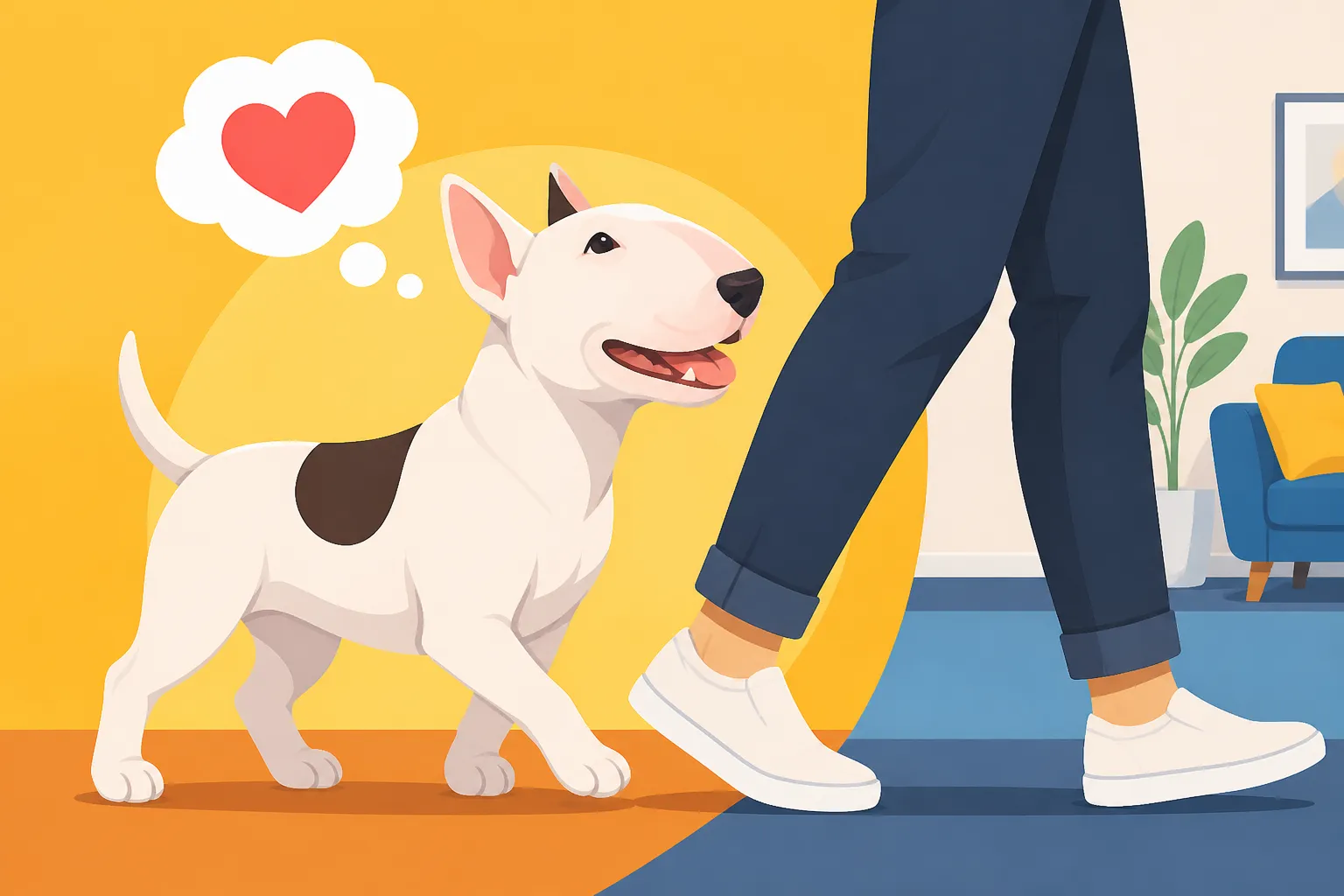
Beyond the lean, they will often follow you from room to room, settle for a nap with their head on your foot, or insist on being the fuzzy companion for every chore, from laundry to gardening. This relentless shadowing is their way of saying, "You're my person, and I want to be where you are." They might even attempt to climb into your lap, regardless of their size, convinced they are still the tiny puppy they once were. It's this full-body, unabashed affection that endears them to so many, even when you trip over them for the tenth time that morning. You can learn more about How Physically Affectionate a Bull Terrier Is in our detailed guide.
Understanding the Motivation Behind the Shadowing
It's easy to label a Bull Terrier as simply "clingy," but their constant presence often stems from a complex mix of instinct, learning, and emotional needs. Unpacking these motivations can help you better understand your unique companion and respond to their needs more effectively.
The Comfort of Proximity and Security
For many Bull Terriers, following you is a basic comfort mechanism. Your presence means security, safety, and all things good. Think about it: when you're around, they get fed, get walked, get cuddles, and generally have a pretty good time. Why wouldn't they want to be as close to the source of all that goodness as possible? They often feel most relaxed when they are within your immediate vicinity, able to hear your breathing, feel your movements, and generally stay tuned into your every activity.
This desire for proximity isn't always about getting something directly, like a treat, but about the sheer comfort of knowing you're there. It's a primal instinct for pack animals to stay close to their perceived leader and family unit. For a Bull Terrier, their human family is their pack, and sticking to you like glue is their way of reinforcing that bond and ensuring they remain a central, protected part of it. It's a sweet, albeit sometimes inconvenient, testament to how much they trust and rely on you.
Fear of Missing Out (FOMO)
Anyone who lives with a Bull Terrier knows they have an almost insatiable curiosity and a deep desire to be involved in everything. This often manifests as a serious case of FOMO. If you move, they assume something interesting is happening, and they absolutely cannot risk being left out. Whether it's a trip to the refrigerator, a venture into the garage, or even just a shift in your seat, their internal alarm bells ring, signaling a potential adventure they must be part of.
This isn't just about being nosy; it's about their active and engaged personalities. Bull Terriers are intelligent and love mental stimulation, and being aware of their environment and what their humans are doing is a huge part of that. They don't want to miss a dropped crumb, a sudden game, or even just the subtle shift in your mood. Their following behavior is often driven by this keen interest in the world around them, especially when that world revolves around you.
Reinforcement: Accidental and Intentional
Let's be honest, sometimes we unwittingly reinforce this shadowing behavior. Every time your Bull Terrier follows you and you absentmindedly give them a pat, or say "Good boy/girl," or even just make eye contact, you're confirming that their behavior is desirable. They're smart cookies, and they quickly learn that being near you often leads to positive attention, even if that attention is minimal.
Consider this scenario: you walk into the kitchen, your Bull Terrier trots right behind you. You open the fridge, they sit expectantly, and you, out of habit, toss them a small piece of cheese or a carrot. Bingo! They've just been rewarded for following you into the kitchen. This isn't to say you should ignore your dog entirely, but it highlights how easily their "following" instinct can be strengthened by our natural, affectionate responses. Understanding this can help you be more intentional about when and how you give attention.
When "Velcro" Becomes a Worry: Anxiety
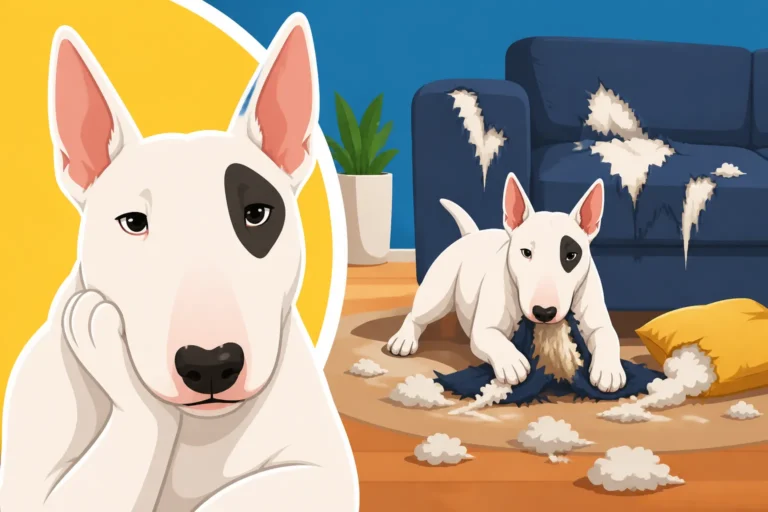
While much of the following behavior is rooted in affection and curiosity, there are times when it can be a symptom of underlying anxiety, particularly separation anxiety. If your Bull Terrier's shadowing is accompanied by other signs of distress when you prepare to leave, like whining, pacing, destructive chewing, or inappropriate urination, it might be more than just typical clinginess. Signs a Bull Terrier Has Separation Anxiety can be subtle at first, but it's important to recognize them early.
In these cases, the constant following isn't about wanting to be part of the fun; it's driven by genuine fear and panic about being alone. They are desperate to maintain contact, convinced that if they let you out of their sight, you might disappear forever. This is a serious issue that needs careful management and professional guidance. It's a far cry from the goofy companion who just wants to supervise your dishwashing.
Managing the Constant Companionship: Tips and Strategies
Living with a Bull Terrier who shadows your every move is part of the charm, but it's also important to manage it so that both you and your dog can have healthy independence. The goal isn't to stop them from loving you or wanting to be near you, but to teach them that it's okay, even good, to be comfortably on their own sometimes.
Fostering Independent Play and Relaxation
One of the most effective ways to encourage a little healthy distance is by providing engaging activities that your Bull Terrier can enjoy independently. Puzzle toys, KONGs stuffed with delicious treats, or durable chew toys can keep their minds and mouths busy. You can find a huge variety of these on platforms like Amazon, making it easy to stock up on different options to keep things interesting. The key is to offer these before they start shadowing, to proactively redirect their attention.
Create a designated "happy place" for your Bull Terrier, like a comfy bed in a quiet corner or a sturdy crate. Teach them to settle there with positive reinforcement. This isn't about banishing them, but about giving them a secure space where they can relax without needing to be right on top of you. Even just a few minutes of calm, independent chewing or napping can build their confidence in being comfortable alone. Remember, Whether a Crate Helps a Bull Terrier Left Alone often depends on positive association and careful introduction.
Structured Alone Time
It might sound counterintuitive, but intentionally scheduling short periods of alone time, even when you're home, can be incredibly beneficial. Start small: put your Bull Terrier in their designated safe space with a special long-lasting treat (like a filled KONG) and step into another room for just a few minutes. Don't make a big deal out of leaving or returning. Gradually increase the duration as they become more comfortable.
This exercise teaches them that your absence is temporary and not a cause for panic. It's about building resilience and trust. For those struggling with this, online training programs, such as those offered by BAXTER & Bella, can provide structured plans and expert guidance to help you navigate these steps effectively. Consistency is key here; a few minutes a day, every day, is far more effective than an hour once a week.
Training for Boundaries
While "Bull Terrier" and "boundaries" can sometimes feel like an oxymoron, teaching specific cues can work wonders. A "place" or "bed" command, where they learn to go to a designated spot and stay there until released, can be very useful. This allows you to have moments of space without your dog feeling rejected. It gives them a job and a clear expectation.
For instance, when you're cooking, rather than having them underfoot, you can direct them to their bed in the kitchen. Reward them generously for staying there, reinforcing that good things happen when they respect boundaries. This isn't about being mean; it's about giving them clear communication and helping them understand appropriate behavior in different situations. It helps them build confidence in their ability to understand and respond to your requests.
Enrichment Beyond Following
Bull Terriers are intelligent dogs who need mental stimulation just as much as physical exercise. If their only "job" is to follow you, that's what they'll do. Offering a variety of enrichment activities can redirect their focus and satisfy their innate curiosity. Think about scent games, where you hide treats around the house for them to sniff out, or teaching them new tricks.
These activities tap into their problem-solving abilities and can be incredibly tiring in a good way, leading to more relaxed behavior throughout the day. A tired Bull Terrier, both mentally and physically, is often a happy Bull Terrier who is less likely to feel the compulsive need to monitor your every move. It also helps to prevent What a Bull Terrier Does When It Is Bored, which often involves destructive behaviors.
Here's a quick overview of approaches to manage shadowing behavior:
| Behavior Type | Motivation | Management Strategy | Key Benefit |
|---|---|---|---|
| Normal Shadowing | Affection, Curiosity, Pack Instinct | Provide independent enrichment, designated 'place' | Fosters healthy independence, mental stimulation |
| Demand Following | Seeking attention/rewards | Avoid accidental reinforcement, teach boundaries | Reduces nagging, clarifies expectations |
| Anxiety-Driven Following | Fear, insecurity (separation anxiety) | Structured alone time, counter-conditioning, vet/trainer consultation | Builds confidence, reduces distress |
| FOMO Following | Desire to be involved, not miss out | Redirect with engaging solo activities, puzzle toys | Satisfies curiosity constructively |
When Following Becomes a Problem: Separation Anxiety and Other Concerns
While a Bull Terrier's shadowing can be charming, there are instances when it crosses the line from endearing quirk to a genuine behavioral issue. Recognizing these shifts is crucial for your dog's well-being and your household's harmony.
Distinguishing Normal Clinginess from Anxiety
It’s vital to differentiate between a Bull Terrier’s typical desire for proximity and true separation anxiety. A dog that just follows you around the house and then curls up contentedly when you leave is displaying normal breed behavior. They might give you a sad look, but they’ll settle. Why a Bull Terrier Cannot Be Left Alone All Day is a critical question for this breed, as their need for companionship is high, but that doesn't automatically mean anxiety.
On the other hand, if your Bull Terrier shows intense distress when you prepare to leave—panting, drooling, pacing, vocalizing excessively, or attempting to block your exit—and then exhibits destructive behavior, house-soiling, or incessant barking/howling once you’re gone, you’re likely dealing with separation anxiety. This is more than just wanting to be near you; it’s a panic response to being left alone. A Bull Terrier with true separation anxiety is suffering, and it requires a more targeted intervention than simply encouraging independent play.
The Impact on Your Daily Life
A Bull Terrier who constantly shadows you can certainly impact your daily routines. Imagine trying to carry a hot coffee across the kitchen when your dog is weaving between your legs, or attempting a quiet moment in the bathroom only to have a wet nose nudge the door open. It can be frustrating, trip hazards are real, and privacy becomes a distant memory. This isn't just about your convenience; it can create stress for both you and your dog if not managed.
Moreover, if their constant following is a sign of anxiety, it means they are rarely truly relaxed. They are always on alert, monitoring your movements, which can lead to chronic stress. This can affect their overall health, sleep patterns, and general demeanor, making them more prone to other behavioral issues. Understanding Whether a Bull Terrier Is a One Person Dog can also shed light on why their focus might be so intensely directed at one individual, amplifying this shadowing.
Seeking Professional Help
If you suspect your Bull Terrier's shadowing has veered into the territory of separation anxiety, it's incredibly important to seek professional help. A qualified veterinarian can rule out any underlying medical conditions that might contribute to anxiety, and they might suggest medications to help manage extreme cases of panic. Beyond that, a certified professional dog trainer or a veterinary behaviorist can provide a tailored plan to address the anxiety.
These experts use positive reinforcement and desensitization techniques to gradually help your Bull Terrier build confidence in being alone. They can guide you through exercises, set up camera monitoring, and help you identify triggers and appropriate responses. This isn't a quick fix, but with patience and expert guidance, many Bull Terriers can learn to be comfortable and relaxed in their own space, even when you're not right there beside them.
Disclaimer
This article is for general informational purposes only and does not constitute professional advice. Laws, prices and regulations vary by location and change over time. Consult a qualified professional for guidance on your specific situation.