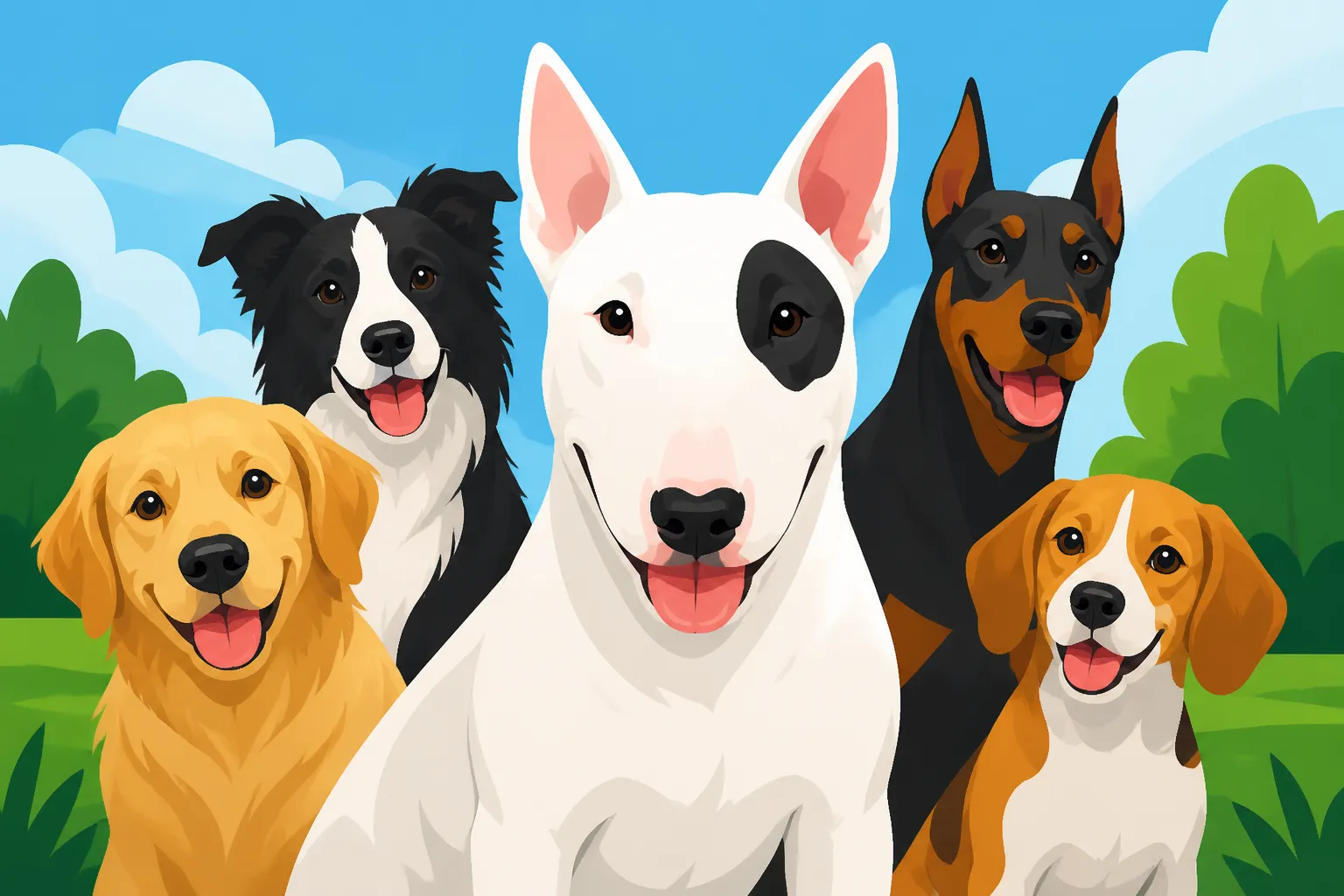
A Bull Terrier With Other Dogs
Living with a Bull Terrier means embracing a vibrant, sometimes challenging, personality. One of the biggest hurdles many Bull Terrier owners face, or worry about facing, is how their beloved, egg-headed companion will get along with other dogs. It’s a common frustration, the desire for a harmonious multi-dog home or even just stress-free walks, only to be met with intense greetings, over-the-top play, or outright conflict. This comprehensive guide aims to shed light on the unique dynamics of Bull Terriers and other dogs, offering realistic insights and actionable strategies to help foster peace and understanding in your canine relationships.
Understanding the Bull Terrier's Breed History and Instincts
To truly grasp why a Bull Terrier interacts with other dogs the way it does, we need to take a step back and understand its heritage. These aren't just any dogs; they were purposefully bred for specific traits that, while admirable in their original context, can manifest as complex social behaviors today.
The "Bull and Terrier" Legacy: What it Means for Dog-Dog Interactions
The Bull Terrier descends from the "bull and terrier" types of dogs, which were initially developed for blood sports in 19th-century England. These dogs were bred for tenacity, strength, and a high pain tolerance. While the modern Bull Terrier, refined by James Hinks, was envisioned as a gentleman's companion and "White Cavalier"—a dog that would not initiate fights but could defend itself if challenged—those ancestral traits haven't completely disappeared. This legacy means that while a Bull Terrier is often affectionate and loyal to its human family, it might carry a deeply ingrained readiness to engage when another dog presents a perceived challenge or even just a strong play invitation.
It's not about malice; it's about ancient programming. They were bred to be formidable, and that drive can still be present, sometimes just beneath the surface of their clownish exterior. This means that a casual, unsupervised introduction to a new dog, especially one that doesn't understand Bull Terrier body language, can escalate quickly. Their threshold for "enough is enough" with other dogs might be higher or lower than you expect, and their response can be intense. Understanding this history isn't about excusing bad behavior, but about acknowledging the inherent predispositions we work with, rather than against.
Prey Drive and Its Impact on Small Dogs
Another significant instinct hardwired into many Bull Terriers is a pronounced prey drive. While they weren't primarily bred for hunting vermin in the same way some terriers were, their bull and terrier ancestors certainly had the drive and capability to chase and capture. This instinct can be particularly problematic when a Bull Terrier encounters smaller, faster-moving animals, including small dogs. A tiny Chihuahua darting past might not be seen as another canine friend, but rather as a small, quick-moving "prey" item. This isn't a judgment on the Bull Terrier's character, but a recognition of a strong, natural impulse.
This prey drive isn't always about aggression; sometimes it's simply an uncontrollable urge to chase. However, a chase can easily turn into something more serious, especially if the smaller dog panics or attempts to defend itself. Owners often worry about How Strong a Bull Terrier's Prey Drive Is, and for good reason. It's why secure leashes and careful management are non-negotiable when out in public, particularly in areas where smaller dogs or wildlife might be present. It's a vital consideration for anyone contemplating a multi-pet household that includes a Bull Terrier and a cat or other small animals; careful, gradual introductions and constant supervision are paramount, and sometimes, a true cohabitation just isn't safe or fair to the smaller animal.
The Bull Terrier's Unique Play Style
If you've ever watched two Bull Terriers play, you know it's often a full-contact sport. They tend to be very physical, using their strong bodies to lean, bump, and shoulder-check each other. They'll mouth, tug, and wrestle with an intensity that can look alarming to an outsider. While this is perfectly normal and enjoyable for many Bull Terriers, it can be completely misunderstood by other breeds, and even by some individual Bull Terriers. A Labrador might interpret a Bull Terrier's boisterous body slam as an act of aggression, not an invitation to play, leading to defensive reactions.
This physical style also ties into their high pain tolerance. What might be a painful nip to another dog could be just a playful "love bite" to a Bull Terrier, who might not realize the force they're exerting. Teaching a Bull Terrier to modulate its play is essential. How to Teach a Bull Terrier to Play Gently is a critical skill, and it often involves interrupting over-the-top interactions and redirecting with calmer play or training. They thrive on wrestling and roughhousing, but they need to learn boundaries, especially if they are to interact safely with a variety of other dogs.
Early Socialization: The Foundation of Positive Interactions
Just like with any dog, early and consistent socialization is absolutely critical for a Bull Terrier. However, with their specific breed tendencies, it's not just about exposing them to other dogs; it's about controlled, positive, and educational exposure.
Puppyhood is Paramount: Exposure, Not Overwhelm
Puppyhood is a prime socialization window, typically from 8 to 16 weeks of age. During this time, a Bull Terrier puppy's brain is highly receptive to new experiences and forming associations. The goal isn't to expose them to every dog on the planet, but to ensure that the interactions they do have are positive and build confidence. Overwhelming a puppy with too many boisterous or aggressive dogs can be just as damaging as no socialization at all, potentially leading to fear or reactivity later on.
Think quality over quantity. Seek out calm, well-mannered adult dogs that are known to be good with puppies. Allow your Bull Terrier puppy to observe other dogs from a safe distance, rewarding calm behavior. Short, positive interactions are far more valuable than prolonged, stressful ones. A few minutes of gentle sniffing and parallel walking with a tolerant older dog is more beneficial than an hour of free-for-all at a dog park, which can quickly become overwhelming for a sensitive, albeit tough-looking, puppy.
The Role of Puppy Classes and Controlled Environments
Puppy classes are invaluable resources for Bull Terrier owners. They offer a structured, supervised environment where puppies can learn appropriate play behaviors with their peers, often under the watchful eye of experienced trainers. This controlled setting allows puppies to learn bite inhibition and social cues in a relatively safe space. A good puppy class also provides owners with tools to read their puppy's body language and intervene before interactions become too intense.
Look for classes that emphasize positive reinforcement and discourage harsh corrections, as What a Harsh Correction Does to a Bull Terrier can be detrimental to their confidence and willingness to engage. Beyond classes, play dates with carefully selected, compatible dogs can be incredibly beneficial. Again, supervision is key. If play becomes too rough or one dog becomes uncomfortable, step in and redirect them. Building positive associations in controlled settings lays the groundwork for better interactions down the line.
Continuing Socialization Through Adolescence
Socialization isn't a one-and-done event that ends at 16 weeks. Bull Terriers, like many breeds, go through an adolescent period, often between 6 months and 2 years, where their temperament can change, and they might test boundaries. The Age a Bull Terrier Finally Settles can vary, but until then, consistent effort is needed. Dogs they were once fine with might suddenly become triggers, or they might develop new reactivity.
During adolescence, continued exposure to a variety of safe dogs and environments is crucial. This might involve structured walks with known dog friends, attending obedience classes, or participating in dog sports. It's also a time when owners need to be particularly vigilant, as some of the breed's inherent tendencies, like same-sex aggression, might begin to emerge. Continuing to advocate for your dog, ensuring they have positive, non-threatening experiences, and managing situations carefully will help them navigate this complex stage and mature into a well-adjusted adult.
Recognizing and Managing Bull Terrier-Specific Dog-Dog Dynamics
Bull Terriers aren't always easy-peasy with other dogs, and it's essential to be realistic about the potential challenges. Understanding these common dynamics allows you to be proactive and manage situations effectively.
Understanding Same-Sex Aggression
One of the most well-known and frustrating tendencies in Bull Terriers is same-sex aggression. While not every Bull Terrier exhibits it, it's prevalent enough that responsible owners must be aware of it. This means that two male Bull Terriers, or sometimes two female Bull Terriers, might be fine until a certain age or trigger, and then suddenly become antagonistic. The question of Why Two Same Sex Bull Terriers Fight often comes down to their inherent drive to establish dominance or simply a lack of tolerance for another dog of the same sex once they reach social maturity.
This isn't about blaming the dog; it's about acknowledging a breed-specific trait that can emerge despite excellent socialization. In multi-dog households, this often means that keeping two Bull Terriers of the same sex can be a precarious balancing act, or even impossible. It's far more common to see harmony with a male and a female Bull Terrier together, though even then, careful management is still required. For owners seeking a second dog, choosing a different breed or a dog of the opposite sex and ensuring very careful, supervised introductions is often the safest path.
Intense Play and Its Potential Misinterpretations
We touched on the Bull Terrier's physical play style earlier, but it bears repeating: their play can be intense. They might run, chase, tackle, mouth, and pin with a ferocity that looks like a real fight to the uninitiated. While this might be genuine play for two compatible Bull Terriers, it can easily be misinterpreted by other breeds or even by some Bull Terriers themselves, leading to fear, defensiveness, or escalating conflict. How Rough a Bull Terrier Plays With Other Dogs is often a point of concern for owners and observers alike.
It's crucial for owners to learn to differentiate between enthusiastic play and genuine aggression. Look for loose, wiggly bodies, play bows, turn-taking, and self-handicapping (where a larger dog lets a smaller dog "win"). If you see stiff bodies, raised hackles, hard stares, or one dog trying consistently to escape, it's time to intervene. Interrupt intense play sessions before they escalate and ensure both dogs get a chance to cool down. Sometimes, the best solution is to limit play with dogs that don't match their energy or style and to seek out those few, rare dogs who truly "get" Bull Terrier play.
Resource Guarding Between Canines
Resource guarding—the protective behavior over food, toys, sleeping spots, or even people—is another dynamic that can lead to conflict between dogs, and Bull Terriers are certainly not immune. Their tenacious nature can mean they hold onto resources with a particular intensity, which can be a flashpoint if another dog approaches their prized possession. Imagine two dogs eyeing the same coveted chew toy, or one dog trying to nudge its way onto the other's favorite bed.
Management is key here. In a multi-dog home, ensure each dog has its own separate feeding area, and pick up all high-value toys when you can't actively supervise. Provide multiple beds and resting spots so there's no competition for comfort. If your Bull Terrier tends to guard you, the "person" resource, ensure they have strong "place" commands and practice rewarding them for being calm when other dogs approach you. Building a strong "leave it" command can also be invaluable for redirecting their attention away from guarded items.
Here's a quick comparison of play styles:
| Breed/Type | Typical Play Style | Potential for Misinterpretation with BTs |
|---|---|---|
| Bull Terrier | Full-contact, wrestling, body slams, mouthy, high energy | High, by other breeds |
| Herding Breeds | Chasing, nipping heels, herding, sometimes "bossy" | Moderate, can be seen as controlling |
| Retrievers | Fetch, chase, bouncy, often less physical | Moderate, BTs may overwhelm |
| Sighthounds | Sprinting, chase, often aloof, less physical with contact | High, BTs' physicality can be intrusive |
| Small Terriers | Squeaky toy focus, darting, intense, sometimes reactive | Moderate, can trigger BT prey drive |
Training Strategies for Harmonious Multi-Dog Households
If you live in a multi-dog household with a Bull Terrier, or you're planning to introduce one, proactive and consistent training is your best friend. It's not about making them best buddies with every dog, but about teaching them impulse control, respect, and how to coexist peacefully.
Encouraging Appropriate Play
Bull Terriers are powerful and can play very hard. While that's fine with another dog who understands and enjoys that style, it's crucial to teach them restraint for others. This involves interrupting play that's getting too wild or uneven. Use a consistent cue like "break" or "enough" and separate the dogs briefly. You can then redirect them to individual activities, like chewing a Kong or playing fetch separately. How to Teach a Bull Terrier to Play Gently often starts with teaching them to disengage.
Another strategy is parallel play with toys. Give each dog a high-value toy (a strong tug toy, a squeaky ball from Amazon that can withstand a Bull Terrier's bite) and encourage them to play independently in the same space. This teaches them to enjoy each other's presence without direct, intense interaction. Praise and reward calm, parallel play heavily. It's about building a positive association with sharing space without having to engage in rough physical contact.
Creating Structure and Routine in a Multi-Dog Home
Structure and routine provide security and clarity for all dogs, especially Bull Terriers, who thrive on knowing what to expect. In a multi-dog household, this means consistent feeding times, individual crate time, separate training sessions, and clear boundaries. Each dog should have its own designated safe space, like a crate or a bed, where they can retreat and not be disturbed. This reduces potential conflict over prime real estate.
Consider a rotational schedule for high-value activities, ensuring each dog gets exclusive access to certain toys or one-on-one time. Feed dogs in separate rooms or crates to prevent resource guarding. When you walk, start with individual walks before attempting parallel walks, ensuring each dog understands loose-leash walking on its own first. A structured environment minimizes ambiguity and gives you, the human, clear leadership, which can alleviate much of the tension between dogs.
Individual Training and Attention for Each Dog
It's easy to fall into the trap of training all dogs together, but Bull Terriers benefit immensely from one-on-one training sessions. These sessions build a stronger bond between you and your Bull Terrier, reinforce basic obedience commands away from distractions, and allow you to tailor the training to their individual needs. Plus, it ensures each dog feels valued and gets individual attention, reducing potential jealousy or competition.
Focus on core commands like "sit," "stay," "down," "come," and "leave it." These are indispensable for managing dog-dog interactions. A strong "leave it" can prevent your Bull Terrier from snatching a toy from another dog, while a reliable "come" can interrupt an escalating situation. Programs like BAXTER & Bella offer excellent online resources that can guide you through positive reinforcement training, providing structure for those one-on-one sessions without the pressure of a class environment. The stronger your individual relationship and control over your Bull Terrier, the better you'll be able to manage their interactions with other dogs.
Navigating Public Interactions and Dog Parks
Taking your Bull Terrier out into the world means encountering other dogs, often unexpectedly. Having a solid plan and managing these interactions carefully is paramount to keeping everyone safe and happy.
Assessing the Risks of Off-Leash Areas
Dog parks can be a contentious topic for any breed, but for Bull Terriers, they often present unique challenges and significant risks. While the idea of a wide-open space for dogs to run and play sounds appealing, the reality can be far different. Uncontrolled environments with unknown dogs of various temperaments, play styles, and socialization levels can quickly turn into a disaster for a Bull Terrier. Why a Dog Park Goes Wrong for a Bull Terrier is a question many owners learn the hard way.
Bull Terriers, with their intense play style and potential for same-sex intolerance, can either be misunderstood by other dogs or might initiate interactions that escalate. A well-meaning Bull Terrier might body-slam a shy dog, causing fear and a defensive snap. Or, a less socialized dog might react aggressively to a Bull Terrier's approach. For these reasons, many experienced Bull Terrier owners choose to avoid dog parks altogether. Instead, they opt for secure, fenced areas with carefully selected dog friends, or focus on other forms of exercise and mental stimulation. It's a risk assessment, and for many, the potential for harm simply outweighs the perceived benefits.
Structured Parallel Walks and Leashed Encounters
Rather than chaotic free-for-alls, structured parallel walks offer a much safer and more beneficial way for Bull Terriers to "socialize" with other dogs. This involves walking two dogs on separate leashes, side-by-side, maintaining enough distance so they can observe each other calmly without direct interaction. The goal is to create a positive association with another dog's presence. Start with plenty of distance, perhaps across the street, and gradually decrease it as both dogs remain relaxed.
During these walks, reward calm behavior, loose leashes, and ignoring the other dog. If either dog shows signs of stress (stiff body, staring, pulling), increase the distance. These walks teach a Bull Terrier that other dogs can exist in their space without requiring an intense greeting or confrontation. It builds a foundation of neutrality and calm acceptance. This is especially helpful if Whether a Bull Terrier Can Be Socialized Around Dogs is a concern, as it focuses on calm coexistence rather than forced interaction.
Managing Greetings on Leash
Leash greetings are often where things go wrong for Bull Terriers and other dogs. A tight leash can create tension, making dogs feel trapped and more likely to react. Their enthusiastic nature means they can go from zero to sixty in a blink, pulling intensely and creating a potentially overwhelming situation for the other dog. Why a Bull Terrier Pulls Toward Everything is a common complaint, and it's particularly problematic when it involves other canines.
The best approach for many Bull Terriers is to minimize or avoid direct on-leash greetings altogether, especially with unknown dogs. If a greeting is necessary or unavoidable, keep it brief and controlled. Ask permission from the other owner first. Keep your Bull Terrier on a loose leash, allow for a quick "sniff and move on" interaction, and then calmly walk away. Practice a strong "look at me" command to redirect your Bull Terrier's attention away from other dogs when passing. This teaches them that you are in control of the situation and they don't need to "handle" every approaching dog themselves.
When to Seek Professional Help
Even with the best intentions and consistent effort, some Bull Terrier owners find themselves struggling with dog-dog interactions. It's important to recognize when professional intervention is necessary to ensure the safety and well-being of all involved.
Identifying the Tipping Point: When Behavior Becomes a Problem
It’s natural for puppies to be mouthy or for adolescent dogs to test boundaries, but there’s a distinct difference between normal developmental behaviors and problematic aggression. The tipping point often involves incidents where one dog causes physical harm to another, or when the level of stress in the household becomes unmanageable due to constant tension between dogs. If you notice your Bull Terrier consistently displaying warning signs like prolonged hard stares, growling, snapping, lunging, or repeated fights, it’s time to take action.
Don't wait until a serious injury occurs. Small, frequent skirmishes, even if no blood is drawn, can severely impact the quality of life for all dogs in the home and lead to increased anxiety. Persistent issues where Whether an Adult Bull Terrier Can Learn to Tolerate Dogs seems impossible without conflict signal that your Bull Terrier is beyond what typical home training can address. These are not failures on your part, but rather complex behavioral patterns that require expert guidance to unravel. Ignoring these signs only increases the risk of escalation and a worsening prognosis.
The Value of a Certified Professional Dog Trainer or Behaviorist
When dog-dog issues arise, especially aggression, the internet is full of well-meaning but often conflicting advice. This is precisely when you need to consult a certified professional dog trainer or, for more severe cases, a veterinary behaviorist. These professionals have specialized knowledge in canine behavior, learning theory, and safe, effective modification techniques. They can observe your Bull Terrier's behavior in context, identify triggers, and develop a tailored management and training plan.
Look for trainers who use positive reinforcement and force-free methods. Avoid anyone who advocates for punishment-based techniques, as these can suppress symptoms without addressing the underlying emotional state, potentially making aggression worse or redirecting it. A good trainer will help you understand your Bull Terrier's body language, teach you how to set up successful interactions, and empower you with the skills to manage challenging situations safely. They might suggest specific exercises, environmental modifications, or even recommend a vet visit to rule out underlying medical issues.
Medical Considerations for Behavioral Changes
Sometimes, a sudden change in a Bull Terrier's behavior towards other dogs isn't purely behavioral; it can have a medical component. Pain, discomfort, or an undiagnosed illness can significantly impact a dog's temperament and make them more irritable, fearful, or reactive. For example, joint pain might make a dog less tolerant of being bumped during play, or an ear infection could make them sensitive to another dog sniffing their head.
If your Bull Terrier suddenly starts exhibiting aggression or a significant change in their social behavior, the very first step should always be a visit to your veterinarian. They can perform a thorough physical examination, run blood tests, and check for any underlying health issues that might be contributing to the behavioral change. Rule out medical causes before diving deep into behavioral modification, as addressing a physical ailment might resolve or significantly improve the behavioral problem.
Living a Fulfilling Life with a Multi-Dog Bull Terrier
Bringing a Bull Terrier into a household with other dogs, or adding another dog to a Bull Terrier's life, is a commitment. It requires patience, consistency, and a realistic understanding of the breed. But with the right approach, it can be incredibly rewarding.
Commitment and Consistency are Key
There's no magic bullet when it comes to managing a Bull Terrier with other dogs. It requires an unwavering commitment to ongoing training, management, and supervision. This isn't a "set it and forget it" endeavor. You'll need to be vigilant during walks, mindful during play sessions, and consistent with household rules. This means enforcing boundaries, even when your Bull Terrier gives you its most charming "clown" look.
Consistency across all family members is also vital. Everyone in the household needs to be on the same page regarding rules, training cues, and management strategies. If one person allows behaviors that another person corrects, it creates confusion for the Bull Terrier and undermines your efforts. A united front will ensure your Bull Terrier understands what's expected of them and helps them feel secure in their role within the pack. This commitment is part of What Twelve Years of a Bull Terrier Adds Up To – a lifetime of partnership and dedication.
The Rewards of a Well-Managed Multi-Dog Home
While the challenges of managing a Bull Terrier with other dogs can seem daunting, the rewards of a well-managed, harmonious multi-dog home are immense. Seeing your Bull Terrier calmly coexist with another canine, or even engage in appropriate play, is a testament to your hard work and dedication. A Bull Terrier that has learned to navigate the world respectfully alongside other dogs is a confident, happier animal.
These relationships, even if they are more about polite coexistence than best-friend status, enrich your Bull Terrier's life by providing companionship and mental stimulation. For you, the owner, it brings peace of mind and the joy of witnessing your beloved dogs thrive. It might not always be the effortless, picture-perfect scenario seen in movies, but a realistic, managed harmony is a deeply satisfying achievement for any Bull Terrier family. It demonstrates Whether Two Bull Terriers Can Live Together or How a Bull Terrier Gets On With Other Dogs can be a success story with the right approach.
Prioritizing Safety and Well-being
Ultimately, your primary responsibility as a Bull Terrier owner is to prioritize the safety and well-being of all animals in your care, including your Bull Terrier and any other dogs they interact with. This might mean making difficult decisions, like choosing not to visit dog parks, only having supervised play dates, or even re-evaluating the composition of your multi-dog household if persistent aggression cannot be safely managed. It's not about being overprotective; it's about being responsible.
Never put another dog at risk, and never allow your Bull Terrier to be in a situation where they might be harmed. Listen to your gut feelings, observe body language closely, and don't hesitate to remove your Bull Terrier from any situation that feels unsafe or uncomfortable. A Bull Terrier thrives when its environment is predictable and its interactions are managed. By understanding their unique traits and providing clear, consistent guidance, you can ensure a life of joy and security for your Bull Terrier and the dogs around them.
Disclaimer
This article is for general informational purposes only and does not constitute professional advice. Laws, prices and regulations vary by location and change over time. Consult a qualified professional for guidance on your specific situation.