How Hereditary Nephritis Damages a Bull Terrier’s Kidneys
The thought of your vibrant, full-of-life Bull Terrier silently battling a progressive, inherited disease is a fear that chills many breed enthusiasts to the bone. Hereditary Nephritis (HN) is one such condition, a genetic ticking clock that specifically targets and systematically dismantles the delicate filtration system within your dog's kidneys. This guide aims to pull back the curtain on this devastating disease, explaining in detail precisely how it damages a Bull Terrier's kidneys, the insidious progression, and what it means for affected dogs and their devoted families.
Understanding Hereditary Nephritis in Bull Terriers
Hereditary Nephritis, often abbreviated as HN, is a devastating genetic disorder primarily affecting Bull Terriers and Miniature Bull Terriers. Unlike some kidney issues that develop later in life due to age, infection, or environmental factors, HN is present from birth, an unwelcome inheritance passed down through specific genes. It’s not something your dog "catches"; it's a deeply ingrained flaw in the blueprint of their kidney structure. This makes it particularly heartbreaking for owners, as the disease begins its silent work long before any outward symptoms ever become apparent.
The root cause lies in a genetic mutation affecting the collagen protein, specifically Type IV collagen. This isn't just any collagen; it's a crucial component of the glomerular basement membrane (GBM) within the kidneys. Think of the GBM as the super-fine filter that allows waste products to pass out of the blood while retaining essential proteins and other large molecules. When this filter is compromised by faulty collagen, it's like a finely woven sieve suddenly developing tiny holes. Understanding How Hereditary Nephritis Is Inherited in Bull Terriers is crucial for breeders to avoid passing on this devastating condition.
Because HN is inherited, responsible breeding practices are absolutely paramount. A reputable breeder will go to great lengths to ensure their breeding stock is clear of this gene through DNA testing. However, even with the best intentions, the complexity of genetics means that sometimes a carrier dog might be unknowingly bred, or new mutations can arise. The insidious nature of HN means that even a seemingly healthy young Bull Terrier can be carrying this genetic time bomb, which only reinforces the importance of knowing Which Health Tests a Bull Terrier Breeder Should Run before bringing a puppy home. It truly is a silent, progressive assault on one of the body's most vital organs.
The Microscopic Damage: How HN Destroys Kidney Function
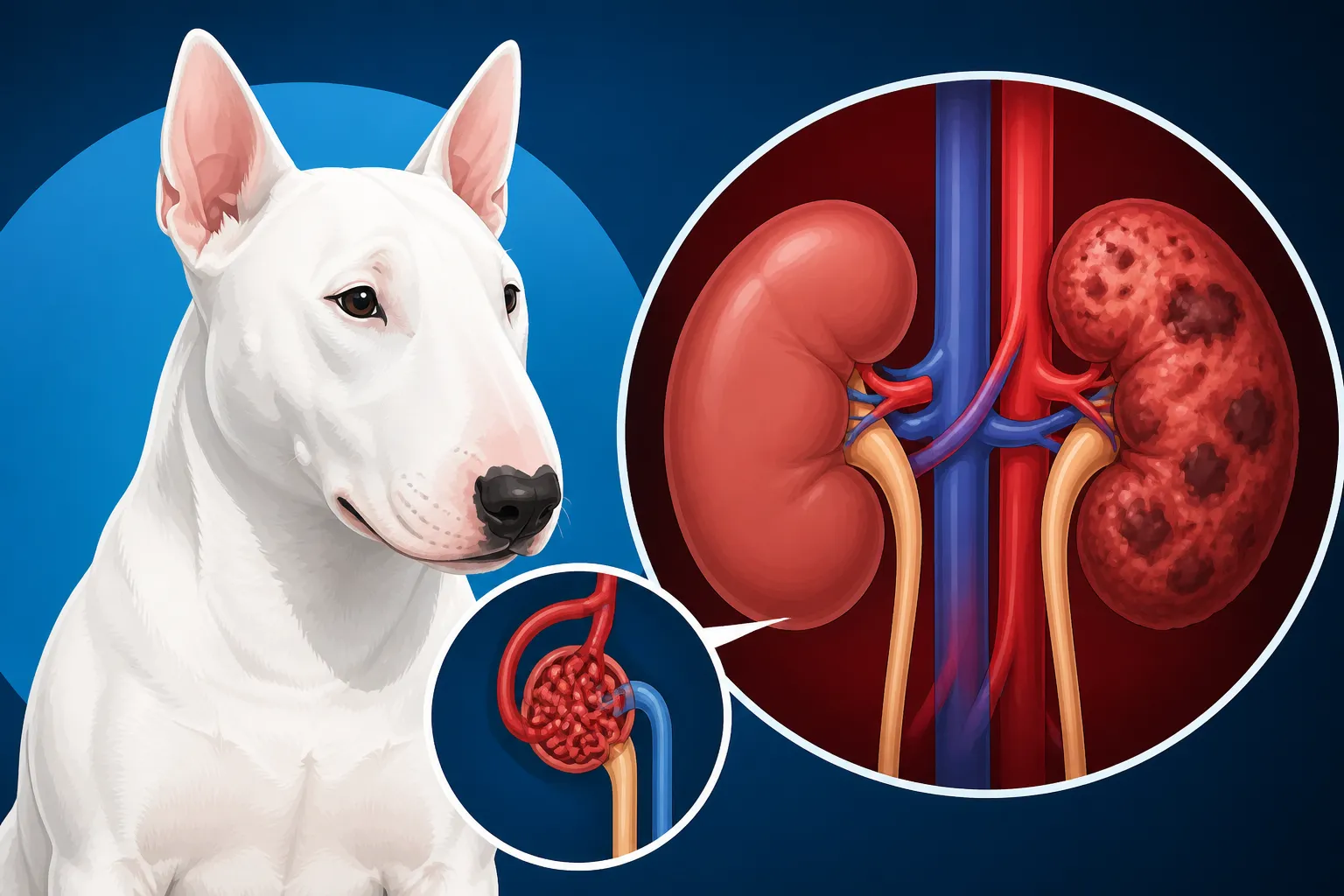
The real tragedy of Hereditary Nephritis unfolds at a microscopic level, deep within the tiny, intricate structures of the kidneys called nephrons. Each kidney contains millions of these nephrons, and each nephron has a glomerulus – a cluster of tiny blood vessels that acts as the primary filter. In a healthy Bull Terrier, these glomeruli are efficient workhorses, meticulously sifting through the blood, removing toxins and excess water to form urine, all while carefully keeping essential proteins, such as albumin, safely within the bloodstream. This is a critical balance, ensuring the body maintains proper fluid levels and nutrient distribution.
With HN, the structural integrity of the glomerular basement membrane (GBM) is fundamentally flawed. Instead of being a robust, tight filter, it's weaker and more permeable. Imagine a fine mesh screen that's meant to catch tiny particles; in a Bull Terrier with HN, some of the strands are loose or broken, allowing larger particles to slip through. The most significant and earliest indicator of this damage is the leakage of protein from the blood into the urine, a condition known as proteinuria. This isn't just a minor issue; protein is vital for countless bodily functions, and its continuous loss is a huge red flag that the kidneys are failing to do their job correctly.
Initially, this protein leakage might be minimal and undetectable without specific diagnostic tests, but as the disease progresses, more and more protein escapes. This constant leakage causes several cascading problems. Firstly, the body is deprived of essential proteins, leading to issues like fluid imbalances (edema), muscle wasting, and a general decline in health. Secondly, the protein itself, as it passes through and is reabsorbed by other parts of the nephron, can cause further inflammation and scarring within the kidney tubules. It's a cruel feedback loop: the initial damage leads to protein leakage, and the protein leakage then exacerbates the damage. This progressive scarring, known as glomerulosclerosis, slowly but surely destroys functional nephrons, replacing them with non-functional scar tissue.
This irreversible scarring means the kidneys lose their ability to filter blood efficiently. Toxins that should be removed begin to build up in the bloodstream, leading to a condition called uremia, which is essentially poisoning of the body by its own waste products. As more and more nephrons become damaged and scarred, the kidneys shrink, harden, and become unable to sustain life. The profound impact this has on a Bull Terrier's daily life is immense. It's truly a devastating cascade that starts with a tiny, invisible flaw and culminates in total renal failure.
The Progressive Impact: From Silent Decline to Renal Failure
The insidious nature of Hereditary Nephritis lies in its slow, relentless progression. For a long time, often months or even years, a Bull Terrier with HN might appear perfectly healthy. There are no outward signs during this early phase, making it incredibly difficult for owners to spot. This is why regular screening, specifically The Yearly Urine Test Every Bull Terrier Owner Should Book, is so critically important. Catching proteinuria early, even if your dog seems fine, can allow for interventions that might slow the disease's progression, even if a cure isn't possible.
As the kidney damage advances, the filtering capacity of the glomeruli diminishes, and more and more protein leaks into the urine. This is often monitored by a test called the Urine Protein-to-Creatinine (UPC) ratio. A rising UPC ratio is a clear indicator that the kidneys are struggling. During this phase, your Bull Terrier might still be asymptomatic, but the internal damage is accelerating. The loss of protein leads to a decrease in albumin in the blood (hypoalbuminemia), which can eventually cause fluid to accumulate in the abdomen (ascites) or in the limbs (edema). It’s a very stark reminder of What Hereditary Nephritis Does to a Bull Terrier at an internal level, long before the obvious symptoms hit.
Eventually, the relentless destruction of nephrons reaches a critical point, leading to chronic kidney disease (CKD) and ultimately, end-stage renal failure. This is when the classic symptoms begin to appear, often seemingly out of nowhere, leaving owners bewildered and heartbroken. These symptoms include:
- Increased thirst and urination (polydipsia and polyuria): The damaged kidneys can no longer concentrate urine, so the dog drinks more to compensate for fluid loss.
- Lethargy and weakness: Buildup of toxins saps their energy.
- Loss of appetite and weight loss: Nausea and general malaise make eating unappealing.
- Vomiting and diarrhea: More signs of toxin buildup affecting the digestive system.
- Pale gums: Anemia can develop as kidneys also produce a hormone vital for red blood cell production.
- Bad breath (uremic breath): A distinctive, unpleasant odor caused by toxins.
Recognizing these Signs a Bull Terrier's Kidneys Are Failing is crucial, though by this stage, a significant portion of kidney function has already been lost. The disease has progressed from silent decline to a full-blown medical crisis. The average age that Hereditary Nephritis begins to show its clinical signs in Bull Terriers can vary, but many dogs unfortunately show severe symptoms in their early to mid-adult years, sometimes as young as two or three, robbing them of their prime years. It's a devastating reality that Hereditary Nephritis Takes Bull Terriers in Their Prime.
Diagnostic Tools for Detecting Kidney Damage
Detecting Hereditary Nephritis early in Bull Terriers is a race against time, as the disease progresses silently for so long. Fortunately, veterinary medicine offers several tools to help owners and vets identify the earliest signs of kidney damage, long before clinical symptoms make an appearance. These tests are essential, especially given the breed's predisposition to this particular condition.
The most basic, yet profoundly important, test is a routine urinalysis. This simple urine test can reveal abnormalities such as low urine specific gravity, indicating the kidneys are losing their ability to concentrate urine, and most critically, the presence of protein. However, a standard dipstick test for protein can sometimes give false positives, or not accurately quantify the amount. This leads us to a more precise test: the Urine Protein-to-Creatinine (UPC) ratio. This test measures the amount of protein relative to creatinine in a urine sample, providing a more accurate and quantitative assessment of protein loss. Regularly checking What a UPC Ratio Tells a Bull Terrier Owner can be a literal lifesaver, flagging early kidney dysfunction.
Beyond urinalysis, blood tests play a vital role in assessing kidney function, particularly as the disease progresses. Key indicators include:
- Blood Urea Nitrogen (BUN): A waste product from protein metabolism. Elevated BUN suggests kidneys aren't clearing waste effectively.
- Creatinine: A waste product from muscle metabolism. Elevated creatinine is another strong indicator of impaired kidney function.
- Phosphorus and Calcium levels: As kidneys fail, they struggle to regulate these minerals, often leading to elevated phosphorus.
- Packed Cell Volume (PCV) / Red Blood Cell Count: To check for anemia, a common complication of chronic kidney disease.
These blood values typically only become significantly elevated once about 75% of kidney function has been lost, which is why relying solely on them means missing the early, critical stages of HN. A renal ultrasound can also be beneficial, allowing the veterinarian to visualize the kidneys, assess their size, shape, and internal architecture. In cases of HN, kidneys may appear smaller and have an abnormal texture due to fibrosis and scarring. While these diagnostic steps don't reveal the specific cause of the kidney damage in every case, they provide compelling evidence of declining kidney health, prompting further investigation and management tailored to the individual Bull Terrier.
| Test Type | What It Measures | Key Indicator for HN | Why It's Important |
|---|---|---|---|
| Urinalysis | Urine concentration, presence of blood, glucose, protein | Proteinuria (protein in urine) | First, early alarm bell; cheap and easy. |
| UPC Ratio | Quantitative protein loss in urine | Elevated protein/creatinine ratio | Most sensitive early detection for kidney damage and progression. |
| Blood Chemistry | BUN, Creatinine, Phosphorus, Calcium | Elevated BUN, Creatinine, Phosphorus | Identifies significant kidney dysfunction, usually when 75% of function is lost. |
| Renal Ultrasound | Kidney size, shape, internal architecture | Small, irregular kidneys with increased echogenicity | Visual confirmation of structural changes like fibrosis and scarring within the kidneys. |
| Genetic Test | Presence of specific HN-causing gene mutation | Positive for FANCG mutation | Confirms the genetic predisposition and aids in breeding decisions. |
Managing the Damage: Supportive Care and Future Outlook
While there is currently no cure for Hereditary Nephritis, the good news is that proactive and supportive care can significantly improve the quality of life and potentially extend the lifespan of an affected Bull Terrier. Early diagnosis, often through routine screening like The Yearly Kidney Screen a Bull Terrier Needs for Life, is the cornerstone of effective management. Once kidney damage is detected, a comprehensive approach focusing on minimizing further stress on the kidneys and managing symptoms becomes paramount.
One of the most critical aspects of managing HN is dietary modification. A specialized renal diet, typically lower in protein, phosphorus, and sodium, is prescribed. The aim isn't to eliminate protein entirely, but to provide high-quality protein in controlled amounts, reducing the workload on the damaged kidneys while still meeting the dog's nutritional needs. These diets also contain controlled phosphorus levels, as high phosphorus contributes to disease progression. Providing Which Diet a Bull Terrier With Kidney Disease Needs can be transformative, helping to reduce the buildup of toxins and slow the rate of decline.
Medications also play a vital role. Angiotensin-converting enzyme (ACE) inhibitors, such as enalapril or benazepril, are commonly used to reduce protein loss through the kidneys and help control blood pressure, which often rises with kidney disease. Other medications may be used to manage specific symptoms, such as anti-nausea drugs, appetite stimulants, or phosphate binders to control elevated phosphorus levels. Fluid therapy, either administered intravenously in a veterinary setting or subcutaneously at home by owners, can help keep dogs hydrated and flush out toxins, especially during more advanced stages of the disease. Managing How a Bull Terrier With Nephritis Is Managed requires a dedicated partnership between you and your vet.
It's important to remember that this is a chronic, progressive condition, meaning regular veterinary check-ups and monitoring of kidney values (UPC, BUN, creatinine, phosphorus) are essential. These ongoing costs can be substantial, and many Bull Terrier owners find themselves facing significant financial decisions. This is where investing in pet insurance, like a comprehensive plan from Healthy Paws, early in your dog's life can provide immense peace of mind. Such policies can help cover the continuous diagnostic tests, specialized diets, and medications required to manage a condition like HN, allowing owners to focus on their dog's care rather than the escalating bills. Understanding What Treating a Bull Terrier's Kidney Disease Costs can help families plan ahead.
The future outlook for a Bull Terrier with Hereditary Nephritis depends heavily on the stage of diagnosis and the consistency of management. While HN remains a terminal illness, early detection and aggressive supportive care can significantly extend the period of good quality of life. Owners of Bull Terriers with HN should work closely with their veterinarian, and often a veterinary internal medicine specialist, to develop a tailored management plan. It's a journey filled with ups and downs, but with dedication and informed care, you can make a meaningful difference for your beloved Bull Terrier. Even Caring for a Bull Terrier Past Eight becomes an even more intricate dance when a condition like HN is in the picture, highlighting the need for vigilance throughout their life.
Disclaimer
The information provided in this article is for general informational purposes only and is not intended as a substitute for professional veterinary advice, diagnosis, or treatment. Always seek the advice of your veterinarian or other qualified animal health provider with any questions you may have regarding a medical condition.