Why an Acrodermatitis Bull Terrier Puppy Stops Growing
It's absolutely heartbreaking when you bring home a bouncy, energetic Bull Terrier puppy, full of promise, only to watch it inexplicably falter and stop growing. That initial joy quickly turns to crushing worry as you see your little one falling behind its littermates, failing to thrive, and becoming a shadow of what a healthy Bull Terrier puppy should be. This guide is here to shed light on one of the most devastating reasons this can happen: Acrodermatitis (AD), a rare but lethal genetic condition that directly impacts a puppy's ability to develop.
Understanding Acrodermatitis in Bull Terriers
Acrodermatitis, often referred to as Lethal Acrodermatitis, is a profoundly serious, inherited immunodeficiency disorder specific to Bull Terriers. It's a condition that carries a heavy emotional and financial toll, not just for the affected puppy but for the families who love them. When you hear "immunodeficiency," it immediately signals that something is gravely wrong with the body's defense system, making the puppy incredibly vulnerable.
This isn't just a minor health hiccup; it's a systemic failure. Puppies with AD are born with a genetic mutation that severely impairs their body's ability to absorb and utilize zinc properly, regardless of how much zinc is present in their diet. Zinc is an essential trace mineral involved in hundreds of enzymatic reactions throughout the body, crucial for everything from immune function and skin health to growth and development. Without it, the body simply cannot function as it should. It's truly one of the most devastating conditions a Bull Terrier can inherit, leading to an incredibly short and difficult life. You can learn more about how severe this condition is in our article, What Lethal Acrodermatitis Does to a Bull Terrier.
The Genetic Basis of Growth Stunting
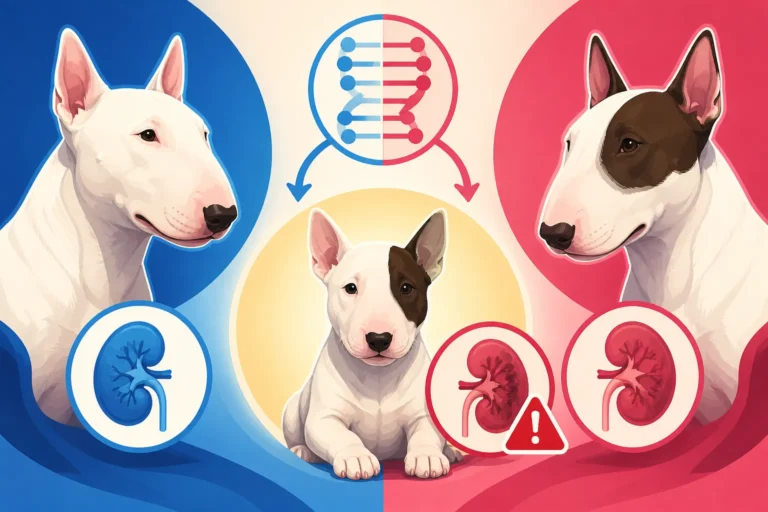
The root cause of an Acrodermatitis Bull Terrier puppy stopping its growth lies deep within its genetic code. This condition is caused by a specific recessive gene mutation. What this means in practical terms is that a puppy must inherit two copies of the faulty gene – one from each parent – to be affected. If a puppy only inherits one copy, it becomes a carrier, perfectly healthy itself, but capable of passing the gene on. This is why responsible breeding practices are so vital, with genetic testing playing a crucial role in preventing such tragic outcomes.
The specific gene responsible, as detailed in our guide, Which Gene Causes Acrodermatitis in Bull Terriers, is critical for normal cellular processes, including those that regulate zinc absorption and metabolism. When this gene is defective, the puppy's body essentially starves of zinc at a cellular level, no matter how balanced their diet might be. This internal starvation directly impacts rapidly growing tissues and organs, leading to a cascade of problems that include, prominently, a failure to grow at the expected rate. It's a cruel twist of fate that leaves owners feeling helpless.
The Critical Role of Zinc in Puppy Development
Zinc might seem like a small detail, just one of many minerals, but for a developing puppy, especially a rapidly growing breed like a Bull Terrier, its importance cannot be overstated. It's a powerhouse mineral, essential for cell division, protein synthesis, and enzyme function – all fundamental processes driving growth and development. Imagine building a house without a crucial fastener; even if you have all the other materials, the structure won't hold together properly. That's essentially what happens with an AD puppy and zinc.
A normal Bull Terrier puppy, with access to a balanced diet, efficiently absorbs zinc from its food, which then goes to work supporting its immune system, maintaining healthy skin and coat, and ensuring proper skeletal and muscular development. For puppies with Acrodermatitis, this entire pathway is broken. The zinc is there, perhaps even in abundance, but the body can't recognize it or utilize it effectively. This fundamental biological breakdown is the primary reason these puppies fail to grow, and it underscores the systemic nature of this devastating disease.
Why an AD Puppy Cannot Absorb Zinc
It's a common, heartbreaking misconception that if a puppy with Acrodermatitis is simply given more zinc, it will get better and start growing. Owners naturally assume that if zinc is the problem, zinc is the solution. Unfortunately, this isn't the case. The issue isn't a lack of dietary zinc, but an inherent cellular defect that prevents the body from recognizing and incorporating it into vital metabolic processes. Even if you try to supplement, the mechanism for absorption is faulty. As we discuss in depth in Why an Acrodermatitis Bull Terrier Cannot Absorb Zinc, the specific gene mutation impacts the zinc transporters within the intestinal cells and other body tissues.
These transporters are like tiny gatekeepers; in AD puppies, the gates are either broken or simply don't open, leaving the zinc outside where it can't do its job. This leads to a severe, functional zinc deficiency at a cellular level, even if blood tests show adequate zinc levels circulating. The body simply can't access it where it's needed most for growth, immune function, and skin integrity. This is why an AD puppy stops growing – its cells lack the fundamental building blocks they need, regardless of external supply.
| Symptom Category | Healthy Bull Terrier Puppy | Acrodermatitis Bull Terrier Puppy |
|---|---|---|
| Growth & Weight | Consistent weight gain, increasing height and length, reaches milestones. | Stunted growth, failure to gain weight, appears smaller than littermates. |
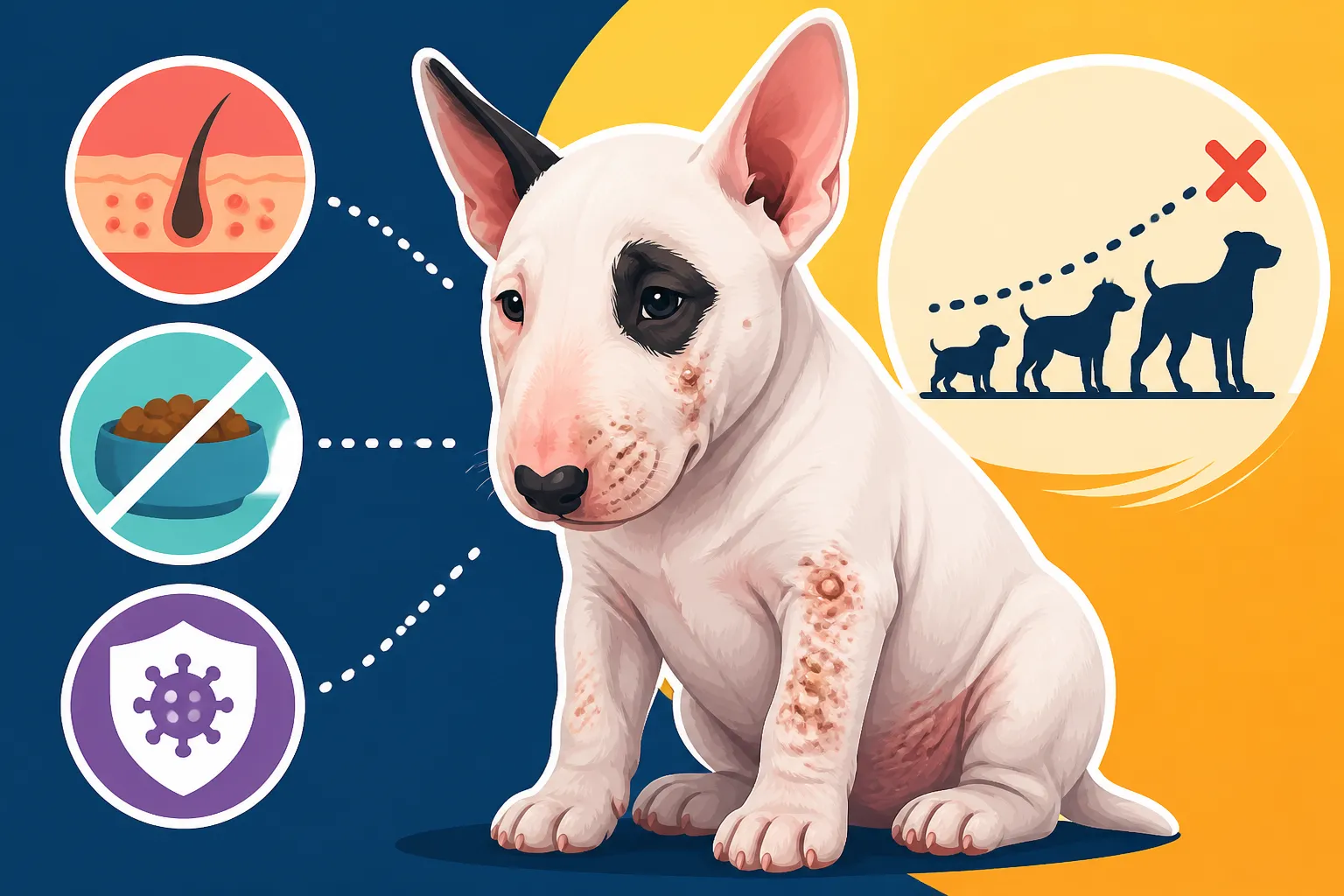
| Skin & Coat | Smooth, clear skin; shiny, healthy coat. | Thickening, crusting, and cracking of skin, especially on paws, nose, and around eyes. Dull, sparse coat. |
| Immune System | Robust, fights off common infections. | Highly susceptible to infections (bacterial, fungal, viral), persistent illnesses. |
| Appetite | Eager eater, finishes meals readily. | Poor appetite, difficulty eating, picky. |
| Energy & Play | Energetic, playful, curious. | Lethargic, depressed, less interested in play. |
| Paws & Digits | Soft pads, normal nail growth. | Swollen, sore, crusty pads; abnormal nail growth. |
| Oral Cavity | Normal mouth structure. | May have an arched palate, dental abnormalities. |
Broader Health Impacts Beyond Growth Stunting
The failure to grow is undoubtedly one of the most noticeable and distressing symptoms of Acrodermatitis, but it's far from the only challenge these puppies face. The systemic nature of zinc deficiency means that virtually every organ system is compromised. It’s a full-body struggle for survival that touches every aspect of the puppy’s health, painting a grim picture for their future.
Immune System Collapse and Persistent Infections
One of the most devastating consequences of Acrodermatitis, alongside growth stunting, is the catastrophic impact on the puppy's immune system. Zinc is absolutely crucial for the proper functioning and development of immune cells. Without it, the immune system effectively collapses, leaving the puppy utterly defenseless against even the most common pathogens. This isn't just a weakened immune system; it's one that can barely mount a response.
This severe immunodeficiency leads to a life riddled with persistent and recurrent infections. These puppies often suffer from skin infections, respiratory issues, and gastrointestinal problems that simply won't clear up, despite aggressive veterinary intervention. Every sniffle can turn into pneumonia, every tiny wound into a raging infection. It's a constant battle, making their short lives incredibly uncomfortable and reinforcing why an Acrodermatitis Bull Terrier puppy catches every infection it encounters.
Characteristic Skin Lesions and Other Physical Manifestations
Beyond the internal struggles, Acrodermatitis also manifests itself with striking and painful external symptoms, particularly affecting the skin. These puppies develop distinctive skin lesions that often start around the eyes, muzzle, ears, and, most notably, on their paws. The skin becomes thickened, red, crusty, and prone to cracking, which is incredibly painful and leads to secondary bacterial and fungal infections. You might notice their paws looking particularly awful, as described in What an Acrodermatitis Bull Terrier's Paws Look Like.
Their coats often appear dull and sparse, and some puppies can develop an arched palate or other dental abnormalities. These physical signs, coupled with the noticeable lack of growth, often serve as crucial diagnostic clues for veterinarians. These external symptoms are a constant reminder of the internal battle raging within the puppy, further contributing to their overall misery and making their quality of life incredibly poor.
Managing and Coping with an Acrodermatitis Diagnosis
Receiving an Acrodermatitis diagnosis for your Bull Terrier puppy is a profoundly devastating moment. There's no sugarcoating it: this is a terminal condition, and current treatments are palliative at best, focusing on managing symptoms rather than curing the underlying genetic defect. The best thing you can do as an owner is to equip yourself with knowledge and prepare for the difficult road ahead, leaning on your veterinary team for support.
Diagnostic Confirmation and Prognosis
The first step after suspecting AD is to get a definitive diagnosis. This typically involves a physical examination, assessing the characteristic clinical signs like stunted growth, skin lesions, and recurrent infections. A veterinarian will likely perform a skin biopsy, which can show specific changes consistent with AD. However, the most definitive test is a genetic DNA test, usually performed via a cheek swab. This test, which became available around When the Bull Terrier Acrodermatitis DNA Test Arrived, can confirm the presence of two copies of the defective gene.
Once diagnosed, the prognosis is unfortunately very grim. Puppies rarely survive beyond two years of age, and many succumb much earlier, often within their first year, due to overwhelming infections or failure to thrive. It’s a heartbreaking reality, and as much as we wish for a different outcome, understanding the likely course of the disease, as outlined in How Long an Acrodermatitis Bull Terrier Puppy Survives, allows you to focus on providing the best possible quality of life for the time they have.
Supportive Care and Quality of Life
Given the terminal nature of Acrodermatitis, the focus shifts entirely to supportive care aimed at maximizing comfort and mitigating suffering. This means working closely with your veterinarian to manage secondary infections with antibiotics or antifungals, using topical skin treatments to soothe painful lesions, and providing nutritional support to encourage whatever growth is possible, even if it's minimal. Special attention will be paid to hydration and ensuring the puppy is as comfortable as possible.
While there’s no cure, ensuring your puppy feels loved, warm, and as pain-free as possible is paramount. This might involve frequent veterinary visits, dedicated at-home care, and making difficult decisions about their quality of life as the disease progresses. In such challenging times, the financial burden can be immense. While Acrodermatitis itself might be considered a pre-existing or congenital condition by many insurers if not diagnosed very early, having pet insurance like Healthy Paws for future, unrelated issues can be a lifeline for other health challenges your Bull Terrier might face. It’s a harsh lesson that makes you realize how quickly veterinary bills can skyrocket, and why thinking ahead, even for a healthy puppy, is so important.
Breeder Responsibility and Genetic Testing
This devastating condition highlights the critical importance of responsible breeding practices. Since Acrodermatitis is an inherited disease, ethical Bull Terrier breeders should absolutely be screening their breeding stock for the AD gene. This involves DNA testing both potential parents to ensure that two carriers are never bred together. If both parents are carriers, there's a 25% chance with each litter that a puppy will be born affected with AD.
Asking a breeder about their health testing protocols, especially regarding Acrodermatitis, is not just a good idea – it's essential. A reputable breeder will be transparent about their testing results and will provide documentation. They understand that preventing such suffering is their moral obligation. For new puppy owners, choosing a breeder who prioritizes genetic health testing, including for AD, is the single most important step you can take to avoid this tragic situation. Always look for breeders who go the extra mile to ensure the health and well-being of their puppies and the future of the breed.
Disclaimer
This article is intended for informational purposes only and does not constitute veterinary advice. Always consult with a qualified veterinarian for any health concerns or before making any decisions about your pet's health or treatment.