What a Bull Terrier’s Downface Is
One of the first things that strikes people about a Bull Terrier is its truly unmistakable head. That smooth, continuous curve from the top of the skull right down to the tip of its nose can look quite unlike any other dog you've ever seen, and it's something that often sparks curiosity, sometimes confusion, and occasionally even concern for those unfamiliar with the breed. This guide is all about demystifying that iconic profile, known as the "downface," exploring what it is, where it came from, and what it truly means for your beloved Bull Terrier.
Unpacking the Bull Terrier's Distinctive Downface
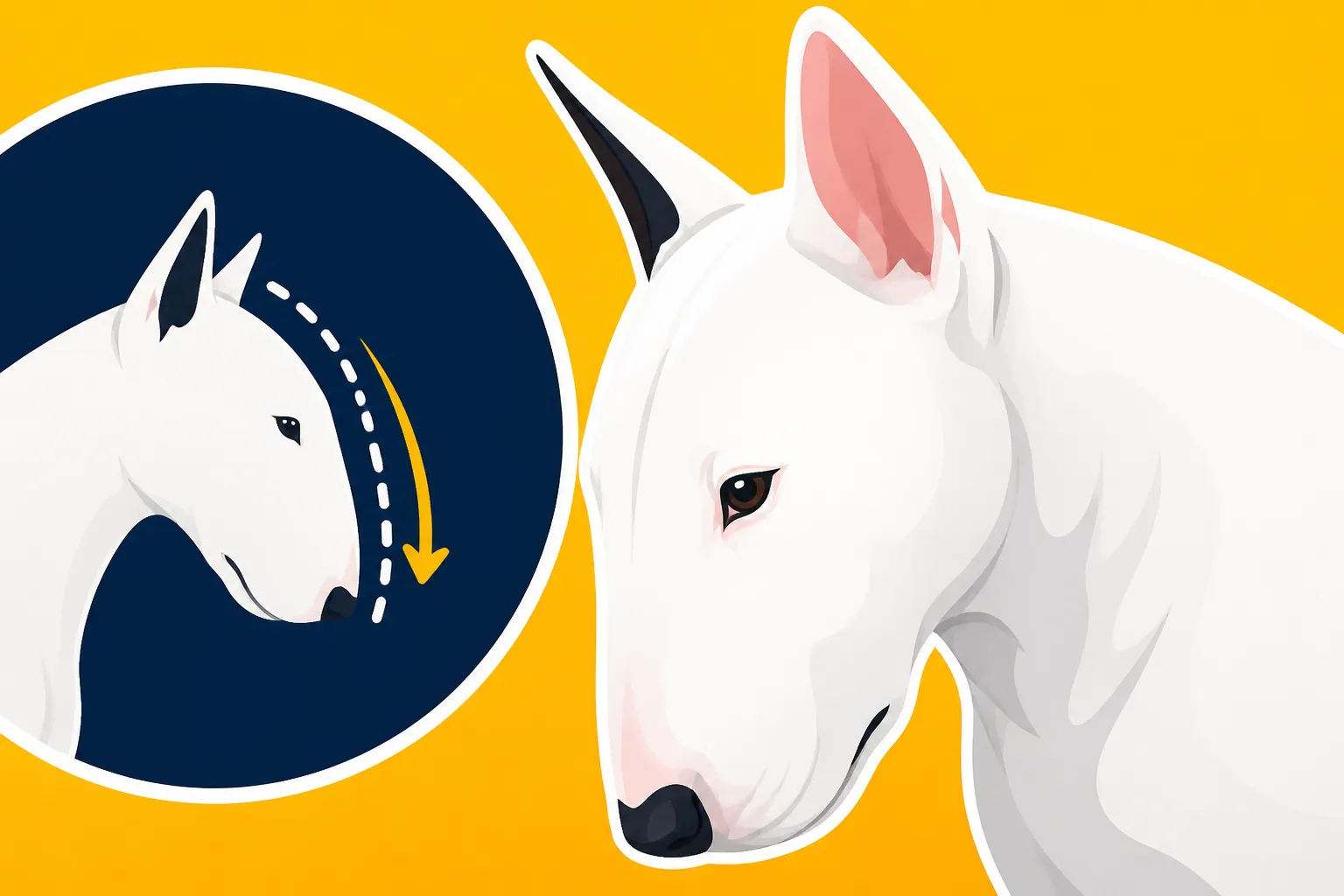
The "downface" is more than just a cute nickname; it's a fundamental characteristic of the Bull Terrier breed standard, giving them their truly unique appearance. If you've ever seen a Bull Terrier, you know exactly what I'm talking about – that elegant, unbroken curve that sweeps from the top of their head, over their forehead, and down to the end of their nose. It's truly a sight to behold and one of the hallmarks that makes a Bull Terrier, well, a Bull Terrier.
Defining the Roman Finish
When breeders and enthusiasts talk about the downface, they often use terms like "Roman finish" or "arch." Imagine a perfect, uninterrupted arc. That's the ideal. The topline of the skull should be almost flat between the ears, then gently curve downwards, without any abrupt changes, right to the nose. This isn't just a slight slope; it’s a pronounced, yet smooth, downward curve that defines the breed's profile. It’s a work of art, really, and takes generations of careful breeding to achieve and maintain. It's one of the features that make them so instantly recognizable in a crowd. What a Roman Finish Means on a Bull Terrier delves deeper into the aesthetic.
This continuous sweep is what gives the Bull Terrier's head its powerful, yet refined, appearance. It’s not meant to look weak or snipey; rather, it should convey immense strength and substance. When you look at a well-bred Bull Terrier, that Roman finish should almost feel like a natural extension of its sturdy, muscular body. It adds to their overall powerful and formidable, yet still graceful, presence.
The Lack of a Stop: A Key Feature
Part and parcel of the downface is the complete absence of a "stop." In most dog breeds, the stop is that indentation or angle where the forehead meets the muzzle. Think of a Labrador, a German Shepherd, or even a Chihuahua – they all have a distinct stop. But not our Bull Terriers! Their profile is smooth and unbroken. Why a Bull Terrier Has No Stop explains this more fully.
This lack of a stop is crucial for achieving that characteristic downface. Any interruption in that smooth curve would detract from the ideal. It means that their forehead flows seamlessly into their nose bridge, creating that singular, egg-shaped profile that is so central to their identity. It’s not just a missing feature; it’s an intentional and defining characteristic that contributes heavily to their distinctive look.
The Unique Egg-Shaped Skull
Beyond the downface itself, the entire skull of a Bull Terrier is distinctively egg-shaped when viewed from the front. It's broad and full, tapering gently from the ears towards the nose, with no hollows or indentations. This fullness is vital; a narrow or weak skull would undermine the entire "egg" aesthetic. It’s a robust and strong head, designed to give them that powerful bite and formidable presence.
This egg shape, combined with the downface, creates a truly striking and memorable silhouette. It's a testament to the dedication of breeders who have worked for generations to refine these unique physical traits. When you're looking at a Bull Terrier, the egg head and the downface are intertwined – you can’t really have one without the other contributing to that overall "Bullie" look. When the Bull Terrier's Egg Head Appeared dives into the history of this unique feature.
The Historical Journey to the Downface
The Bull Terrier's journey to its distinctive downface is a fascinating tale, deeply rooted in the breed's origins and the specific vision of its early developers. This isn't a feature that appeared overnight; it's the result of deliberate breeding choices and a strong drive to create a truly unique and aesthetically pleasing companion dog.
James Hinks' Vision for the White Cavalier
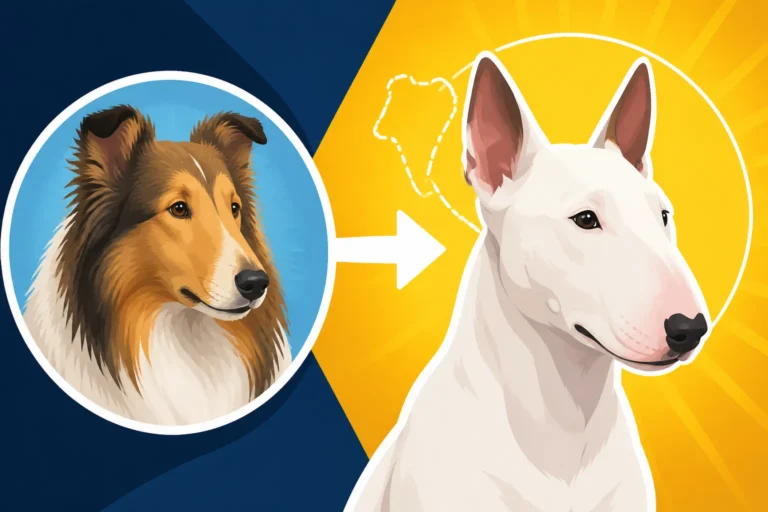
The story of the Bull Terrier's appearance, including its head, largely begins with James Hinks in 19th-century Birmingham, England. Hinks set out to create a truly elegant and aesthetically pleasing dog from the rough-and-tumble "bull and terrier" types of the era. These earlier dogs, while courageous and robust, lacked uniformity in appearance. Who James Hinks Was and Where the Bull Terrier Comes From offer more insight into his groundbreaking work.
Hinks' initial focus was on creating an all-white dog, known affectionately as the "White Cavalier." He aimed for a dog with strength and courage, but also one with beauty and refinement, a true gentleman's companion. The head was a crucial part of this vision. He wanted a clean, symmetrical head, free from the coarse features often seen in the earlier bulldog crosses. This quest for refinement was the first step towards the modern downface, pushing away from the blunt, boxy heads of their ancestors towards something sleeker and more aristocratic.
Evolution from the Early Bull and Terrier
The early "bull and terrier" crosses, from which the Bull Terrier emerged, often had broader skulls, more defined stops, and less uniform profiles. These dogs were bred for specific tasks, often involving grit and determination, and aesthetic uniformity wasn't their primary breeding goal. As Hinks and later breeders started to refine the type, they began to select for dogs with longer, cleaner head planes. This was a gradual process, not a sudden change.
Over time, through selective breeding, the stop became less pronounced, and the forehead began to slope more smoothly. This wasn't about introducing entirely new genetic material for the downface but rather emphasizing and enhancing existing traits in the gene pool through careful pairing. Breeders were looking for dogs that exhibited that nascent curve, and they bred them together, slowly but surely shaping the iconic profile we recognize today.
Shifting Ideals in Breed Type
The development of the downface wasn't merely a random mutation; it was a conscious and evolving ideal within the breed. Early Bull Terriers still had a more discernible stop than their modern descendants. However, as the breed gained popularity and formal breed standards began to take shape, the smooth, continuous curve became a highly prized trait. Breeders meticulously selected individuals that exhibited this characteristic to the greatest degree, slowly pushing the breed's appearance towards the desired "Roman finish."
It became a signature look, setting the Bull Terrier apart from other terrier breeds and giving it an undeniable presence in the show ring and as a companion. The quest for this unique head shape became an intrinsic part of the Bull Terrier's identity, a testament to the dedication of those who envisioned and crafted this remarkable breed. How the Bull Terrier's Head Changed Over Time provides a detailed look at this evolution.
Why the Downface Matters: Understanding the Breed Standard
For anyone involved in the Bull Terrier world, especially breeders and judges, the downface isn't just a quirky feature; it's a cornerstone of the breed standard. It dictates much of what constitutes a "good" Bull Terrier head and is a key indicator of correct type. Understanding its importance goes beyond mere aesthetics; it speaks to the breed's historical development and its unique place in the canine world.
The Importance of a "Well-Filled" Head
The breed standard emphasizes a head that is "long, strong, and deep right to the end of the muzzle, but not coarse." Crucially, it must be "filled up." This "filling" refers to the substance and breadth of the skull, particularly around the eyes and under the jaw. A truly excellent downface isn't just a curve; it's a curve on a full, powerful foundation. A head that lacks this "fill" can appear weak or snipey, which is a major deviation from the ideal. How a Bull Terrier's Skull Is Filled Out delves into what makes a truly well-formed head.
This fullness ensures that the Bull Terrier’s powerful jaws have ample room and musculature, contributing to their formidable bite. It's a balance of elegance and strength. Without that well-filled quality, the downface can lose its impact and appear somewhat delicate, which goes against the fundamental structure and history of the breed. It’s about creating a harmonious, powerful, and distinctive headpiece.
Assessing Balance and Proportionality
While the downface is a defining characteristic, it must exist in perfect balance and proportion with the rest of the dog. A head that is too long or too short for the body, or a downface that is too exaggerated or too subtle, can throw off the entire outline of the Bull Terrier. The smooth, continuous curve should flow elegantly, never looking distorted or creating an impression of having been "pushed in."
Judges at dog shows carefully assess this balance. They're looking for that ideal, unbroken curve, but they're also ensuring that it contributes to the overall robust and balanced appearance of the dog. It's a difficult thing to achieve, which is why a truly exceptional Bull Terrier head is so highly prized. It's not just about a single feature, but how that feature integrates into the magnificent whole.
Triangular Eyes: A Complementary Trait
Another critical feature that works in tandem with the downface and egg-shaped skull is the Bull Terrier’s unique, small, triangular eyes. Set obliquely and deeply, these eyes are one of the most expressive features of the breed, despite their unusual shape. They should be dark and convey a keen, intelligent expression. Why a Bull Terrier's Eye Is Triangular explores the distinctiveness of this trait.
The placement and shape of these eyes are crucial for maintaining the smooth, unbroken curve of the downface. Eyes that are too large, too round, or set incorrectly would interrupt that seamless flow. They are integral to the Bull Terrier's characteristic "look" – a mischievous yet intelligent gaze that peeks out from beneath that powerful, curving skull. Without these specific eye traits, the downface would simply not have the same impactful presentation.
Here's a quick comparison of key Bull Terrier head features:
| Feature | Description | Ideal Appearance | Common Deviations |
|---|---|---|---|
| Downface | Smooth, continuous, downward curve from skull to nose. | Unbroken, elegant arc ("Roman finish"). | Indentation (stop), abrupt angle, snipey muzzle. |
| Stop | The indentation where forehead meets muzzle. | Completely absent. | Any discernible stop. |
| Skull Shape | Egg-shaped when viewed from front, broad and full. | Well-filled between and over the eyes, tapering smoothly. | Narrow, pinched, or hollow areas around eyes/cheeks. |
| Eyes | Small, dark, triangular, deeply set, and placed obliquely. | Keen, intelligent expression, enhancing the downface. | Round, large, light-colored, bulging, or incorrectly set eyes. |
| Jaw | Long, deep, and strong. | Powerful, strong underjaw. | Weak underjaw, lacking substance. |
Living with the Downface: Practical Considerations for Owners
While the downface is undeniably striking, it does bring with it a few practical considerations for Bull Terrier owners. These aren't necessarily problems, but rather unique aspects of caring for a breed with such a distinctive head structure. Understanding these can help you better cater to your Bull Terrier's needs and ensure their comfort and well-being.
Visual Field and Perception Challenges
Because of the deep-set, triangular eyes and the broad, curving skull, a Bull Terrier's field of vision can be a little different from that of a dog with a flatter face or more forward-set eyes. They might have a slightly reduced peripheral vision directly in front of their nose or at certain angles. This isn't a significant impairment, but it's something to be aware of.
For instance, when playing or interacting, your Bull Terrier might not always see a treat or a toy if it's placed directly under their nose without some verbal guidance. You might find yourself placing things a little to the side, or making sure they see the item approach from a wider angle. It’s rarely a serious issue, but simply a quirk of their unique head shape that means a little extra awareness on your part during interactions. This contributes to why their play style can sometimes seem a bit clumsy or full-on – they might not always have the full visual context of their surroundings, leading to those famous "Bullie bumps."
Grooming and Skin Care Around the Face
The smooth, tight skin that covers the Bull Terrier's downface is generally quite easy to care for, but it does require attention. Because of the deep-set eyes, sometimes debris or discharge can accumulate in the corners. A gentle wipe with a damp cloth can keep this area clean. While the downface itself doesn't typically create folds that trap moisture, the overall skin health of a Bull Terrier is paramount. A Bull Terrier's Skin Is Its Weakest Point is a good read for more on this.
You’ll want to pay particular attention to their nose area, which can be prone to dryness or sunburn, especially in white Bull Terriers. A little dog-safe balm might be necessary in dry climates. Regular, gentle checks of their facial skin are just part of your routine. You can find excellent grooming wipes and balms for pets on sites like Chewy that can make these small tasks easier and more effective.
Feeding and Water Bowl Choices
The unique head shape can influence how your Bull Terrier eats and drinks. Their deep muzzle and strong jaws mean they can be quite enthusiastic eaters, often "inhaling" their food. While the downface doesn't typically cause eating difficulties, some owners find that certain bowl shapes are more comfortable or efficient for their Bull Terrier.
Wide, shallow bowls can be a good choice for water to prevent their muzzle from getting too wet and potentially irritating the skin, though many Bull Terriers just dive right in! For food, some owners opt for slow-feeder bowls to prevent rapid consumption, which can be beneficial for digestion. When shopping for bowls, consider designs that accommodate their powerful bite and deep muzzle. You can explore a wide variety of feeding solutions, from elevated feeders to interactive puzzle bowls, on online retailers like Chewy, ensuring your Bull Terrier eats comfortably.
Beyond Aesthetics: Debunking Myths and Health Concerns
When a breed has such a distinctive physical trait like the Bull Terrier's downface, it's natural for questions and sometimes misconceptions to arise about its impact on health and function. It's important to separate fact from fiction and understand that, for the vast majority of well-bred Bull Terriers, the downface is a functional and healthy characteristic. Whether the Egg Head Causes a Bull Terrier Any Problem covers some concerns.
Does the Downface Cause Breathing Issues?
One common concern for breeds with unique facial structures is breathing difficulties. Fortunately, for the Bull Terrier, the downface, while distinctive, does not generally lead to the respiratory issues seen in brachycephalic (short-nosed) breeds like Bulldogs or Pugs. The Bull Terrier's muzzle is still long and deep enough to allow for clear airways and efficient breathing.
The breed standard explicitly calls for a "long" muzzle, ensuring adequate space for nasal passages. A well-bred Bull Terrier should breathe freely, without snorting, snoring excessively (beyond typical dog snores), or showing signs of respiratory distress. If your Bull Terrier does exhibit persistent breathing problems, it's more likely due to other underlying health issues, rather than the downface itself. Always consult your veterinarian if you have concerns about your dog's breathing.
Impact on Bite and Dental Health
The Bull Terrier is known for its incredibly powerful jaws and a scissor bite, where the upper teeth closely overlap the lower teeth. The downface and the fullness of the skull are actually designed to support this strong jaw structure. A correctly formed downface allows for proper tooth alignment and a powerful, functional bite. How a Bull Terrier's Jaw Is So Powerful highlights this.
However, like all dogs, Bull Terriers can still be prone to dental issues if not properly cared for. The unique shape of their head doesn't inherently cause dental problems, but owners still need to be diligent about oral hygiene. Regular brushing, dental chews, and professional cleanings are all crucial for keeping those powerful teeth healthy. Neglecting dental care can lead to problems regardless of head shape. Whether a Bull Terrier Needs Its Teeth Brushed explains why it's so important. Many specialized dental chews and oral health products can be found on Chewy.
Is the Egg Head a Problem?
The "egg head" is really just another way of describing the overall shape of the Bull Terrier's skull, including the downface. As discussed, a well-bred egg head, with its characteristic fullness and smooth curve, is a healthy and functional structure for the Bull Terrier. It's robust, provides ample brain space, and supports their powerful musculature.
Problems usually arise only when the head is poorly bred, meaning it might be too narrow, lack the necessary "fill," or have an overly exaggerated curve that compromises other features. These issues are deviations from the ideal and can sometimes be linked to other structural problems in the dog. However, a properly proportioned and well-developed egg head is a hallmark of the breed's health and vitality, not a cause for concern. It’s part of what makes What a Bull Terrier's Temperament Is Really Like so unique – that expressive face beneath that iconic skull.
Disclaimer
This article is for general informational purposes only and does not constitute professional advice. Laws, prices and regulations vary by location and change over time. Consult a qualified professional for guidance on your specific situation.