Whether a Collie Gave the Bull Terrier Its Head
The Bull Terrier's head is truly one of a kind, instantly recognizable with its distinctive egg shape and "down-face." It's a feature that sparks a lot of curiosity, and many wonder about the historical influences that shaped such a unique profile. This guide will dive deep into the fascinating lineage of the Bull Terrier, specifically addressing the idea that the Collie played a role in its head development and revealing the true origins of this breed's iconic look.
The Iconic Bull Terrier Head: A Study in Uniqueness
Let's be honest, there's no mistaking a Bull Terrier's head. It's the crown jewel of the breed, a marvel of canine architecture that sets it apart from every other dog. We're talking about that smooth, unbroken curve from the top of the skull right down to the tip of the nose, often referred to as a "Roman finish" or "down-face." There's no abrupt stop, no sudden dip where the forehead meets the muzzle, which is typical in most other breeds. This singular feature is a hallmark of the Bull Terrier.
Compounding this distinctiveness are the eyes – small, dark, and triangular, set obliquely and imparting a mischievous yet intelligent expression. They really do complete the unique puzzle of the Bull Terrier's face. Unlike many breeds where a prominent stop is desirable, the Bull Terrier's standard calls for its complete absence, contributing to that incredible, flowing silhouette. This distinctive head shape wasn't an accident; it was the result of deliberate and often intense selective breeding over many generations, a true testament to the vision of its early developers. If you've ever wondered about the details, you might be interested in Where the Bull Terrier's Egg Shaped Head Came From.
Unraveling the Myth: Did the Collie Influence the Bull Terrier's Head?
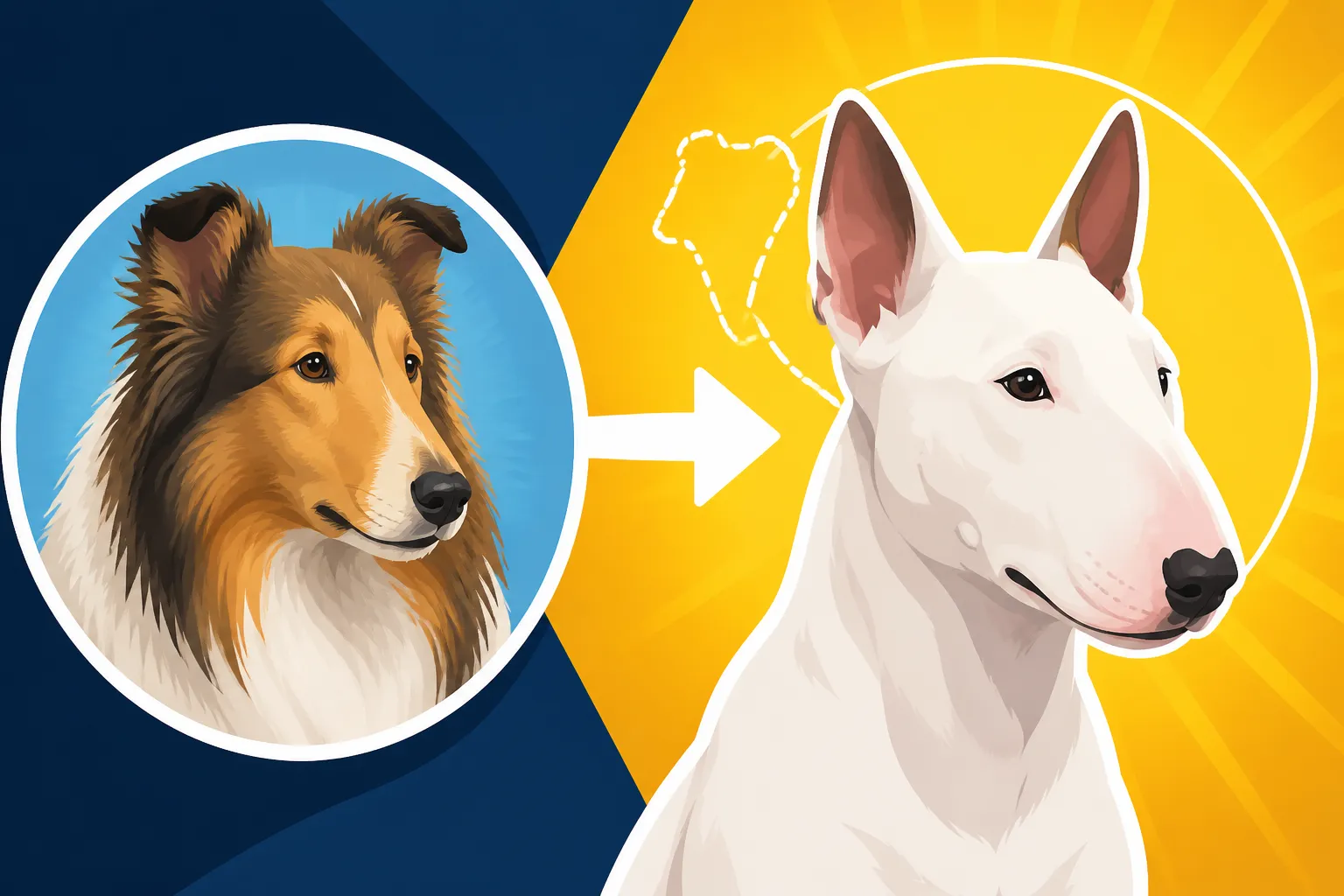
It's natural to speculate about the origins of such a specific trait, and sometimes, popular theories emerge that aren't quite accurate. The idea that a Collie, or a similar herding breed, contributed to the Bull Terrier's head shape is one such interesting myth. On the surface, you might think, "Well, Collies have rather refined, often long muzzles, perhaps there's a connection there?" However, historically speaking, there's little to no evidence to support the inclusion of Collie bloodlines in the development of the Bull Terrier's head. The desired characteristics and breeding goals were quite different.
The early Bull Terrier breeders were not looking for the delicate, elegant lines typically associated with a Collie's head. Their focus was on strength, symmetry, and that distinctive Roman nose, which was developed from a very different genetic pool. While both breeds are known for their intelligence and distinctive profiles, the type of head desired for each was almost diametrically opposed. Collies were bred for their herding prowess, demanding keen senses and a specific cranial structure that accommodated their working needs. The Bull Terrier, on the other hand, was being refined for companion and show purposes, with an aesthetic that emphasized power and sculptural form. It's a common misconception that often arises when comparing breeds with somewhat refined muzzles, but the actual lineage tells a different story entirely. Modern Bull Terrier enthusiasts often spend hours on sites like Chewy, researching everything from breed history to the best toys for their strong-jawed companions, often encountering these historical puzzles along the way.
The True Architects of the Bull Terrier's Head Shape
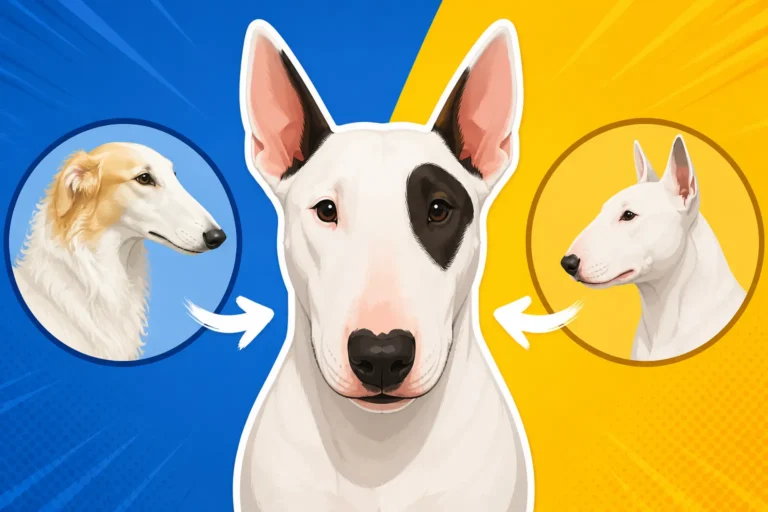
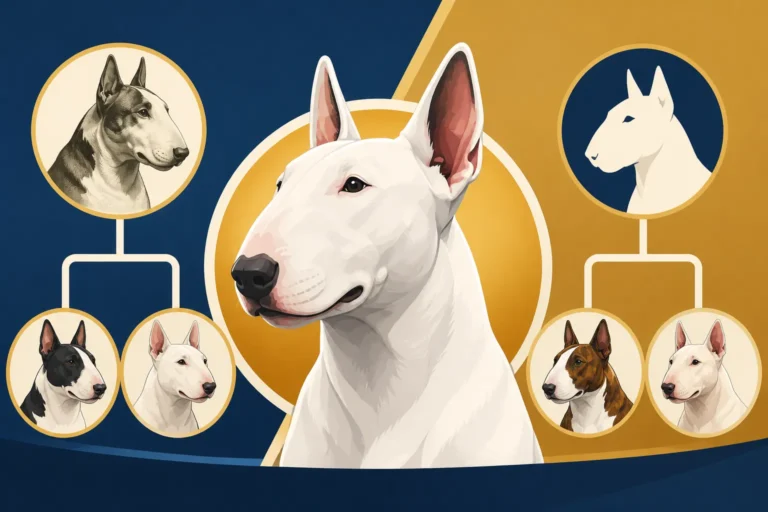
The real story of the Bull Terrier's head begins not with Collies, but with a visionary breeder named James Hinks in 19th-century Birmingham, England. Hinks's goal was to create a "White Cavalier" – a powerful, yet elegant, all-white dog that combined the strength of the Old English Bulldog with the agility and refinement of the now-extinct English White Terrier. The foundation breeds he chose were instrumental in laying the groundwork for the Bull Terrier we know today.
The Old English Bulldog contributed significant bulk, jaw strength, and that powerful, sturdy build. While its head was broader and less refined than what Hinks ultimately achieved, it provided the genetic basis for robustness. Then came the English White Terrier, a much more elegant, somewhat smaller, and more refined terrier type, which brought in the desired white coat and a more elongated skull compared to the bulldog. Which Breeds Went Into the Bull Terrier delves deeper into these foundational elements. Hinks was aiming for a dog that looked tough but possessed a good temperament, a companion for gentlemen rather than just a fighting dog. It was through careful, calculated crosses between these two types, and subsequent generations of selective breeding, that the distinctive head began to emerge. The process was less about introducing a completely different head type, and more about exaggerating certain traits and refining others within the existing lineage. You can learn more about Who James Hinks Was and his impact on the breed.
The subsequent breeders who followed Hinks's lead continued to select for that smooth, down-faced profile. They gradually eliminated the "stop" – the indentation between the eyes – and emphasized the egg shape, filling out the skull and creating that remarkable curve. This wasn't a quick process; it took decades of dedicated effort. These breeders were focused on a very specific aesthetic goal, meticulously choosing dogs that displayed even the slightest hints of the desired head shape and breeding them together to consolidate the trait.
How Selective Breeding Shaped the Bull Terrier's Distinctive Profile
The unique "egg-shaped" or "down-face" of the Bull Terrier's head wasn't an accidental occurrence or the result of a diverse crossbreed like a Collie. Instead, it was a deliberate and painstaking artistic endeavor by breeders. Imagine generations of breeders, each with a clear vision, selecting only those puppies that exhibited a slightly more rounded skull, a smoother transition from forehead to nose, and less of a "stop" in their profile. This is the essence of selective breeding.
In the early stages, after James Hinks had established the initial white Bull Terrier type, breeders actively sought out dogs with even a subtle hint of that desired continuous curve. They would breed these dogs together, hoping to intensify the trait in their offspring. Over time, features like the flattened skull and the pronounced "Roman finish" became more prevalent and exaggerated. This process involved culling or not breeding dogs that deviated from the ideal, effectively "sculpting" the breed's head with each passing generation. When the Bull Terrier's Egg Head Appeared tracks this fascinating evolution.
This isn't to say there weren't debates or different interpretations of the ideal. There absolutely were. But the overall direction was towards the specific, almost sculptural quality of the head we see today. The goal was always to achieve that distinctive profile, filling out the skull and creating that powerful yet sleek appearance. For owners exploring the nutritional needs of their Bull Terrier, especially concerning healthy development, checking out breed-specific dietary advice on platforms like Chewy can be very helpful.
The Genetic Journey of the Down-Face
Understanding the genetics behind such a specific trait is complex, but it boils down to identifying and propagating the genes responsible for skull structure and facial bone development. Breeders weren't necessarily aware of the specific genes they were influencing, but they were certainly masters of observable traits. They would look for a puppy that, even as a youngster, showed promise for that "filled-out" forehead and lack of a pronounced stop. How a Bull Terrier's Skull Is Filled Out goes into more detail about these physical characteristics.
The "down-face" isn't just about the curve; it's also about the deep jaw and powerful muzzle, which contribute to the overall strength and characteristic look of the Bull Terrier. These features were selectively enhanced to create a formidable yet aesthetically pleasing dog. It was a conscious effort to develop a distinct "type" that was instantly recognizable and admired. This intricate process of selective breeding meant that breeds with vastly different head structures, like the Collie, simply weren't part of the equation for developing this specific Bull Terrier trait.
Beyond the Head: A Glimpse at Overall Breed Development
While the head is perhaps the most striking feature, the entire Bull Terrier breed was shaped through similar dedication. Breeders worked on temperament, aiming for the "White Cavalier" reputation of courage without aggression. They also focused on physical prowess, ensuring the dog retained its athletic capabilities. What a Roman Finish Means on a Bull Terrier encapsulates one of the most celebrated aspects of this development.
When exploring historical breed traits, remember that current care practices, readily available through resources like Chewy, focus on optimal health and well-being, which wasn't always the case for early breeders. For instance, the breed's susceptibility to certain health conditions, like deafness in white Bull Terriers, also emerged from these intensive breeding practices for specific aesthetic traits. The constant refinement for a unique appearance came with its own set of challenges, some of which breed clubs and responsible owners continue to address today.
Ultimately, the Bull Terrier's head is a testament to focused breeding, a living sculpture crafted over generations by dedicated individuals, far removed from the genetic influences of the Collie.
Here's a quick comparison of the mythical Collie influence versus the actual historical influences on the Bull Terrier's head:
| Feature | Mythical Collie Influence | Actual Historical Influences |
|---|---|---|
| Head Shape Goal | Refined, sometimes long, elegant muzzle (Collie type) | Egg-shaped, strong, down-faced (Roman finish) |
| Primary Contribution | Little to none; historically inaccurate theory | Old English Bulldog (power, jaw), English White Terrier (refinement, white coat) |
| Breeding Focus | Unrelated to desired Bull Terrier traits | Deliberate selection for specific cranial curve, absence of stop |
| Key Breeders | Not associated with Bull Terrier development | James Hinks and subsequent Bull Terrier fanciers |
| Resulting Traits | Not evident in Bull Terrier's distinct head | Smooth, unbroken profile; small, triangular eyes; powerful jaw |
Looking Back to Move Forward: Understanding Breed History for Better Ownership
Understanding the historical context of your Bull Terrier, including the origins of its distinctive features like its head, is more than just a fun fact; it's a way to truly appreciate the breed. It helps us understand why they are the way they are, from their physical build to some aspects of their temperament. The deep dive into their lineage, which primarily involved the Old English Bulldog and the English White Terrier, reveals a story of focused intent to create a unique companion.
While popular culture might link distinct features to unexpected ancestors, the truth of breed development is often a meticulous journey of selection and refinement. Knowing this helps us to dispel myths and focus on accurate, responsible breeding and ownership practices. For those diving deep into genetics, understanding which breeds contributed to specific features is fascinating, and online communities, often supported by retailers like Chewy, can be a great place to connect with other enthusiasts. It encourages us to look at our Bull Terriers not just as pets, but as living pieces of canine history, each carrying the legacy of those dedicated breeders. Perhaps you're curious about Whether a Greyhound Went Into the Bull Terrier or How Hinks Made the Bull Terrier Coat White, which touches on other aspects of this rich history. Ultimately, by understanding the past, we become better stewards of these incredible dogs in the present and future.
Disclaimer
This article is for general informational purposes only and does not constitute professional advice. Laws, prices and regulations vary by location and change over time. Consult a qualified professional for guidance on your specific situation.