Whether Puss the Bull Terrier Was Injured at All
The story of Puss, James Hinks’s celebrated Bull Terrier, is often repeated as a contest in which she beat another dog and walked away without a scratch. But was she truly uninjured, or did later retellings turn a more complicated event into a neat legend? This guide separates what the story claims from what can responsibly be concluded.
What the Puss story says about her injuries
The familiar account of the contest
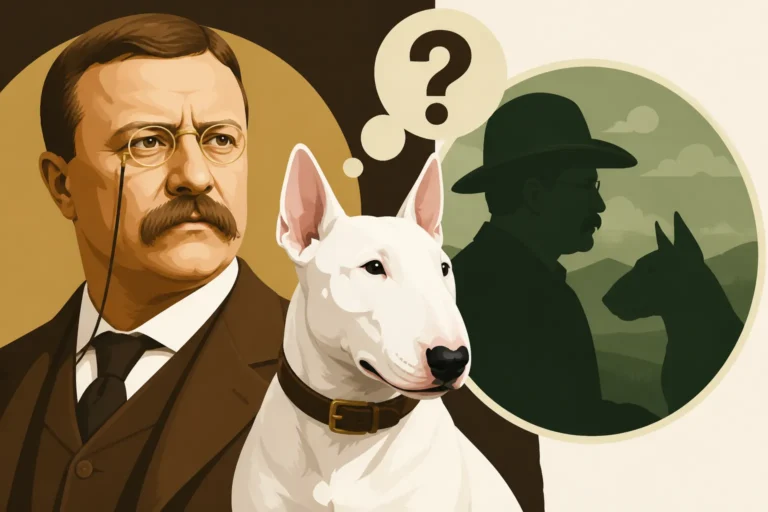
Puss is remembered as a white Bull Terrier associated with Birmingham breeder James Hinks. In the story most often repeated, she faced a dog belonging to another man at Cremorne Gardens in 1862. Puss supposedly won, while her opponent came off far worse.
The detail that fuels the question is the claim that Puss emerged without a mark, or at least with no serious injury. That image fits the story’s larger purpose: it presents Hinks’s dog as courageous, capable and composed. It also makes the episode easy to retell. One dog wins; the other is badly hurt; Puss is apparently untouched.
That is the version behind Puss, the Bull Terrier That Won a Wager Without a Scratch. The title captures the celebrated claim, but it should not be treated as a veterinary report or a complete account of every injury that may have occurred. A dog can finish a contest without an obvious wound and still have bruising, soreness or other damage that was not recorded.
What “uninjured” might mean in a nineteenth-century story
When an old account says a dog was “without a scratch,” readers can reasonably take it to mean that no visible wound was noticed or reported. It does not necessarily mean a person examined the dog carefully afterward, checked for pain, or ruled out hidden injuries.
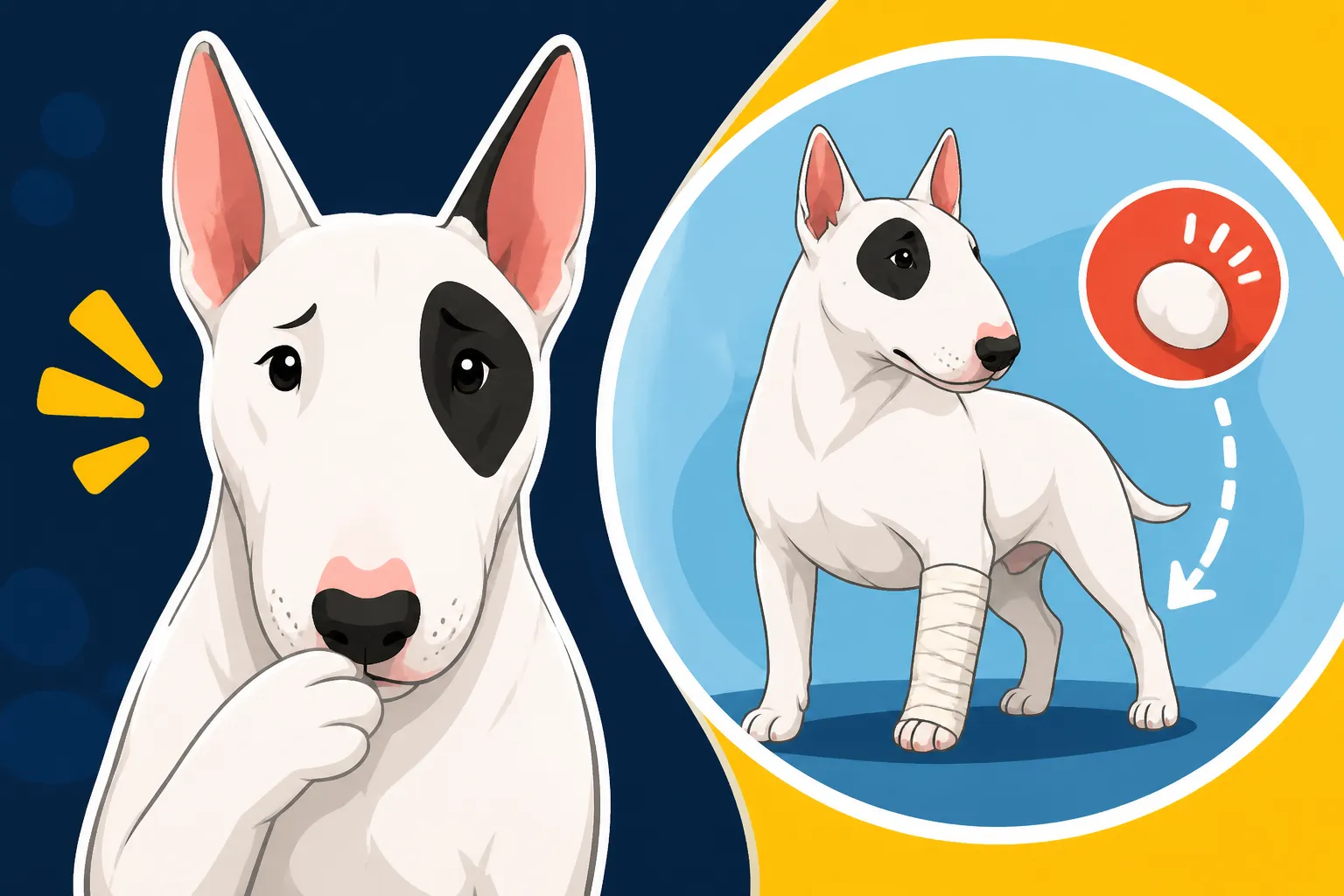
The distinction matters. A small cut, a bruised area under the coat, a strained muscle or a painful bite that did not break the skin might never make it into a dramatic retelling. And even when a dog looks normal immediately after a stressful event, that alone cannot establish that the dog suffered no harm.
So the most careful reading is that Puss was said to have come through the contest without visible injury. That is not the same as knowing she was medically unharmed. The story does not give enough detail to make that stronger claim.
Why the injury detail became part of her reputation
The unmarked-dog detail gives the episode a satisfying ending. It turns Puss’s supposed victory into a display of toughness and makes her seem almost impossibly resilient. Those qualities helped the story endure as part of the breed’s early history.
But an appealing detail is not automatically a verifiable one. The story’s memorable shape may tell us as much about how people wanted to describe Hinks’s dog as it does about Puss’s condition after the event. The question is not whether the account is famous; it is whether the surviving version offers enough evidence to confirm the precise injury claim.
What can be established and what remains uncertain
The story is not detailed enough to settle the question
The Puss episode is usually presented as a brief historical anecdote, not as a full event record. Accounts may differ in wording and emphasis, and the story is often passed along without the sort of independent medical documentation that would settle whether Puss had a minor or hidden injury.
That leaves a gap between the claim and what can be proved. If the account says she was unmarked, that is useful evidence of how the event was described. It is not proof that she sustained no injury at all. Without a careful examination record or reliable, independent descriptions of her condition afterward, certainty is out of reach.
This is why Whether the Cremorne Bull Terrier Story Is True is a useful related question. The broader story’s reliability and the narrow question of Puss’s injuries are connected: if the event details are uncertain, then a precise claim about her post-contest condition is even harder to establish.
The table stakes for reading the anecdote
| Claim in the story | What it can reasonably tell us | What it cannot prove |
|---|---|---|
| Puss won the contest | The episode was remembered and told as a victory for Puss | Every detail of how the event unfolded |
| Her opponent was badly hurt | The story emphasized a striking contrast between the dogs | The full extent or medical nature of the other dog’s injuries |
| Puss had no marks | The account portrays her as visibly uninjured | That she had no bruising, pain or hidden injury |
| The story reflects Hinks’s reputation | Puss became part of the narrative around an influential breeder | That the anecdote was a neutral, complete account |
Why contemporary accounts still need careful reading
Even a report written close to an event can be selective. A showman, breeder, owner or spectator may describe what they saw, but their perspective, loyalties and goals shape what gets emphasized. A dramatic victory is more likely to be repeated than an uneventful or ambiguous aftermath.
That does not mean the anecdote should simply be dismissed. It means readers should distinguish between the historical claim and the level of confidence the claim supports. Puss may indeed have left without a visible wound, as the story says. The available narrative, however, does not justify stating as fact that she suffered no injury whatsoever.
The responsible answer to “Was Puss injured at all?” is therefore: we do not know. The best-known account says she was unmarked, but it cannot rule out minor or unrecorded injury.
Why the story should not be confused with modern dog care
A dramatic victory is not evidence of safety
Stories like Puss’s can make a contest sound like a test of bravery in which the winner proves strength by surviving. That is a romantic framing, not a sound way to think about animal welfare. A dog that appears to win or walk away normally may still have suffered pain, fear or physical damage.
There is also an important difference between learning about a historical practice and treating it as something to admire or repeat. The Puss story belongs to a period when public displays involving dogs could be presented as entertainment and proof of a dog’s worth. Modern understanding of animal welfare makes clear that an animal’s apparent toughness does not make a harmful contest acceptable.
For a fuller look at the breed’s past, Whether the Bull Terrier Was a Fighting Dog and What Happened at the 1862 Cremorne Show provide useful context. They help separate the historical setting from the simplified version in which a single victory stands in for the whole story.
What the anecdote does and does not say about Bull Terriers
Puss’s story is often used to illustrate the early Bull Terrier’s courage and determination. But one historical dog cannot establish that all Bull Terriers behave alike, nor can an old contest anecdote serve as a reliable guide to an individual dog’s temperament.
A Bull Terrier living as a companion today is shaped by many things: breeding, health, early experiences, training and the environment around them. Breed history can help explain how people once described the dogs, but it does not replace learning about the individual dog in front of you. For a broader view, see The White Cavalier: Why the Bull Terrier Never Started Fights and Whether Hinks Bred the Fight Out of the Bull Terrier.
This distinction is especially helpful when a dramatic historical tale is repeated as though it explains the breed’s personality. Puss may have been admired for her grit, but that does not mean a modern Bull Terrier should be expected to tolerate pain, confront other dogs or prove itself through conflict.
How to describe Puss’s condition accurately
Use careful language instead of certainty
If you are writing or talking about Puss, you can preserve the famous detail without overstating it. Say that the traditional account describes her as emerging without a visible mark, or that she was said to be uninjured. Those phrases accurately signal that the statement comes from a story rather than a confirmed medical record.
Avoid claiming that Puss definitely suffered no injury of any kind. The surviving version does not appear to offer the detail needed to support that conclusion. It is equally unhelpful to claim that she certainly had hidden injuries; that is possible, but possibility is not proof.
A careful sentence might read: “In the familiar account of the Cremorne Gardens contest, Puss is said to have won and emerged without visible injury, though the story does not establish whether she had minor or hidden injuries.” That wording keeps the historical claim intact while being honest about its limits.
Keep the legend in its proper historical frame
Puss remains an important name in Bull Terrier history because her story became intertwined with James Hinks and the breed’s early public image. James Hinks Built the Bull Terrier in Birmingham in the 1860s explores that wider context, while What Hinks Won Betting on His Bull Terrier looks at the wagering detail commonly attached to the episode.
The central point is not that the story must be either wholly true or wholly invented. Historical anecdotes can preserve a real event while also simplifying it, polishing it or repeating details that cannot now be checked. Puss may have been visibly unharmed after the contest; that is what the familiar version says. Whether she was injured at all remains unknown.
That distinction lets us appreciate why the story endured without treating “without a scratch” as a definitive medical finding. Puss’s legend tells us how people remembered and promoted an admired dog. It does not give us enough evidence to say with certainty what her body experienced afterward.
Disclaimer
This article is for general informational purposes only and does not constitute professional advice. Laws, prices and regulations vary by location and change over time. Consult a qualified professional for guidance on your specific situation.