Where the Bull Terrier’s Egg Shaped Head Came From
The moment you see a Bull Terrier, one feature immediately jumps out: that distinct, egg-shaped head. It's truly unlike any other breed, smooth and powerful, tapering to a refined muzzle. For many, it's the defining characteristic, the iconic silhouette that instantly identifies a Bull Terrier. But have you ever stopped to wonder how on earth this unique physical trait came to be? It wasn't an accident, nor did it simply appear overnight. It was the result of deliberate, meticulous breeding over generations, a fascinating journey that transformed a robust fighting dog into the "White Cavalier" we know and adore today. This guide will take you through the incredible story of how the Bull Terrier's iconic head was forged.
The Early Days: From Fighting Dog to Fancy Breed
To understand the Bull Terrier's head, we first have to rewind to its origins, a time when dog breeding was far less about aesthetics and much more about function. The ancestors of our beloved Bull Terriers were dogs bred for a very different purpose, in a very different world. These were the working dogs of the 19th century, known for their tenacity and strength.
The Bull and Terrier Legacy: Before the Egg
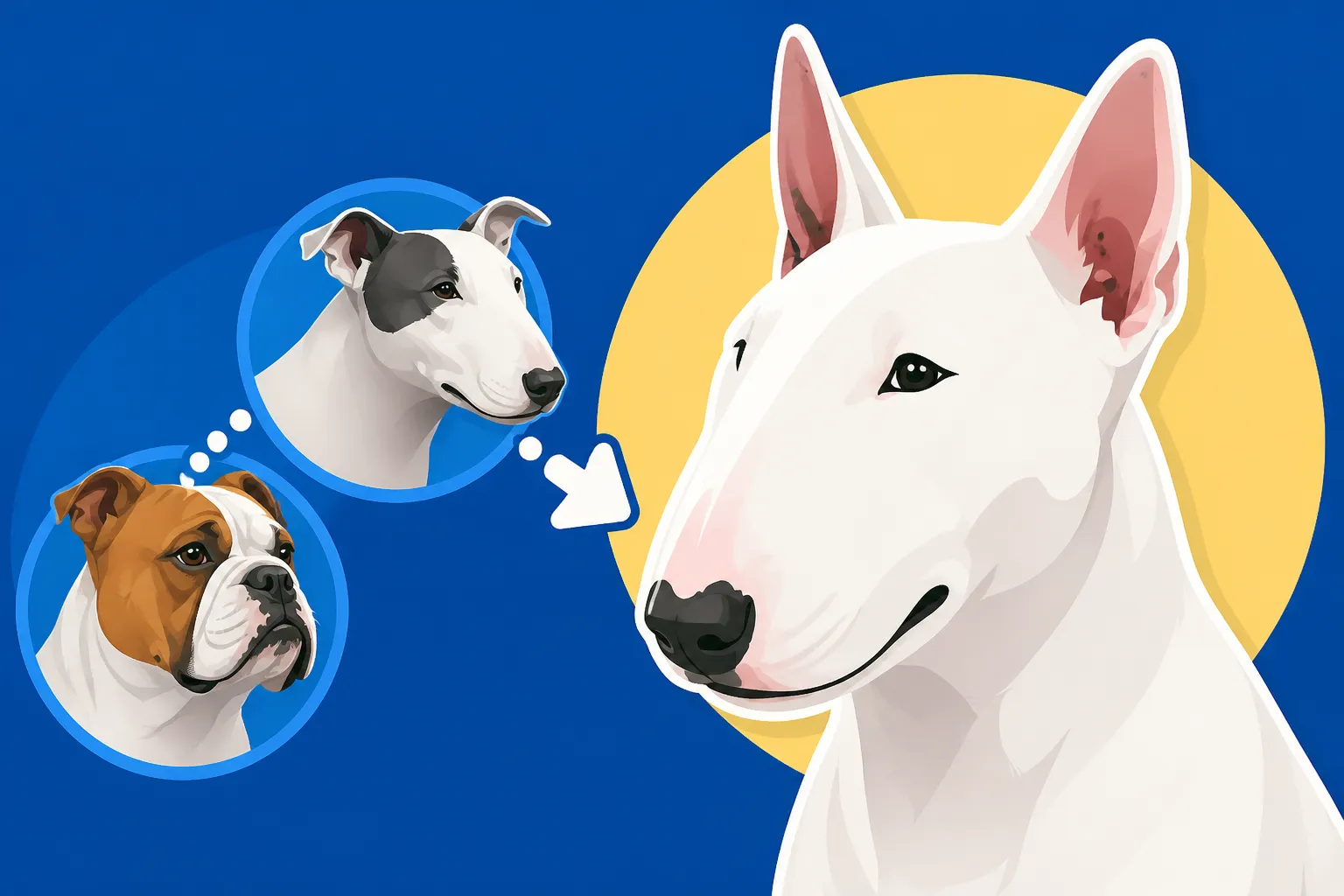
Before the distinct Bull Terrier breed emerged, there existed a type of dog simply known as the "Bull and Terrier." These were rugged, athletic dogs, primarily a cross between the Old English Bulldog and various terrier breeds. Their purpose was clear: to excel in brutal blood sports like bull-baiting and dog fighting. They needed strong jaws, immense courage, and a powerful build. What they didn't have was a refined, egg-shaped head. Instead, they had broader skulls, more pronounced "stops" (the indentation between the eyes), and a more typical terrier-like appearance. These dogs were fighters, bred for performance, not for the show ring. Their heads were functional, designed for gripping and holding. If you look at historical depictions of these dogs, you'd hardly recognize them as the direct ancestors of today's Bull Terrier. They were a motley crew, varying widely in appearance, united by their shared purpose and fierce temperament. What the Bull and Terrier Was provides even more insight into their history.
James Hinks' Vision: The White Cavalier
Enter James Hinks, a dog dealer from Birmingham, England, in the 1860s. Hinks saw potential in the Bull and Terrier type, but he envisioned something different. He wanted to create a dog that retained the courage and stamina of its ancestors but possessed a cleaner, more elegant appearance. He famously aimed for a "White Cavalier"—a gentleman's companion, noble in bearing, but still a formidable dog if challenged. He began a meticulous breeding program, primarily using the existing Bull and Terrier stock and likely outcrossing with other breeds to achieve his desired look. His goal wasn't just about color; it was about refining the entire silhouette, including that distinctive head. James Hinks Built the Bull Terrier in Birmingham in the 1860s delves into his foundational role. Hinks was a true pioneer, effectively taking a rough-and-tumble working dog and applying a designer's eye to create a new, distinct breed. His early dogs, while often all-white, still had some way to go before sporting the pronounced "egg head" we associate with the breed today. They were cleaner, more refined than their Bull and Terrier predecessors, but the extreme head shape was yet to fully develop. This transformation was a gradual process, built on selective breeding for specific traits that Hinks and subsequent breeders found desirable.
Shaping the Head: A Deliberate Breeding Choice
The iconic "egg head" of the Bull Terrier wasn't an accidental mutation; it was the result of highly intentional breeding over many generations. Breeders weren't just trying to make the dogs look "nice"; they were striving for a specific aesthetic ideal that set the Bull Terrier apart.
Introducing the Roman Finish: A Smooth Transition
One of the earliest and most significant steps in developing the Bull Terrier's unique head was the introduction of what became known as the "Roman finish" or "downface." Initially, the Bull Terriers bred by James Hinks still possessed a slight "stop"—that small indentation where the forehead meets the muzzle, common in most dog breeds. However, breeders soon began to favor dogs with a smoother profile, one where the top of the skull flowed seamlessly into the muzzle without any interruption. This wasn't achieved overnight but through careful selection of individuals who naturally exhibited this flatter, more continuous line. It was a gradual evolution, with each generation inching closer to the smooth, unbroken curve we see today. The desire was for an unbroken, clean line from the top of the skull to the tip of the nose, giving the impression of a powerful, yet elegant, wedge. This "Roman finish" became a hallmark of the breed, a subtle but critical departure from its more traditional-headed ancestors. How the Bull Terrier's Head Changed Over Time illustrates this evolution clearly.
The Quest for the Downface: A Defining Feature
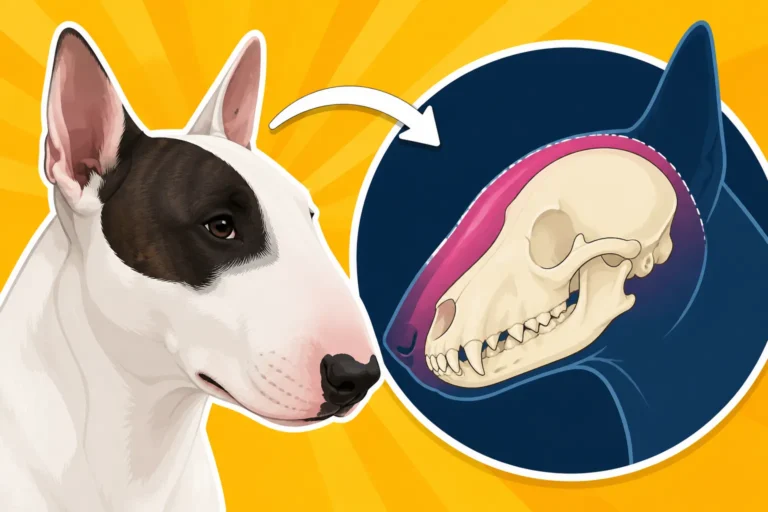
The "downface" is the ultimate expression of the Roman finish, and it's what truly makes the Bull Terrier's head unique. This is where the profile forms a continuous, gentle curve downwards from the top of the skull to the end of the nose, often described as an egg or football shape. It means there is no "stop" whatsoever. This was an incredibly challenging feature to breed for, requiring a deep understanding of canine anatomy and genetics. Breeders selected dogs with the least amount of stop and bred them together, slowly intensifying the characteristic over many generations. The ideal downface isn't merely flat; it's a beautifully arched curve, full and strong, providing plenty of jaw strength while maintaining an elegant appearance. This pursuit was driven by an aesthetic vision, a desire to create a breed that was instantly recognizable and distinct. It became a point of pride for breeders, a testament to their skill and dedication to perfecting the Bull Terrier's unique look. When the Bull Terrier's Egg Head Appeared, it solidified the breed's visual identity, distinguishing it permanently from other terrier types. It's a complex genetic trait, and achieving it consistently while maintaining health and temperament remains a testament to careful breeding practices.
The Role of Specific Breeds in the Transformation
The journey to the Bull Terrier's egg-shaped head involved a carefully curated lineage, drawing characteristics from several breeds. While some theories persist, the known influences paint a clear picture of how this unique feature was solidified.
The English White Terrier's Contribution
One of the primary contributors to the Bull Terrier's refinement, especially in terms of its sleek appearance and all-white coat, was the now-extinct English White Terrier. This breed, itself a descendant of earlier white terriers, was prized for its elegant lines and distinctive head shape, though not yet the extreme egg-shape. English White Terriers were known for their clean, muscular builds and upright, pointy ears, traits that James Hinks sought to incorporate into his new breed. While they didn't possess the dramatic downface of a modern Bull Terrier, they provided a foundation of refinement and a cleaner profile than the rougher "Bull and Terrier" types. Their genetic influence helped to smooth out the broader skulls and more pronounced stops of the fighting dogs, moving the Bull Terrier further along the path towards a more aesthetically pleasing form. Their contribution was less about the specific "egg" and more about the overall trend towards a more elegant and less coarse appearance.
The Influence of the Dalmatian and Other Outcrosses
While there's often speculation about a multitude of breeds contributing to the Bull Terrier's distinctive head, the most widely accepted and significant outcrosses, beyond the English White Terrier, include the Dalmatian and potentially the Spanish Pointer. The Dalmatian's smooth, arched skull and elegant carriage were particularly valuable. By introducing Dalmatian blood, breeders could further refine the Bull Terrier's head, contributing to the desired continuous curve and reducing the stop. The Dalmatian is a sleek, athletic dog with a distinctive head profile, which, while not a downface, offers a foundation for the smooth, clean lines desired. This crossbreeding wasn't just about the head; it also helped to standardize the Bull Terrier's size, improve its gait, and even contribute to some of the colored varieties that would later emerge. While the precise details of every single outcross are lost to history, the consistent pattern points to a deliberate effort to blend the tenacity of the old Bull and Terrier with the grace and refined structure of other breeds, all working towards the unique physical ideal. Which Breeds Went Into the Bull Terrier offers a deeper dive into the Bull Terrier's genetic melting pot.
Understanding the "Egg Head" Anatomy
The Bull Terrier's head is often described using terms like "egg-shaped," "downface," and "Roman finish," but what do these terms actually mean in terms of physical anatomy? It's more than just a smooth curve; it's a precise arrangement of bone and muscle that creates this singular look.
The Continuous Arch: From Skull to Nose
The most striking feature of the Bull Terrier's "egg head" is the continuous, unbroken arch that extends from the top of the skull all the way to the tip of the nose. There is no indentation, no "stop," where the forehead meets the muzzle. Instead, the skull gently curves downwards and forwards, presenting a profile that is full, smooth, and powerful. This arch should be broad and deep, giving the head a substantial feel without being coarse. Imagine tracing a line from the back of the skull, over the top, and down to the nose; in a Bull Terrier, this line is an uninterrupted, graceful arc. This anatomical structure provides significant jaw strength, allowing for a powerful bite, while also contributing to the breed's characteristic look. It's this unique combination of strength and smooth elegance that makes the Bull Terrier's head so admired in the breed standard. This structural choice gives the dog a unique silhouette that is unmistakable.
The Triangular Eye and Small Placement
Complementing the distinctive head shape are the Bull Terrier's eyes. They are relatively small, dark, and set obliquely, giving them a distinct triangular appearance. This isn't just an aesthetic choice; the small, deeply set eyes are designed to be well-protected, historically useful in the rough-and-tumble world of their ancestors. Their placement further enhances the unique head shape. Instead of being set wide apart and round, they are placed close together and high on the head, helping to emphasize the downward curve of the muzzle. This combination of the continuous arch and the distinctive eyes creates the breed's iconic, somewhat intense, yet often comical expression. It’s important that while the eyes are small and triangular, they should always convey an intelligent, keen, and determined gaze, never a dull or sunken look. The Bull Terrier Is the Only Breed With a Triangular Eye highlights just how unique this feature truly is in the canine world, setting them apart from nearly every other breed. The overall effect of the head, with its smooth curve and tiny, triangular eyes, is truly a work of art from a breeding perspective.
Challenges and Controversies of the Unique Head
While the Bull Terrier's head is undeniably iconic and a testament to selective breeding, such extreme physical traits can sometimes come with their own set of challenges and controversies. It's important for potential owners and breeders to understand these aspects.
Impact on Vision and Breathing
When considering a head shape as unique as the Bull Terrier's, it's natural to wonder about its functional implications. The deeply set, triangular eyes, while distinctive, are quite small. This can, in some cases, lead to a slightly reduced field of vision compared to breeds with larger, more forward-facing eyes. While most Bull Terriers adapt perfectly well and navigate their world without issue, it's something to be aware of. Similarly, the extreme downface, while not generally leading to the same severe breathing problems seen in brachycephalic (short-nosed) breeds, does mean a different structure to the nasal passages. Reputable breeders work diligently to ensure that the unique head structure does not impede healthy breathing. Issues can arise if the muzzle is bred too short or too narrow, compromising airflow. A well-bred Bull Terrier with a proper downface should breathe freely and easily, even during exercise. Why a Bull Terrier's Eye Is the Smallest of Any Breed touches on the protective nature of their eye placement. It is crucial for breeders to prioritize health and function alongside aesthetics to avoid creating dogs that suffer from their unique looks.
Maintaining the Breed Standard: Health vs. Aesthetics
The Bull Terrier breed standard places immense importance on the head, describing it in precise detail. This has led to a constant balancing act for breeders: striving for the ideal "egg head" while simultaneously ensuring the health and welfare of the dogs. The desire for an extreme downface can sometimes tempt less scrupulous breeders to prioritize appearance over genetic health, potentially leading to issues. Responsible breeders, however, understand that the integrity of the breed depends on a holistic approach. They consider not just the head, but also temperament, structural soundness, and genetic health clearances. They screen for inherited conditions like Hereditary Nephritis, heart problems, and deafness, which are far more critical to a dog's well-being than a perfect head shape. The ethical breeder knows that a stunning head means nothing if the dog is unsound or unhealthy. The discussion often revolves around how far breeders can push aesthetic boundaries before compromising the dog's quality of life. The goal is to produce dogs that embody the standard's beauty without sacrificing their ability to live full, healthy lives. What a Bull Terrier Breeder Should Have Tested outlines essential health screenings.
Comparing Head Shapes: Old vs. New
It's truly fascinating to look back at photographs of Bull Terriers from the late 19th and early 20th centuries and compare them to the dogs we see today. The evolution of the head shape is striking. Early Bull Terriers, while still distinct, had a less pronounced downface, often with a visible, albeit slight, stop. Their heads were still powerful and refined, but the extreme, seamless curve of the modern "egg head" was not yet fully established. This visual progression highlights the dedication and selective breeding efforts of generations of fanciers.
Here's a simplified comparison:
| Feature | Early Bull Terrier Head (Late 19th Century) | Modern Bull Terrier Head (Today) |
|---|---|---|
| Profile Curve | More gradual, often with a slight stop | Continuous, uninterrupted arch (downface/Roman finish) |
| Skull Shape | Broad, but less uniformly egg-shaped | Egg-shaped, full, and smooth across the top |
| Eye Placement | Similar small, dark eyes, perhaps less triangular | Small, dark, triangular, deeply set and close together |
| Muzzle Length | Proportionate to skull, perhaps slightly longer | Deep and tapering, equal in length to skull |
| Overall Impression | Powerful, refined, but less extreme | Distinctive, powerful, elegant, unique |
This table clearly illustrates how dedicated breeding has honed the specific traits over time. Whether Early Bull Terriers Looked Like Today's provides excellent visual examples of this fascinating historical journey. The consistent refinement has led to the iconic head shape that is now instantly recognizable around the world.
The Legacy and Evolution of the Bull Terrier Head
The journey of the Bull Terrier's head, from a functional fighting dog's skull to the highly refined "egg head," is a testament to the power of selective breeding and a clear vision. Today, this unique feature is not just a breed characteristic; it's a symbol.
Modern Bull Terriers: Consistency in Type
In the modern era, the Bull Terrier's distinctive head shape is a well-established and consistent feature of the breed. Reputable breeders around the world strive to produce dogs that conform to the breed standard, which meticulously describes the ideal "egg head." This consistency isn't accidental; it's the result of generations of breeders understanding the genetics involved and carefully selecting breeding pairs. While there will always be slight variations between individual dogs and bloodlines—some might have a slightly fuller arch, others a more pronounced taper—the fundamental "downface" and overall egg shape are universally recognized and expected. This means that when you see a Bull Terrier, whether at a dog show, in a park, or even on a product from a brand like Chewy, its unique profile immediately identifies it. This adherence to type ensures that the breed's iconic look is preserved for future generations, a living testament to the breeders who shaped it.
The Enduring Appeal of the Distinctive Profile
The Bull Terrier's egg-shaped head is more than just an anatomical feature; it's a huge part of the breed's charm and unique identity. For many enthusiasts, it's the very first thing that captures their attention and draws them to the breed. This distinctive profile contributes significantly to the Bull Terrier's reputation as a "clown in a dog suit"—it gives them an almost cartoon-like quality, yet simultaneously conveys strength and elegance. It's a head that commands attention, sparks conversation, and makes the Bull Terrier instantly memorable. This enduring appeal has transcended the show ring, making Bull Terriers recognizable figures in popular culture, from advertisements to beloved cartoon characters. The breeders who meticulously shaped this head would likely be amazed and proud to see how their vision has become a global icon, cherished by Bull Terrier owners and admired by dog lovers everywhere. The uniqueness of their head ensures they stand out, whether they're lounging on a cozy bed bought from Chewy or proudly trotting down the street. It's a legacy that continues to define the breed.
Disclaimer
This article is for general informational purposes only and does not constitute professional advice. Laws, prices and regulations vary by location and change over time. Consult a qualified professional for guidance on your specific situation.