Whether the Spuds MacKenzie Bull Terrier Was Female
The Bull Terrier in the Spuds MacKenzie beer commercials was female, even though the character was presented as a male party-loving dog. That mismatch has confused viewers for years. Here’s who Spuds was, why a female dog played him, and what the famous campaign did—and didn’t—tell audiences about Bull Terriers.
Was the Spuds MacKenzie Bull Terrier female?
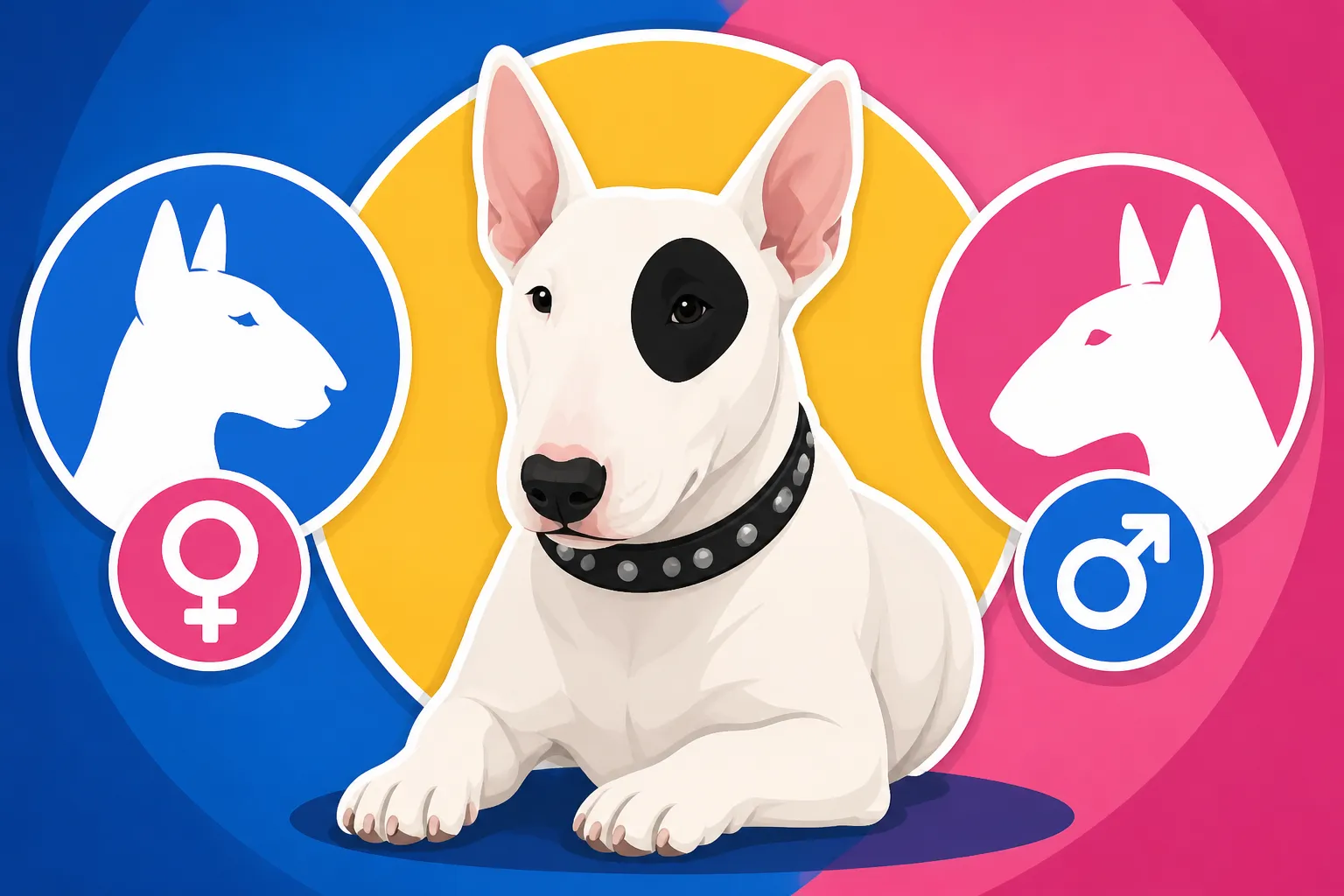
Yes. The real Bull Terrier who appeared as Spuds MacKenzie was female. The dog’s name was Honey Tree Evil Eye, often shortened to Evie. Spuds, by contrast, was the name and identity of the fictional advertising character: a male dog with a carefree, sociable, party-animal persona.
That distinction is the key to the question. People often remember the mascot as though Spuds were a male dog with a well-documented personal life. In reality, Spuds was a character performed by a female Bull Terrier. The campaign cast the dog for her appearance and ability to work on set, not because the animal’s sex matched the character.
The real dog and the fictional mascot
Spuds became widely recognizable through Bud Light advertisements in the late 1980s. The commercials showed a white Bull Terrier in social settings, surrounded by people and treated as the center of the fun. The dog’s public character was male, but the animal playing him was female.
This kind of casting is not unusual in film, television, or advertising. An animal actor can portray a character of a different sex, just as a human performer can play a fictional role unlike their own life. The audience is meant to follow the character in the story, not infer the animal actor’s biology from the character’s name or behavior.
For Spuds, the distinction was especially easy to miss because the commercials did not usually pause to explain who the dog was off camera. Viewers saw the mascot, the brand, and the party setting. Unless they encountered reporting about the dog, there was little reason to ask whether the real Bull Terrier was male or female.
Why many people assumed Spuds was male
The campaign gave viewers several cues pointing toward a male character: Spuds was referred to as “he,” and the advertising framed him as a male partygoing companion. The mascot’s name and swagger reinforced that impression. So when people later learned the dog was female, the revelation could feel surprising, even though there was no contradiction in the casting.
It helps to keep two questions separate:
| Question | Answer |
|---|---|
| Was Spuds the advertising character presented as male? | Yes |
| Was the real dog who played Spuds male? | No |
| What was the real dog’s name? | Honey Tree Evil Eye, also called Evie |
| What breed was the dog? | Bull Terrier |
| Does the mascot’s sex tell you the dog actor’s sex? | No |
For a fuller look at the identity behind the commercials, see Which Bull Terrier Played Spuds MacKenzie. The short answer remains simple: the character was male, and the dog portraying him was female.
Why did a female dog play a male character?
The practical answer is that the advertising team selected a dog to embody a mascot. The character did not need to share the performer’s sex. Spuds’ role depended on his recognizable Bull Terrier look, calm presence around people, and usefulness in a staged commercial—not on being biologically male.
That distinction can be overlooked because mascot advertising encourages viewers to treat the animal as a personality. Spuds seemed to have a social life, a circle of human friends, and a consistent attitude. Those details made the campaign memorable, but they belonged to the character and the advertising setup, not necessarily to the real dog’s everyday life.
A familiar kind of animal casting
Animal actors are selected for traits that work on camera: appearance, temperament, training, and how safely they can take part in a scene. Their roles may be written as male or female regardless of the animal’s sex. A female dog can portray a male character, and a male dog can play a female one.
In Spuds’ case, the audience was invited to accept the mascot as a male Bull Terrier. The dog’s actual sex did not prevent her from appearing in the role. The commercials relied on the visual image and the character’s behavior, not a storyline about reproduction or biological identity.
This is also why the fact is best understood as a casting detail rather than a mystery about the breed. Nothing about Bull Terriers makes a female dog especially suited to playing a male mascot. The choice was about the individual dog and the role the campaign wanted to create.
What the campaign did not establish about Evie
The ads gave the public a carefully arranged version of Spuds: a dog amid parties, people, and playful situations. They do not provide a complete account of the dog’s home life, temperament in every setting, or training routine. A short commercial is not a reliable guide to what any individual dog is like away from the camera.
Nor should viewers assume that Honey Tree Evil Eye behaved exactly like the exaggerated mascot. Advertising characters are shaped to fit a concept. The dog could perform the role on set without being a nonstop party companion in real life.
The same caution applies when people see a Bull Terrier in a film, a television spot, or a social media clip and conclude that every dog of the breed will behave the same way. A famous dog may prompt interest in the breed, but it cannot serve as a temperament test or a complete ownership guide. For historical context on the breed’s public image, Which Famous Bull Terriers Everyone Remembers offers a wider frame.
How the Spuds MacKenzie story became a lasting question
Spuds was memorable because the campaign gave the mascot a clear, easy-to-recognize identity. The dog was not just an animal appearing in the background; Spuds was the center of the scenes and the character around whom the social world revolved. That prominence made details about the real dog more interesting to viewers later.
The female-dog fact has lasted in part because it reverses the assumption people naturally make. If a commercial consistently calls a dog “he,” many viewers will assume the animal is male. Learning that the performer was female adds a small behind-the-scenes twist to a campaign already remembered for its unusual mascot.
The mascot’s gender versus the dog’s biology
When discussing the story, precise wording prevents confusion. It is accurate to say that Spuds MacKenzie was portrayed as a male character. It is also accurate to say that the real Bull Terrier who played Spuds was female. Those statements describe different things, so they do not conflict.
The distinction comes up in searches and conversations because people often use “Spuds” to mean both the fictional mascot and the real dog. A question such as “Was Spuds female?” can therefore mean either “Was the character written as female?” or “Was the dog in the commercials female?” The answers differ: the character was male, while the dog actor was female.
If you are looking for more about the mascot’s history, Why the Spuds MacKenzie Bull Terrier Was Pulled explores another question people associate with the campaign. The discussion of the dog’s sex, however, is a straightforward casting fact—not evidence that the character was secretly written as female.
Why a commercial is not a breed profile
A popular mascot can shape how people picture a breed, but an ad is designed to sell a product and hold attention. It does not show the ordinary routines, care needs, or potential challenges of living with a Bull Terrier. Spuds’ social, easygoing image was part of the campaign’s storytelling.
Someone who is newly curious about Bull Terriers should look beyond a single famous dog. Breed history, health, training, and the individual animal’s background all matter. For a wider view of the breed’s historical image, Whether the Bull Terrier Was a Gentleman's Companion is a useful related topic, while Which Films Feature a Bull Terrier looks at the breed’s presence on screen.
If the commercials have simply made you curious about practical dog ownership, everyday needs are a separate question from Spuds’ casting. For example, prospective owners may want to compare suitable toys, grooming supplies, and basic walking equipment through a pet retailer such as Chewy. A retailer can help with shopping, but it cannot tell you whether a Bull Terrier fits your household; that depends on the individual dog and the commitment you can make.
What to remember about the real Spuds MacKenzie
The most reliable way to explain the story is to separate the dog from the role. Honey Tree Evil Eye, or Evie, was a female Bull Terrier. Spuds MacKenzie was the male character she portrayed in Bud Light advertising. The campaign’s use of a female dog did not change the character’s presentation, and the character’s pronouns did not reveal the dog’s sex.
That small distinction is useful whenever a famous animal appears in a fictional role. Audiences tend to remember the character’s name, personality, and story, while details about the performer can fade into the background. In this case, the detail that stuck was the surprise: the dog everyone called “he” was female.
A quick way to answer the question
If someone asks whether the Spuds MacKenzie Bull Terrier was female, you can answer: “Yes—the real dog was a female named Honey Tree Evil Eye, but she played Spuds, a male mascot.”
That phrasing captures both sides without mixing them up. It also avoids a common source of confusion: calling the dog herself male simply because the character was referred to as “he.” For the dog’s identity and campaign background, Which Bull Terrier Played Spuds MacKenzie is the most directly related follow-up.
For readers whose interest extends from the mascot to caring for a real Bull Terrier, practical preparation matters more than the character’s party-loving image. A pet retailer such as Chewy may be one place to look for routine supplies, but selecting products is only one small part of responsible ownership. Learn about exercise, training, and breed health before making a decision.
The answer is a small piece of advertising history, but it is also a reminder that a famous animal and the character it plays are not always the same. Spuds was portrayed as male; the Bull Terrier behind the mascot was female. If you’re exploring Bull Terrier ownership after discovering the story, Chewy can help you browse everyday pet essentials, while careful research and conversations with knowledgeable professionals can help you assess the breed itself.
Disclaimer
This article is for general informational purposes only and does not constitute professional advice. Laws, prices and regulations vary by location and change over time. Consult a qualified professional for guidance on your specific situation.