How Often an Aging Bull Terrier Should Be Weighed
As our beloved Bull Terriers enter their golden years, it's easy to overlook subtle changes that could signal deeper health concerns. One of the most common, yet frequently missed, indicators of a senior Bull Terrier's well-being is their weight. It's not just about looking "chubby" or "thin"; shifts in weight can be a critical red flag for various age-related conditions. This guide will walk you through why and how often you should be monitoring your aging Bull Terrier's weight, and what to do when you notice changes.
Why Weight Monitoring Becomes Crucial for Senior Bull Terriers
As our Bull Terriers age, their bodies go through a myriad of changes, much like humans do. Their metabolism slows down, muscle mass naturally decreases, and they can become more susceptible to a whole host of health issues. Monitoring their weight isn't just a casual observation; it becomes a vital tool in proactive health management. Early detection of significant weight changes can literally mean the difference between catching a treatable condition in its early stages and facing a much more advanced, and often more difficult, battle.
Think about it: a small loss of appetite might not seem like much on its own, but if it leads to a steady weight drop over a few weeks, it could be the first sign of something serious brewing beneath the surface. Conversely, an unexplained weight gain could put unnecessary strain on aging joints or indicate hormonal imbalances. Our Bull Terriers are incredibly stoic, and sometimes, the scale is the first objective indicator we have that something is amiss.
The Silent Threat of Muscle Loss
One of the biggest challenges with senior Bull Terriers and weight is the insidious nature of muscle loss, often referred to as sarcopenia. You might look at your aging Bull Terrier and think, "They seem to be maintaining their weight," but what you might not realize is that fat can be replacing precious muscle mass. This means the number on the scale stays the same, or only drops slightly, while their body composition significantly deteriorates. Muscle loss can lead to weakness, reduced mobility, and a poorer quality of life, making everyday activities like getting up from a nap or climbing a few stairs much harder.
This is why simply weighing your Bull Terrier isn't enough; you also need to regularly assess their body condition. Run your hands along their ribs – can you feel them easily without pressing hard, but not see them protruding? Feel along their spine and hips. Are they well-covered, or do you feel sharp bony prominences? If you notice a reduction in muscle over their back, hips, and thighs, even if the scale hasn't moved dramatically, it's a sign your vet needs to be involved. This is especially important for active breeds like Bull Terriers, where a robust physique is part of their natural strength. Losing that muscle compromises their entire structure. You can read more about this in Whether an Aging Bull Terrier Loses Muscle.
Weight as a Barometer for Underlying Health Issues
A significant change in your Bull Terrier's weight, whether up or down, can be a symptom of various underlying medical conditions common in senior dogs. For instance, unexplained weight loss can be a red flag for kidney disease, a condition Bull Terriers can be predisposed to, or even something like dental pain making it uncomfortable to eat. If your senior Bull Terrier is suddenly turning their nose up at their kibble or only eating soft foods, it might not just be pickiness; it could be a sign of discomfort, which the weight loss then confirms.
Similarly, weight gain, especially if they haven't increased their food intake or decreased exercise, could indicate a metabolic disorder like hypothyroidism, which can certainly affect Bull Terriers, or even fluid retention related to heart issues. The problem is that many of these conditions progress slowly, and by the time outward symptoms are obvious, the disease might be quite advanced. Regular weight checks offer a consistent, objective data point that you can discuss with your vet. It's like having an early warning system. For more on what to expect as your dog ages, check out What Changes in a Bull Terrier After Eight.
Here’s a quick overview of how weight changes can tie into senior Bull Terrier health:
| Weight Change | Potential Underlying Causes |
|---|---|
| Weight Loss | Kidney disease, heart disease, dental pain/gum disease, cancer, diabetes, malabsorption issues, chronic pain (leading to decreased appetite/activity), inflammatory bowel disease, hyperthyroidism (rare but possible), inadequate diet for activity level, poor food quality, stress, anxiety. |
| Weight Gain | Hypothyroidism, Cushing's disease, heart disease (fluid retention), reduced activity without dietary adjustment, overfeeding, metabolic slowdown, certain medications, lack of appropriate exercise. |
How Often is "Often Enough"? Establishing a Routine
Determining the ideal frequency for weighing your aging Bull Terrier involves finding a balance between vigilance and practicality. While it's tempting to check every day, that can lead to unnecessary anxiety over minor fluctuations. What we're really looking for are consistent trends or sudden, significant changes. Establishing a routine helps ensure you don't miss those critical shifts.
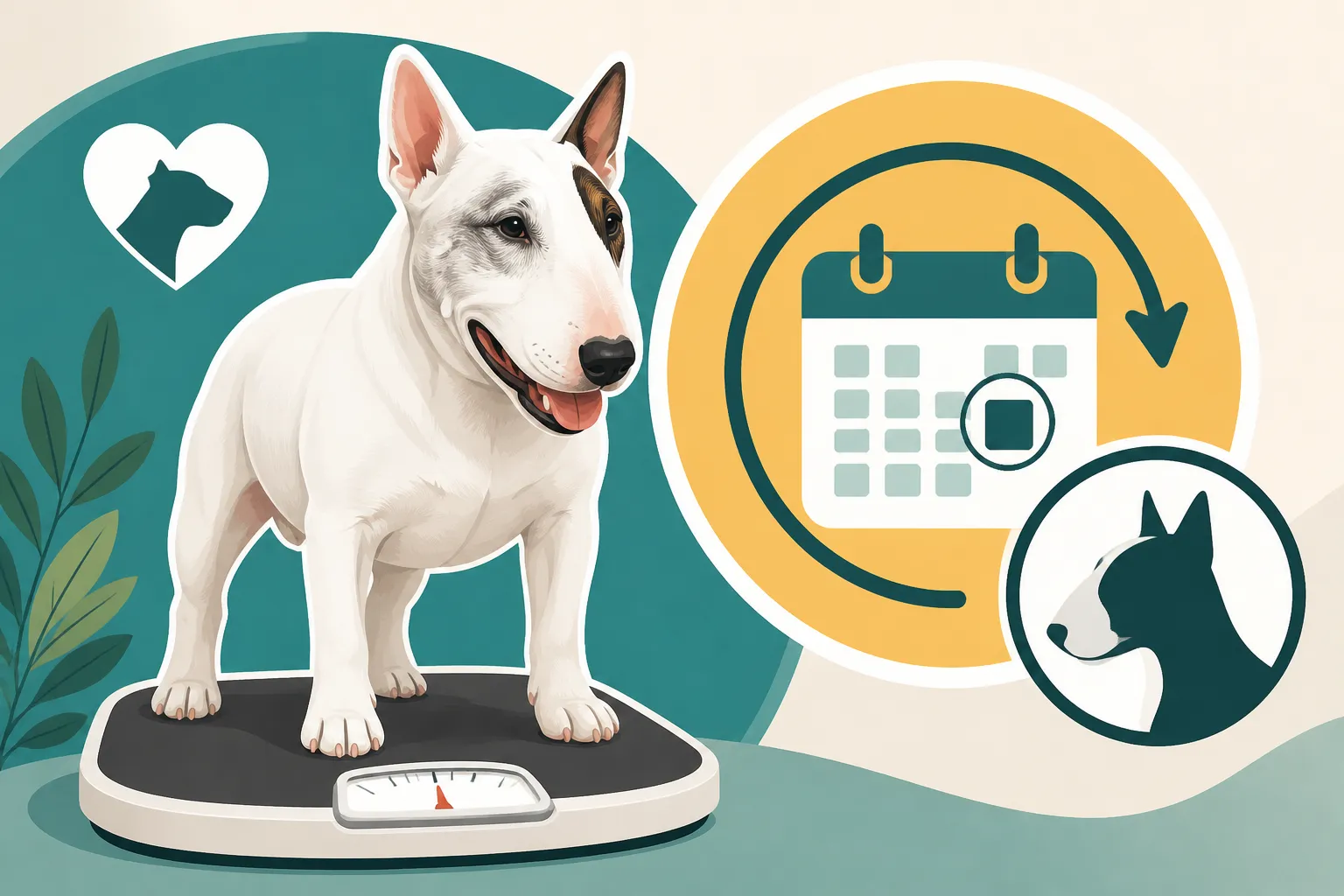
For most seemingly healthy senior Bull Terriers, a monthly weigh-in is a good starting point. This cadence allows you to track trends over time without getting bogged down by daily variations that might be due to hydration or recent meals. However, there are definitely circumstances where you'll want to increase that frequency. The key is to be adaptable and to know your dog. If you have a Bull Terrier that is generally very stable, monthly might be perfect. If they're on new medication or have a known health issue, more frequent checks are a must.
Monthly Checks: The Baseline for Stability
For your aging Bull Terrier who seems to be doing well, a monthly weigh-in acts as your baseline. Pick a specific day each month, maybe the first Saturday, and stick to it. This consistency is crucial for accurate comparison. Weighing them at the same time of day (e.g., before breakfast) can also help reduce minor daily variations. Documenting this weight is just as important as the weigh-in itself. Keep a simple log in a notebook or on your phone – date, weight, and any quick notes about their appetite or activity level for that month.
This monthly routine allows you to quickly spot a downward or upward trend. A half-pound fluctuation might not be concerning, but if that half-pound loss becomes a pound the next month, and another half-pound the month after, you're looking at a concerning trend that needs a veterinary consultation. This simple, consistent habit is one of the most powerful tools you have in caring for your aging companion. It’s also a perfect opportunity to perform a quick body condition check and look for any new lumps, bumps, or skin issues, as discussed in The Weekly Skin Check Every Bull Terrier Needs.
When to Increase Frequency
There are several scenarios where you'll want to ramp up your weighing frequency. If your Bull Terrier has recently been diagnosed with a new health condition, such as early-stage kidney disease or a heart murmur, your vet will likely recommend more frequent weight checks – perhaps weekly or bi-weekly. This is because these conditions can cause rapid changes in body weight or fluid retention, and quick adjustments to medication or diet might be necessary.
Similarly, if your Bull Terrier is on a new medication, especially one that could affect appetite or metabolism, more frequent weighing is a wise move. The same goes for any significant changes in their diet, such as switching to a prescription food or trying a new commercial brand from Chewy or Ollie. You need to see how their body responds to these changes. If they're recovering from an illness or surgery, daily or every-other-day checks might even be appropriate for a short period, just to ensure they're on the right track. Any time you notice a significant shift in appetite, energy levels, or drinking habits, a more frequent weigh-in is also warranted. These are all signs that your Bull Terrier's body is experiencing a change, and weight can either confirm or help you quantify it.
Practical Tips for Weighing Your Bull Terrier at Home (or with Assistance)
Let's be real, weighing a Bull Terrier, especially an older one who might be a bit stiffer or less cooperative, isn't always the easiest task. They're strong, they're often wiggly, and they have a low center of gravity that can make them feel heavier than they are. Trying to get them to stand still on a small bathroom scale can feel like wrestling an alligator. But don't despair! There are practical ways to get accurate weights without causing undue stress to you or your senior dog.
The goal is to make it as smooth and stress-free as possible. If it becomes a struggle every time, you'll be less likely to do it regularly, defeating the purpose. A calm approach, patience, and a few high-value treats are your best friends here. Remember, consistency in method is just as important as consistency in timing for getting reliable data.
The "You Weigh Me, Then We Weigh Together" Method
For larger dogs like Bull Terriers, the most common and effective method for at-home weighing is the "human-and-dog" technique.
Here’s how to do it:
- Weigh Yourself: Step onto your bathroom scale alone and get your weight. Write this number down.
- Pick Up Your Bull Terrier: Carefully and safely pick up your Bull Terrier. If your senior Bull Terrier is too heavy or has mobility issues that make lifting them unsafe for either of you, you’ll need to adapt this method or seek alternatives. For those who can lift, try to hold them as still as possible.
- Weigh Together: Step back onto the scale while holding your Bull Terrier. Write this combined weight down.
- Subtract: Subtract your solo weight from the combined weight. The difference is your Bull Terrier's weight.
Example:
- Your weight: 150 lbs
- Your weight + Bull Terrier's weight: 205 lbs
- Bull Terrier's weight: 205 lbs – 150 lbs = 55 lbs
This method is surprisingly accurate for most home scales. Make sure you use the same scale each time to minimize discrepancies. If your Bull Terrier is too large to safely lift, consider using a human-sized luggage scale or a digital baby scale if your Bull Terrier is a Miniature or on the smaller side. You might also find robust scales suitable for larger dogs on sites like Chewy or Amazon, though these can be an investment.
Vet Visits as a Weigh-In Opportunity
Every time your Bull Terrier goes to the vet, they get weighed. This is a built-in opportunity to get an accurate, professionally calibrated weight reading. If your senior Bull Terrier is visiting the vet for their Yearly Urine Test Every Bull Terrier Owner Should Book or their How Often a Bull Terrier Needs a Wellness Exam, make a point of noting their weight from the clinic scale. These scales are designed for animals and are usually more precise than a standard bathroom scale.
Many veterinary clinics also offer "walk-in weigh-ins" for free or a small fee, especially for their existing clients. If you're concerned about your Bull Terrier's weight and don't want to wait for their next appointment, call your vet and ask if you can simply pop in for a quick weigh. It's a fantastic, low-stress way to get accurate readings and can be a good intermediate step if you're not seeing your vet for a full appointment.
Specialized Scales and Community Resources
If your Bull Terrier is too large or too uncooperative for the "lift and weigh" method at home, and frequent vet visits aren't practical, consider investing in a dedicated pet scale. These are typically low-profile, sturdy digital scales designed for animals, making it easier for your Bull Terrier to simply step on and off. While they can be an investment, they offer convenience and accuracy, particularly for breeds with significant weight. You can often find a good range of these on platforms like Amazon or Chewy.
Another option is to check local pet supply stores. Many larger stores have a walk-on scale for customer use, often near the entrance or grooming section. These are usually robust and big enough for even the largest Bull Terriers. Just be mindful of other patrons and ensure your Bull Terrier is comfortable in that environment. Community dog clubs or training facilities might also have scales available for members. Don't be shy about asking around; you'd be surprised how many resources are out there.
What to Do When the Scale Changes: Interpreting the Numbers
Noticing a change in your senior Bull Terrier's weight can be unsettling, but it's important to approach it calmly and methodically. The number on the scale is just one piece of the puzzle. It needs to be interpreted in the context of their overall health, activity level, and body condition. Don't panic, but don't ignore it either. This is where your diligent record-keeping really pays off.
The most important step after noticing a change is to consult your veterinarian. They can help you determine if the change is cause for concern, conduct further diagnostics if needed, and recommend appropriate interventions. Remember, you're your Bull Terrier's best advocate, and your observations are invaluable to their care team.
Noticing Gradual vs. Sudden Changes
The rate at which your Bull Terrier's weight changes can tell you a lot.
- Gradual Changes: A slow, steady decrease or increase over several months is often indicative of chronic, underlying conditions such as kidney disease, a developing heart condition, or a slow-growing tumor. It could also be a sign that their caloric intake isn't matching their energy expenditure anymore. Perhaps they’re less active than they used to be, but you're still feeding them the same amount of food, leading to gradual weight gain. Or conversely, if they're struggling with chewing because of dental issues, a gradual loss might occur. These gradual shifts, while concerning, often allow more time for intervention before they become critical.
- Sudden Changes: A rapid drop or gain in weight (e.g., several pounds in a week or two) is usually more urgent. Sudden weight loss could point to an acute illness, severe gastrointestinal upset, or a rapidly progressing disease. Sudden weight gain, especially if accompanied by swelling in the abdomen or limbs, could indicate fluid retention due to heart or kidney failure. These rapid changes warrant immediate veterinary attention, as they often signal a more acute and potentially life-threatening situation.
Always make sure to rule out simple explanations first, such as recent changes in diet or medication, before jumping to conclusions.
Connecting Weight to Body Condition Score
As we touched on earlier, weight alone isn't the whole story. Body Condition Score (BCS) is a visual and tactile assessment of your Bull Terrier's fat reserves and muscle mass. It's usually scored on a 1-5 or 1-9 scale, with the middle numbers being ideal.
To assess BCS:
- Ribs: Feel their ribs. You should be able to feel them easily, but not see them prominently. If you can see them clearly, they might be too thin. If you have to press hard to feel them, they might be overweight.
- Waist: Look at your Bull Terrier from above. Do they have a visible waistline behind their ribs?
- Abdominal Tuck: Look at them from the side. Do they have an upward slope from their chest to their abdomen?
- Spine and Hips: Feel along their spine and hip bones. You should feel them under a thin layer of muscle and fat, but they shouldn't protrude sharply.
A Bull Terrier with a "perfect" weight on the scale but a low BCS might be losing muscle and gaining fat – a situation that still requires attention. Conversely, a Bull Terrier whose weight is slightly up but has excellent muscle tone and a good BCS might just be particularly well-conditioned. Your vet will use both weight and BCS to get a full picture. If you're unsure how to assess your Bull Terrier's BCS, ask your vet to demonstrate during your next visit. Learning how to gauge Signs a Bull Terrier Is Overweight or underweight through BCS is a valuable skill.
The Importance of a Detailed Vet Conversation
When you notice a concerning weight change, the next call is to your veterinarian. When you speak with them, be prepared to share all the details you’ve been diligently tracking. This includes:
- Weight History: Your log of monthly (or more frequent) weights, noting the dates.
- Appetite Changes: Has their food intake increased, decreased, or stayed the same? Are they drinking more or less water?
- Activity Levels: Are they less active, more active, or the same? How Far an Aging Bull Terrier Should Still Run
- Other Symptoms: Any vomiting, diarrhea, coughing, increased urination, lethargy, changes in coat quality, or behavioral shifts? Even subtle changes in How a Bull Terrier Hides Pain can be relevant.
- Diet: What brand of food are they eating? Have there been any recent changes? This is also a good time to consider if a specialized diet is needed, for example, Which Diet a Bull Terrier With Kidney Disease Needs. You might discuss options from brands like Ollie or specialized formulations from pet food companies available at Chewy or your local pet store.
Your vet will likely recommend a thorough physical exam, blood tests, and possibly urinalysis or imaging to pinpoint the cause of the weight change. This comprehensive approach ensures that nothing is missed, giving your beloved senior Bull Terrier the best chance at a healthy, comfortable life in their golden years. Knowing How Many Calories a Bull Terrier Needs in their current state will also be a key discussion point with your vet.
Disclaimer
This article is for general informational purposes only and does not constitute professional advice. Laws, prices and regulations vary by location and change over time. Consult a qualified professional for guidance on your specific situation.