Why an Under Exercised Bull Terrier Ends Up in Rescue
It’s a heartbreaking reality that many Bull Terriers find themselves in rescue shelters, not because they are inherently 'bad' dogs, but often because their previous owners simply weren't prepared for their unique energy levels and intelligent minds. The image of a Bull Terrier as a sturdy, tough, low-maintenance companion can be misleading, leading new owners down a path of frustration when their under-exercised dog starts acting out. This guide will delve into why a lack of proper physical and mental stimulation is such a critical factor in Bull Terriers ending up in rescue, exploring the breed's needs, the destructive behaviors that can arise, and how responsible ownership can prevent such a sad outcome.
The Bull Terrier's Deep-Seated Need for Activity
Many people see a Bull Terrier’s unique egg-shaped head and compact, muscular build and assume they’re a low-energy breed content to lounge all day. But beneath that distinctive exterior lies a dog with a profound need for physical and mental engagement, a legacy of its energetic heritage. Failing to understand and meet this need is perhaps the most common reason these wonderful dogs end up in difficult situations, often leading to rehoming or entry into the rescue system.
More Than Just a Pretty Face: A Breed Built for Action
The Bull Terrier, historically, was developed for activity and resilience. They weren't bred to be dainty lapdogs. Their ancestors were tenacious working dogs, designed for stamina and a certain level of physical prowess. While the modern Bull Terrier is a beloved companion, those intrinsic drives for engagement and exertion haven't vanished. They retain a deep well of energy and a sharp mind that absolutely craves a job, or at the very least, a consistent outlet. Without it, that energy doesn't just dissipate; it redirects, often into channels that prove challenging for an unprepared owner.
It's why you often hear them called "a three-year-old in a dog suit." This isn't just a cute nickname; it’s a remarkably accurate description of their enduring youthful exuberance and boundless capacity for mischief if left to their own devices. They possess a childlike curiosity combined with impressive physical strength and jaw power, a potent combination that needs careful management. Ignoring this fundamental aspect of their temperament is like trying to put a high-performance sports car in park permanently – eventually, something’s going to break.
The Problem with a Sedentary Lifestyle
Imagine yourself cooped up indoors day after day with nothing to do. You’d probably get restless, bored, and maybe a little destructive, right? Now amplify that feeling by ten for a Bull Terrier. A casual stroll around the block once a day simply isn't going to cut it for most Bull Terriers. Their physical needs demand vigorous exercise – running, playing, exploring – to burn off that potent energy. Beyond the physical, their intelligent and sometimes stubborn minds require mental stimulation. Puzzle toys, training sessions, and interactive games are not luxuries; they are necessities.
When a Bull Terrier’s physical and mental needs go unmet, they don’t just become a bit lazy. They become frustrated, agitated, and invent their own forms of "entertainment," which almost invariably clashes with human household rules. This isn't out of malice, but pure, unadulterated boredom and a desperate need to express their natural drives. The misconception that a small yard is enough, or that a few minutes of fetch will suffice, often marks the beginning of a rocky road for both dog and owner.
Behavioral Fallout from Insufficient Exercise
The consequences of an under-exercised Bull Terrier aren't minor inconveniences; they manifest as significant behavioral challenges that can test the patience and resources of even the most devoted owners. These behaviors are often the direct cause of owners feeling overwhelmed and, sadly, contemplating surrender.
The Reign of Destruction
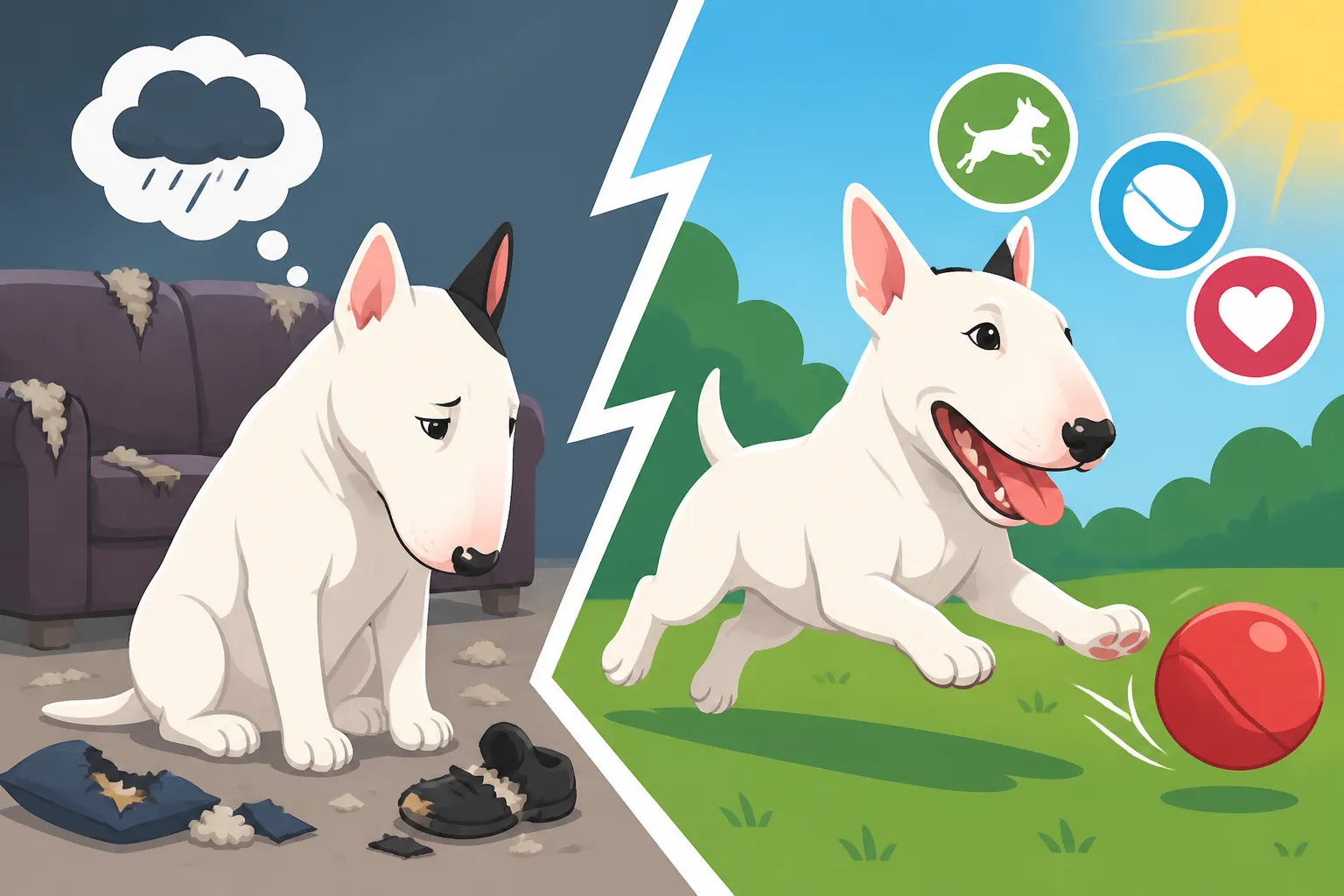
One of the most immediate and impactful signs of an under-exercised Bull Terrier is destructive chewing and digging. This isn’t just a puppy phase; an adult Bull Terrier with pent-up energy can, and will, systematically dismantle your home. Sofas, door frames, drywall, skirting boards – nothing is safe. I’ve seen Bull Terriers chew through crates, dig holes in carpets, and turn expensive dog beds into confetti in minutes. This is not out of spite, but a primal urge to relieve stress and boredom through mouth-work and physical exertion. You might come home to find a cushion exploded across the living room, or a section of your door frame gnawed down to the studs. What a Bull Terrier Does to a Door Frame is a very real problem.
Consider the cost of this destruction. Replacing furniture, repairing walls, or even emergency vet visits for ingested foreign objects can quickly spiral into hundreds, if not thousands, of dollars. It’s a financial strain that adds to the emotional toll of dealing with a constantly destructive dog. Owners often find themselves investing in "indestructible" toys, only to find their Bull Terrier has mastered the art of destruction on those too. High-quality chew toys from brands available on platforms like Chewy can help, but they are only one part of the solution; they can't replace actual exercise.
Unwanted Vocalization and Hyperactivity
An under-exercised Bull Terrier often becomes a very vocal dog. Excessive barking, whining, and grumbling are common ways they try to get attention or express their frustration. This can be particularly problematic in apartment living situations, straining relationships with neighbors. They might bark incessantly at every passerby, every leaf that blows past the window, or simply at you, demanding interaction and an outlet for their energy. This constant noise can be incredibly draining for an owner who is already struggling.
Beyond barking, the home can become a canine demolition derby. Indoor "zoomies" – bursts of frantic running, leaping, and body-slamming – are an under-exercised Bull Terrier’s attempt to burn off energy in a confined space. This can be dangerous, leading to knocked-over lamps, frightened children, or accidental injuries to people and other pets. While zoomies can be a normal part of a Bull Terrier’s play, when they become the primary outlet for daily energy, it signals a serious lack of appropriate exercise.
Aggression and Obsessive Behaviors
While Bull Terriers are generally known for their good nature, insufficient exercise and mental stimulation can lead to increased stress and frustration, which can sometimes manifest as aggression. This isn't typical for the breed but can occur when a dog is consistently under-stimulated and agitated. This might show up as resource guarding, leash reactivity towards other dogs or people, or even nipping behaviors born of frustration and a lack of impulse control. These are serious issues that demand immediate attention and professional intervention, and they stem from a foundation of unmet needs.
Another concerning behavior is obsessive spinning or tail chasing. While Why a Bull Terrier Chases Its Tail can have medical causes, it can also be a behavioral coping mechanism for extreme boredom and anxiety. An under-exercised Bull Terrier might spend hours spinning in tight circles, sometimes even injuring its tail. This compulsive behavior can be heartbreaking to witness and is a clear indicator that the dog is struggling immensely with its environment and lack of engagement. It’s a desperate plea for something, anything, to occupy its mind and body.
The Unforeseen Costs of Neglecting Exercise
The financial and emotional toll of living with an under-exercised Bull Terrier often becomes unbearable, pushing owners to the brink and frequently leading to the decision to rehome their beloved pet. These aren't just minor inconveniences; they are significant burdens that many prospective owners simply don't anticipate.
The Steep Price of Property Damage
As mentioned, the destructive tendencies of a bored Bull Terrier can incur substantial costs. Think about a sofa: a new one could set you back hundreds or even thousands. Repairing a chewed door frame or replacing flooring can be equally expensive. Then there are the smaller, but equally frustrating, items: shoes, books, remote controls, children's toys – all fair game for a Bull Terrier determined to create its own fun. The Destruction Budget Nobody Warns a Bull Terrier Owner About is not a myth; it's a harsh reality for those unprepared for the breed's drive.
Beyond simple replacement, there's the cost of prevention. Investing in heavy-duty crates, secure chew toys, and dog-proof barriers can add up. Even then, a determined Bull Terrier can often find a way. This constant battle against destruction drains both your wallet and your spirit, making you feel like you're constantly fighting against your own dog rather than enjoying its companionship.
Behavioral Training and Veterinary Interventions
When destructive behaviors or aggression escalate, professional help becomes necessary. Hiring a qualified dog trainer or a veterinary behaviorist to address these issues can be incredibly expensive. Behavior modification programs require consistent effort, time, and money, and even then, success is largely dependent on the owner's commitment to implementing the recommended changes, which almost always include a significant increase in appropriate exercise and mental stimulation. What a Bull Terrier Owner Should Hire a Behaviorist details the commitment required, and the cost associated.
Furthermore, an under-exercised Bull Terrier is more prone to certain medical issues. Stress-related gastrointestinal problems, injuries from unsupervised rough play or destructive acts (like swallowing non-food items), and even conditions exacerbated by a lack of proper fitness can lead to unexpected veterinary bills. Having a good pet insurance plan from a company like Healthy Paws can certainly help mitigate some of these financial shocks, but prevention through proper care is always the best approach.
The Heartbreaking Reality of Rehoming
Ultimately, for many owners, the cumulative stress, financial burden, and emotional exhaustion of managing an under-exercised Bull Terrier become too much. They feel they have no choice but to rehome the dog or surrender it to a rescue organization. This is a devastating outcome for everyone involved, especially the Bull Terrier, who often doesn’t understand why it’s being moved from its home. It's a testament to the breed's resilience that so many Bull Terriers adapt to new homes through rescue, but it’s a situation that is entirely preventable with proper understanding and preparation.
Rescue organizations are often overflowing with Bull Terriers, precisely because their energy and unique needs were underestimated. When an owner brings a Bull Terrier to rescue, they are often distraught, citing "unmanageable behavior" as the primary reason. The rescue then faces the cost of vetting, housing, feeding, and rehabilitating these dogs, which is why What a Bull Terrier Rescue Fee Does Not Cover can be significant, reflecting the sheer resources needed to help these dogs find suitable forever homes.
Preventing Rescue: Responsible Ownership from Day One
The good news is that under-exercised Bull Terriers ending up in rescue is largely preventable. It comes down to honest self-assessment before bringing a Bull Terrier into your home, and a commitment to meeting their specific needs throughout their lives.
Honest Self-Assessment: Is a Bull Terrier Right for You?
Before you even consider bringing a Bull Terrier into your life, ask yourself some hard questions:
- Time Commitment: Do you have 1-2 hours daily for dedicated exercise and mental stimulation, rain or shine? This isn't just a walk; it's vigorous play, training, and enrichment. How Much Exercise a Bull Terrier Actually Needs is more than most people expect.
- Energy Levels: Are you an active person or family? Do you enjoy hiking, long walks, or playing fetch for extended periods? A Bull Terrier needs a partner in crime for adventure.
- Patience and Consistency: Bull Terriers are smart but can be stubborn. Are you prepared for consistent, positive reinforcement training, even when it feels like they’re being a "three-year-old in a dog suit?" Why a Bull Terrier Decides a Cue Is Optional is a very real experience for owners.
- Financial Resources: Beyond the initial purchase, can you afford quality food (like a tailored plan from Ollie), veterinary care, training classes, and potentially an emergency fund for unexpected costs? The ongoing financial commitment is substantial.
Being realistic about your lifestyle and what you can genuinely offer a Bull Terrier is the first, most crucial step in preventing future problems. Don't fall in love with the look without understanding the full package.
Daily Routine: Exercise and Enrichment
A consistent, varied routine is key for a Bull Terrier's well-being.
- Physical Exercise: This should involve more than just a leash walk. Think off-leash play in a secure area, brisk runs, fetch, flirt poles, or structured playdates with well-matched dogs. At least one substantial burst of high-intensity activity daily is often required, in addition to regular walks.
- Mental Stimulation: Their brains need a workout too! Incorporate daily training sessions (even short, fun ones), puzzle toys, scent work, and interactive games. Brands like Chewy offer a wide array of Which Puzzle Toys Occupy a Bull Terrier that can challenge their minds. Rotating toys keeps things fresh and exciting.
- Structured Play: Bull Terriers love to play, but their play can be rough. Teach them appropriate play behavior and provide outlets that channel their energy positively. Fetch, tug-of-war (with rules), and supervised interactions are excellent.
The Value of Early Training and Socialization
Starting positive reinforcement training and socialization early is paramount. Puppy classes are invaluable for teaching basic manners and exposing them to new sights, sounds, and other friendly dogs in a controlled environment. A well-socialized Bull Terrier is generally more adaptable and less likely to develop fear-based or frustration-based aggression. Consistency is absolutely vital; a Bull Terrier will push boundaries, and a firm but fair approach with clear expectations is essential. Remember, A Bull Terrier Trains When It Sees the Point, so make learning rewarding and fun.
Seeking Professional Help When Needed
There is no shame in admitting you need help. If you find yourself struggling with your Bull Terrier’s behavior, reach out to a certified professional dog trainer or a veterinary behaviorist. They can provide tailored advice and strategies to address specific issues. Proactive intervention is always better than waiting until problems become entrenched and severe. Often, a fresh perspective and some expert guidance can turn a challenging situation around, ensuring your Bull Terrier remains a cherished member of your family and avoids the rescue system.
Here's a quick comparison of what an under-exercised Bull Terrier might exhibit versus one whose needs are consistently met:
| Trait / Behavior | Under-Exercised Bull Terrier | Adequately Exercised Bull Terrier |
|---|---|---|
| Energy Level | Restless, hyperactive indoors, constant pacing/nudging. | Calm and relaxed indoors, settles easily after activity. |
| Destruction | Chewing furniture, digging, destroying personal items. | Less destructive, channels chewing to appropriate toys. |
| Vocalization | Excessive barking, whining, attention-seeking noises. | Barks appropriately (e.g., at doorbell), less whining. |
| Attention Span | Easily distracted, struggles to focus on training. | More focused during training, eager to learn. |
| Mood | Frustrated, anxious, prone to irritability. | Happy, playful, well-adjusted temperament. |
| Interaction | Nipping, jumping, body-slamming for attention. | Greets politely, engages in appropriate play. |
| Sleep | Struggles to settle, restless nights. | Sleeps soundly and peacefully. |
By understanding and committing to the unique needs of this incredible breed, you can ensure your Bull Terrier thrives, staying out of rescue and living a full, happy life as a cherished companion.
Disclaimer
This article is for general informational purposes only and does not constitute professional advice. Laws, prices and regulations vary by location and change over time. Consult a qualified professional for guidance on your specific situation.