Why a Bull Terrier’s Chest Is So Wide
A Bull Terrier’s chest is wide because it is part of the breed’s characteristic, compact, powerful build—not automatically a sign that the dog is overweight or unwell. The rib cage, shoulders, and chest muscles all contribute to the shape. This guide explains what that broad outline means, how to tell normal structure from a change in body condition, and when a chest or breathing concern deserves veterinary attention.
What makes a Bull Terrier’s chest so wide
The breed’s frame is broad by design
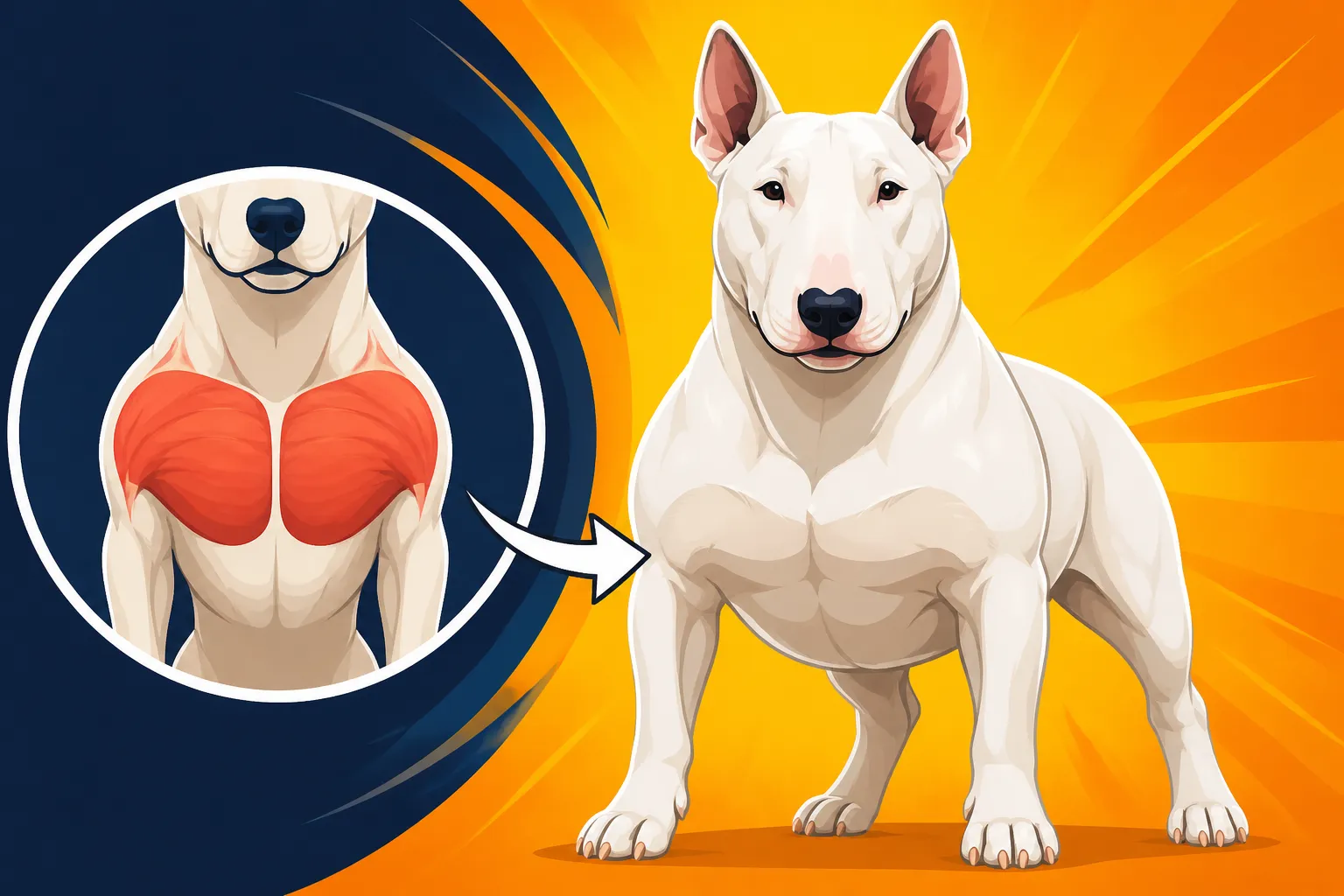
Bull Terriers are sturdy, muscular dogs with a deep body and a noticeable chest. Their width comes from more than one feature: the rib cage is rounded and well sprung, the chest has depth, and the shoulders and muscles add substance around the front of the body. Together, those parts create the solid, broad outline many people notice even in a lean dog.
A wide chest is therefore a normal part of the breed’s general type. It is not a measurement that, on its own, tells you whether a dog is healthy, overweight, or fit. Two Bull Terriers can look different because of their sex, height, age, genetics, and muscle development while still having a recognizably broad build. For a fuller picture of the breed’s proportions, see What a Bull Terrier Weighs and How Tall It Stands.
The Bull Terrier’s shape also reflects its breeding history. The modern breed developed from earlier bull-and-terrier dogs and was shaped over time into a distinct companion and show breed. That history helps explain why it has a strong, compact body, but it does not mean every broad-chested Bull Terrier should be expected to look exactly alike. Breed background and the influence of earlier dogs are explored in Which Breeds Went Into the Bull Terrier and What the Old English Bulldog Gave the Bull Terrier.
The rib cage, shoulders, and muscles all contribute
A dog’s chest is not a single flat area. The rib cage surrounds and protects the heart and lungs, while the shoulders and the muscles that support movement add shape to the front of the body. When you look at a Bull Terrier from the front, the chest may appear especially wide because the shoulders, upper forelegs, and rib cage form a substantial silhouette.
From the side, chest depth can be more obvious than width. A deep chest reaches down toward the elbows, while a broad chest describes the body’s side-to-side dimension. These traits can occur together, but they are not interchangeable. A dog may have a deep body without looking unusually wide from the front, or a powerful front that looks broad without appearing excessively deep.
This distinction matters when assessing your own dog. A chest that looks broad because the dog has a naturally solid frame is different from a body that has gradually become fuller around the ribs and waist. Breed appearance should be considered alongside how the dog feels, moves, and behaves—not judged from one photograph or a quick glance.
Breed type varies from dog to dog
A Bull Terrier’s chest can look different as the dog grows and matures. Puppies are still developing, and their proportions may seem temporarily uneven as their legs, shoulders, and body change at different rates. Adult dogs also vary: one may have a particularly muscular front, while another has a lighter outline.
A broad chest is not a reason to assume a dog is oversized. Height, weight, body condition, and overall proportions all matter. A dog’s outline should be considered as a whole rather than compared with a single idealized picture online. The breed’s distinctive head often draws attention, too, but the body has its own proportions; the shape of the head is discussed in What a Bull Terrier's Downface Is and Why the Bull Terrier Has No Stop.
| What you notice | What it may reflect | What to check |
|---|---|---|
| Broad front on a lean dog | Normal rib cage, shoulders, and muscle | Waist, ribs, movement, and stable weight |
| Chest that looks deeper from the side | Natural body proportions | Whether the dog is comfortable and active |
| A fuller body developing over time | Possible weight gain or changing condition | Rib coverage, waistline, feeding, and activity |
| Sudden swelling or a new change in shape | A health issue or injury may need assessment | Contact a veterinarian, especially if the dog seems unwell |
| Noisy or labored breathing | A breathing problem, not something to explain away by chest shape | Seek veterinary advice promptly |
How to tell a normal broad chest from weight gain
Look at the whole body, not just the front
Because Bull Terriers are naturally substantial through the chest and shoulders, judging weight by appearance alone can be misleading. A dog may look broad from the front and still have a healthy body condition. Instead, assess the ribs, waist, and abdomen as part of the same picture.
With your dog standing comfortably, run your hands gently along the rib cage. You should generally be able to feel the ribs beneath a light covering, without pressing hard. From above, look for some narrowing behind the ribs. From the side, notice whether the abdomen rises behind the chest rather than continuing in a straight, heavy line. These checks are more useful than asking whether the chest looks “too big.”
A thick neck, strong shoulders, or naturally muscular front can make the body appear heavier than it is. On the other hand, a dog can gain fat around the ribs and waist without the change being immediately obvious beneath a short coat. If you are unsure, ask your veterinarian to assess body condition and track weight over time. How to Feel a Bull Terrier's Ribs offers a more detailed guide to that hands-on check.
Watch for gradual changes in outline and condition
Weight gain often happens slowly. A collar may become snug, the waist may become less visible, or the dog may seem less eager to jump into the car. These small changes can be easy to miss when you see your dog every day. Comparing periodic photos taken from the side and above can help you notice a shift, especially when you take them under similar conditions.
Muscle and body fat can also be confused. A Bull Terrier with regular, appropriate activity may have well-developed shoulders and a firm front. That is different from a dog whose ribs are increasingly difficult to feel and whose waist has disappeared. A veterinarian can help distinguish the two and suggest a safe plan if the dog needs to lose weight. Avoid cutting food sharply or adding strenuous exercise without guidance, especially for a puppy, an older dog, or one with a health concern.
If you are reviewing food portions, treats, and activity together, make changes gradually and keep a simple record. Note the food offered, extras given during training, walks, play, and weight checks. A broad chest alone does not tell you to reduce food; the aim is to assess the dog’s overall condition rather than react to one feature.
Sudden changes deserve a different response
A chest that has always looked broad is usually just part of your dog’s build. A new change—particularly a sudden increase in abdominal or chest size—is a different matter. Swelling, pain, weakness, repeated retching, restlessness, or a dog that cannot get comfortable should not be dismissed as a normal breed shape. Contact a veterinarian for advice.
Breathing signs also matter more than appearance. If your dog is struggling to breathe, breathing with obvious effort, collapsing, or showing blue or very pale gums, seek emergency veterinary care. A broad chest does not explain away these symptoms. Even less dramatic changes, such as a new persistent cough or unusual fatigue, are worth discussing with your vet.
How chest shape affects movement and everyday care
A strong front still needs comfortable movement
The Bull Terrier’s sturdy front is part of its overall build, but a broad chest does not make every activity suitable at every intensity. Fitness should be developed gradually and matched to the individual dog’s age, health, and conditioning. A young dog still growing, for example, needs age-appropriate activity rather than repetitive, high-impact exercise simply because it looks muscular.
Pay attention to how your dog moves during ordinary walks and play. Does the dog move evenly, recover comfortably, and remain willing to continue? Or has there been a change in stamina, gait, or willingness to exercise? Those observations are more useful than assuming that a strong-looking dog cannot have discomfort.
The shape of the body can also affect equipment fit. A harness that sits comfortably on a narrow-bodied dog may rub behind a Bull Terrier’s front legs or press across the chest. Look for adjustable straps, enough room for natural shoulder movement, and a fit that does not slide or pinch. When comparing options at a local shop or on Chewy, use your dog’s actual measurements and check the maker’s fit instructions rather than relying on a breed label alone.
Measure for a harness instead of guessing by breed
To check fit, measure around the widest part of the chest as directed by the harness manufacturer. Also note the dog’s neck measurement if the design requires it. A soft tape should lie against the coat without being pulled tight. If your dog dislikes measuring, take a few calm attempts with treats rather than trying to hold the dog still through a stressful struggle.
After putting on a harness, check that you can move the straps without them digging into the skin, and watch your dog walk, turn, and sit. Look under the front legs for rubbing, redness, or hair wear. A harness can appear secure while restricting shoulder movement, so observing the dog in motion is important. If it shifts around or seems to press on the chest, try a different design or ask a knowledgeable fitter for help.
When browsing Chewy, or any retailer, compare the adjustment range and return or exchange information with your dog’s measurements in hand. If your dog falls between sizes, has an unusually broad front, or has a medical condition affecting movement, ask your veterinarian or a professional fitter what style is appropriate. The goal is comfort and control, not simply choosing a product described as suitable for Bull Terriers.
Keep health checks tied to the individual dog
A broad chest is not itself a diagnosis and does not indicate a heart or lung problem. Still, routine veterinary care matters for every dog, including one that looks fit and energetic. Let your vet know about changes in breathing, exercise tolerance, coughing, fainting, or recovery after activity. A clinician can decide whether examination or further testing is appropriate.
At home, get familiar with what is normal for your dog. Notice how the chest moves at rest, how quickly the dog settles after a walk, and whether ordinary play remains comfortable. You do not need to count every breath or repeatedly inspect your dog if everything is normal; the practical point is to recognize a meaningful change. For breed-specific heart concerns, see The Heart Murmur a Bull Terrier Puppy Should Be Checked For and When a Bull Terrier Should Have an Echocardiogram.
When to ask a veterinarian about your Bull Terrier’s chest
Book a routine appointment for ongoing changes
If your dog’s shape has gradually changed, weight has crept up, or activity has become harder, arrange a routine veterinary visit. Bring notes about when you first noticed the change, how it has progressed, and whether appetite, drinking, sleep, or movement has changed as well. Photos from earlier months can be useful because they show the difference more clearly than memory alone.
A veterinary appointment is also sensible if you cannot tell whether the dog is lean or carrying extra weight. Body-condition assessments are easier when someone can feel the ribs and examine the dog from several angles. Your vet can take the dog’s age, lifestyle, health history, and breed build into account rather than relying on a generic weight target.
Seek prompt help for breathing difficulty or sudden swelling
Do not wait for a routine check if your dog is visibly struggling to breathe, collapses, has blue or pale gums, or develops sudden swelling with distress. These signs need prompt veterinary assessment. Likewise, a new chest or abdominal change accompanied by pain, repeated retching, marked weakness, or unusual agitation deserves urgent attention.
For milder but persistent symptoms—such as a cough, reduced stamina, or breathing that seems different from your dog’s usual pattern—call your veterinary clinic and describe exactly what you are seeing. A brief video of an episode can help the clinic understand the concern, provided recording it does not delay care when your dog is in distress.
Keep the question specific
When you talk with your veterinarian, separate what you observe from what you suspect. For example: “His chest has always been broad, but over the last few weeks he gets tired sooner on our usual walk,” is more useful than “His chest looks wrong.” Mention whether the change was sudden or gradual and whether it occurs at rest, during exercise, or after excitement.
That detail helps distinguish normal conformation from a new issue requiring investigation. A Bull Terrier’s wide chest is usually a feature of its build. The more important clues are changes in body condition, comfort, movement, or breathing—and those are worth assessing on their own merits.
Disclaimer
This article is for general informational purposes only and does not constitute professional advice. Laws, prices and regulations vary by location and change over time. Consult a qualified professional for guidance on your specific situation.