Whether a Kidney Biopsy Is Needed on a Bull Terrier
Finding out your beloved Bull Terrier might have kidney problems is a truly terrifying experience. The questions flood your mind: How serious is it? What does this mean for their future? And often, after initial tests, you might be faced with another daunting question: Does my Bull Terrier need a kidney biopsy? This guide is here to walk you through the complexities of kidney disease diagnostics in Bull Terriers, specifically focusing on when and why a kidney biopsy might become a necessary, albeit challenging, step in understanding and managing your dog’s health.
Understanding Bull Terrier Kidney Disease and Its Diagnosis
Bull Terriers, as much as we adore their quirky personalities and egg-shaped heads, are unfortunately predisposed to certain health conditions, and kidney disease is high on that list. It’s a silent, insidious threat that often shows very few outward signs until it’s already quite advanced, leaving us owners feeling helpless and blindsided.
The Silent Threat of Hereditary Nephritis
One of the most concerning kidney conditions in our breed is Hereditary Nephritis. This isn't just any kidney disease; it's a genetic disorder specific to Bull Terriers that causes progressive damage to the tiny filtering units within the kidneys, known as glomeruli. What makes it so heartbreaking is that often, a Bull Terrier can appear perfectly healthy, full of life, and happy, even while this disease is quietly ravaging their kidneys. Owners often report their dogs acting completely normal, eating well, and having great energy, only to receive devastating news after routine bloodwork or a specific screening test. This silent progression is precisely why early and thorough diagnostic testing is so critical for this breed. Hereditary Nephritis Takes Bull Terriers in Their Prime far too many Bull Terriers, and understanding its nature is the first step in prevention and management.
The genetic component means it’s passed down through generations, making responsible breeding practices and pre-purchase screening paramount for puppies. But even with the best intentions, some dogs slip through, or are adopted later in life without a full health history. The disease causes a leakage of protein from the blood into the urine, which is a tell-tale sign that the filtering system is compromised. As the disease progresses, kidney function declines, leading to a buildup of toxins in the blood that healthy kidneys would normally filter out. This slow, often unnoticeable decline is incredibly frustrating for owners who only want the best for their quirky companions.
Initial Diagnostic Steps: Bloodwork, Urinalysis, and UPC Ratios
When a vet suspects kidney issues in a Bull Terrier, they typically start with a combination of routine, non-invasive tests. These are your first line of defense and provide crucial initial insights without putting your dog through undue stress.
Blood tests, specifically checking blood urea nitrogen (BUN) and creatinine levels, are standard. These values rise as kidney function declines because the kidneys aren't effectively filtering waste products from the blood. However, it's important to remember that these levels often don't become elevated until roughly 75% of kidney function has been lost. This is why solely relying on BUN and creatinine can give a false sense of security in the early stages of Hereditary Nephritis. Furthermore, your vet will also likely check phosphorus levels, as elevated phosphorus is another common indicator of failing kidneys, and can cause its own set of problems for your dog.
Urinalysis is equally vital. It gives your vet a snapshot of what's happening inside the kidneys. They'll look at the urine's specific gravity, which indicates how well the kidneys are concentrating urine. A dilute urine sample can be a red flag. They'll also check for the presence of blood, infection, and, critically, protein. While a small amount of protein in the urine can be normal, consistently high levels are a significant concern for Bull Terriers, especially when Hereditary Nephritis is suspected. This is why The Yearly Urine Test Every Bull Terrier Owner Should Book is not just a recommendation, but a critical part of proactive care for our breed.
This brings us to the urine protein-creatinine (UPC) ratio. This test is arguably one of the most important screening tools for early kidney disease in Bull Terriers. Unlike a simple dipstick test for protein, a UPC ratio provides a quantitative measure of how much protein is being lost through the urine, accounting for variations in urine concentration. A high UPC ratio indicates significant protein leakage, which is a hallmark of glomerular disease like Hereditary Nephritis. What a UPC Ratio Tells a Bull Terrier Owner is invaluable information, because it helps vets detect the disease much earlier than bloodwork alone, sometimes years before BUN or creatinine levels show any change. Monitoring this ratio over time helps track the disease's progression and the effectiveness of treatment. Many Bull Terrier owners are advised to check their dog’s UPC ratio regularly, even annually, as part of their routine health checks. How Often a Bull Terrier's Urine Should Be Tested depends on their age and health status, but for Bull Terriers, vigilance is key.
When Imaging Comes Into Play: Ultrasound and Beyond
After blood and urine tests, your vet might recommend imaging, usually an ultrasound, to get a better look at the physical structure of your Bull Terrier’s kidneys. This non-invasive step adds another layer of diagnostic information, helping to rule out other potential issues or pinpoint structural abnormalities.
What a Kidney Ultrasound Can Reveal
A kidney ultrasound provides detailed images of your Bull Terrier's kidneys, allowing the veterinarian to assess their size, shape, and internal architecture. It's like an internal map that helps visualize what's going on. The vet will be looking for a number of things: Are the kidneys unusually small, suggesting chronic disease? Are they enlarged? Do they have an irregular shape? Are there any obvious cysts, tumors, or stones present?
For Bull Terriers, an ultrasound can be particularly helpful in identifying conditions like Polycystic Kidney Disease in a Bull Terrier, which involves the presence of multiple fluid-filled sacs within the kidney tissue. While this isn't the same as Hereditary Nephritis, it's another inherited kidney condition that can affect the breed. An ultrasound can also reveal changes in the kidney's internal structure, such as increased echogenicity (brightness) which might indicate scarring or inflammation. It's a fantastic tool for visualizing these physical changes and can help guide further diagnostic steps. Your vet will often rely on a specialist, perhaps a veterinary radiologist, to interpret these images to ensure accuracy. How a Bull Terrier's Kidney Ultrasound Is Read can be complex, requiring an expert eye to discern subtle signs of disease.
Limitations of Non-Invasive Diagnostics
While blood tests, urinalysis, and ultrasound are incredibly valuable, they do have their limitations. They tell us that there's a problem, and sometimes where the problem is, but they don't always tell us the exact nature of the disease at a cellular level, or its precise stage and prognosis.
For instance, a high UPC ratio tells us protein is leaking, which strongly points to glomerular disease, but it doesn't definitively tell us which type of glomerular disease, or the extent of inflammatory versus scar tissue. An ultrasound might show small, irregular kidneys, indicating chronic kidney disease, but it can't tell us the specific pathology causing that change. These tests can indicate Signs a Bull Terrier's Kidneys Are Failing, but they don't always provide the granularity needed for targeted treatment plans.
This lack of specific information can be incredibly frustrating for owners. You know something is wrong, your dog is potentially at risk, but without a definitive pathological diagnosis, treatment options can feel like a shot in the dark, often limited to supportive care that manages symptoms rather than targeting the root cause. This is where the challenging conversation about a kidney biopsy often begins.
The Kidney Biopsy Decision: When and Why It's Considered
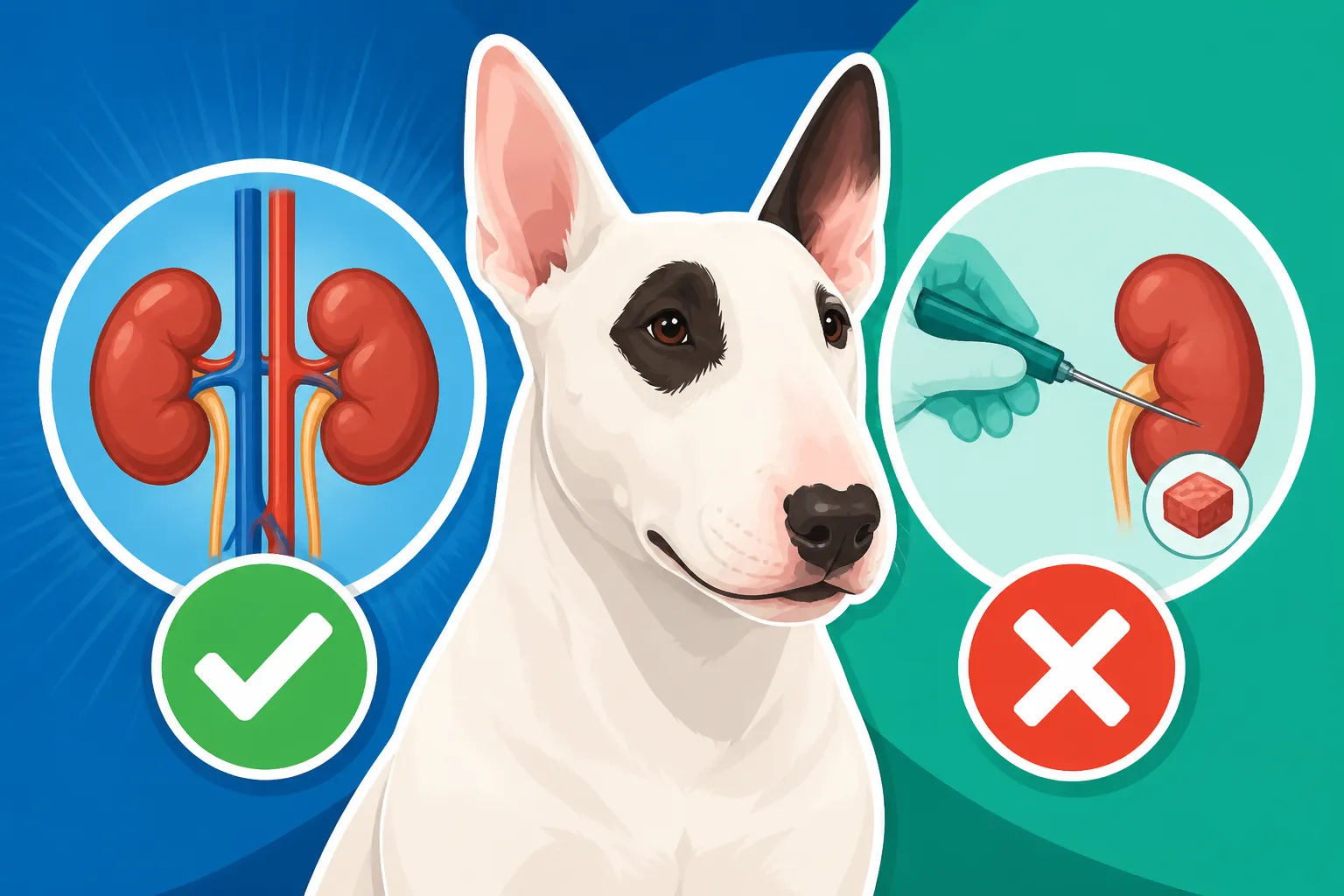
When non-invasive tests paint a picture of kidney trouble but can't give a definitive diagnosis, a kidney biopsy steps into the spotlight. It's a more invasive procedure, and the decision to proceed often comes with a lot of apprehension for owners. However, for a Bull Terrier potentially facing a serious, progressive condition like Hereditary Nephritis, it can offer invaluable clarity.
The Purpose of a Renal Biopsy in Bull Terriers
The primary purpose of a renal biopsy is to obtain a small tissue sample from the kidney for histopathological examination. This means the tissue is sent to a specialized lab where pathologists examine it under a microscope, looking at the cells and structures in incredible detail. They can identify the specific type of kidney disease, the extent of damage, and whether it’s primarily inflammatory, degenerative, or scarring.
For a Bull Terrier, a biopsy can definitively diagnose Hereditary Nephritis by showing characteristic changes in the glomeruli. It can also differentiate it from other types of kidney disease, such as other forms of glomerulonephritis or tubulointerstitial nephritis, which might have different causes and require different treatments. How Hereditary Nephritis Damages a Bull Terrier's Kidneys can only be truly confirmed and understood through this kind of direct tissue analysis.
A biopsy provides actionable information. Knowing the exact diagnosis can significantly impact treatment strategies. For some types of kidney disease, specific immunosuppressive medications might be beneficial, while for others, they would be useless or even harmful. Without a biopsy, treatments often have to be generalized and supportive, focusing on managing symptoms rather than addressing the underlying pathology. This definitive diagnosis can not only guide therapy but also give you a more accurate prognosis, helping you make informed decisions for your Bull Terrier's future.
Risks and Benefits: Weighing the Decision
The decision to pursue a kidney biopsy is never taken lightly, and it's completely understandable for owners to feel anxious about it. It involves general anesthesia, and any surgical procedure carries inherent risks.
Potential Risks of a Kidney Biopsy:
- Bleeding: The kidneys are highly vascular organs, so there's a risk of hemorrhage, which can range from minor to severe.
- Infection: As with any invasive procedure, there's a risk of introducing bacteria and causing an infection.
- Damage to other organs: Though rare, there's a slight risk of puncturing adjacent organs during the biopsy.
- Pain: Your Bull Terrier will experience some discomfort post-procedure, which will need to be managed with pain medication.
- Anesthesia complications: Some dogs have adverse reactions to anesthesia, although this risk is minimized by thorough pre-anesthetic screening and careful monitoring.
These risks are real, and your veterinarian will discuss them openly with you. The procedure is typically performed by a specialist, often an internal medicine veterinarian, who has extensive experience with these delicate procedures, which helps mitigate risks.
Potential Benefits of a Kidney Biopsy:
- Definitive Diagnosis: This is the biggest benefit. A clear diagnosis removes much of the uncertainty.
- Targeted Treatment: With a specific diagnosis, your vet can prescribe treatments that are most likely to be effective, potentially slowing disease progression and improving quality of life.
- Accurate Prognosis: Knowing the exact type and severity of kidney damage helps provide a more accurate outlook for your Bull Terrier.
- Guidance for Breeding Decisions: If your Bull Terrier is intact, a definitive diagnosis of Hereditary Nephritis can inform responsible breeding choices, preventing further spread of the disease.
The financial aspect is also a significant consideration. A kidney biopsy, including anesthesia, the procedure itself, hospitalization, and histopathology fees, can be costly. It’s during these stressful times that having pet insurance, perhaps from a provider like Healthy Paws, can make a monumental difference, allowing you to prioritize the best diagnostic and treatment options without immediate financial strain. Healthy Paws, for example, often covers diagnostic tests for unexpected illnesses, which a kidney biopsy would certainly fall under.
Alternatives to Biopsy and Management Without a Definitive Diagnosis
For some owners, due to financial constraints, their Bull Terrier's age, or other health concerns that make anesthesia risky, a kidney biopsy might not be a viable option. It's a tough call, and there are alternatives, even if they offer less certainty.
If a biopsy isn't pursued, your veterinarian will likely recommend empirical treatment, meaning they'll manage the disease based on the most probable diagnosis indicated by the non-invasive tests. For Bull Terriers with protein-losing nephropathy (high UPC ratio), this typically involves a multi-pronged approach:
- Dietary Management: A renal diet, specifically formulated to be lower in protein, phosphorus, and sodium, is often prescribed. The idea is to reduce the workload on the kidneys and slow the progression of damage. Which Diet a Bull Terrier With Kidney Disease Needs is a crucial part of long-term management.
- Medications to Reduce Proteinuria: Angiotensin-converting enzyme (ACE) inhibitors (like enalapril or benazepril) are commonly used to reduce protein leakage in the urine and help control blood pressure.
- Blood Pressure Control: High blood pressure (hypertension) is common in kidney disease and can further damage the kidneys. Medications to manage blood pressure are often part of the treatment plan.
- Phosphate Binders: If blood phosphorus levels are high, phosphate binders can be added to food to reduce absorption from the gut.
- Omega-3 Fatty Acids: Supplements like fish oil can have anti-inflammatory effects and may help protect kidney function.
This approach focuses on supportive care and managing the symptoms, aiming to slow the disease's progression and maintain your Bull Terrier's quality of life for as long as possible. While not as precise as a biopsy-guided treatment, it can still be very effective. It's a testament to the dedication of Bull Terrier owners that they navigate these complex decisions, always with their beloved dog's best interests at heart. How a Bull Terrier With Nephritis Is Managed is a journey, not a sprint, and requires ongoing dedication.
Life After a Kidney Disease Diagnosis
Regardless of whether a kidney biopsy is performed, a diagnosis of kidney disease in your Bull Terrier marks the beginning of a new phase of care. It requires vigilance, commitment, and a strong partnership with your veterinary team.
Tailoring Treatment Based on Biopsy Results
If you do proceed with a kidney biopsy and receive a definitive diagnosis, the subsequent treatment plan can be much more precise. For example, if the biopsy reveals a specific type of inflammatory glomerulonephritis, your veterinarian might consider immunosuppressive drugs, like corticosteroids or other agents, to specifically target the inflammation. This wouldn't be a safe or appropriate course of action without that definitive tissue diagnosis. The biopsy allows for a truly personalized medicine approach, giving your Bull Terrier the best possible chance at slowing the disease and maintaining a good quality of life. The clarity provided by a biopsy can eliminate guesswork and ensure that valuable time and resources are spent on the most effective therapies.
Ongoing Monitoring and Quality of Life
Living with a Bull Terrier with kidney disease means a commitment to ongoing monitoring. This includes regular veterinary check-ups, often every few months, to track disease progression. These appointments will typically involve blood tests to monitor BUN, creatinine, and phosphorus levels, and urinalysis, including the crucial UPC ratio, to assess protein loss. Blood pressure checks are also a regular part of the routine to ensure hypertension is controlled. What a Bull Terrier's Yearly Bloodwork Should Cover will become a much more focused panel.
The goal is always to maintain your Bull Terrier's quality of life. This means not just managing the disease medically, but also ensuring they remain comfortable, happy, and engaged. Pay close attention to their appetite, energy levels, and any changes in drinking or urination habits. While the diagnosis is serious, many Bull Terriers with kidney disease can live fulfilling lives for years with proper management. Your vet, possibly a kidney specialist or veterinary internal medicine expert – What a Bull Terrier's Kidney Specialist Charges can be a concern, but their expertise is invaluable – will guide you through this journey. And again, having pet insurance like Healthy Paws can help cover the recurring costs of these ongoing diagnostics and medications, easing the financial stress associated with chronic illness. Consistent care, supported by a good insurance plan, ensures your Bull Terrier receives the best possible long-term outlook.
Comparative Overview of Kidney Diagnostic Methods
To help you visualize the different approaches to diagnosing kidney issues in Bull Terriers, here's a quick comparison of the common methods:
| Diagnostic Method | What it Measures / Reveals | Invasive? | Main Purpose | Pros | Cons |
|---|---|---|---|---|---|
| Bloodwork | BUN, Creatinine, Phosphorus (kidney function, waste products) | No | Detect kidney dysfunction or failure | Easy, routine, good for overall health assessment | Doesn't show issues until 75% function lost; non-specific to disease type. |
| Urinalysis | Specific gravity, protein, presence of cells/bacteria | No | Assess kidney concentration ability and protein leakage | Routine, provides early indicators (like dilute urine) | Protein dipstick can be misleading; general, not specific to disease type. |
| UPC Ratio | Quantitative protein in urine | No | Measure protein leakage (key for Hereditary Nephritis) | Highly sensitive for early protein-losing nephropathies | Only measures protein loss, not overall kidney health or specific disease type. |
| Kidney Ultrasound | Kidney size, shape, internal architecture, presence of cysts/masses | No | Visualize kidney structure and identify abnormalities | Non-invasive, identifies structural issues (e.g., polycystic kidneys) | Doesn't provide functional data or specific cellular-level diagnosis; requires expert interpretation. |
| Kidney Biopsy | Direct tissue sample for microscopic examination | Yes | Obtain definitive diagnosis of specific kidney disease | Provides exact disease type, severity, and guides targeted treatment | Invasive, requires anesthesia, carries risks (bleeding, infection), higher cost. |
This table highlights why a biopsy, despite its invasiveness, can be the most informative tool when initial tests are inconclusive or when a specific, targeted treatment plan is critical. How Long a Bull Terrier Lives After a Nephritis Diagnosis can be significantly influenced by the accuracy and timeliness of a diagnosis, which a biopsy often provides.
Disclaimer
The information provided in this article is for educational purposes only and is not a substitute for professional veterinary advice. Always consult with a qualified veterinarian for any health concerns or before making any decisions about your Bull Terrier's care and treatment.