Whether Coat Color Predicts Bull Terrier Tail Chasing
It’s an unsettling sight when your beloved Bull Terrier starts spinning and chasing their tail, not in playful bursts, but with an obsessive, frantic energy that seems to consume them. Many a worried owner has found themselves wondering if there’s some hidden factor at play, perhaps something as seemingly innocuous as their dog’s coat color. This guide aims to clear up common misconceptions and dive deep into what truly causes this complex behavior in Bull Terriers, offering a roadmap for understanding and managing it.
The Misconception of Coat Color and Tail Chasing in Bull Terriers
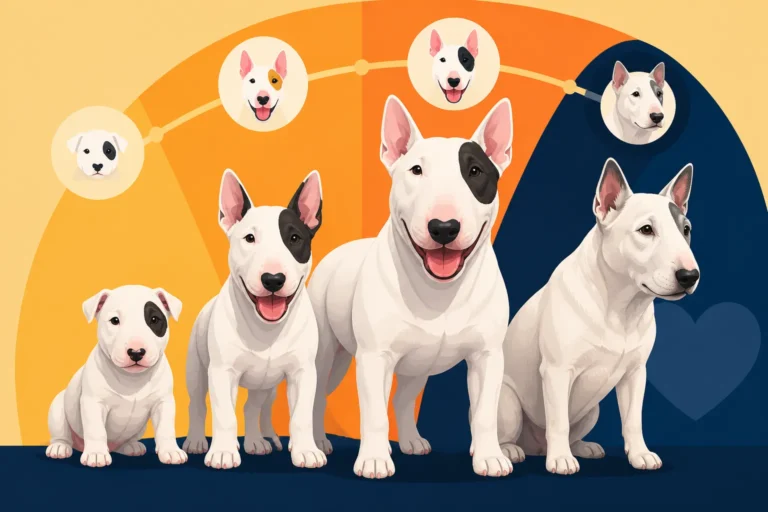
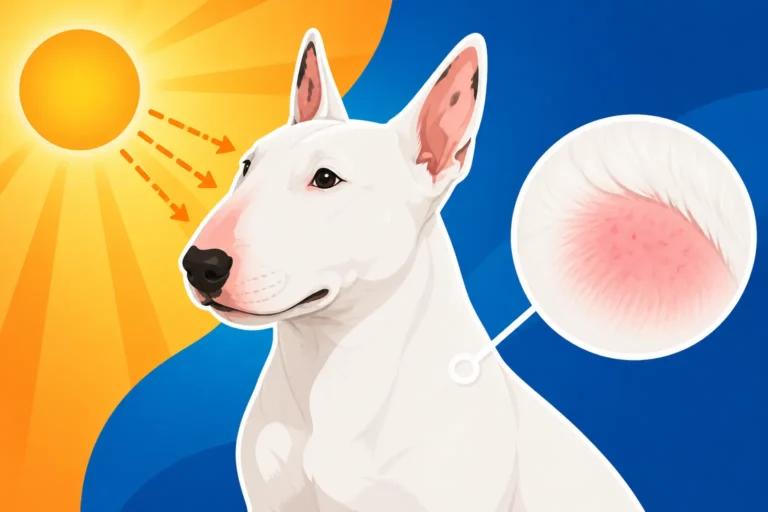
Let's address a common, yet unfounded, concern right off the bat: the idea that your Bull Terrier's coat color dictates whether they're more or less prone to tail chasing. You might have heard whispers in the park, or read old forums suggesting that white Bull Terriers are more susceptible to certain behaviors or health issues due to their pigmentation. While it's true that some white-coated breeds, including Bull Terriers, are predisposed to deafness due to the lack of pigment in the inner ear, this genetic link does not extend to tail chasing.
Historically, anecdotal observations sometimes led to generalizations. For instance, if an owner had a white Bull Terrier who was a persistent tail chaser, they might mistakenly connect the two. However, there is no scientific evidence, no peer-reviewed studies, and no genetic markers that correlate specific coat colors in Bull Terriers with an increased likelihood of developing obsessive tail chasing. Whether your Bull Terrier is pure white, brindle, red, or tricolor, their coat color does not predispose them to this particular behavioral issue. It’s a bit like saying people with red hair are more prone to biting their nails – it just doesn’t hold water scientifically. The genetics controlling coat color are distinct from those that might influence neurological or compulsive behaviors.
Debunking Old Wives' Tales About Color and Behavior
Many old wives' tales circulate in the dog world, passed down through generations of breeders and owners. While some of these traditions hold kernels of truth, many are simply superstitions or misinterpretations. The idea that a white Bull Terrier's "hot head" or "crazy streak" is linked to its coat color is one such tale. While Bull Terriers, regardless of color, can certainly be strong-willed, intense, and prone to zoomies, these are breed characteristics, not color-specific traits.
When we discuss genetic predispositions, we're talking about specific genes that influence certain physical or neurological developments. For example, the gene responsible for white coat color often has pleiotropic effects, meaning it can influence multiple traits. In many breeds, the gene that causes a lack of pigment in the coat (like the gene responsible for the pure white Bull Terrier) can also affect the development of melanocytes in the inner ear, leading to congenital deafness. This is why a white Bull Terrier should be BAER Tested. However, the complex neurological pathways that lead to compulsive behaviors like tail chasing are not understood to be linked to these specific pigmentation genes. It’s important for owners to separate verifiable genetic links from folk wisdom.
Why This Misconception Persists
The persistence of the coat color myth often stems from a natural human desire to find simple explanations for complex problems. When a beloved dog exhibits a puzzling or distressing behavior like compulsive tail chasing, it’s easy to grasp at any perceived pattern, no matter how flimsy. If you’re already aware that white Bull Terriers have a higher incidence of deafness, it’s not a huge leap for some to assume other behavioral or health quirks might also be linked to their color.
Additionally, the Bull Terrier's unique look and intense personality sometimes lend themselves to caricature. Their striking appearance, especially the all-white variety, can sometimes be associated with exaggerated personality traits, both positive and negative. Without solid scientific data, these assumptions can take root in anecdotal lore, making it harder for owners to understand the true underlying causes of their dog's issues. The reality is, Bull Terriers of all colors can be equally prone to complex behavioral patterns, and the cause is almost always deeper than skin deep.
Understanding the True Causes of Bull Terrier Tail Chasing
So, if coat color isn't the culprit, what does make a Bull Terrier chase its tail obsessively? The truth is, tail chasing, especially when it becomes compulsive or self-injurious, is a complex behavior with multiple potential underlying causes. It's rarely just "being silly" or boredom, though those can certainly be contributing factors. Often, it's a sign that something deeper is going on.
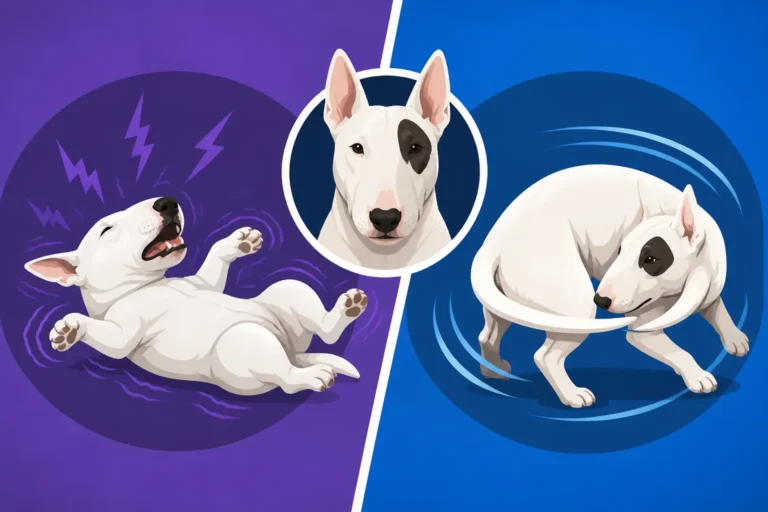
Many Bull Terriers have a genetic predisposition to compulsive disorders, similar to obsessive-compulsive disorder (OCD) in humans. This breed is particularly noted for specific behaviors like spinning and "trancing" – a state where they walk slowly, often with their head down, as if captivated by something unseen. While trancing is generally harmless, persistent tail chasing can be far more serious. It's crucial for owners to understand that this isn't a behavior to simply ignore or scold away; it requires careful investigation. For a deeper dive into this phenomenon, you might want to read our article on Why a Bull Terrier Chases Its Tail.
Neurological and Genetic Factors
One of the primary theories behind compulsive tail chasing in Bull Terriers points to a neurological basis. This isn't just a bad habit; it's often a manifestation of a specific type of compulsive disorder. Some researchers believe it's a form of canine dyskinesia, an involuntary movement disorder. This type of tail chasing can sometimes be triggered by excitement, stress, or even frustration, but once triggered, the dog seems to have difficulty stopping the behavior. It's as if a switch gets flipped in their brain, overriding their normal impulse control.
There is strong evidence that compulsive tail chasing in Bull Terriers is inherited. Studies have identified specific genetic markers that appear to be linked to this behavior. This means that certain Bull Terrier lines are more likely to produce puppies who will develop this condition. If you know the lineage of your Bull Terrier and if tail chasing is present in their ancestors, it might give you a clue about the genetic component. It's why responsible breeders are so vital, as they strive to breed away from such predispositions. Understanding this genetic link can help you manage your expectations and guide your approach to treatment, focusing on neurological support rather than just behavioral modification alone. Our article on Whether Bull Terrier Spinning Is Inherited provides more detail on this often-frustrating aspect.
Medical Conditions and Pain
Beyond genetics, various medical conditions can also manifest as obsessive tail chasing. A dog who is experiencing pain or discomfort might fixate on that area, leading to excessive licking, biting, or chasing of their tail. This could be due to:
- Parasites: Fleas, mites, or internal parasites can cause intense itching around the tail base.
- Allergies: Skin allergies are incredibly common in Bull Terriers, and constant itching can lead to a focus on the tail. A Bull Terrier's Skin Is Its Weakest Point, and irritation here can easily lead to a vicious cycle of discomfort and chasing.
- Anal Gland Issues: Impacted or infected anal glands cause significant discomfort and can lead a dog to chew or chase their tail in an attempt to relieve the pressure.
- Spinal Issues or Nerve Damage: Less common but possible, pain or nerve irritation in the lower back or tail can drive a dog to chase or bite at the area.
- Seizures: In some cases, tail chasing can be a partial seizure activity. While classic seizures are often dramatic, some forms of seizure can manifest as repetitive, seemingly purposeless behaviors. This is a very serious consideration, and it's essential to differentiate between compulsive tail chasing and seizure activity. Our guide on Whether Bull Terrier Tail Chasing Is a Seizure can offer further insight.
It's vital that any Bull Terrier displaying persistent tail chasing is thoroughly examined by a veterinarian to rule out these underlying medical causes. Without addressing pain or discomfort, no behavioral intervention will be truly effective.
Behavioral and Environmental Triggers
While not the root cause in many compulsive cases, behavioral and environmental factors can certainly exacerbate or trigger tail chasing episodes.
- Boredom and Lack of Mental Stimulation: Bull Terriers are intelligent, high-energy dogs. If they aren't given enough physical exercise and, perhaps more importantly, enough mental enrichment, they can become bored and frustrated. This can lead to self-stimulatory behaviors, and tail chasing can be one of them. Imagine being cooped up all day with nothing to do – you'd probably start pacing or developing little nervous habits too! Puzzle toys, training sessions, and interactive games are crucial for this breed.
- Anxiety and Stress: Just like people, dogs can experience anxiety. Changes in routine, new environments, separation anxiety, or even perceived threats can elevate stress levels. Tail chasing can become a coping mechanism for an anxious dog, a way to channel their nervous energy. Understanding What Sets Off a Bull Terrier's Spinning can help owners identify and mitigate these stressors.
- Attention Seeking: While less common as a primary cause for compulsive chasing, sometimes a dog learns that chasing its tail gets a reaction from its owners. If every spin elicits a gasp, a shout, or an attempt to interrupt, the dog might, in some instances, learn to use the behavior to gain attention, even if it's negative attention. This is particularly true for less intense, non-compulsive tail wagging.
- Frustration: A Bull Terrier who is routinely thwarted from doing something they want (like chasing a squirrel or greeting another dog) might turn that pent-up energy inward, resulting in tail chasing. Providing appropriate outlets and teaching impulse control can help.
Diagnosing and Managing Tail Chasing in Bull Terriers
Dealing with a Bull Terrier who compulsively chases their tail can be incredibly frustrating and heartbreaking for owners. It's a journey that often requires patience, persistence, and a multi-faceted approach involving veterinary care, behavioral intervention, and sometimes medication. The first and most critical step is always a thorough veterinary examination.
The Crucial Role of Your Veterinarian
When your Bull Terrier starts exhibiting obsessive tail chasing, your first call should always be to your veterinarian. They are your primary partner in ruling out medical causes and guiding the diagnostic process. Your vet will perform a comprehensive physical exam, checking for any signs of pain, skin irritation, anal gland issues, or neurological abnormalities. They might recommend diagnostic tests such as:
- Blood work: To check for systemic issues.
- Skin scrapings or allergy tests: If skin irritation is suspected.
- X-rays or MRI: To investigate potential spinal or neurological issues. An MRI might be recommended if there's a strong suspicion of a neurological problem not visible on routine exams. You can read about Whether a Bull Terrier Should Have an MRI for more information.
- Referral to a specialist: In complex cases, your vet might refer you to a veterinary neurologist or a veterinary behaviorist. These specialists have advanced training and can offer more in-depth diagnostics and treatment plans. It’s comforting to know that pet insurance providers like Healthy Paws can often help with the costs associated with these specialist visits and extensive diagnostic tests, easing the financial burden during a stressful time.
Behavioral Modification and Environmental Enrichment
Once medical causes have been ruled out or are being managed, behavioral modification becomes a key component of the treatment plan. This is where you, as the owner, play a massive role.
- Increase Mental and Physical Exercise: Ensure your Bull Terrier gets ample opportunities for appropriate exercise. This doesn't just mean a quick walk around the block. Bull Terriers thrive on structured activity, like long walks, fetch sessions, or even dog sports. Mental stimulation is equally, if not more, important. Incorporate puzzle toys, scent work, obedience training, and interactive games into their daily routine. A tired Bull Terrier is often a happy and less obsessive Bull Terrier. Our article on Whether Exercise Reduces Bull Terrier Spinning offers practical advice.
- Redirection and Interruption: When you notice your Bull Terrier starting to fixate on their tail, gently redirect their attention to an appropriate activity. This could be a favorite toy, a short training command, or a game of fetch. The goal is not to punish the tail chasing but to break the cycle and offer an alternative. It can be tricky, as you don't want to inadvertently reward the spinning with attention. Learn How to Interrupt a Bull Terrier's Tail Chasing effectively.
- Reduce Stress and Anxiety: Identify and minimize environmental stressors. This might involve creating a quiet, safe space for your dog, maintaining a consistent routine, or even using calming aids like pheromone diffusers or anxiety vests. A low-stress environment is crucial for any dog prone to compulsive behaviors.
- Positive Reinforcement: Reward calm, non-tail-chasing behavior. Catch your Bull Terrier when they're relaxed or engaged in an appropriate activity and praise them heavily. This reinforces desired behaviors and helps build their confidence.
Medication and Professional Support
For many Bull Terriers with true compulsive tail chasing, behavioral modification alone is not enough. This is where medication, in conjunction with behavioral work, can be incredibly helpful.
- Pharmacological Intervention: Just like OCD in humans, canine compulsive disorders often respond well to medications that help regulate neurotransmitters in the brain, such as selective serotonin reuptake inhibitors (SSRIs) or tricyclic antidepressants (TCAs). These medications, prescribed by a veterinarian, can help reduce the intensity and frequency of the compulsive behavior, making behavioral training more effective. It's important to understand that these aren't "happy pills" but tools to rebalance brain chemistry. Consistency and patience are key, as it often takes several weeks to see the full effect of the medication. For more specifics, consider reading about Which Medication Stops a Bull Terrier Spinning. Again, having a pet insurance plan like Healthy Paws can be a lifesaver, as ongoing medication and veterinary consultations can add up quickly.
- Certified Professional Dog Trainers and Veterinary Behaviorists: Working with a professional dog trainer certified in positive reinforcement methods, or a veterinary behaviorist, can provide invaluable support. A veterinary behaviorist has a deep understanding of both the medical and behavioral aspects of compulsive disorders and can create a tailored treatment plan combining medication and advanced behavior modification techniques. They can help you implement strategies that are effective and humane, reducing frustration for both you and your Bull Terrier.
Comparative Overview of Tail Chasing Myths vs. Facts
To summarize, let's look at a clear comparison between common myths and scientific facts regarding Bull Terrier tail chasing:
| Aspect | Common Myth/Belief | Scientific Fact/Reality |
|---|---|---|
| Coat Color Predisposition | White Bull Terriers are more prone to tail chasing. | No scientific link between coat color and tail chasing. |
| Primary Cause | Just boredom or attention-seeking. | Often a complex neurological compulsive disorder. |
| Severity | A quirky habit, harmless. | Can lead to self-injury, significant distress, and pain. |
| Treatment | Scolding or ignoring the behavior. | Requires veterinary diagnosis, behavioral modification, often medication. |
| Genetic Link | None or unclear. | Strong evidence of a genetic predisposition in Bull Terriers. |
| Underlying Issues | Purely behavioral. | Can be triggered or worsened by pain, allergies, or other medical issues. |
Ultimately, understanding that your Bull Terrier's tail chasing is a complex issue, often with a significant genetic or medical component, is the first step toward effective management. It allows you to approach the problem with empathy and a commitment to seeking the right professional help, rather than getting caught up in outdated myths.
Disclaimer
The information provided in this article is for general informational purposes only and is not a substitute for professional veterinary advice, diagnosis, or treatment. Always seek the advice of your veterinarian or other qualified health provider with any questions you may have regarding a medical condition or treatment for your Bull Terrier.