How Much a Bull Terrier Tolerates From a Child
It’s a common scenario for Bull Terrier owners, especially those with young children or who are planning a family: you adore your goofy, loving Bull Terrier, but you also hear whispers about their terrier tenacity and powerful build. The big question looms – how much can your Bull Terrier truly tolerate from a child before they reach their limit? This guide will dive deep into the unique Bull Terrier temperament, explore practical strategies for ensuring harmonious living, and help you understand the crucial boundaries that keep both your beloved dog and your children safe and happy.
Understanding the Bull Terrier Temperament Around Children
Bull Terriers are often described as "three-year-olds in a dog suit," a moniker that perfectly encapsulates their playful, boisterous, and sometimes clumsy nature. This isn't a breed known for its delicate movements, and understanding this fundamental aspect of their personality is the first step toward managing interactions with children.
The Bull Terrier's "Clownish" Nature and Energy
Let's be real: Bull Terriers are big, enthusiastic goofballs. They love to play, they love to be involved, and sometimes, they just don't quite grasp their own strength and size. Imagine your Bull Terrier, tail wagging, rushing to greet a child. What to them feels like a joyous, full-body hug can easily turn into a tackle for a smaller human. They might body-slam you for fun without a malicious bone in their body, simply because that's their exuberant way of showing affection and engaging in play. Living With a Bull Terrier That Body Slams You for Fun
This intense playfulness, combined with their dense, muscular build, means accidental bumps and knocks are a very real possibility. A Bull Terrier might zoom through the house, trip over its own feet, and inadvertently knock a toddler off balance. It’s not aggression; it’s just pure, unadulterated Bull Terrier energy. They thrive on attention and engagement, and if a child is offering that in the form of running or squealing, the Bull Terrier's natural instinct might be to join the game with all the enthusiasm of a bulldozer. This isn't to say they are dangerous, but rather that their physical presence and playful style need careful management around smaller, more fragile beings.
Prey Drive and the "Terrier" Instinct
Beneath that endearing clown exterior lies the heart of a terrier. Bull Terriers were originally bred for their strength, courage, and determination. While the fighting aspects of their past are thankfully long gone, some of those instincts, particularly a strong prey drive, can still be present. This doesn't mean your Bull Terrier will see your child as prey, but it does mean that certain high-energy behaviors from children, such as running, shrieking, or sudden movements, can trigger a chasing instinct.
This isn't unique to Bull Terriers, of course; many breeds possess a prey drive. However, with the Bull Terrier's power and speed, a simple game of chase can quickly escalate into something unintended. A child running across the yard might look like a fun, fast-moving target to a bored or under-exercised Bull Terrier, leading the dog to give chase, nip playfully, or even bowl them over. It's crucial for owners to recognize that this is not aggression stemming from anger, but rather an instinctual, often misunderstood, reaction that requires careful training and management. Understanding and channeling this drive appropriately is key to preventing misunderstandings and ensuring everyone’s safety. How Strong a Bull Terrier's Prey Drive Is
Sensitivity and Limits
Despite their tough-guy appearance, Bull Terriers can be surprisingly sensitive creatures. They form deep bonds with their families and can be quite attuned to emotional shifts in the household. While they are generally a very tolerant breed, especially with their own family members, every dog has a limit. Just like a human, a dog can get overwhelmed, startled, or simply tired of constant poking, prodding, or loud noises.
Imagine a scenario where a child, not understanding boundaries, continuously pulls on the dog's ear, tries to climb on them while they're sleeping, or attempts to take a coveted toy directly from their mouth. While some Bull Terriers might endure this for a surprisingly long time with a sigh, eventually, the sustained annoyance or perceived threat can lead to stress. This stress often manifests in subtle ways initially – a lip lick, a yawn, a head turn away – but if ignored, it can escalate to a growl or, in rare cases, a snap. It's not that the Bull Terrier wants to react negatively, but rather that its polite warnings have been missed, and it's communicating its discomfort in the only way it knows how. Respecting these subtle signals is paramount to building trust and preventing any negative interactions.
Setting the Stage: Crucial Preparations Before Bringing a Child and Bull Terrier Together
Bringing a Bull Terrier and children together successfully isn't something that happens by accident; it requires forethought, consistent effort, and a proactive approach. It's about setting up both your dog and your children for success, creating an environment where boundaries are clear and respect is mutual.
Training for Both Dog and Child
This is, without a doubt, the most critical step. Your Bull Terrier needs to be well-trained in basic obedience and impulse control, and your child needs to understand how to interact with a dog respectfully.
Dog Training: Building a Foundation of Control and Calm
For your Bull Terrier, focus on commands like "sit," "stay," "leave it," "drop it," and a solid "recall." More importantly, teach them a "go to your place" or "settle" command, which directs them to a designated spot when things get too boisterous. This is invaluable when the kids are getting hyped up or when your Bull Terrier needs a break. Positive reinforcement is the name of the game here. Rewarding calm behavior, gentle interactions, and successful impulse control will build a dog that understands expectations. Consider enrolling in online programs like BAXTER & Bella, which offer structured, positive reinforcement-based training that can be done from the comfort of your home, allowing flexibility for busy family schedules. They provide step-by-step guidance that is invaluable for building a well-behaved family dog.
Beyond basic commands, focus on teaching your Bull Terrier to play gently. If they're prone to nipping or mouthiness during play, redirect them to appropriate chew toys. If they body-slam, teach them to sit for greetings instead. The goal is to build a dog that can regulate its excitement and respond reliably to your cues, even amidst the chaos of family life. Teaching a Bull Terrier to Sit and Stay
Child Training: Fostering Respect and Understanding
Children, especially young ones, don't instinctively know how to interact with dogs. It's your job to teach them. Start early with simple rules:
- No disturbing a sleeping or eating dog. This is non-negotiable.
- Hands off the dog's face, ears, and tail. These are sensitive areas.
- No climbing, riding, or pulling on the dog.
- Speak in calm voices, no screaming.
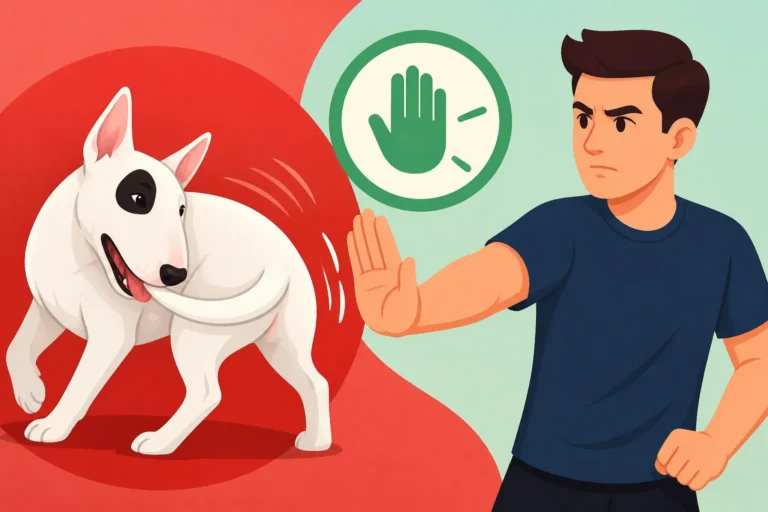
- Always ask permission before petting. Teach them the "petting zoo" rule: two gentle pats, then stop. If the dog leans in for more, they can continue. If the dog moves away, they stop.
Use visual aids, role-playing, and consistent supervision to reinforce these lessons. Explain why these rules are important – not just "because I said so," but "because it makes Fido feel safe and happy." Make sure that every interaction is supervised by an adult who can intervene immediately if either the dog or child breaks the rules. This isn't a one-time lesson; it's an ongoing process as your children grow and their understanding evolves. How to Teach a Child to Play With a Bull Terrier
Creating Safe Spaces
Establishing physical boundaries is just as important as behavioral training. Both your Bull Terrier and your child need a designated "safe zone" where they can retreat and be undisturbed.
A Sanctuary for Your Bull Terrier
This could be a comfortable crate in a quiet corner of the house, a dog bed in a room with a baby gate, or even a designated "dog room" if you have the space. The key is that this area is theirs, and children are taught never to bother the dog when it's in its safe space. This gives your Bull Terrier an invaluable escape route when they feel overwhelmed, tired, or simply want some alone time. They need to know that they can disengage without consequence.
A sturdy crate is an excellent investment for a Bull Terrier. They are known for their chewing prowess, so don't skimp on quality. Brands available on Amazon offer heavy-duty options designed to withstand even the most determined chewer. Ensure the crate is large enough for your Bull Terrier to stand up, turn around, and lie down comfortably. Which Crate Holds a Bull Terrier
A Safe Zone for Your Child
Similarly, a playpen or a gated-off section of a room can serve as a child's safe zone, particularly for toddlers. This allows children to play freely without inadvertently encroaching on the dog's space, and gives parents peace of mind knowing the child is safe even if their back is turned for a moment. These physical barriers are not punishments but tools to manage the environment and prevent unwanted interactions.
Routine and Structure
Dogs thrive on routine, and Bull Terriers are no exception. A predictable schedule helps reduce anxiety and makes them feel secure. This includes consistent feeding times, regular potty breaks, structured exercise sessions, and dedicated quiet times.
When a Bull Terrier knows what to expect, they are generally calmer and more settled. This consistency also applies to rules regarding child interaction. If sometimes the dog is allowed to roughhouse with the kids, and other times it's reprimanded for the same behavior, it creates confusion and stress for the dog. All family members need to be on the same page regarding rules and interactions. A well-structured daily life minimizes unexpected surprises, which can be a trigger for stress or reactive behavior in any dog, especially one with the powerful physicality of a Bull Terrier. A predictable environment fosters a sense of security for your dog, allowing them to relax and be their best selves around the children. What a Bull Terrier's Temperament Is Really Like
Recognizing and Respecting a Bull Terrier's Boundaries
Understanding your Bull Terrier's body language is the bedrock of preventing negative interactions with children. Dogs communicate constantly, but their signals are often subtle and easily missed by humans, especially by excited or oblivious children. Learning to read these signals will allow you to intervene before your dog feels the need to escalate its warnings.
Signs of Discomfort or Stress
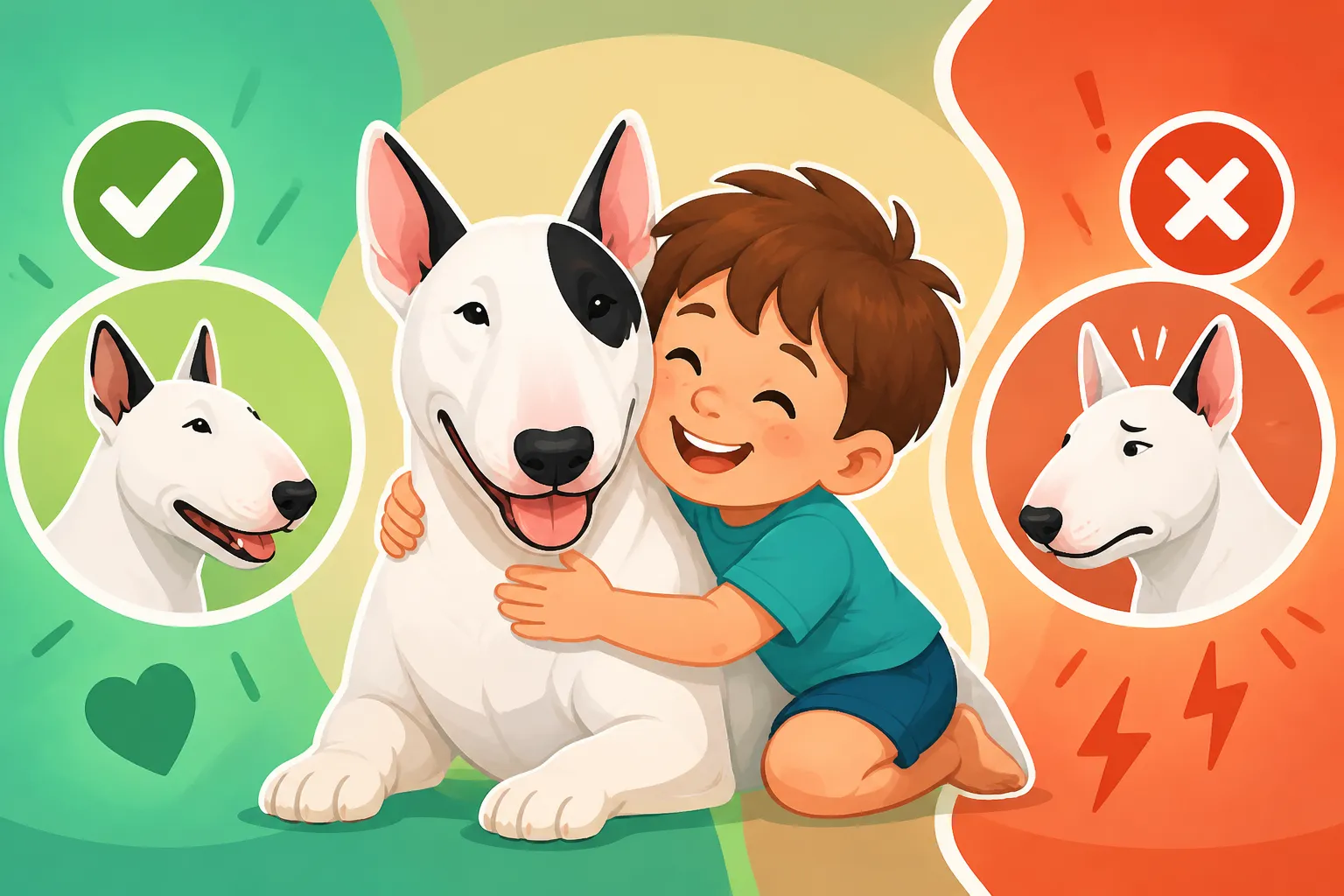
Bull Terriers, like all dogs, will give a series of increasingly obvious signals when they are uncomfortable or stressed. These are polite requests for space or for the offending action to stop. It's vital that adults in the household learn to recognize these cues and teach older children to do the same.
Early, Subtle Signals (often missed):
- Lip licking: A quick flick of the tongue over the nose when no food is present.
- Yawning: Again, when not tired.
- Head turning/turning away: The dog tries to physically avoid eye contact or the source of discomfort.
- "Whale eye": The whites of the dog's eyes are visible, often when it's looking away but tracking something with its peripheral vision.
- Stiff body posture: Muscles are tense, tail might be held stiffly or tucked slightly.
- Moving away: The dog tries to leave the situation. This is a clear indicator they want space.
More Obvious Signals (warnings that should never be ignored):
- Growling: This is a dog's explicit warning. It means, "I'm uncomfortable, and I need this to stop, or I will have to defend myself." It's crucial not to punish a growl, as this removes the warning system and can lead to a dog biting without prior warning.
- Snapping: A quick open-and-close of the mouth, often in the air or a "muzzle punch" without actual contact, is a final warning.
- Baring teeth: Often accompanied by a growl, this is a clear sign of impending defensive action.
By understanding these signals, you can step in early, redirect the child, or give the dog a break, preventing the situation from escalating.
Here’s a helpful table summarizing common dog stress signals:
| Stress Signal | Description | Interpretation |
|---|---|---|
| Lip Licking | Quick flick of tongue across nose, no food present. | "I'm feeling a little anxious/uncomfortable." |
| Yawning | Wide open mouth, often without being tired. | "I'm stressed, trying to calm myself or the situation." |
| Head Turn / Look Away | Dog deliberately turns head or body away from interaction. | "Please stop, I want to disengage." |
| "Whale Eye" | Whites of eyes visible at inner/outer corners, often with stiff body. | "I'm worried/stressed, keep your distance." |
| Stiff Body / Freezing | Dog becomes rigid, still, may hold breath briefly. | "I'm very uncomfortable, anticipating something negative." |
| Low Tail Carriage / Tucked | Tail held low, sometimes tucked between legs. | "I'm insecure, fearful, or highly stressed." |
| Moving Away / Hiding | Dog attempts to walk or run away, or hides behind furniture/person. | "I need space and want to escape this situation." |
| Growling | Low vocalization, can be subtle or overt. | "STOP NOW. I am very unhappy and will defend myself if needed." |
| Snapping / Air Biting | Quick, sharp bite in the air, usually close to person/object. | "LAST WARNING. Next time I might make contact." |
Situations That Challenge a Bull Terrier's Tolerance
Certain situations are inherently more challenging for dogs and can test even the most tolerant Bull Terrier. Being aware of these common triggers allows you to proactively manage them.
- Eating and Chewing: Food and high-value chews are often considered primary resources. A dog might tolerate a child's presence while eating, but a child attempting to take food or even reaching for the bowl can trigger a protective response. This is called resource guarding, and while not all Bull Terriers guard, it's a common trigger. Always teach children to leave the dog completely alone during meal times or when it has a special chew.
- Sleeping: A dog roused suddenly from sleep can be startled and react defensively purely out of instinct. Imagine being abruptly woken up – your first reaction might not be gentle. A sleeping Bull Terrier should always be off-limits for children.
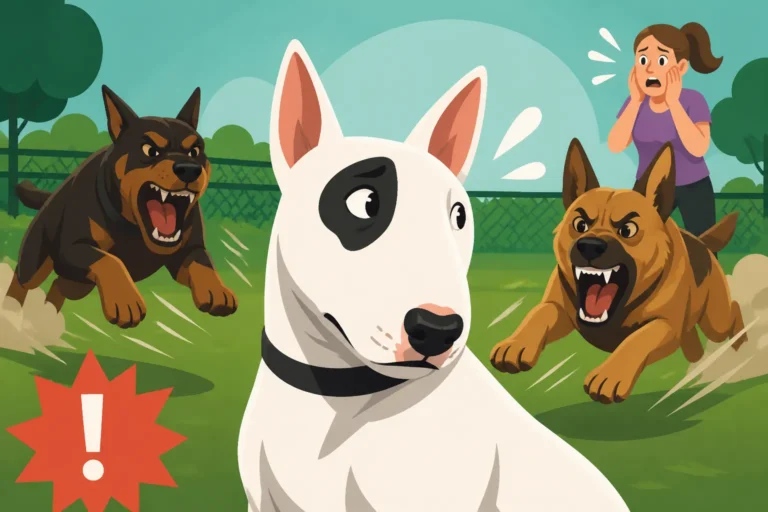
- Feeling Trapped or Cornered: If a Bull Terrier is in a tight space, under a table, or cornered against a wall, and a child approaches, the dog may feel it has no escape route. This can heighten anxiety and lead to a defensive reaction. Ensure your Bull Terrier always has a clear path to retreat.
- Rough Play and Lack of Boundaries: While Bull Terriers love to play, continuous roughhousing, chasing, or wrestling from children can become too much. Their high pain tolerance might make it seem like they're enjoying it, but sustained poking, pulling, or falling on them can quickly become irritating or even painful.
- Sudden Movements and Loud Noises: A child's sudden shriek, a toy dropped unexpectedly, or a quick dash across the room can startle a Bull Terrier, especially if they are resting or not expecting it.
These scenarios aren't about "bad" dogs; they're about natural canine responses to situations where they feel threatened, uncomfortable, or their boundaries are not respected. As the adult, it's your responsibility to anticipate these challenges and manage the environment to prevent them.
Immediate Action When Boundaries Are Tested
If you observe any signs of discomfort or stress from your Bull Terrier, or if a situation arises that challenges their boundaries, immediate and calm intervention is essential.
- Separate Calmly: The first step is to gently and calmly separate the dog and child. This doesn't mean yelling or punishing, which can escalate the dog's stress. Instead, use your dog's "go to your place" command or lure them with a treat to their designated safe zone. Physically guide the child away from the dog.
- Reinforce "Leave It" or "Go to Your Place": If the interaction is escalating, a firm "leave it" command directed at the dog can interrupt unwanted behavior. If the dog is showing signs of stress, direct them to their safe space. This teaches them that retreating is an acceptable and encouraged response.
- Never Punish a Growl: This cannot be stressed enough. A growl is a warning system. If you punish your Bull Terrier for growling, you teach them that it's not safe to warn you. The next time they feel threatened or uncomfortable, they might skip the growl and go straight to a bite. Instead, acknowledge the growl, remove the child, and then reassess the situation to understand why the dog felt the need to warn.
- Review and Adjust: After the immediate situation is defused, take a moment to understand what happened. What triggered the dog's discomfort? Was the child doing something inappropriate? Was the dog tired or feeling unwell? Use this information to adjust your management strategies, reinforce training, and prevent similar incidents in the future. Perhaps the dog needs more exercise, or the child needs a refresher on respectful interactions. Signs a Bull Terrier Has Separation Anxiety
Long-Term Strategies for Harmonious Living
Creating a safe and happy home for both your Bull Terrier and your children is an ongoing commitment. It’s not about just managing incidents, but about fostering a relationship built on trust, respect, and clear understanding from both sides.
Continued Socialization and Enrichment
A well-adjusted Bull Terrier is a happy Bull Terrier, and a happy Bull Terrier is more likely to be tolerant and calm around children. This means focusing on their physical and mental well-being consistently.
Positive Experiences with Children
It's not enough for your Bull Terrier to just tolerate children; ideally, you want them to have positive associations. Supervise controlled interactions where children are calm and gentle, and the Bull Terrier receives treats or praise for calm behavior. If you have friends with well-behaved children, arrange short, supervised "meet and greet" sessions where both the dog and children are guided through appropriate interaction. This isn't about throwing your dog into a playdate free-for-all, but rather about carefully curated positive exposures that build confidence.
Mental and Physical Exercise
A bored Bull Terrier is a mischievous Bull Terrier, and often a more anxious one. These dogs need significant mental and physical stimulation to be well-behaved and content. Daily walks, playtime in a secure yard, and engaging in dog sports like obedience or agility can burn off their boundless energy. Remember, a tired Bull Terrier is usually a good Bull Terrier. Aim for at least 60-90 minutes of vigorous exercise daily, broken into sessions. How Much Exercise a Bull Terrier Actually Needs
Beyond physical exercise, mental enrichment is crucial. Puzzle toys, snuffle mats, and training sessions keep their intelligent minds engaged. Providing a variety of durable chew toys, perhaps from a selection found on Amazon, can satisfy their strong chewing instincts and prevent them from looking for inappropriate outlets. This prevents boredom from turning into destructive behaviors or heightened anxiety, which can impact their tolerance levels. Regularly rotating toys and engaging in interactive games will keep them mentally sharp and less prone to nervous energy around active children.
Professional Guidance and Support
Sometimes, despite your best efforts, you might encounter challenges that feel beyond your ability to manage. This is when it's absolutely crucial to seek professional help.
When to Call a Certified Professional Dog Trainer or Veterinary Behaviorist
Don't wait until a serious incident occurs. If you notice any of the following, it's time to call in the experts:
- Your Bull Terrier consistently shows stress signals around your children that you cannot resolve with management.
- There's been a growl, snap, or bite incident, even if it didn't break the skin.
- You're seeing increasing resource guarding directed at children.
- Your Bull Terrier seems overly anxious, fearful, or aggressive towards children in general.
A certified professional dog trainer (CPDT-KA) can help you refine your dog's obedience, teach impulse control, and provide hands-on guidance for managing interactions. For more complex behavioral issues, especially those involving aggression or severe anxiety, a veterinary behaviorist (DACVB) is the appropriate specialist. These are veterinarians with advanced training in animal behavior and can rule out underlying medical conditions, prescribe medication if necessary, and create comprehensive behavior modification plans. Investing in professional help early can prevent minor issues from becoming major problems. Whether a Bull Terrier Owner Should Hire a Behaviorist
The Importance of Supervision, Always
This is the golden rule, the non-negotiable principle for any household with dogs and children, especially with a powerful breed like the Bull Terrier. No matter how well-trained your dog is, no matter how respectful your children are, never leave them unsupervised together.
Think of it this way: accidents happen. A child might trip and fall on the dog, startling it. A toy might accidentally hit the dog in the eye. A child might forget a rule in a moment of excitement. Even if your Bull Terrier is the most tolerant dog on the planet, their sheer size and strength mean that an accidental bump or an overzealous play gesture can have serious consequences for a small child. How Easily a Bull Terrier Knocks You Over
Constant, active supervision means you are present, engaged, and ready to intervene at a moment's notice. This allows you to:
- Read your dog's body language and step in before they get overwhelmed.
- Guide your children to interact appropriately.
- Redirect inappropriate play from either side.
- Ensure that designated safe spaces are respected.
It's a huge responsibility, but it's the most effective way to ensure a lifetime of safe, loving, and happy interactions between your Bull Terrier and the children in your life. With consistent training, clear boundaries, and unwavering supervision, your Bull Terrier can be a wonderful, clownish companion for your family.
Disclaimer
This article is for general informational purposes only and does not constitute professional advice. Laws, prices and regulations vary by location and change over time. Consult a qualified professional for guidance on your specific situation.