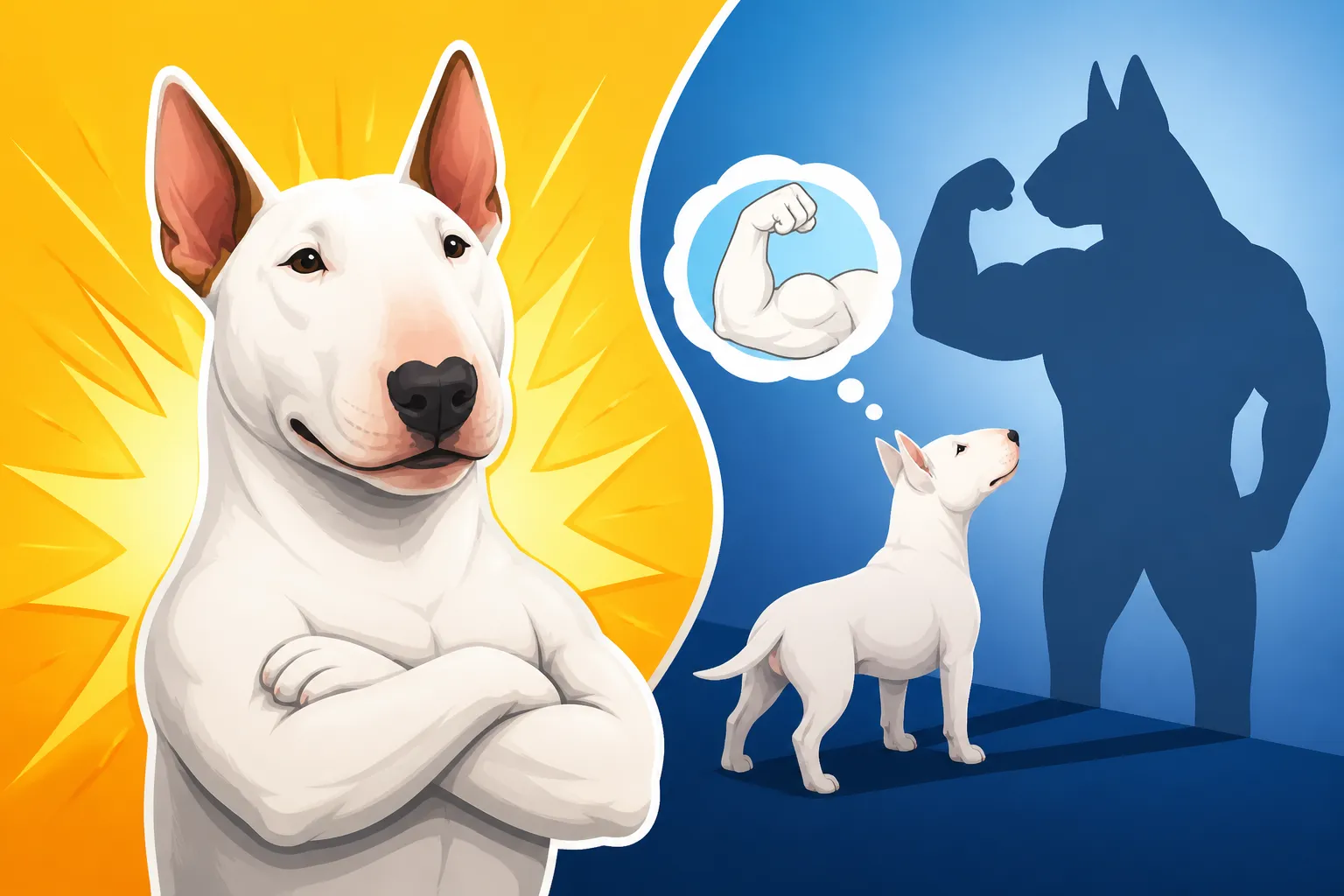
Whether a Bull Terrier Understands Its Own Strength
It’s a common scenario for Bull Terrier owners: one minute you’re enjoying a quiet moment, the next you’re sprawled on the floor, wondering if a miniature rhino just charged through your living room. Our beloved Bull Terriers, for all their clownish charm and deep affection, often seem utterly oblivious to the sheer power packed into their muscular, egg-shaped bodies. This guide dives deep into whether our Bull Terriers truly understand their own strength and offers practical advice on how to manage their powerful, often clumsy, enthusiasm.
The Bull Terrier's Physicality: A Breed Apart
Let's face it, Bull Terriers are built differently. They're dense, muscular, and surprisingly agile for their stocky appearance. This combination makes them incredibly strong, capable of bursts of speed and unexpected impacts that can leave a human (or an unsuspecting armchair) reeling.
Built Like a Brick, Moves Like a Rocket
A Bull Terrier's physique is truly unique. They possess a powerful, compact body with deep chests and strong legs, designed for tenacity and quick, explosive movements. When they decide to zoom across the yard, or more commonly, bound off the sofa to greet you, they gather momentum with astonishing speed. This isn't just a regular dog bounding; it's a solid mass propelled forward with intent, even if that intent is simply pure, unadulterated joy.
Many owners can recount tales of being accidentally body-slammed, tripped, or knocked off balance during a playful romp. It’s rarely malicious; it’s simply a potent combination of enthusiasm and raw physical power. Their low center of gravity and solid build mean they can hold their ground or push through obstacles with surprising ease. They are truly an unstoppable force when they get an idea in their heads, whether it's chasing a squirrel that suddenly appeared in the park or trying to join you on the couch for a cuddle at full speed. This inherent strength is a huge part of their appeal, but it's also where many owners realize that their Bull Terrier might not fully grasp the impact of their own physical presence.
The "Three-Year-Old in a Dog Suit" Phenomenon
There's a well-loved saying among Bull Terrier enthusiasts that perfectly encapsulates this issue: they're "a three-year-old in a dog suit." This isn't just about their playful, sometimes mischievous nature; it speaks volumes about their mental maturity often lagging behind their physical capabilities. Imagine a boisterous preschooler, all energy and little self-control, suddenly endowed with the body of a collegiate athlete. That's often what living with a Bull Terrier feels like.
While they mature mentally, many Bull Terriers retain a puppy-like exuberance well into their adult years. They can be incredibly intelligent and capable of learning complex commands, but sometimes, in the heat of the moment, impulse takes over. They haven't quite developed the nuanced understanding of personal space or delicate movements that larger, more sedate breeds might, or even smaller breeds who have to be more careful. Their natural way of showing affection might be to lean their entire 50-70 pound body into you, or to launch themselves into your lap with a joyous thud. This isn't them being deliberately rough, but rather an expression of their personality through a powerful physical form they haven't learned to modulate. Why a Bull Terrier Is Called a Three Year Old in a Dog Suit really gets to the heart of this delightful, yet sometimes bruising, reality.
Understanding Canine Self-Awareness
The question of whether a Bull Terrier (or any dog) understands its own strength is complex, as canine cognition differs vastly from human self-awareness. It's less about conscious thought and more about learned behavior and instinct.
Instinct vs. Conscious Control
Dogs operate heavily on instinct and learned associations. They don't conceptualize "strength" or "impact" in the same way a human does. When a Bull Terrier leans on you, it's not thinking, "I weigh 60 pounds, and this will probably knock my human off balance." Instead, it's driven by an instinct to seek closeness, comfort, or attention, combined with a learned behavior that this action often results in positive interaction (like petting or talking). Their powerful lean is a direct expression of their desire, unmitigated by an understanding of the effect of that force.
Their play is another prime example. When a Bull Terrier engages in boisterous play, whether it's with another dog or with you, they are reacting to the moment, the excitement, and the joy of the interaction. They aren't consciously dialing back their power; they're responding to cues from their playmate. If another dog yelps, they might soften. If a human says "ouch!" or disengages, they might learn. But this learning is about cause and effect, not an intrinsic understanding of their own brute force. They learn what reactions their actions provoke, rather than understanding the physics behind their body slams. For them, it’s all about the immediate feedback.
The Role of Social Feedback
This is where dogs truly learn the limits of their strength: through social feedback, especially from other dogs. From puppyhood, littermates teach each other "bite inhibition" – how much pressure is too much. A yelp from a sibling, or a sharp correction from their mother, quickly teaches a puppy to be gentler. This applies to body language and physical play too. If a Bull Terrier puppy tries to bowl over an older, established dog, they're likely to receive a clear, swift correction that teaches them boundaries. How Rough a Bull Terrier Plays With Other Dogs highlights how these interactions shape their behavior.
The challenge for human owners is that we often don't provide the same clear, consistent feedback. We might tolerate a certain level of roughhousing, or accidentally reinforce it by laughing or giving attention. A Bull Terrier might body-slam you, and you might stumble but then immediately pet them, inadvertently teaching them that body-slamming is an effective way to get your attention. Without consistent, clear boundaries and appropriate corrections (which don't mean harsh punishment, but rather clear communication and redirection), a Bull Terrier may never fully learn to modulate its strength. They need us to be their "other dog" – to teach them when they're being too much, but in a way they understand.
Managing a Bull Terrier's Unintentional Impact
While our Bull Terriers may not grasp the physics of their power, we can teach them to control their impulses and be more mindful of their bodies. It takes patience, consistency, and a realistic understanding of their breed traits.
Training for Body Awareness and Impulse Control
Training is paramount. This isn't about crushing their spirit or making them less enthusiastic, but about channeling that energy and teaching them to exercise self-control.
- "Gentle" and "Soft" Cues: Start by teaching a "gentle" cue for taking treats. Hold a treat in a closed fist, offering it only when they nose it softly. As soon as they mouth it gently, open your hand and reward. This generalizes to other interactions, like taking toys or even giving affection.
- Impulse Control Games: Games like "Red Light, Green Light" or "1-2-3-Sit" help them learn to stop, think, and offer a calm behavior before proceeding. Make them wait for their food bowl, or pause before bursting through a doorway. BAXTER & Bella, an online puppy school, offers structured programs that can be incredibly helpful for teaching these foundational impulse control exercises in a positive, engaging way. Their systematic approach can help owners break down complex behaviors into manageable steps.
- Structured Play: Instead of free-for-all wrestling, engage in structured play that incorporates commands. Tug-of-war is great, but ensure there's a clear "drop it" command. Fetch helps burn energy and practices recall. Why a Bull Terrier Runs at You at Full Speed can be managed with strong recall training.
- Leash Manners: A Bull Terrier on a leash can be an absolute powerhouse. Investing in a good, well-fitted harness that discourages pulling, rather than just a flat collar, can make a huge difference. Which Harness Holds a Bull Terrier is a crucial read. Then, consistent training is key to teaching them to walk politely by your side without dragging you down the street. Teaching a Bull Terrier to Walk Without Pulling is essential for daily walks to be enjoyable and safe.
- Body Awareness Exercises: Activities like cavaletti poles, navigating agility obstacles, or even just weaving through your legs can help them become more aware of their limbs and how to move them precisely. This isn't about making them dainty, but about giving them a better sense of their physical self.
Environmental Management and Safe Play
Sometimes, the best training is about managing the environment to prevent unintended accidents and ensure everyone's safety.
- Supervised Interactions: All interactions, especially with children or smaller pets, should be closely supervised. Even the most well-meaning Bull Terrier can accidentally knock over a toddler or play too roughly with a tiny cat. Teach children how to interact safely with a Bull Terrier, and teach your Bull Terrier to be calm around children. How Much a Bull Terrier Tolerates From a Child delves into this important dynamic.
- Designated Play Areas: Create safe spaces for vigorous play, ideally outdoors in a securely fenced yard where they can zoom and exert their energy without bumping into furniture or people.
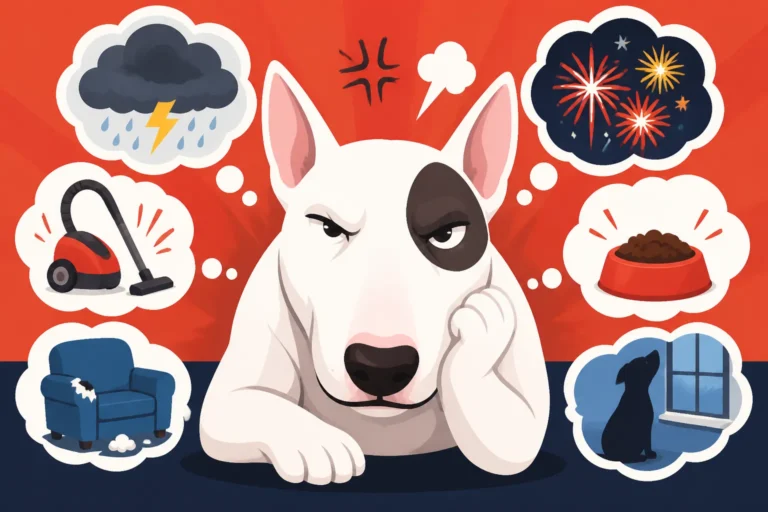
- Indestructible Gear: Given their strength and enthusiasm, investing in durable equipment is a must. A truly indestructible dog bed, chew-proof toys from brands found on Amazon that are known for their extreme durability, and a heavy-duty crate are not luxuries, but necessities for a Bull Terrier home. What a Crate a Bull Terrier Cannot Break Costs and What a Bull Terrier Does to a Sofa are not exaggerations – they speak to the real destructive potential when a Bull Terrier is bored, anxious, or simply expressing its strength without proper outlets. Providing appropriate, robust outlets for chewing and play can redirect their powerful jaws and bodies away from your belongings.
Teaching Gentle Interactions
The goal isn't to stop your Bull Terrier from being affectionate, but to teach them how to be affectionate without causing bumps and bruises.
- Reward Calmness: Actively seek out and reward moments of calm. If your Bull Terrier approaches you gently, sits rather than jumps, or lies down quietly, praise and reward them immediately.
- Disengage from Roughness: If your Bull Terrier starts to get too rough during play or interaction, immediately disengage. Turn your back, walk away, or even leave the room for a moment. This teaches them that rough behavior makes the fun stop. Only re-engage when they are calm. This technique is detailed in Living With a Bull Terrier That Body Slams You for Fun.
- Consistency is Key: Every member of the household needs to be on the same page. If one person allows jumping and body-slams, while another corrects it, the Bull Terrier will get mixed signals and won't learn effectively.
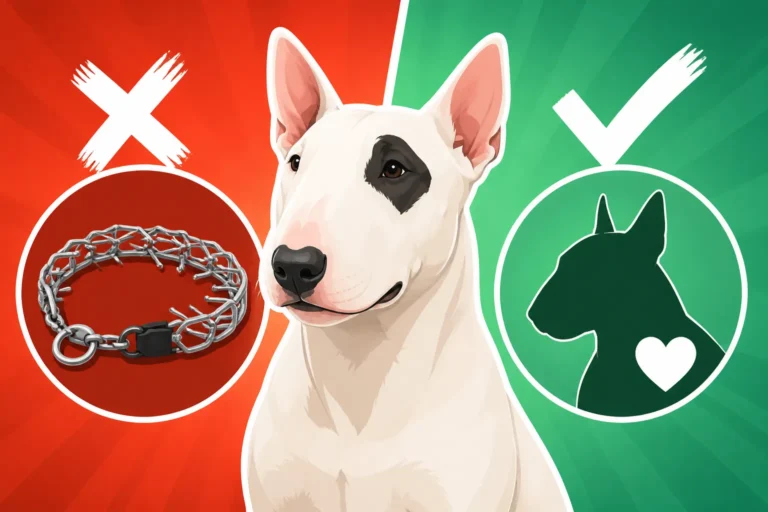
- Positive Reinforcement: Always use positive reinforcement. Bull Terriers are sensitive and can shut down under harsh correction. They respond best to clear, consistent guidance that rewards desired behaviors.
Here's a quick overview of management strategies:
| Strategy Category | Key Actions | Benefits |
|---|---|---|
| Training | "Gentle" cue, impulse control games, structured play, leash manners, recall | Builds self-control, improves communication, safer outings |
| Environmental | Supervised interactions, safe play areas, durable toys & gear, heavy-duty crate | Prevents accidents, protects belongings, ensures safety for all |
| Social Learning | Consistent feedback, disengaging from rough play, rewarding calmness | Teaches appropriate interaction, reduces accidental injuries |
| Professional Help | Consult certified trainer/behaviorist for persistent issues | Expert guidance for complex behaviors or safety concerns |
When to Consult a Professional
Most of the time, a Bull Terrier's "lack of awareness" regarding their strength is a normal part of their breed's exuberance and can be managed with consistent training and environmental control. However, there are times when it's wise to seek professional help.
If your Bull Terrier's rough play escalates beyond accidental clumsiness into genuinely aggressive behavior, or if they struggle immensely with impulse control despite consistent training, it's time to bring in an expert. A certified professional dog trainer can provide tailored strategies and hands-on guidance for specific behaviors like persistent How Easily a Bull Terrier Knocks You Over or intense arousal during play. For more complex or deeply ingrained behavioral challenges, a veterinary behaviorist can assess underlying medical or neurological factors and develop a comprehensive behavior modification plan. Remember, their safety, and the safety of everyone around them, is paramount.
With understanding, patience, and consistent effort, you can help your Bull Terrier navigate the world more gracefully, embracing their powerful presence while ensuring gentle interactions.
Disclaimer
This article is for general informational purposes only and does not constitute professional advice. Laws, prices and regulations vary by location and change over time. Consult a qualified professional for guidance on your specific situation.