Whether a Bull Terrier Gets Separation Anxiety
There are few things as heart-wrenching as leaving your beloved Bull Terrier home alone, only to return to a scene of chaos or tales of incessant barking from concerned neighbors. Bull Terriers, with their intense loyalty and boundless energy, can sometimes struggle deeply when separated from their favorite people, often manifesting as a complex and distressing condition known as separation anxiety. This guide will walk you through understanding this unique challenge and offer compassionate, practical strategies to help your Bull Terrier find peace and confidence when you're not around.
Understanding Bull Terrier Separation Anxiety
It’s easy to dismiss a destroyed cushion or a puddle on the floor as mere naughtiness, but for a Bull Terrier experiencing separation anxiety, these actions are often desperate cries for help. Their quirky, devoted nature, which makes them such incredible companions, can also make them particularly vulnerable to this condition.
What It Looks Like in a Bull Terrier
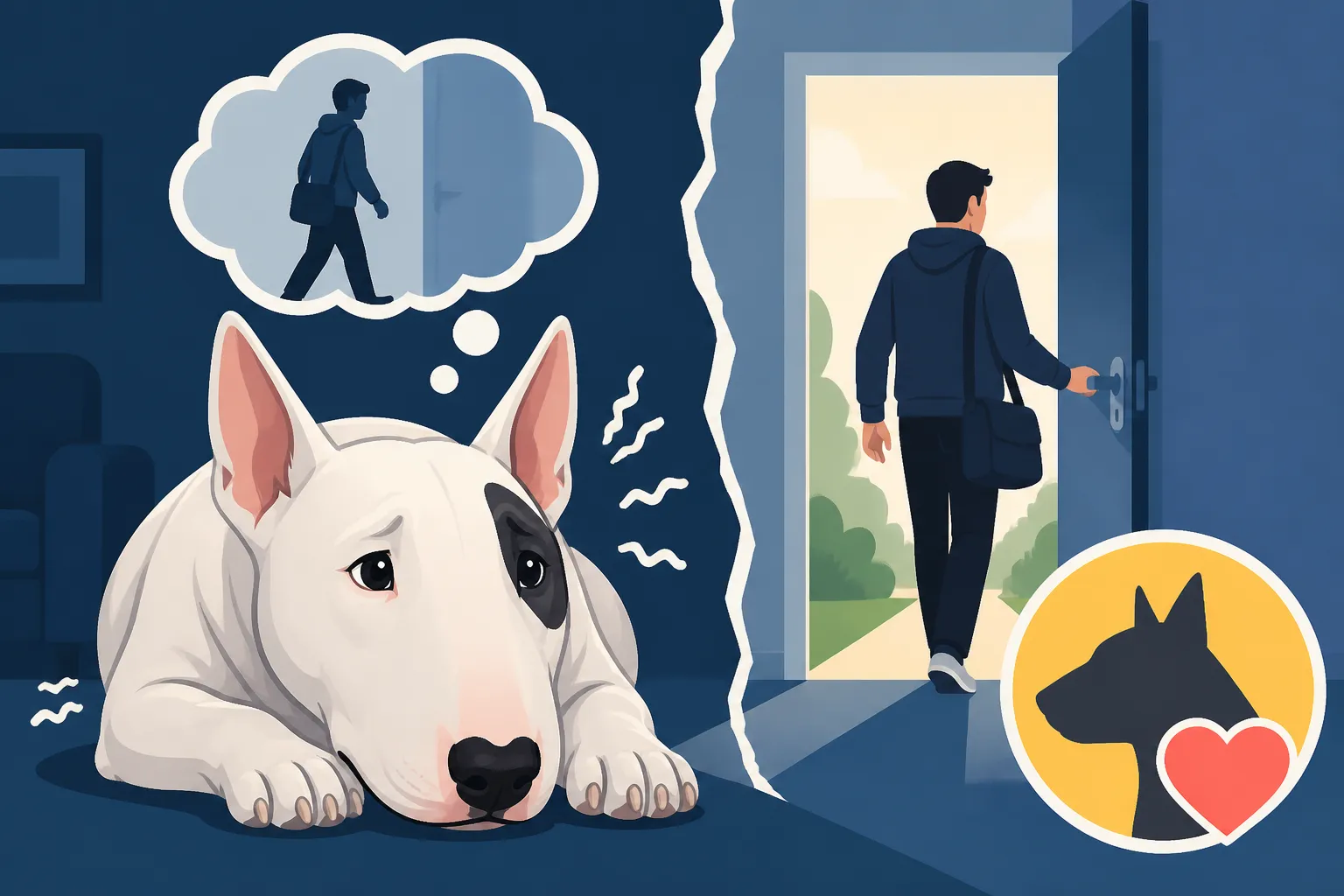
Unlike a dog that might just chew a shoe out of boredom, a Bull Terrier with true separation anxiety exhibits specific patterns of distress. You might see excessive drooling, panting, or even frantic pacing before you even leave. Once alone, the behaviors can escalate dramatically. Imagine coming home to a door frame chewed down to splinters, a crate bent out of shape, or perhaps reports from neighbors of relentless howling. This isn't defiance; it's panic. For a Bull Terrier, their entire world often revolves around their person, and being cut off from that anchor can feel like a profound threat. They might even injure themselves trying to escape, rubbing their noses raw or breaking teeth on crates and doors. This emotional torment is a stark contrast to their usual What a Bull Terrier's Temperament Is Really Like.
The physical manifestations of anxiety are as varied as the dogs themselves. Some Bull Terriers might become destructive, tearing up carpets or furniture. Others might vocalize non-stop, barking, whining, or howling until they’re hoarse. Accidents inside the house, even from a fully house-trained dog, are also common, as their anxiety overrides their ability to hold it. These aren't spiteful acts; they're involuntary responses to overwhelming stress and a profound sense of abandonment.
Why Bull Terriers Are Prone to It
Bull Terriers are often described as "three-year-olds in a dog suit" – a testament to their demanding, sometimes clingy, and incredibly people-oriented personalities. This intense bond, while charming, can become a double-edged sword when they are left alone. Their need for constant companionship and mental engagement means that solitude often translates into profound distress. They aren't dogs that are content to snooze away the day by themselves; they crave interaction, problem-solving, and being at the center of your universe.
Their high intelligence, combined with a potential for stubbornness, means they can become highly frustrated when their needs for attention and activity aren't met. If you've ever wondered Why a Bull Terrier Cannot Be Left Alone All Day, this emotional dependency is a major factor. They thrive on routine and presence, and any sudden disruption to that can trigger anxiety. Furthermore, some Bull Terriers are known for their sensitivity, despite their tough exterior. A traumatic past, such as being rehomed or spending long hours alone, can also predispose them to developing separation anxiety.
Recognizing the Early Warning Signs
Catching separation anxiety early can make a world of difference in your Bull Terrier's well-being. It's not always about outright destruction; sometimes, the signs are much more subtle and easily missed until the problem has really taken root.
Subtle Cues Before Escalation
Before your Bull Terrier starts chewing through drywall, they might be sending out quieter signals of impending stress. Pay close attention to their behavior when you're preparing to leave. Do they start pacing or trembling the moment you pick up your keys or put on your shoes? Do they follow you from room to room with an increased intensity, perhaps even blocking your path? Some Bull Terriers might try to distract you with playful antics, while others might become withdrawn, refusing food or treats you offer just before departure. Excessive licking of their paws, yawning, lip-licking, or a lowered body posture can also be subtle indicators of anxiety creeping in. They might even try to prevent your departure by leaning on you or nudging your hand. These are all attempts to communicate their unease and can be vital clues that your Bull Terrier is not coping well with the idea of being alone.
Observing these subtle changes can help you intervene before the anxiety builds to an unbearable level. It's about learning to read your Bull Terrier's unique language of stress. Are their ears pinned back more than usual? Is their tail tucked? Do they seem restless even after a good walk? Recognizing these pre-departure anxieties is crucial for addressing the root cause rather than just reacting to the aftermath.
Destructive Behaviors and Vocalizations
Once you've left, the symptoms often become far more obvious and, unfortunately, can cause significant damage and disruption. The destructive urge is not about being "bad" but about trying to cope with an unbearable emotional state. They might target exits – doors, windows, crates – in an attempt to reunite with you. This is why you often hear of Bull Terriers bending metal crates or scratching doors until they're ruined. What a Bull Terrier Does When It Is Bored can sometimes overlap with separation anxiety, but the intensity and targeted nature of the destruction usually distinguish anxiety.
Common behaviors include:
- Chewing and Destruction: Furniture, door frames, window sills, carpets, and even electrical cords can fall victim. This isn't just a bit of light gnawing; it's often frantic and extensive. You might even discover your Bull Terrier ingested parts of what they destroyed, leading to serious health risks.
- Inappropriate Urination/Defecation: Even perfectly house-trained Bull Terriers might urinate or defecate indoors when stressed, regardless of how recently they were outside. It’s an involuntary physiological response, not a sign of spite.
- Excessive Vocalization: Prolonged barking, howling, or whining that starts shortly after you leave and continues for extended periods is a classic sign. Neighbors are often the first to report this, and it can lead to strained relationships.
- Pacing and Restlessness: Some Bull Terriers will pace continuously, unable to settle, often creating worn paths in carpet or flooring.
- Escape Attempts: This can be the most dangerous, leading to injuries as they try to break through windows, doors, or kennels. This is why having Which Crate Holds a Bull Terrier is so important.
If you suspect these behaviors, setting up a camera to observe your Bull Terrier when you're gone can provide invaluable insight into the true extent and nature of their distress.
| Behavior Type | Mild Separation Anxiety | Moderate Separation Anxiety | Severe Separation Anxiety |
|---|---|---|---|
| Vocalization | Intermittent whining, soft cries | Consistent barking/whining, some howling | Prolonged, frantic barking, howling, distressed vocalizations |
| Destruction | Chewing on a few inappropriate items (shoes, cushions) | Targeted chewing on exits (door frames, windows) | Extensive destruction, self-harm attempts (broken teeth) |
| House Soiling | Isolated accidents | Regular urination/defecation, even after being out | Frequent accidents, sometimes immediately after you leave |
| Pacing/Restlessness | Occasional restlessness, difficulty settling | Persistent pacing, inability to relax | Frantic pacing, spinning, hyper-vigilance |
| Pre-departure Cues | Increased following, slight panting | Obvious anxiety when you prepare to leave | Panicked reactions to departure cues, refusal to engage |
Proactive Steps for Building Resilience
The good news is that separation anxiety can be managed and often significantly improved with patience, consistency, and the right approach. It’s about building your Bull Terrier’s confidence in being alone, slowly and gently.
The Power of a Safe Space and Routine
Creating a consistent, comforting routine and a designated "safe space" for your Bull Terrier is paramount. This space should be one where they feel secure and can relax, even when you're present. For many Bull Terriers, a sturdy, comfortable crate can be ideal – provided it's introduced positively and never used for punishment. Make sure it's one What a Heavy Duty Bull Terrier Crate Costs because a Bull Terrier will challenge anything less. Fill it with soft bedding, familiar scents (like an old t-shirt of yours), and high-value, long-lasting chews or puzzle toys. The goal is for them to associate this space with calm and positive experiences.
Establish a predictable routine for your departures and arrivals. This can help reduce anxiety because your Bull Terrier will know what to expect. Avoid making a big fuss when you leave or come home. A quiet departure and a calm greeting, waiting until your Bull Terrier is settled before showering them with attention, can help de-emphasize the event of your absence. Before you leave, ensure they've had ample exercise and a potty break. A tired Bull Terrier is a calmer Bull Terrier, and a full bladder will only add to their stress. Remember, even How Much Sleep a Bull Terrier Puppy Needs is significant, and a well-rested dog is often less anxious.
Gradual Desensitization and Alone Time Training
This is the cornerstone of treating separation anxiety and it requires immense patience. The idea is to gradually accustom your Bull Terrier to your absence, starting with very short periods and slowly increasing the duration. Begin by practicing mock departures: pick up your keys, open the door, step outside, then immediately come back in. Don't make eye contact or interact. Repeat this many times until your Bull Terrier shows no reaction. Then, gradually increase the time you're outside – five seconds, then ten, then thirty.
Never push your Bull Terrier past their threshold of comfort. If they start to show signs of anxiety, you've gone too far, and you need to dial it back. You want to build positive associations with alone time. Leave them with a special chew toy or a food-stuffed Kong only when you're leaving, and take it away when you return. This makes your departure a signal for something good. Online resources, like those offered by BAXTER & Bella, often provide structured programs for this kind of desensitization, guiding you through the process step-by-step. Remember that consistency is key; even a few minutes alone a day, done correctly, can be more beneficial than long, infrequent attempts. Learning How Long a Bull Terrier Lasts Alone Before It Chews is a painful process, but knowing their limit is vital for this training.
Harnessing Enrichment to Combat Boredom
A Bull Terrier’s mind is always active, and boredom can quickly exacerbate anxiety. Providing engaging mental stimulation is crucial, especially when they are left alone. Puzzle toys, like those found readily on Amazon, that dispense treats are excellent for keeping their brains occupied and diverting their attention away from your absence. Rotate these toys to keep them novel and exciting. Consider freezing a Kong filled with peanut butter, yogurt, or wet food; it takes a long time for them to get everything out.
Another strategy is to scatter their kibble around the room or hide it in various spots, turning mealtime into a scavenger hunt. This "nose work" is incredibly mentally tiring. For a breed that thrives on having a "job," mental challenges can be just as exhausting, if not more so, than physical exercise. Thinking about Which Puzzle Toys Occupy a Bull Terrier can make a huge difference in their ability to cope. A Bull Terrier that is mentally engaged is less likely to fixate on your absence.
Seeking Professional Guidance
Sometimes, despite your best efforts, separation anxiety is too deeply rooted or severe to manage on your own. It's okay, and often necessary, to seek professional help. There's no shame in admitting you need an expert's guidance.
When a Veterinarian or Certified Professional Can Help
If your Bull Terrier's anxiety is severe, leading to self-injury, extensive destruction, or prolonged distress, it's time to involve professionals. Your first stop should be your veterinarian. They can rule out any underlying medical conditions that might be contributing to the anxiety and, if appropriate, discuss medication options. A vet might also recommend blood tests or other diagnostics to ensure your Bull Terrier is physically healthy.
Beyond medical evaluation, a certified professional dog trainer or a veterinary behaviorist is invaluable. These specialists have extensive knowledge of animal behavior and can develop a tailored modification plan specifically for your Bull Terrier. They can help identify precise triggers, guide you through desensitization and counter-conditioning techniques, and teach you how to read your dog's specific body language. Platforms like BAXTER & Bella also offer behavior consultations or comprehensive courses that can be a lifesaver for owners dealing with complex behavioral issues. Don't hesitate to ask Whether a Bull Terrier Owner Should Hire a Behaviorist if you're feeling overwhelmed.
Medications and Management Strategies
In some cases, behavioral modification alone isn't enough, especially for severe anxiety. Your vet might prescribe medication to help reduce your Bull Terrier's overall anxiety levels, making them more receptive to training. These medications are not a "cure-all" but a tool to help your dog relax enough to learn new coping mechanisms. They are typically used in conjunction with a behavior modification plan, not as a standalone solution.
Management strategies can also include temporary changes to your routine. If possible, consider options like dog walkers, doggy daycare (if your Bull Terrier enjoys the company of other dogs and handles novel environments well), or having a trusted friend or family member check in on them. For those who travel, finding a sitter who understands the nuances of separation anxiety is crucial. While a crate can be a safe space, it's essential to ensure Whether a Crate Helps a Bull Terrier Left Alone by observing their behavior in it, as some dogs can worsen their anxiety by attempting to escape. Pheromone diffusers, calming supplements, or thunder shirts can also be part of a multi-faceted approach, though their effectiveness varies greatly between individual dogs.
Remember, addressing separation anxiety is a marathon, not a sprint. There will be good days and bad days, but with patience, consistency, and professional support, you can help your Bull Terrier build the confidence they need to be happy and calm when you're away.
Disclaimer
This article is for general informational purposes only and does not constitute professional advice. Laws, prices and regulations vary by location and change over time. Consult a qualified professional for guidance on your specific situation.