How Strong a Bull Terrier Is on a Leash
If you've ever found yourself being dragged down the street by a determined, happy-go-lucky torpedo with an egg-shaped head, you already know the distinct challenge of leash walking a Bull Terrier. It's not just a casual stroll; it's often a full-body workout, a test of wills, and sometimes, frankly, a bit embarrassing. This guide is here to validate those struggles and equip you with the knowledge and strategies to transform your walks from a tug-of-war into a genuinely enjoyable experience for both you and your strong-willed companion.
The Raw Power Behind That Egg-Shaped Head
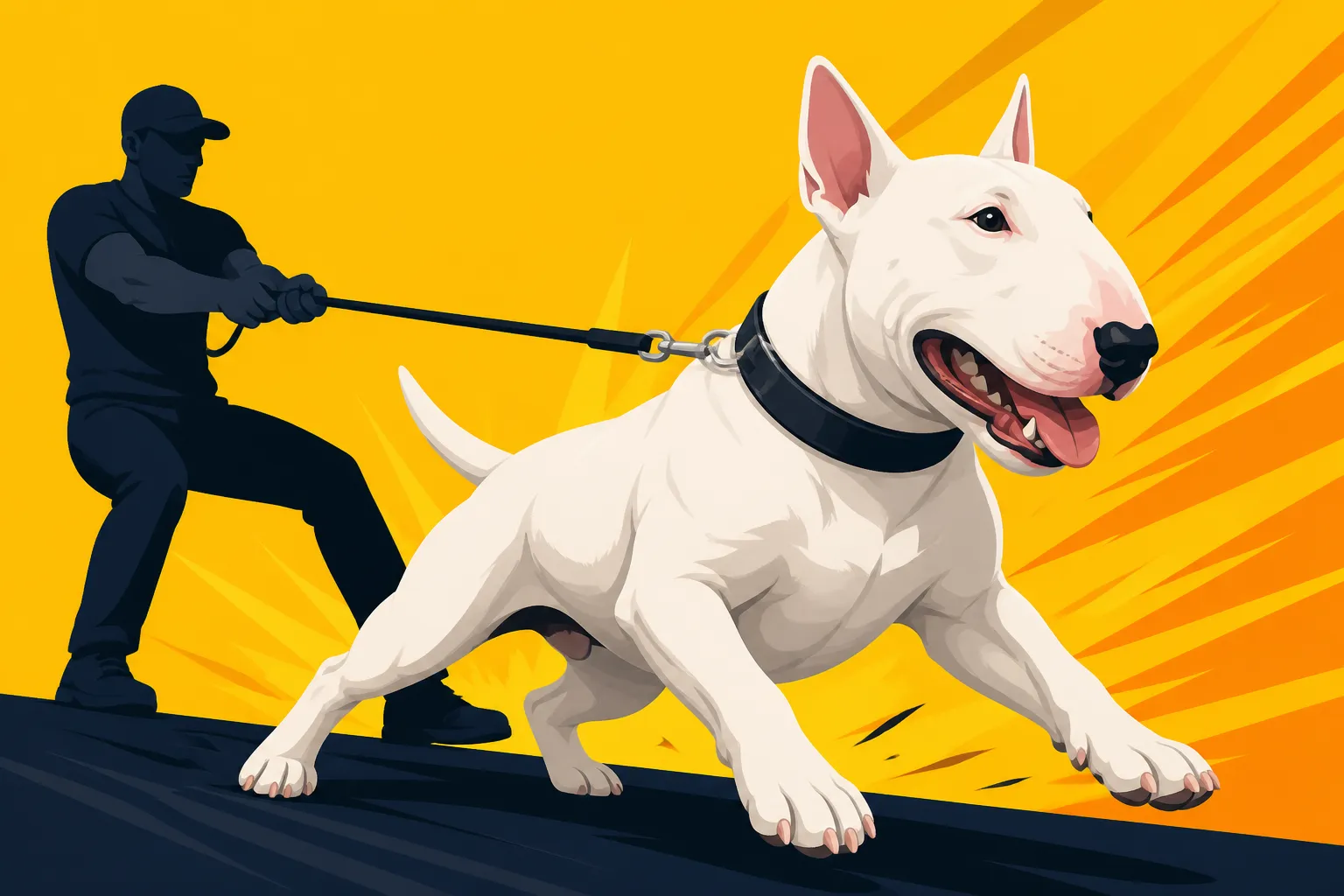
Let's be honest, a Bull Terrier is a force of nature. They are built like brick outhouses, packed with dense muscle, and possess a boundless zest for life that often translates into an incredible amount of pulling power on the leash. It's not just their size; it's the combination of their physical build and their unique temperament that makes them such formidable walkers.
Understanding the Bull Terrier Physique
Take a moment to truly appreciate the physical characteristics of a Bull Terrier. They are squarely built, incredibly strong for their size, with a deep chest, powerful shoulders, and a thick neck. Their bone structure is robust, and they carry a significant amount of lean muscle. When they decide to lean into a harness or collar, they're essentially putting their entire body weight and musculature into it. It's like a compact, canine powerhouse has decided a specific blade of grass absolutely must be investigated, and your arm is merely an inconvenient attachment.
Many owners, especially those new to the breed, are surprised by this raw strength. You might see a Bull Terrier puppy and think, "Oh, how cute!" and then suddenly, at six months old, you're struggling to hold onto a fifty-pound dog that's decided to chase a squirrel. Their low center of gravity and powerful hindquarters give them excellent traction, making them incredibly effective at pulling. It's a testament to the breed's history; these dogs were bred for endurance and tenacity, traits that unfortunately translate directly to "pully dog" on a walk if not properly managed.
Why They Pull: Instinct vs. Training
It's crucial to understand that a Bull Terrier doesn't pull to annoy you, at least not intentionally. They pull because it's instinctual, it's often rewarding, and they haven't been taught a better way. Think about it from their perspective: they see, hear, and smell a world bursting with exciting stimuli. Every corner, every bush, every passing person or dog is an adventure waiting to happen. Their natural curiosity and high energy drive them forward. When they pull and get to where they want to go, even for a second, they learn that pulling works.
The concept of walking politely on a loose leash is entirely counter-intuitive to a dog. Their natural pace is often faster than ours, and their desire to explore far outweighs our desire for a calm stroll. This is where the human element of consistent training comes in. Without it, their natural instincts take over, and their incredible strength becomes a dominant factor in every walk. It’s not a malicious act; it’s simply a lack of understanding on their part, combined with their potent physical capabilities. Teaching a Bull Terrier to Walk Without Pulling is about bridging that gap between instinct and expectation.
The "Three-Year-Old in a Dog Suit" Phenomenon
This affectionate nickname for Bull Terriers rings incredibly true when it comes to leash manners. Imagine a boisterous, enthusiastic three-year-old in a dog's body, and you're halfway to understanding the Bull Terrier mindset on a walk. They are full of exuberance, easily distracted, and often operate on pure impulse. A sudden scent, a fluttering leaf, or another dog across the street can trigger an immediate, powerful surge forward, completely forgetting any prior training.
This isn't to say they aren't intelligent or trainable; quite the opposite! But their enthusiasm and sometimes short attention span mean that consistent reinforcement is key. They need to be reminded, often and gently, that loose-leash walking is the desired behavior, even when the world is screaming "EXPLORE!" Understanding that this is part of their charming, if sometimes frustrating, personality helps owners approach training with patience and a sense of humor, rather than exasperation. Remember, they aren't trying to be difficult; they're just being quintessentially Bull Terrier. For more on this unique personality, check out Why a Bull Terrier Is Called a Three Year Old in a Dog Suit.
Common Leash Walking Challenges with a Bull Terrier
Walking a Bull Terrier often presents a unique set of challenges that go beyond simple pulling. Their specific breed traits, combined with individual personality, can make for some truly memorable (and sometimes exasperating) excursions.
The Excitement Pull: Every New Smell is a Quest
One of the most common reasons a Bull Terrier turns into a freight train on a leash is sheer excitement and curiosity. Their noses are powerful, and every new scent is a thrilling mystery waiting to be solved. Whether it's the faint whiff of another dog that passed by an hour ago, a hidden patch of interesting weeds, or a rogue piece of discarded fast food, your Bull Terrier sees it as an undeniable quest.
This "excitement pull" often happens suddenly. You could be enjoying a perfectly loose-leash walk, only for your dog to abruptly lunge, leaving you scrambling to maintain balance. It's not a steady, persistent pull, but rather an explosive burst of energy driven by an irresistible urge to investigate. Managing this requires anticipating their reactions, learning their body language cues, and being ready to redirect their attention before they launch into investigation mode. It’s a constant dance of observation and intervention, especially in stimulating environments like a park or busy street.
Prey Drive and Its Impact on Leash Manners
Bull Terriers, like many terrier breeds, can have a strong prey drive. This instinct to chase small, fast-moving objects can make leash walking particularly challenging if squirrels, rabbits, or even birds are present. The moment they spot something that triggers this drive, their focus narrows, and their strength seems to multiply. They'll lunge, bark, and pull with incredible force, often ignoring all commands.
This isn't a sign of aggression, but rather a hardwired instinct kicking in. It can be incredibly difficult to break their focus once the prey drive is engaged. Owners often feel a sudden jerk that can be jarring, potentially leading to dropped leashes or even injury if unprepared. Understanding this inherent trait is crucial. It means planning your walks in areas with fewer wildlife distractions, or being intensely prepared with high-value treats and redirection techniques for those unavoidable encounters. Sometimes, even the sight of a leaf blowing in the wind can set off this chasing instinct, highlighting the need for vigilance.
Reactivity: When Other Dogs or People Are Too Much
While many Bull Terriers are outwardly friendly and boisterous, some can exhibit reactivity on leash, particularly towards other dogs or even unfamiliar people. This isn't necessarily aggression, but often a combination of over-excitement, frustration, fear, or a desire to "say hello" in a very Bull Terrier way (which can come across as intimidating). When they see another dog, they might bark, lunge, growl, and pull with all their might, making the walk incredibly stressful for both ends of the leash.
This type of reactivity is often fueled by their strength. A smaller, weaker dog might attempt to lunge but be easily held back. A Bull Terrier, however, can truly drag you, making the behavior feel overwhelming and difficult to control. The key here is early intervention and systematic counter-conditioning. You want to change your Bull Terrier's emotional response to these triggers, making them feel calm and safe, rather than overstimulated or threatened. This often involves working at a distance where they can still notice the trigger without reacting, and gradually decreasing that distance as they learn to remain calm.
Essential Tools for Managing a Strong Bull Terrier on Leash
When you're dealing with a dog as strong as a Bull Terrier, the right equipment isn't just a convenience; it's a necessity for safety, comfort, and effective training. Investing in durable, appropriate gear can make a world of difference.
Harnesses vs. Collars: What Works Best?
This is a hot topic among dog owners, and for a Bull Terrier, the choice is especially important.
-
Flat Collars: While essential for ID tags, a flat collar is generally not recommended for managing a Bull Terrier's pulling power. When they pull, all the pressure is on their neck and throat. Given their thick, powerful necks, this can lead to discomfort, damage to the trachea (especially if they lunge suddenly), and provides very little leverage for you to control them. It also risks them slipping out if they back away. For a dog that pulls, a flat collar often just reinforces the pulling, as it doesn't offer a gentle way to redirect their momentum.
-
Martingale Collars: These collars tighten gently but don't choke. They're better than flat collars for preventing escape, especially for dogs with heads smaller than their necks (which Bull Terriers do not typically have, but some might if they are sleek). However, they still apply pressure to the neck and shouldn't be relied upon as a primary no-pull solution for a seriously strong Bull Terrier.
-
Front-Clip Harnesses: These are often a game-changer for Bull Terriers. Instead of clipping the leash on the back, the clip is on the chest. When your dog pulls, it gently redirects their body towards you, making it much harder for them to pull forward with full force. Many owners find these harnesses incredibly effective for reducing pulling and giving them more control without causing discomfort to the dog's throat. Brands like PetSafe Easy Walk harness or the SENSE-ation harness are popular choices and can be found on Amazon.
-
Back-Clip Harnesses: While comfortable and good for dogs who don't pull, a back-clip harness can actually encourage pulling in a strong Bull Terrier. It's like putting a sled dog in a harness – they're designed to pull from the back, using their full body strength. If your Bull Terrier is already a strong puller, a back-clip harness might make the problem worse.
When choosing, prioritize your dog's comfort and safety, and your ability to maintain control. For a comprehensive look, read Which Harness Holds a Bull Terrier.
Leash Choices: Length, Material, and Durability
Just as important as the collar or harness is the leash itself.
- Standard Leashes (4-6 feet): For general walking, a 4 to 6-foot leash is ideal. It provides enough length for your Bull Terrier to explore a bit, but keeps them close enough for you to maintain control.
- Longer Leashes (10-15 feet): These can be great for practicing recall in safe, open areas or for giving your dog more freedom in less stimulating environments, but they are not recommended for everyday loose-leash training in busy areas, as they can quickly become unmanageable with a strong puller.
- Retractable Leashes: A resounding no for Bull Terriers, especially pullers. Retractable leashes teach a dog that pulling always gets them more slack, directly undermining loose-leash training. They also offer very little control, can cause rope burns, and the sudden jolt when the leash runs out can be dangerous for both you and your dog.
- Material: Opt for sturdy materials like braided nylon or leather. Nylon is durable and easy to clean, while leather is comfortable to hold and becomes softer over time. Avoid flimsy, thin leashes that could snap or cause hand injuries if your Bull Terrier lunges suddenly. A sturdy handle is also key.
Always ensure your leash is in good condition, checking for fraying or wear, especially if your Bull Terrier has a tendency to chew.
Training Aids: Head Halters and Front-Clip Harnesses
Beyond standard equipment, certain training aids can provide extra assistance, particularly for very strong or reactive Bull Terriers.
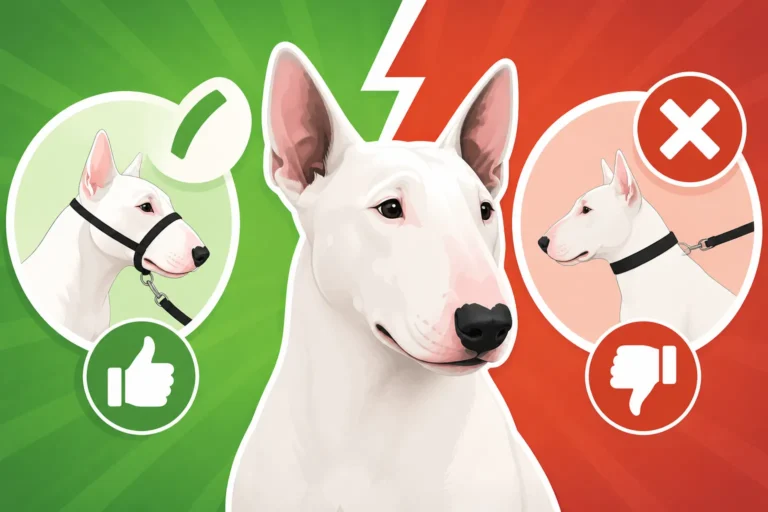
- Head Halters (Halti, Gentle Leader): These resemble a muzzle but are purely for control, not to prevent biting. They fit over the dog's nose and around their head, with the leash clipping under the chin. Where the head goes, the body follows. A head halter gives you incredible steering power without needing to yank on your dog's neck. For a strong Bull Terrier, it offers a level of control that can feel revolutionary, allowing you to easily redirect their head away from distractions or simply guide them calmly. However, they require careful introduction to ensure your dog accepts them comfortably. A Bull Terrier's strong sense of self means they might object at first, so gentle, positive conditioning is key. Learn more about their suitability in Whether a Head Halter Suits a Bull Terrier.
- Front-Clip Harnesses: As mentioned, these harnesses, like the popular PetSafe Easy Walk or the Freedom No-Pull Harness, are designed to redirect your dog's forward momentum. When your Bull Terrier pulls, the leash attachment on the chest causes them to pivot to the side, making pulling less effective and less rewarding. This reduces the strain on your arm and their neck, promoting a more pleasant walking experience. They are generally well-tolerated and a fantastic starting point for teaching loose-leash walking, especially before introducing something like a head halter.
| Leash/Harness Type | Best Use Case | Pros | Cons |
|---|---|---|---|
| Flat Collar | ID tags, minimal control | Simple, widely available | Little control over pulling, pressure on neck/throat, easy to slip out |
| Martingale Collar | Escape prevention | Prevents slipping, applies gentle, temporary pressure | Still neck pressure, not a true no-pull solution |
| Back-Clip Harness | Dogs that don't pull, comfort | Distributes pressure evenly, comfortable, good for non-pullers | Can encourage pulling in strong dogs, less control |
| Front-Clip Harness | Teaching loose-leash walking | Redirects pulling, reduces strain, good control without neck pressure | Some dogs may dislike the fit across chest initially |
| Head Halter | Maximum control for strong pullers | Excellent steering, stops pulling effectively, prevents lunging | Requires careful introduction, some dogs resist initially, can look like a muzzle |
Remember, no single tool is a magic bullet. They are aids to training, not replacements for it.
Training Strategies for a Well-Mannered Walk
Having the right tools is only half the battle; the other half is implementing effective training strategies. Bull Terriers are intelligent, but they need consistency, positive reinforcement, and a clear understanding of what you expect.
Foundation: Positive Reinforcement and Consistency
The cornerstone of successful leash training with a Bull Terrier is positive reinforcement and unwavering consistency. Bull Terriers respond best to rewards-based training that makes learning fun and engaging. Yelling, jerking the leash, or using harsh corrections can often backfire, causing them to shut down, become more resistant, or even develop negative associations with walks.
Instead, focus on rewarding the behaviors you want to see. When your Bull Terrier walks with a loose leash, even for a few steps, mark that moment with a verbal cue ("Yes!" or "Good!") and immediately reward with a high-value treat (think cooked chicken, cheese, or their absolute favorite toy). The key is to make the reward immediate and meaningful. Repetition and consistency are paramount. Every walk, every time you step outside, you are either reinforcing pulling or reinforcing loose-leash walking. There's no "off" switch for training. This means everyone who walks the dog must use the same methods and cues. This consistency helps your Bull Terrier understand what's expected of them, turning polite walking into a habit.
Teaching Loose Leash Walking: Practical Steps
Teaching a Bull Terrier to walk on a loose leash involves breaking the behavior down into small, achievable steps.
- Start Indoors: Begin in a low-distraction environment like your living room. Hold the leash, wait for slack, take a few steps. The moment the leash is loose, say "Yes!" and give a treat. If your dog pulls, stop immediately. Wait for the leash to slacken, then reward. This teaches them that a tight leash means "stop" and a loose leash means "go" and "reward."
- Gradual Progression: Slowly move to slightly more distracting areas, like your backyard, then a quiet street, and eventually to busier locations. Increase distractions incrementally, always ensuring success before moving on.
- The "Tree" Method: If your Bull Terrier pulls, become a "tree." Stop dead in your tracks. Don't move forward until the leash goes slack. This might mean standing still for a while, but it teaches them that pulling gets them nowhere. The moment they ease up, even slightly, reward and resume walking.
- Change Direction: Every time your Bull Terrier starts to pull, calmly change direction. If they're pulling left, turn right. If they're pulling forward, turn around. This keeps them paying attention to you and prevents them from consistently leading the walk.
- High-Value Rewards: Bull Terriers are often food motivated. Use treats they absolutely love, especially in distracting environments. The reward needs to be more appealing than the distraction they're pulling towards.
- Short Sessions: Bull Terriers have an amazing ability to "decide a cue is optional." Why a Bull Terrier Decides a Cue Is Optional is often because their enthusiasm overrides their training. Keep training sessions short, positive, and frequent. A few minutes of focused loose-leash work multiple times a day is more effective than one long, frustrating session.
Managing Distractions and Impulse Control
Distractions are the ultimate test of leash manners for a Bull Terrier. Their excitement and prey drive can be overwhelming.
- Proximity Matters: Work on "engage-disengage" games. Start far away from a distraction (another dog, a squirrel, a person). The moment your Bull Terrier notices the distraction but before they react, mark and treat. Repeat. Gradually, you want them to notice the distraction, look back at you for a treat, and then disengage. This teaches them that distractions predict good things from you, not a chance to lunge.
- Pattern Games: Teach a "watch me" cue that gets their full attention. Practice it constantly in various environments. This command becomes your go-to for breaking focus from a distraction.
- Boundary Training: Teaching a "place" or "mat" command at home builds impulse control, which translates to better behavior on walks. A dog that can settle calmly at home is more likely to settle outside.
- Redirection: When you see a potential distraction, get ahead of your Bull Terrier. Step in front of them, use your body to block their view, and redirect their attention with a treat or a toy. The goal is to interrupt the impulse to pull before it happens.
- Environmental Management: Sometimes, the best strategy is simply to avoid overly stimulating environments until your training is solid. If dog parks always end in a frustrated, pulling mess, choose quiet walking trails instead. Acknowledge that Why a Dog Park Goes Wrong for a Bull Terrier often stems from overstimulation and a lack of focus.
Remember, every step is progress. Celebrate the small victories, like a few seconds of loose leash, and keep building on that success.
The Importance of Exercise and Mental Stimulation
A tired Bull Terrier is a well-behaved Bull Terrier, and this rings particularly true for leash manners. Their immense strength and energy need productive outlets, both physical and mental, to prevent them from becoming a pulling machine on walks.
Burning Off Energy Before the Walk
One of the simplest yet most effective strategies for improving leash manners is to pre-exercise your Bull Terrier before you even step out the door for a formal walk. Think of it: if your Bull Terrier is bursting with pent-up energy, they'll inevitably try to expend it by pulling, lunging, and generally acting like a maniac on the leash. Taking the edge off that energy beforehand can make them much more receptive to training and far less likely to pull with their full strength.
This pre-walk exercise doesn't have to be another full walk. It could be a vigorous game of fetch in the yard, a spirited tug-of-war session in the living room, or even some intense playtime with another compatible dog. For a Bull Terrier, even 10-15 minutes of high-intensity activity can make a noticeable difference. When they are a bit tired, they are more likely to walk calmly, pay attention to your cues, and process their environment without feeling the overwhelming urge to charge forward. It changes their mindset from "I need to run!" to "Okay, I can enjoy this stroll."
Mental Enrichment to Reduce Pulling
Physical exercise is vital, but a Bull Terrier also needs significant mental stimulation. A bored Bull Terrier often finds its own entertainment, which can include destructive chewing, excessive barking, or, you guessed it, being a frantic puller on walks because the walk itself is their only stimulating activity. Engaging their intelligent minds can actually reduce their overall energy levels and make them calmer, more attentive companions. Why a Bull Terrier Needs a Job is a core part of their well-being.
Incorporate puzzle toys filled with treats, scent work games (like hiding treats around the house for them to sniff out), or even structured training sessions (even if it's just practicing "sit" and "stay" in different rooms). Canine enrichment activities, such as those found through platforms like BAXTER & Bella, can provide structured learning opportunities. These activities tap into their natural problem-solving abilities and satisfy their need to "work." A mentally fatigued Bull Terrier is often much calmer on the leash. When their brains are engaged, they're less likely to be solely driven by raw instinct to pull towards every new sight and smell. This stimulation diverts that incredible energy into productive channels rather than just pulling.
Finding Alternatives to Traditional Walks
While walks are important, they don't have to be the only form of exercise or stimulation for your Bull Terrier, especially if leash manners are a major struggle. Sometimes, taking a break from traditional walks or supplementing them with other activities can be hugely beneficial.
Consider exploring activities like:
- Flirt Poles: These are fantastic for engaging a Bull Terrier's prey drive in a controlled way, allowing them to chase and "catch" a lure attached to a long pole. It's a great way to burn off energy in a small space and provides excellent mental focus.
- Structured Playdates: If your Bull Terrier is social, a well-managed playdate with a compatible dog can be a wonderful energy outlet. Ensure the other dog is equally robust and tolerant of the Bull Terrier's enthusiastic play style.
- Running and Hiking (with caution): For a well-conditioned Bull Terrier that is past its puppy growth plates, running or hiking can be excellent exercise. However, always be mindful of their physical limits and the environment. How Much Exercise a Bull Terrier Actually Needs can vary. If you're running, ensure they are trained to run alongside you without pulling, or use a hands-free running leash with a comfortable harness.
- Swimming: Many Bull Terriers love water, and swimming is a low-impact way to burn a lot of energy. Just remember that most Bull Terriers are not naturally buoyant and may need a life vest.
By varying their activities, you provide a well-rounded outlet for their energy and prevent walks from becoming the sole source of excitement, which can often lead to excessive pulling. It's about meeting their physical and mental needs in a way that sets them up for success on the leash.
When to Seek Professional Help
Even with the best intentions and the right tools, some Bull Terriers present leash challenges that feel insurmountable. There's absolutely no shame in seeking professional guidance; in fact, it's often the smartest and most effective path to a happier, more harmonious relationship with your powerful companion.
Identifying When You're Out of Your Depth
It's easy to feel defeated when your Bull Terrier is pulling with all their might, lunging at distractions, or seemingly ignoring every command you give on a walk. You might find yourself dreading walks, making excuses to avoid them, or feeling constantly frustrated. These are significant signs that you might be out of your depth and could benefit from expert help.
Other indicators include:
- Physical Strain or Injury: If you're experiencing shoulder pain, back pain, or have been pulled off your feet, the situation has become physically dangerous.
- Emotional Stress: If walks consistently leave you feeling angry, anxious, or overwhelmed, it's impacting your well-being and likely your Bull Terrier's too.
- Lack of Progress: You've tried multiple techniques and tools, but your Bull Terrier's pulling or reactivity isn't improving, or perhaps it's even getting worse.
- Safety Concerns: If your Bull Terrier's pulling makes it difficult to navigate safely around traffic, other people, or children, professional intervention is critical.
- Behavior Escalation: If pulling is accompanied by aggressive lunging, excessive barking, or snapping at perceived threats, it's a sign that underlying behavioral issues need to be addressed by an expert.
Recognizing these signs isn't a failure on your part, but rather a responsible step towards ensuring both your safety and your Bull Terrier's quality of life.
What a Good Trainer Can Offer
A professional dog trainer specializing in positive reinforcement and force-free methods can be an invaluable resource. They bring an objective eye, extensive knowledge of canine behavior, and practical experience with strong breeds like Bull Terriers.
A good trainer will:
- Assess the Root Cause: They won't just address the symptom (pulling); they'll help you understand why your Bull Terrier is pulling. Is it excitement, prey drive, fear, frustration, or a combination?
- Tailor a Training Plan: They'll develop a personalized plan that fits your Bull Terrier's specific personality and your lifestyle. This often includes teaching you the mechanics of leash handling, timing of rewards, and effective communication.
- Teach You the Skills: A trainer doesn't just train your dog; they train you. They'll show you how to use tools correctly, implement strategies consistently, and read your dog's body language to anticipate and prevent problem behaviors.
- Provide Support and Accountability: They offer ongoing support, troubleshoot challenges as they arise, and hold you accountable for practicing the techniques.
- Address Specific Issues: If your Bull Terrier is reactive to other dogs, a trainer can guide you through desensitization and counter-conditioning protocols in a safe, controlled environment.
When looking for a trainer, seek out those certified by reputable organizations and who emphasize humane, ethical training methods. Ask about their experience with Bull Terriers or similar strong, spirited breeds. Sometimes, group classes focused on loose-leash walking can be helpful, but for intense pulling or reactivity, private sessions often yield faster, more tailored results.
The Value of a Behaviorist for Extreme Cases
In some cases, especially when pulling is accompanied by significant reactivity, aggression, or anxiety, working with a veterinary behaviorist or a certified professional dog behaviorist might be necessary. These specialists have advanced education in animal behavior and can diagnose and treat behavioral disorders that might be contributing to extreme leash issues.
A veterinary behaviorist, for example, is a veterinarian with specialized training in behavior, meaning they can prescribe medication if an underlying anxiety disorder or compulsive behavior (like severe tail chasing, as discussed in Tail Chasing in a Bull Terrier Is a Medical Problem) is contributing to the problem. They look at the bigger picture, considering genetics, health, environment, and learning history.
While more expensive, a behaviorist can provide:
- Comprehensive Diagnosis: They can identify complex behavioral issues that a general trainer might not be equipped to address.
- Medication Management: If needed, they can safely prescribe and monitor psychotropic medications to help manage severe anxiety, fear, or compulsive behaviors, making behavioral modification more effective.
- Integrated Treatment Plans: They often work in conjunction with your regular vet and a positive reinforcement trainer to create a holistic treatment plan.
- Long-Term Support: They can provide ongoing guidance for challenging, deeply ingrained behaviors.
Choosing to seek professional help is an investment in your Bull Terrier's future and your peace of mind. It can turn a dreaded daily chore into a pleasant shared experience, strengthening the bond between you and your unique, powerful companion.
Disclaimer
This article is for general informational purposes only and does not constitute professional advice. Laws, prices and regulations vary by location and change over time. Consult a qualified professional for guidance on your specific situation.