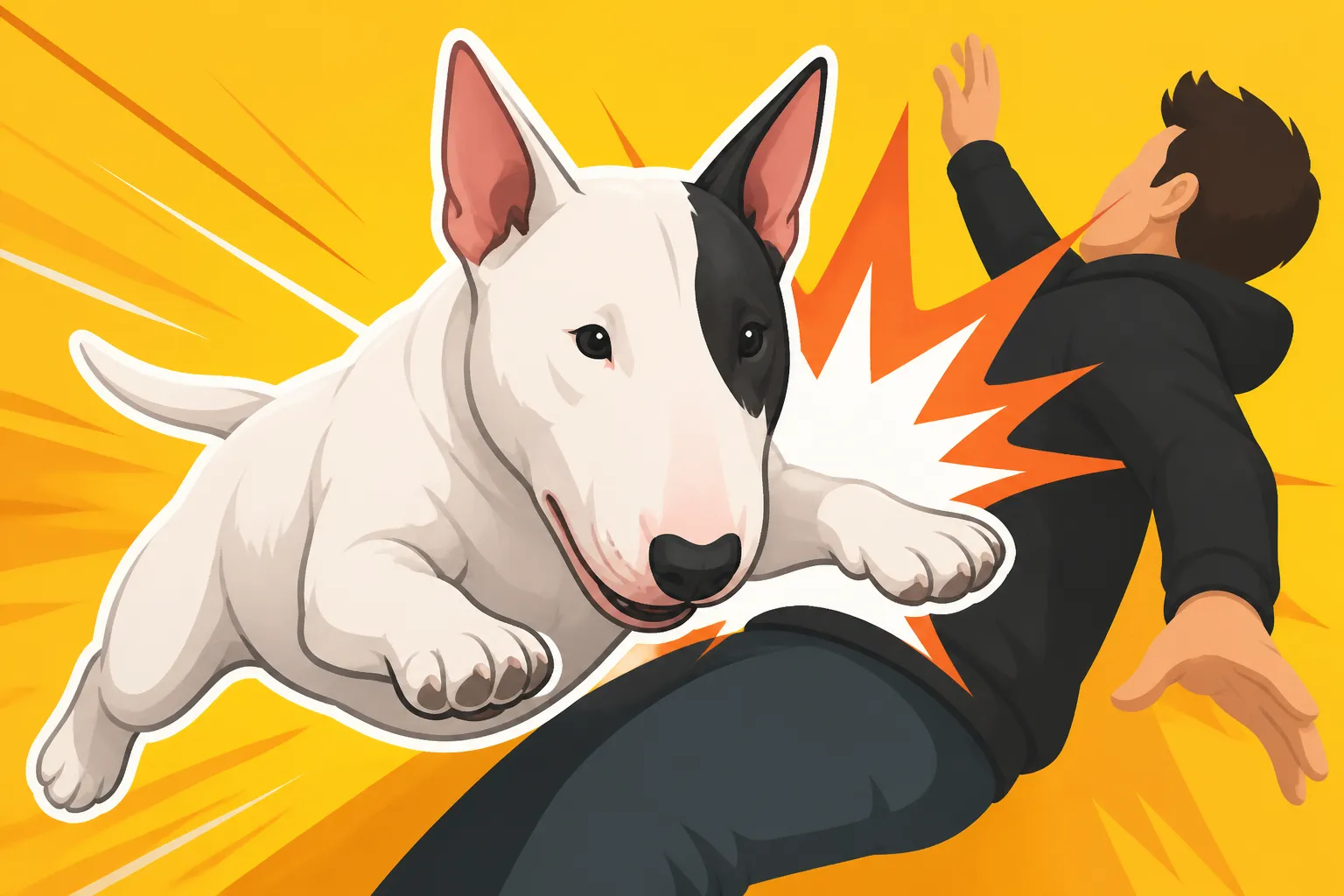
Why a Bull Terrier Body Slams
You know that feeling. One moment you're standing still, perhaps sipping your coffee or reaching for the leash, and the next you're bracing for impact. It's the unique Bull Terrier body slam—a full-contact greeting, a playful shove, or an over-the-top demand for attention that can leave you breathless, literally. This guide is here to unravel why our beloved Bull Terriers launch themselves at us and, more importantly, how we can manage this often-exasperating, sometimes dangerous, but undeniably characteristic behavior.
The Bull Terrier Body Slam: What It Is and How It Feels
For those who haven't experienced it, a Bull Terrier body slam might sound like an exaggeration. For those of us living with these wonderfully robust dogs, it’s a daily reality. It's not just a nudge or a lean; it's a deliberate, often high-speed, full-body collision where your Bull Terrier uses its solid frame and significant muscle to make contact. It can feel like being hit by a furry, excited bowling ball, and let me tell you, it commands your attention whether you want it or not!
A Full-Contact Greeting
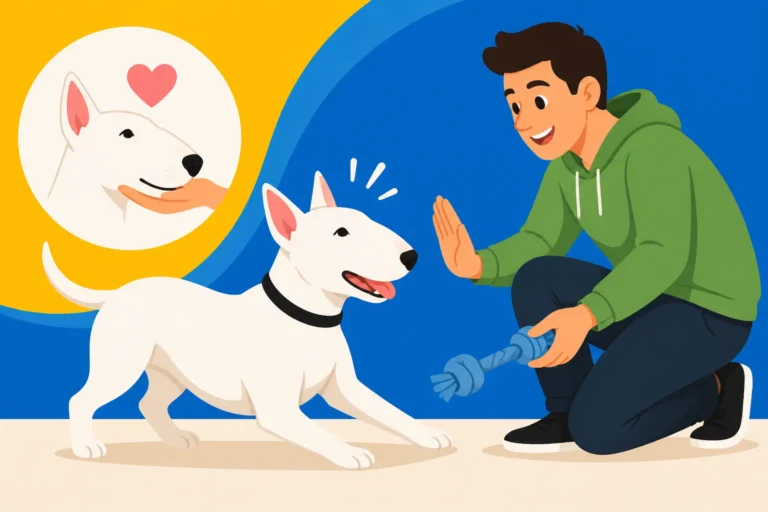
Imagine arriving home after a long day. You open the door, and before you can even say hello, your Bull Terrier barrels towards you, head down, tail wagging like a metronome gone wild, and BAM! You're either knocked off balance, pushed against a wall, or find yourself stumbling backward. This isn't usually an act of aggression; it's a profound declaration of joy, a canine equivalent of a bear hug delivered with the force of a small battering ram. Their enthusiasm often overrides any sense of personal space, both yours and theirs. It's their way of saying, "You're back! I missed you! Let's party NOW!" and they communicate this with their entire physical being.
What's particularly distinct about the Bull Terrier's version of this greeting is their sheer physical density. They aren't flimsy or delicate creatures; they are compact powerhouses, and when they decide to throw their weight around, you definitely feel it. For them, it might feel like a fun game, a way to initiate interaction, or simply an overflow of pent-up excitement. Unfortunately, our human bodies aren't always built to withstand such enthusiastic demonstrations of affection, which is where the frustration often begins.
Not Always Malicious, But Always Impactful
It's crucial to understand that a Bull Terrier's body slam is rarely an act of malice. These dogs are known for their clownish nature and their deep desire to be part of the family, often exhibiting a "three-year-old in a dog suit" personality. They crave interaction and attention, and if a body slam reliably gets a reaction—even a negative one—they've learned it's an effective communication tool. It might be their way of soliciting play, expressing frustration, or simply demanding that you acknowledge their presence right this second.
However, even if the intent isn't malicious, the impact certainly is. A body slam from a 50-70 pound (or more!) Bull Terrier can easily send an adult sprawling, especially if caught off guard. For children, the elderly, or anyone with mobility issues, it can be downright dangerous, leading to falls, bumps, and even serious injury. This is where we, as responsible Bull Terrier owners, have to step in and teach them more appropriate ways to express their immense joy and demand attention, while still appreciating their unique zest for life. The challenge lies in channeling that powerful, affectionate energy.
Deconstructing the "Why": Reasons Behind the Ram
Understanding why your Bull Terrier body slams is the first step toward managing the behavior. It’s often a cocktail of their unique personality, physical attributes, and how we, inadvertently, reinforce their actions. These aren't just random acts; they stem from deep-seated breed traits and their learning experiences within your home.
The Bull Terrier's Exuberant Personality and Need for Attention
Bull Terriers are renowned for their larger-than-life personalities. They're often described as clowns, full of antics and a goofy sense of humor. This exuberance means they tend to do everything with gusto, and seeking attention is no exception. A body slam is a highly effective way to get noticed immediately. If you're ignoring them, busy with chores, or distracted by a phone call, a well-timed body slam guarantees your focus shifts squarely to them.
Think about it: from your Bull Terrier's perspective, a body slam often works. Even if you react with a startled "Ow!" or a frustrated "No!", you're still engaging with them. They might not understand the nuance of your irritation; they just know they got a response. This can create a cycle where the behavior is inadvertently reinforced, making it more likely to happen again. They thrive on being the center of your universe, and they'll use their impressive physicality to ensure that remains the case. This ties into their often-stubborn nature; A Bull Terrier Trains When It Sees the Point, and if the point of body slamming is attention, they'll keep doing it.
Untapped Energy and Over-Stimulation
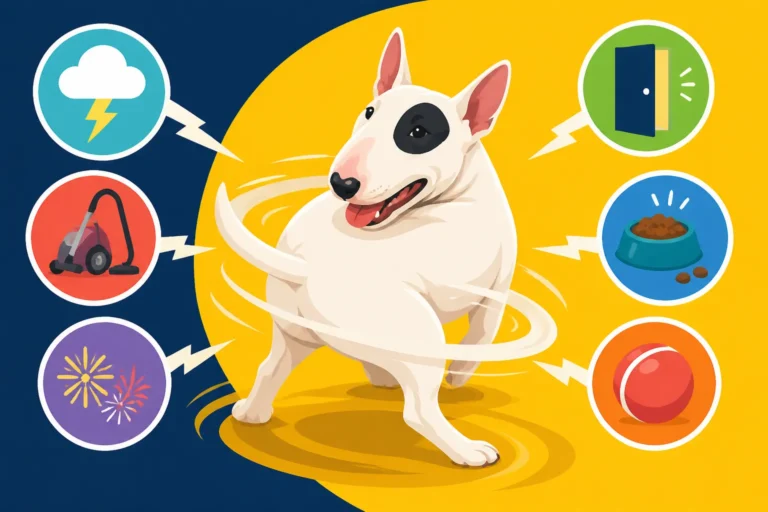
A common culprit behind many Bull Terrier behavioral quirks, including body slamming, is insufficient exercise and mental stimulation. These dogs are powerful and athletic, bred for activity. If they don't get enough opportunities to burn off their physical energy through walks, runs, or vigorous play, that excess energy has to go somewhere. A body slam can be a sudden, explosive release of pent-up energy, especially when they're overstimulated by an exciting event, like your arrival home or the sight of a new person.
Imagine a Bull Terrier who has been crated for hours or spent the day with minimal engagement. When the opportunity for excitement arises, they can quickly become over-aroused, and their impulse control goes right out the window. This isn't just about physical exercise; it's also about mental enrichment. A bored Bull Terrier is a destructive Bull Terrier, and a body slam might just be one of the less destructive manifestations of their boredom. Providing adequate outlets for their physical prowess and keen intelligence is vital in preventing these kinds of boisterous outbursts. How Much Exercise a Bull Terrier Actually Needs is often more than new owners realize.
Communication: "Let's Play!" or "Notice Me!"
Body slamming is often a clear form of communication for Bull Terriers. It's a primal, physical way of initiating interaction. When your Bull Terrier launches themselves at you, they might be saying, "I want to play right now!" or "I'm bored, entertain me!" It's part of Why a Bull Terrier Shows Affection With Its Whole Body. This is particularly true if they follow the slam with play bows, tail wags, or trying to mouth your hands gently. They view you as a giant playmate, and for a dog that sometimes lacks finesse, a full-body contact is a pretty direct invitation.
They might also use it as a way to demand resources, even if it's just your attention. If they've learned that a forceful nudge gets them a pat, a throw of a toy, or a treat, they'll continue to employ that strategy. It’s a very canine way of saying, "Hey, you! I'm here, and I'm important!" Understanding this communicative aspect allows us to interpret the behavior not as an aggression, but as a misguided attempt to connect. Our job is to teach them a more polite "hello" or "play with me."
Lack of Awareness of Their Own Strength
Perhaps one of the most endearing, yet frustrating, aspects of Bull Terrier body slamming is their seeming lack of awareness of their own considerable strength. These dogs are built like tanks: muscular, dense, and incredibly powerful. They don't seem to realize that their enthusiastic greetings or playful shoves can have a significant impact on a fragile human body. They might interact with you the same way they'd interact with a sturdy dog park buddy, completely oblivious to the size and species difference.
This isn't maliciousness; it's often pure, unadulterated Bull Terrier exuberance combined with a touch of blissful ignorance. They are very much "dog" in their physical interactions, and they expect you to be just as resilient as they are. This is a common trait for powerful breeds, and it highlights the need for consistent training from a young age to teach them body control and gentler interactions. It’s crucial for owners to understand Whether a Bull Terrier Understands Its Own Strength and take steps to mitigate the risks.
The Potential Risks and Frustrations of Body Slamming
While we adore our Bull Terriers' goofy charm, their tendency to body slam isn't just a quirky trait; it comes with genuine concerns. Beyond the immediate annoyance, there are significant safety and social implications that owners need to address head-on. Ignoring it won't make it go away, and can sometimes lead to more serious problems down the line.
Safety Concerns for Humans and Other Pets
The most pressing concern with body slamming is the potential for injury. An unexpected impact from a solid Bull Terrier can cause falls, bruises, scrapes, and even more severe injuries like sprains, fractures, or concussions. This risk is amplified for certain demographics within the household. Small children can be easily bowled over and seriously hurt, especially if their heads are at the level of a dog's swinging body. Elderly family members, or individuals with balance issues, are also highly susceptible to injury. Imagine your grandparent visiting and being greeted with a full-force Bull Terrier tackle; it’s a recipe for disaster.
It's not just humans who are at risk. A powerful body slam can also injure other, smaller pets in the household. A smaller dog or a cat could easily be hurt by an overzealous Bull Terrier's greeting. How Easily a Bull Terrier Knocks You Over is a real consideration that requires consistent attention to training and management, especially in multi-species homes. Beyond physical injury, there's the psychological impact: constant bracing for impact can make people, especially children, wary or even fearful of their own dog, which nobody wants.
Damage to Property and Personal Space
Beyond physical harm, body slamming can also lead to unintended damage to your home and belongings. A Bull Terrier launching itself at you while you're holding a glass of water, a plate of food, or a laptop is a recipe for spills, broken items, and costly repairs. Picture trying to carry a tray of drinks through the living room, only for your Bull Terrier to enthusiastically demand attention with a full-frontal assault; the aftermath isn't pretty.
Furthermore, it infringes on personal space. Continuously being bumped, leaned on, or shoved can be exhausting and frustrating. It prevents you from relaxing in your own home, always having to be on guard. This constant vigilance can strain the human-dog bond, turning moments that should be joyful into situations filled with anxiety and irritation. The intent might be affectionate, but the execution creates friction and resentment, making it vital to teach alternative, more respectful ways of interacting.
Misinterpretation by Strangers and Other Dogs
While we understand our Bull Terrier's goofy intentions, not everyone else will. A Bull Terrier body slamming a guest, a delivery person, or someone at the dog park can be severely misinterpreted. What you see as an over-enthusiastic greeting, a stranger might perceive as aggression or a lack of control, leading to fear, complaints, or even legal issues. The powerful physique of a Bull Terrier already carries certain stigmas, and body slamming only reinforces negative stereotypes.
Similarly, other dogs might not appreciate a Bull Terrier's full-contact play style. A body slam could be seen as rude, confrontational, or even a challenge by another dog, potentially leading to altercations. Even if your Bull Terrier is just trying to be friendly, their lack of social finesse can quickly escalate situations. This is why proper socialization and teaching polite greetings are paramount, both for their safety and the reputation of the breed. We want our Bull Terriers to be ambassadors, not sources of fear or conflict, which means addressing behaviors like this that can be easily misunderstood. This is especially true when considering A Bull Terrier With Other Dogs.
Effective Strategies for Managing and Redirecting Body Slams
Managing a Bull Terrier's body slamming tendencies requires a multi-pronged approach focusing on training, appropriate outlets, and environmental control. It's about teaching them what to do instead and setting them up for success, rather than simply punishing the unwanted behavior. Consistency is absolutely key.
Proactive Training for Impulse Control
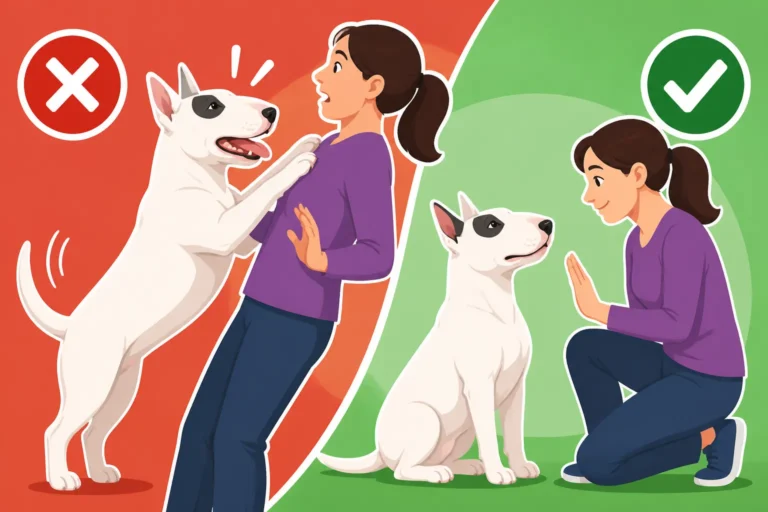
The cornerstone of addressing body slamming is developing strong impulse control in your Bull Terrier. This means teaching them to pause, think, and choose a more appropriate action instead of just reacting with a full-body lunge. Start with basic obedience commands like "sit" or "stay" and practice them rigorously in various environments, gradually increasing distractions. When you arrive home, instead of letting them barrel at you, immediately ask for a "sit" or "down" and reward them heavily for complying before you give them any physical attention.
Using a marker word or a clicker can be incredibly effective here. As soon as their rear touches the ground, mark and reward. This teaches them that calm, polite behavior is what earns them praise and interaction. BAXTER & Bella, an online puppy school, offers excellent resources for building these foundational skills, allowing you to work at your own pace from home. They emphasize positive reinforcement, which is perfect for Bull Terriers who tend to shut down under harsh corrections. Practice greeting exercises with family members and friends, ensuring everyone is on board with the "no attention until all four paws are on the floor" rule. This also helps with Teaching a Bull Terrier to Sit and Stay in exciting situations.
Providing Appropriate Physical and Mental Outlets
A Bull Terrier with pent-up energy is a Bull Terrier ripe for body slamming. These dogs need substantial physical exercise to stay happy and well-behaved. This isn't just a leisurely walk around the block; it's vigorous play, brisk jogs, or engaging games of fetch. Aim for at least 60-90 minutes of dedicated exercise daily, broken into sessions. If they're physically tired, they're less likely to have the excess energy for enthusiastic full-contact greetings.
Beyond physical activity, mental stimulation is equally vital. Bull Terriers are intelligent and need their brains engaged. Puzzle toys, chew toys, scent work, or even short, fun training sessions can help tire them out mentally. Consider durable chew toys available on platforms like Amazon, designed to withstand a Bull Terrier's powerful jaws, to keep them occupied and direct their energy constructively. A tired Bull Terrier, both physically and mentally, is often a calm Bull Terrier. Regularly engaging their minds can help prevent What a Bull Terrier Does When It Is Bored, including attention-seeking slams.
Environmental Management and Preventing Opportunities
Sometimes, the simplest solution is to manage the environment to prevent the behavior from occurring in the first place. If your Bull Terrier is prone to body slamming when guests arrive, consider keeping them on a leash or behind a baby gate until they've settled down. Teach them a "place" command, sending them to a designated mat or bed when visitors come over, and reward them for staying there calmly. This gives them a job to do and prevents the initial chaotic greeting.
When you come home, instead of letting them greet you at the front door, try sending them to a specific spot or having them wait in a separate room for a moment. This brief separation allows them to calm their initial burst of excitement before you engage. Using a sturdy, heavy-duty crate (again, easily found on Amazon) can also be a safe way to manage their excitement during high-traffic times or when you need to focus. Teaching them to wait patiently for attention, rather than demanding it, is a game-changer. This approach also helps with Teaching a Bull Terrier Not to Shoulder Through a Door.
Here's a quick comparison of common body slam scenarios and potential management strategies:
| Scenario | Bull Terrier's Likely Intent | Immediate Human Reaction | Effective Management Strategy |
|---|---|---|---|
| Owner Arrives Home | Extreme Excitement, "Hello!" | "Ow!", "No!", or Pushing Away | Ask for a "Sit/Stay" before entry, reward calm, no attention for jumps. Use a leash if needed. |
| Guest Arrives | Curiosity, Excitement, "Play with me!" | Startled yelp, tripping, fear | "Place" command on leash, barrier (gate) until calm. Gradual, controlled introductions. |
| During Playtime | Exuberant Play, Roughhousing | Getting knocked over, bruises | Interrupt rough play. Redirect to a toy, teach "gentle" cues. End play if it gets too wild. |
| Demanding Attention | "Look at me!", "Pet me!" | Annoyed sigh, verbal reprimand | Ignore unwanted contact. Reward polite "sit" for attention. Redirect to a mental puzzle. |
| Over-stimulated/Zoomies | Burst of energy, uncontrolled fun | Chaos, accidental collisions | Pre-empt with more exercise. Provide safe, open space for zoomies. Teach a "settle" cue. |
When to Call in the Professionals
While many Bull Terrier body slamming issues can be addressed with consistent training and management at home, there are times when it’s wise, and even necessary, to seek professional help. Recognizing these red flags early can prevent escalation and ensure both your safety and your dog’s well-being.
Persistent Behavior and Escalating Intensity
If you've diligently applied the training and management strategies mentioned above, but your Bull Terrier's body slamming remains persistent, or worse, seems to be escalating in intensity, it's a strong indicator that you need external guidance. Perhaps your dog is now knocking you over regularly, or the impacts feel harder, more deliberate, and less like playful exuberance. This kind of unwavering behavior suggests either a deeply ingrained habit, a misunderstanding of your training cues, or an underlying issue that you might not be equipped to identify or address on your own.
A certified professional dog trainer, especially one experienced with powerful, strong-willed breeds like Bull Terriers, can observe your dog's behavior, your interactions, and the dynamics within your home. They can pinpoint exactly where communication is breaking down and offer tailored strategies. Sometimes, what seems like pure stubbornness is actually a need for a clearer, more consistent training approach, or a different motivational strategy that truly resonates with your particular Bull Terrier. They can offer insights into Why a Bull Terrier Pulls Toward Everything or why they might not be responding to your usual methods.
Body Slams Accompanied by Aggression or Fear
While most body slams are not aggressive, any instance where the behavior is accompanied by signs of aggression (growling, snapping, baring teeth, rigid body language, resource guarding) or extreme fear (tucked tail, flattened ears, trembling, trying to escape) warrants immediate professional intervention. If your Bull Terrier is body slamming in a context that seems confrontational, protective, or fear-driven, this moves beyond playful exuberance into potentially dangerous territory.
In such cases, it's crucial to consult with a veterinary behaviorist or a certified applied animal behaviorist. These professionals have a deeper understanding of canine psychology, learning theory, and potential medical or neurological factors that could be influencing behavior. They can conduct a thorough assessment, rule out any underlying health issues (which can sometimes manifest as behavioral changes), and develop a comprehensive behavior modification plan. This is not just about stopping the body slamming, but addressing the root cause of the aggressive or fearful display, ensuring a safe and harmonious environment for everyone. Never hesitate to seek expert help when safety is at stake; it's an investment in your Bull Terrier's future and your peace of mind.
Disclaimer
This article is for general informational purposes only and does not constitute professional advice. Laws, prices and regulations vary by location and change over time. Consult a qualified professional for guidance on your specific situation.